Woodland Moss Overview: Identification, Appearance, and Key Characteristics
Quick Facts
Scientific Name: Moss sp.
Common Name: Woodland Moss
Plant Type: Perennial
Average Height: 0.5–4 inches (1–10 cm)
Spread Width: Several inches to many feet across
Leaf Type: Simple, Scale-Like Leaves
Growth Form: Creeping, Carpet-Forming
Bloom Color: None (Non-Flowering Plant)
Native Range: Temperate and Boreal Regions Worldwide
Toxicity: Non-toxic to humans & pets
Location Observed: Pennsylvania, USA
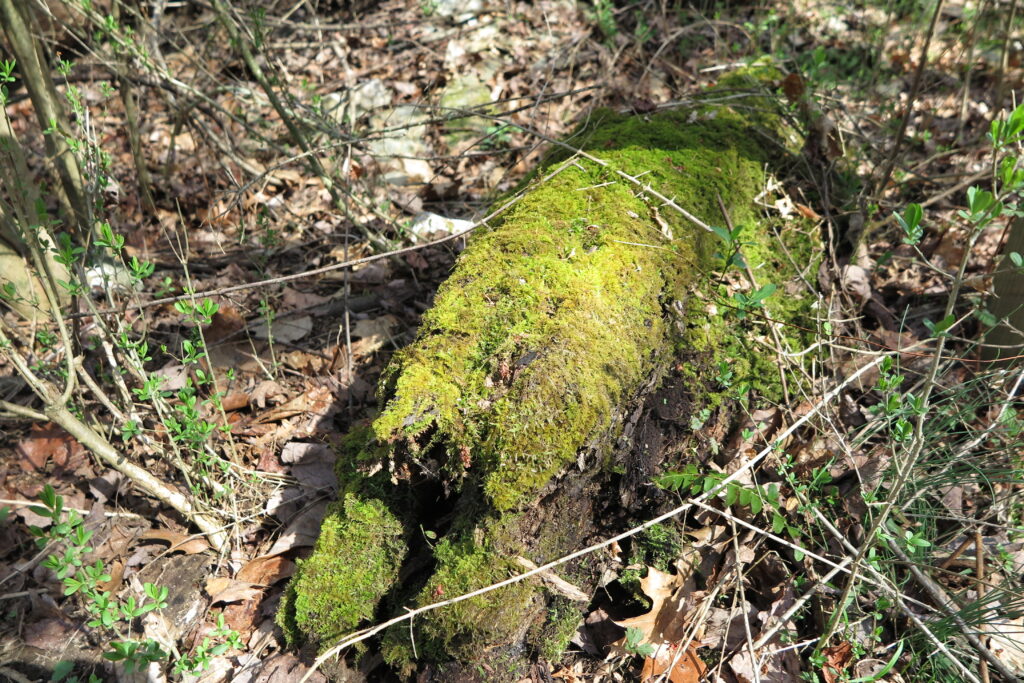
Field Observation
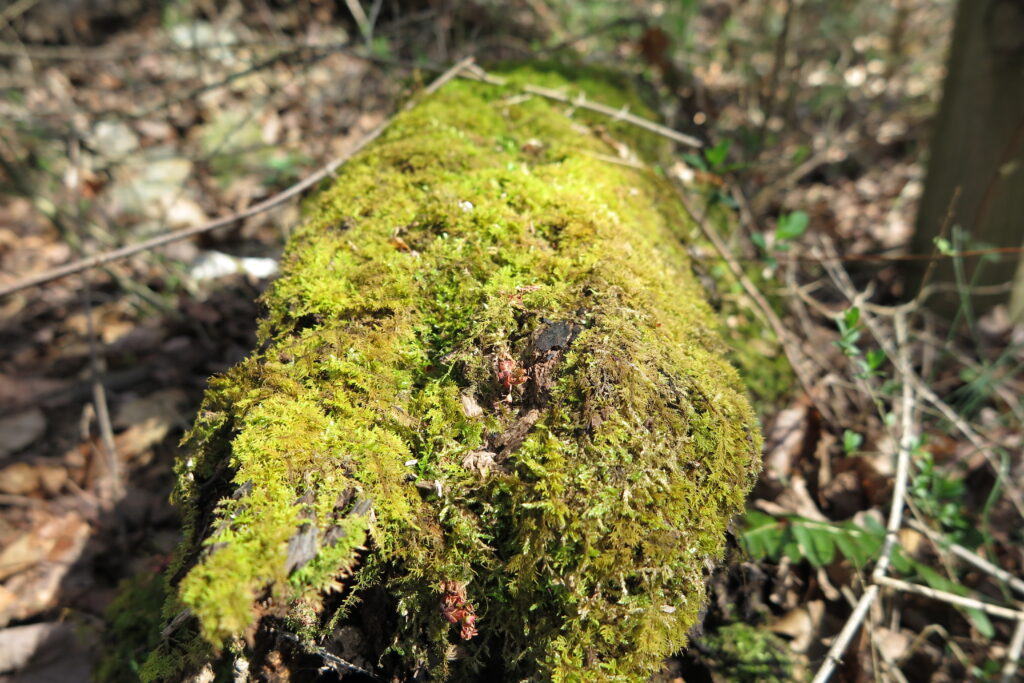
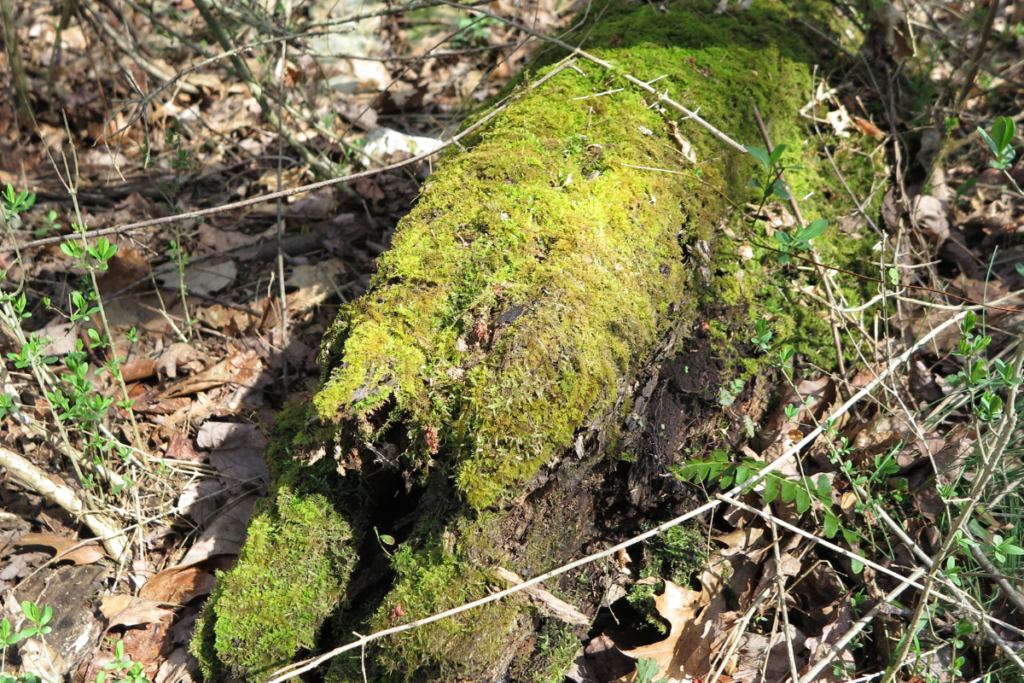
During this observation, Woodland Moss was found covering numerous decaying logs throughout the forest. The moss formed dense, continuous mats with a thick, soft texture that blanketed the wood surface and left very little exposed bark visible. In many areas, the colonies appeared to spread seamlessly across the logs, creating vibrant green carpets that occupied nearly every available space.
What Is Woodland Moss? An Introduction to This Ancient Forest Plant
Woodland Moss is a broad term used for numerous moss species that create lush green carpets across natural landscapes. These small but highly successful plants belong to one of the oldest groups of land vegetation still thriving today. Their lineage stretches back hundreds of millions of years, making mosses among the earliest plants to establish themselves on land.
Although often overlooked because of their size, woodland mosses occur throughout much of the world. They are found across North America, Europe, Asia, and many other temperate and cool-climate regions where moisture is regularly available. From mountain valleys to coastal forests, mosses contribute to the rich green appearance associated with healthy natural environments.
Many outdoor enthusiasts first notice woodland moss while exploring trails, photographing wildlife, or examining fallen logs. A vibrant patch can transform an ordinary forest scene into something that feels ancient and untouched. The dense green surfaces created by these plants frequently become focal points in woodland photography due to their color and texture.
Despite their modest stature, woodland mosses have achieved remarkable success on a global scale. Their ability to establish colonies across a wide variety of natural landscapes has allowed them to persist through changing climates and shifting ecosystems. Today, they remain among the most recognizable non-flowering plants found in forests around the world.
Woodland Moss Appearance and Overall Growth Form
At first glance, woodland moss appears as a soft green covering spread across natural surfaces. Rather than developing a tall structure, it remains close to the ground or substrate, creating a low profile that blends seamlessly into the surrounding landscape. Large colonies often resemble patches of green fabric draped across wood, stone, or soil.
Individual moss plants are extremely small, yet they collectively create visually striking colonies. Thousands of tiny stems grow closely together, producing continuous mats that can range from a few inches across to extensive carpets covering large sections of a forest floor. This growth pattern gives woodland moss its characteristic blanket-like appearance.
Color varies considerably depending on moisture levels, age, and species. Fresh growth frequently displays bright emerald tones, while older sections may appear darker green or slightly yellow-green. In certain lighting conditions, extensive colonies can seem almost luminous against darker surroundings, particularly after rainfall.
The overall shape of woodland moss colonies differs from many familiar garden plants. Instead of growing as upright clumps or branching shrubs, moss expands outward in a spreading form. This growth style allows colonies to cover available surfaces efficiently while maintaining a compact and visually uniform appearance.
One reason woodland moss remains so widespread is its adaptability. Similar-looking colonies can be found across diverse regions despite differences in climate and elevation. This broad distribution has helped make woodland moss one of the most familiar green plants encountered during outdoor exploration.
Distinctive Woodland Moss Characteristics That Define Its Identity
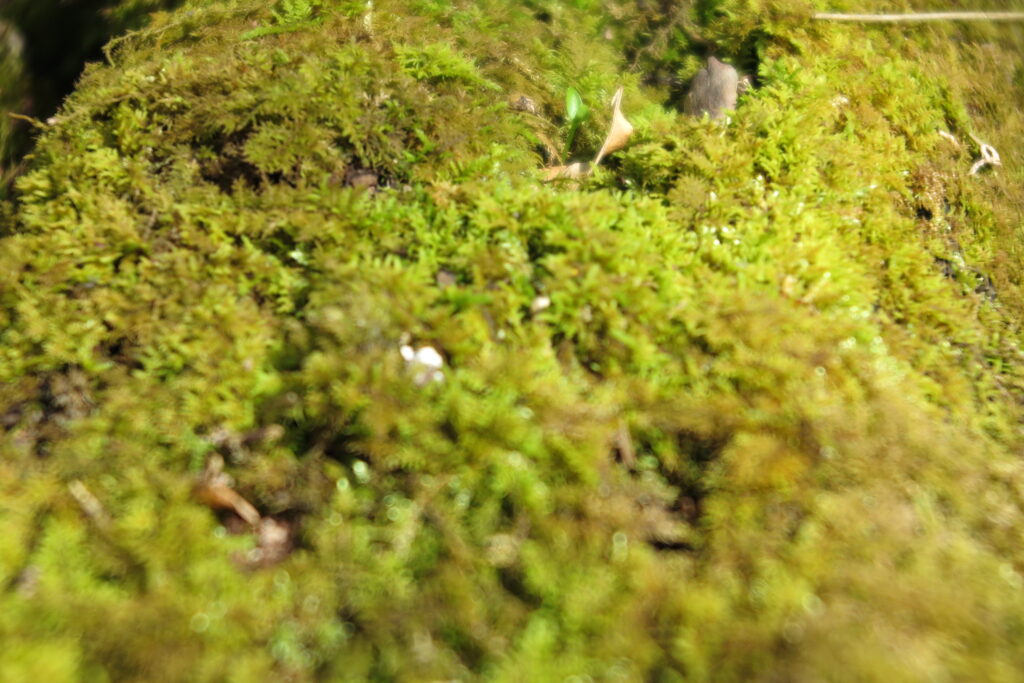
The most recognizable feature of woodland moss is its dense arrangement of tiny leaf-like structures. These leaves surround slender stems and create the velvety texture commonly associated with moss-covered surfaces. While individual leaves are often only millimeters long, together they form a remarkably intricate living surface.
Texture plays a major role in distinguishing woodland moss from surrounding vegetation. Healthy colonies frequently feel soft and cushion-like when gently touched. The surface has a springy quality that differs noticeably from grasses, seedlings, or other low-growing plants that may occur nearby.
Coloration provides another defining characteristic. Woodland moss typically displays rich shades of green ranging from bright emerald to deep olive. Some colonies even develop subtle golden tones under certain conditions. These color variations add visual depth and help create the layered appearance often seen in mature patches.
Viewed closely, woodland moss resembles a miniature forest. Tiny stems rise from the colony surface like countless small trees packed tightly together. This resemblance becomes especially apparent when examining a patch with a hand lens, revealing details that are invisible from a distance.
Compared with algae, which often forms smooth or slimy coatings, woodland moss possesses a clearly organized structure. The presence of visible stems and tiny leaves gives the colony a textured appearance that remains one of its most reliable identifying features. These structural traits help distinguish woodland moss from several other green organisms commonly found in natural environments.
How to Identify Woodland Moss in Natural Settings
Identifying woodland moss begins with observing its overall growth pattern. Most colonies form dense mats that hug the surface they occupy rather than producing tall stems or broad leaves. This carpet-like appearance is often the first clue that a green patch belongs to a moss rather than another plant group.
A close inspection reveals thousands of tiny leafy shoots packed tightly together. Even without magnification, the colony often appears fuzzy or velvety rather than smooth. This texture provides a useful field mark that helps separate moss from algae, which generally lacks the same structured appearance.
Beginners occasionally confuse woodland moss with liverworts because both groups remain relatively small and green. However, many liverworts display flatter growth and lack the distinct leafy texture characteristic of mosses. Looking closely at the colony surface often makes this difference immediately apparent.
Another common identification mistake involves young seedlings growing close together on moist ground. Seedlings eventually reveal stems, true leaves, and other features associated with flowering plants. Woodland moss maintains a consistently compact appearance composed of countless tiny shoots rather than larger individual plants.
A practical field example involves examining a fallen log covered in green vegetation. If the surface resembles a thick, soft carpet with a textured, leafy appearance, woodland moss is a likely identification. The combination of low-growing form, dense structure, and velvety texture creates a visual profile that becomes increasingly recognizable with experience, making woodland moss one of the easiest non-flowering plants to identify in the field.
Observation Location
Observed in William Kain Park Pennsylvania, USA
Popular Searches About Woodland Moss
Explore Woodland Moss Guide
Explore More Plants

Support Encounters World
Help support wildlife photography and get behind the scenes discoveries on Patreon.