
Coras Funnel Weaver Identification Guide: How to Identify a Coras Funnel Weaver Spider
Quick Facts
Scientific Name: Coras sp.
Common Name: Coras Funnel Weaver
Spider Family: Agelenidae (Funnel Weavers)
Average Size: 0.3–0.8 inches (8–20 mm) body length
Primary Coloration: Brown, gray, tan, and mottled patterns
Most Distinctive Feature: Mottled abdomen and funnel-shaped web retreat
Commonly Confused With: Grass spiders, wolf spiders, and other funnel weavers
Coras Funnel Weaver Identification Introduction
The Coras funnel weaver (Coras sp.) is a small spider belonging to the funnel-weaver family Agelenidae. Several species within this genus occur across eastern portions of North America, where they occupy a variety of natural and developed environments. Although they are relatively common, many people encounter them without realizing exactly what species they have found.
Correct identification can be challenging because Coras spiders share characteristics with several other brown or gray spiders. Their coloration is often subtle rather than bold, causing them to blend naturally into their surroundings. As a result, observers frequently mistake them for wolf spiders, grass spiders, or unrelated ground-dwelling species.
A closer look reveals a combination of physical features that help distinguish Coras funnel weavers from other spiders. Body shape, abdominal markings, web structure, and overall proportions all contribute valuable identification clues. Learning to recognize these traits makes accurate identification much easier.
For wildlife observers, photographers, and homeowners, understanding these characteristics can transform a brief encounter into a confident species recognition. While exact species identification sometimes requires microscopic examination, recognizing a spider as a member of the genus Coras is often possible through visible field marks and overall appearance.
Coras Funnel Weaver Appearance and Key Identification Features
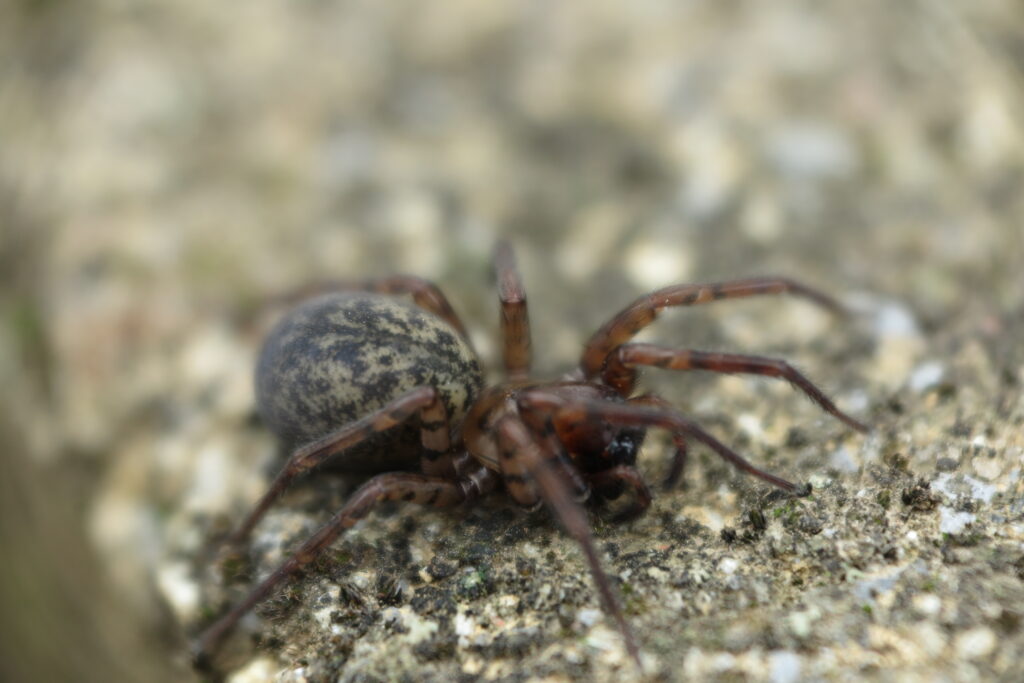
The overall appearance of a Coras funnel weaver is defined by its compact body and muted coloration. Most individuals display shades of brown, gray, tan, cream, and black that blend together into a mottled pattern. This coloration allows the spider to remain well camouflaged against rocks, bark, leaf litter, and other natural surfaces.
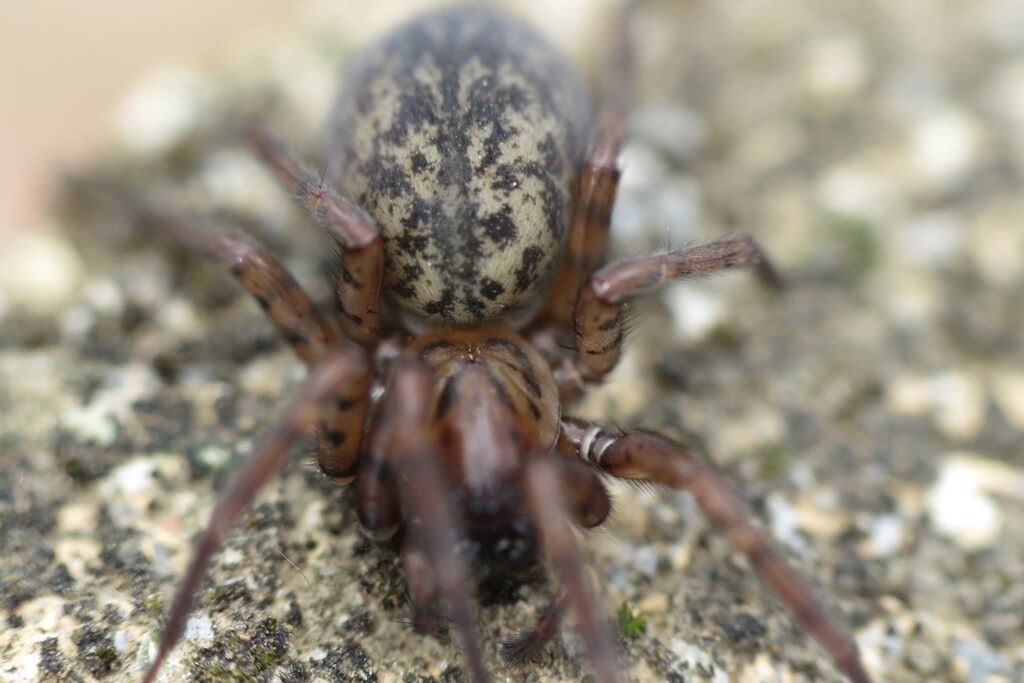
The abdomen is often the most useful identification feature. Rather than displaying simple stripes or solid coloration, Coras funnel weavers usually possess irregular marbled patterns that resemble weathered stone or scattered brush strokes. These markings can vary between individuals but generally create a textured, mottled appearance.
Body proportions also provide useful clues. The abdomen is typically somewhat elongated while the cephalothorax remains sturdy and well-developed. Together, these features create a balanced profile that differs from the rounded shape often seen in cobweb spiders.
Adult Coras spiders are relatively small. Most individuals are comparable in size to a sunflower seed, small coin, or paperclip segment when body length alone is considered. Their modest size often causes them to be overlooked unless viewed carefully.
The legs are moderately long and covered with fine hairs. Unlike some spider species with dramatically oversized legs, Coras funnel weavers maintain proportions that appear practical and streamlined. This balanced appearance contributes to their recognizable overall form.
Distinguishing Characteristics of Coras Funnel Weavers
One of the most important identification clues involves the spider’s web. Coras funnel weavers construct sheet-like webs connected to a narrow funnel-shaped retreat. Finding this characteristic structure often provides stronger identification evidence than coloration alone.
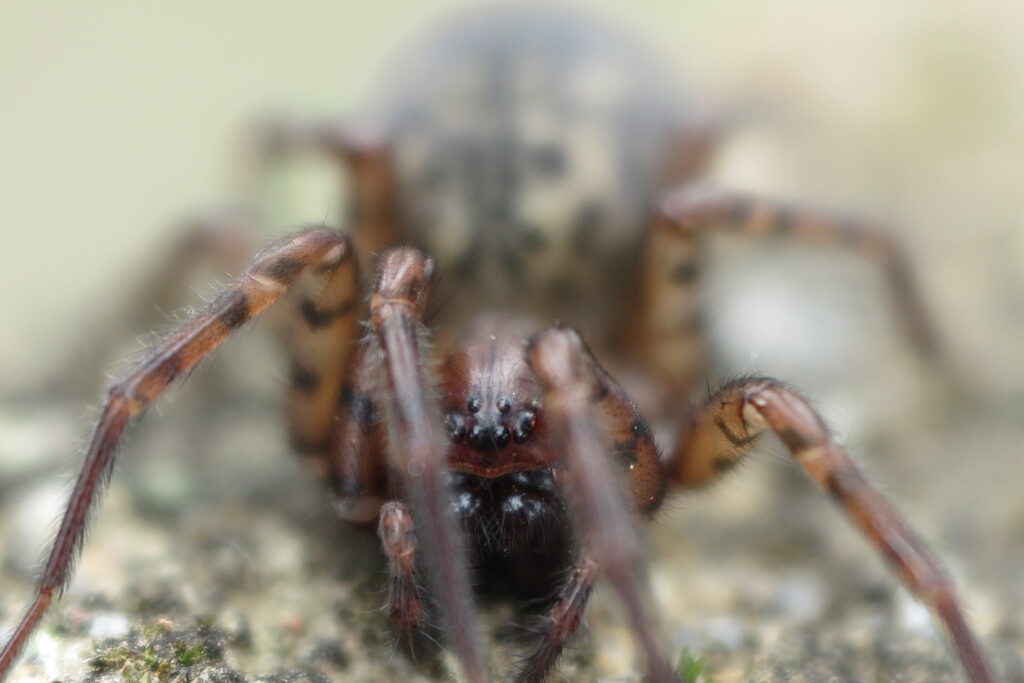
The cephalothorax frequently contains darker markings running along the upper surface. These patterns may appear as longitudinal streaks, bands, or irregular dark areas that contrast with the surrounding coloration. Combined with the abdominal markings, they help create the spider’s overall visual signature.
Spinnerets located at the rear of the abdomen can also assist with identification. These structures are often more visible than those found in many unrelated spider families. Careful observation of the rear body region may reveal subtle features associated with funnel-weaving spiders.
Texture is another useful characteristic. The body often appears slightly velvety due to the presence of numerous fine hairs. Under magnification, these hairs contribute to a soft, textured appearance that enhances camouflage and helps break up the spider’s outline.
The spider’s posture frequently reflects its association with funnel retreats. Individuals often rest with legs positioned outward while remaining partially concealed near the entrance of the funnel. This stance creates a distinctive appearance that experienced observers quickly learn to recognize.
When all these traits are considered together—mottled abdomen, balanced body shape, visible spinnerets, and funnel web construction—the identification process becomes considerably more reliable than relying on a single characteristic alone.
Coras Funnel Weaver vs Similar Spider Species
Grass spiders are among the most commonly confused species. Both belong to the funnel-weaver family and construct similar web types. However, grass spiders typically possess more obvious striping on the cephalothorax and noticeably longer spinnerets that project from the rear of the abdomen.
Wolf spiders create another frequent source of confusion. Their coloration often overlaps with that of Coras funnel weavers, particularly in brown and gray species. The most important difference is that wolf spiders do not build funnel webs and generally possess a more robust, athletic appearance.
Hacklemesh weavers and other ground-dwelling spiders may also resemble Coras species at first glance. However, differences in web structure, body proportions, and abdominal patterning usually become apparent during closer examination. The presence of a true funnel retreat remains an important identifying clue.
Some homeowners mistake Coras funnel weavers for medically significant spiders simply because of their coloration and rapid movements. In reality, the genus lacks the distinctive physical features associated with species such as brown recluses. Careful observation quickly reveals substantial differences in body structure and markings.
A useful comparison is to think of Coras funnel weavers as the “stone-patterned” members of the funnel-weaver group. Their marbled appearance often resembles natural rock surfaces, while many similar spiders display cleaner stripes or simpler markings. This visual texture is frequently one of the easiest traits to recognize in the field.
Accurate identification ultimately comes from evaluating multiple characteristics together. Web structure, body shape, coloration, spinnerets, and overall appearance all contribute important clues. When these features align, a Coras funnel weaver can often be identified confidently even without specialized equipment.
Popular Searches About Funnel Weaver Spiders
Explore Funnel Weaver Spider Guide
Explore More Wildlife

Support Encounters World
Help support wildlife photography and get behind the scenes discoveries on Patreon.