
Coras Funnel Weaver Web Guide: Funnel Web Structure, Function, and Identification
Quick Facts
Web Type: Funnel web
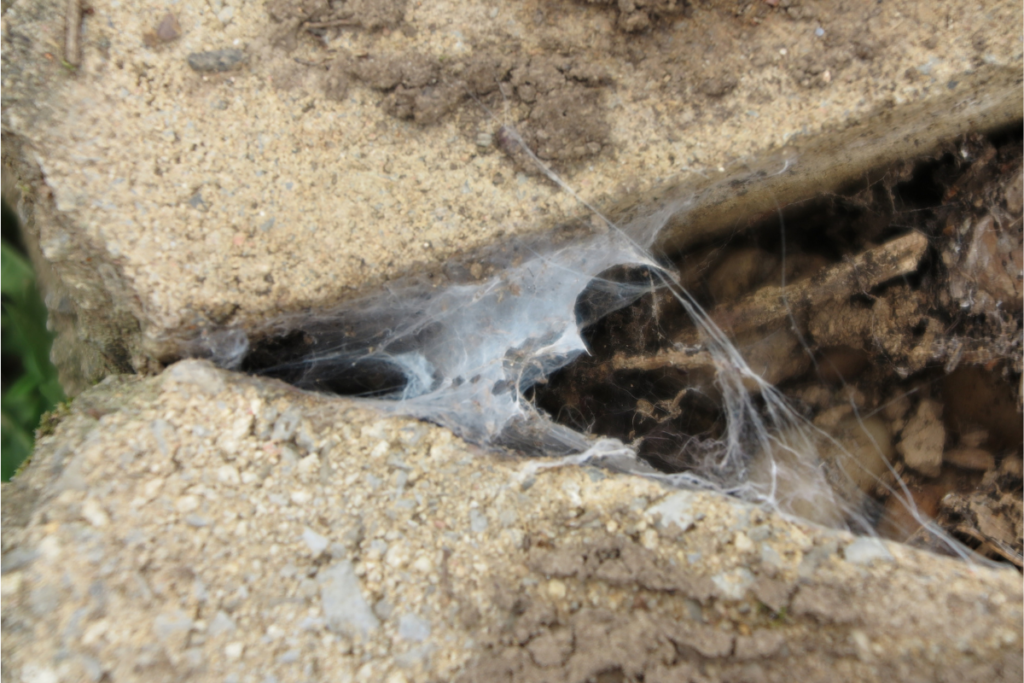
Web Structure: Flat sheet connected to a tubular retreat
Primary Purpose: Prey detection and capture
Web Location: Ground level, rocks, logs, walls, and sheltered crevices
Construction Material: Silk produced from abdominal spinnerets
Most Distinctive Feature: Hidden funnel-shaped retreat at one end of the web
Coras Funnel Weaver Web Introduction
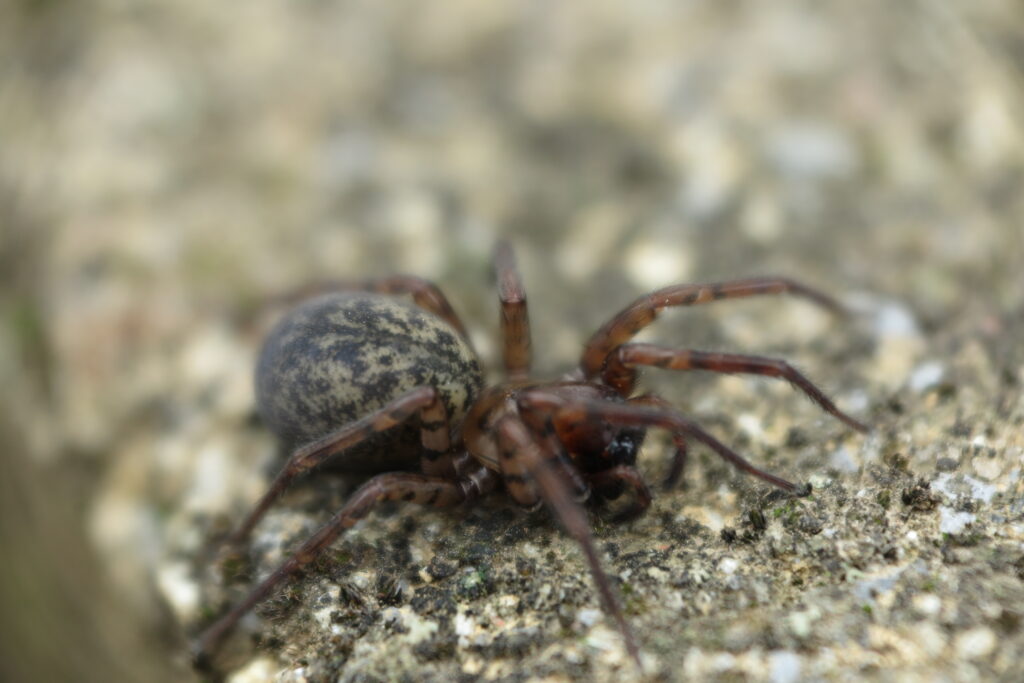
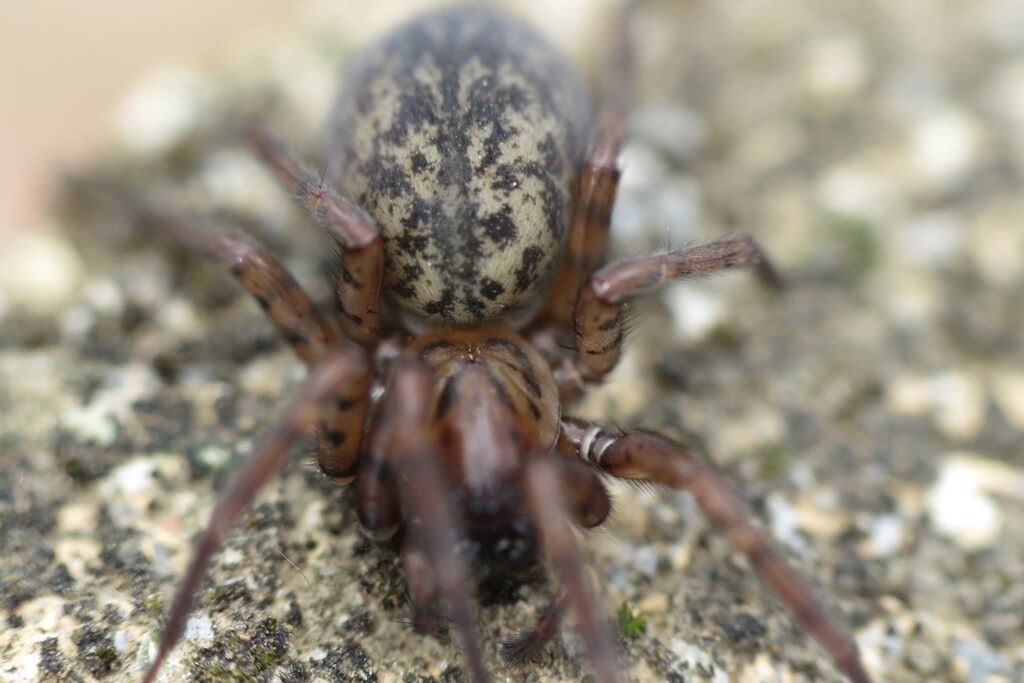
The Coras funnel weaver (Coras sp.) is best known for constructing one of the most distinctive web types found in North America. Members of this genus belong to the funnel-weaver family Agelenidae, a group of spiders recognized for producing silk structures that combine a broad sheet with a narrow retreat. These webs serve as both a home and a hunting platform throughout much of the spider’s life.
Across eastern portions of North America, Coras funnel weavers create webs in a variety of protected locations. Many remain hidden beneath rocks, inside crevices, along stone walls, or beneath other sheltered surfaces. Because the spider itself often stays concealed, the web is frequently the first sign that a Coras funnel weaver is present.
Unlike the symmetrical orb webs commonly associated with garden spiders, funnel webs appear more functional than decorative. Their design prioritizes speed, detection, and protection rather than visual symmetry. The structure may look simple at first glance, but it represents a highly specialized engineering solution developed through millions of years of evolution.
For naturalists and wildlife observers, learning to recognize these webs provides one of the easiest ways to locate Coras funnel weavers. Even when the spider remains hidden from view, the characteristic funnel shape often reveals its presence. Understanding the design and purpose of these webs offers valuable insight into the species’ unique lifestyle.
Coras Funnel Weaver Web Structure and Design
The typical Coras funnel weaver web consists of two primary sections: a horizontal sheet and a funnel-shaped retreat. The sheet portion spreads across nearby surfaces and functions as the main area where prey detection occurs. Attached to one side is a narrow tunnel that extends into a protected location where the spider spends much of its time.
The sheet often appears as a thin layer of silk stretched over uneven surfaces. Unlike sticky orb webs designed to trap flying insects, the sheet web functions more like a detection platform. Insects moving across the silk create vibrations that immediately alert the spider to their presence.
The funnel itself serves as the spider’s protected refuge. This tubular retreat may extend beneath a rock, into a crack, or deep within another sheltered location. From the outside, only the entrance may be visible, while the spider remains concealed farther inside.
The overall design can be compared to a house connected to a front yard. The sheet web acts as the open area where activity occurs, while the funnel serves as the secure interior space. This arrangement allows the spider to monitor a larger area while maintaining immediate access to protection.
Individual web size varies depending on the age of the spider, available space, and environmental conditions. Some webs cover only a small area, while others extend across surprisingly large sections of rock surfaces or debris. Despite differences in scale, the basic design remains remarkably consistent throughout the genus.
Coras Funnel Weaver Web Placement and Habitat Use
Location selection is one of the most important aspects of web construction. Coras funnel weavers typically build their webs in areas that provide both structural support and protection. The spider takes advantage of natural features that help anchor silk while shielding the retreat from disturbance.
Rocks are among the most commonly used web locations. Spaces beneath stones often provide stable conditions and secure hiding places where the funnel can remain protected. A lifted rock may reveal an entire web system that was previously invisible from above.
Woodlands provide numerous opportunities for web placement. Fallen logs, bark fragments, exposed roots, and natural crevices all offer surfaces suitable for construction. These environments frequently contain the structural complexity necessary for supporting both the sheet and funnel portions of the web.
Human-made structures are also utilized in many areas. Stone retaining walls, foundations, wood piles, and outdoor debris can function much like natural rock formations. These artificial environments often contain cracks and sheltered spaces that closely resemble the spider’s preferred natural settings.
Placement often reflects a balance between exposure and protection. The sheet portion usually occupies an area where passing prey can be detected, while the funnel remains hidden within a secure retreat. This arrangement maximizes hunting opportunities while minimizing risk to the spider.
The variety of locations used by Coras funnel weavers demonstrates the adaptability of their web-building strategy. As long as suitable surfaces and protected retreats are available, the spider can establish a functional web in many different environments.
Coras Funnel Weaver Web Function and Survival Advantages
The primary function of the funnel web is prey detection and capture. When a small insect crosses the sheet portion, vibrations travel through the silk toward the spider. These signals provide precise information about the location and movement of potential prey.
Speed is one of the greatest advantages of this web design. The spider can remain safely inside the funnel while monitoring activity on the sheet. Once prey is detected, it emerges rapidly and reaches the target within moments. The process resembles a sprinter launching from a starting block after waiting for a signal.
The funnel also serves as an effective defense system. If danger approaches, the spider can retreat deeper into the tunnel where predators may struggle to follow. This protective function reduces the likelihood of direct encounters with birds, reptiles, larger arthropods, and other threats.
Environmental protection represents another important benefit. The retreat provides shelter from weather fluctuations, disturbances, and accidental damage. While the sheet portion may occasionally require repairs, the protected funnel often remains intact even when surrounding conditions change.
The web functions as an extension of the spider’s sensory system. Rather than relying solely on eyesight, Coras funnel weavers use silk vibrations to gather information about their surroundings. In many ways, the web acts like a network of motion sensors capable of detecting activity across a broad area.
Among North American spiders, the funnel web is one of the most efficient combinations of hunting platform and protective shelter. Its design allows Coras funnel weavers to detect prey, avoid danger, conserve energy, and remain hidden within a single integrated structure. This remarkable adaptation is one of the defining characteristics that makes the genus so successful throughout its range.
Popular Searches About Funnel Weaver Spiders
Explore Funnel Weaver Spider Guide
Explore More Wildlife

Support Encounters World
Help support wildlife photography and get behind the scenes discoveries on Patreon.