
Coras Funnel Weaver vs Grass Spider: Key Differences in Identification, Webs, and Appearance
Quick Facts
Coras Funnel Weaver Scientific Name: Coras sp.
Grass Spider Scientific Name: Agelenopsis sp.
Spider Family: Agelenidae (Funnel Weavers)
Shared Feature: Funnel-shaped sheet webs
Main Identification Difference: Coras spiders have mottled bodies, while grass spiders typically have bold stripes and longer spinnerets
Most Common Misidentification: Coras funnel weavers are frequently mistaken for grass spiders
Coras Funnel Weaver vs Grass Spider Introduction
The Coras funnel weaver (Coras sp.) and the grass spider (Agelenopsis sp.) are among the most commonly confused spiders in North America. Both belong to the funnel-weaver family Agelenidae and share several physical characteristics that can make identification challenging. Their similar coloration, body shape, and web structure often cause observers to assume they are the same type of spider.
Across eastern and central portions of North America, these spiders frequently occur in overlapping regions. A homeowner, gardener, or naturalist may encounter either species beneath rocks, along structures, or within vegetation-rich environments. Because both groups are relatively common, confusion between them occurs regularly.
At first glance, distinguishing the two may seem difficult. Both are medium-sized spiders with brown and gray coloration, long legs, and funnel-shaped retreats. However, careful observation reveals consistent differences that can help separate them quickly and accurately.
Understanding these distinctions is useful for photographers, wildlife enthusiasts, and anyone interested in spider identification. By examining appearance, web construction, body proportions, and diagnostic features, it becomes much easier to determine whether a spider is a Coras funnel weaver or a grass spider.
Coras Funnel Weaver and Grass Spider Appearance Comparison
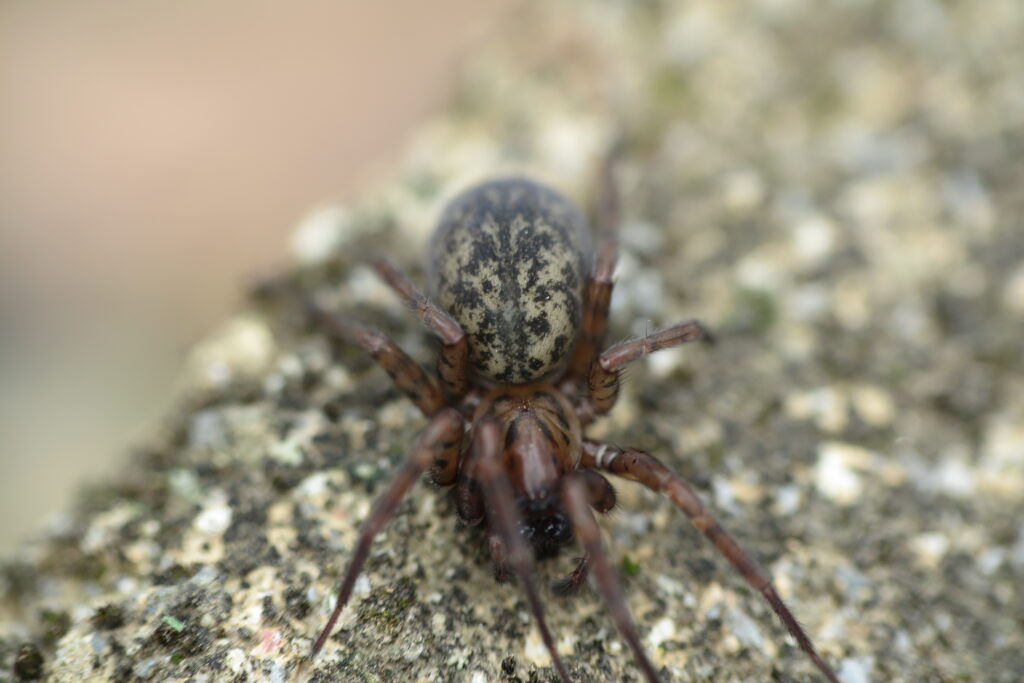
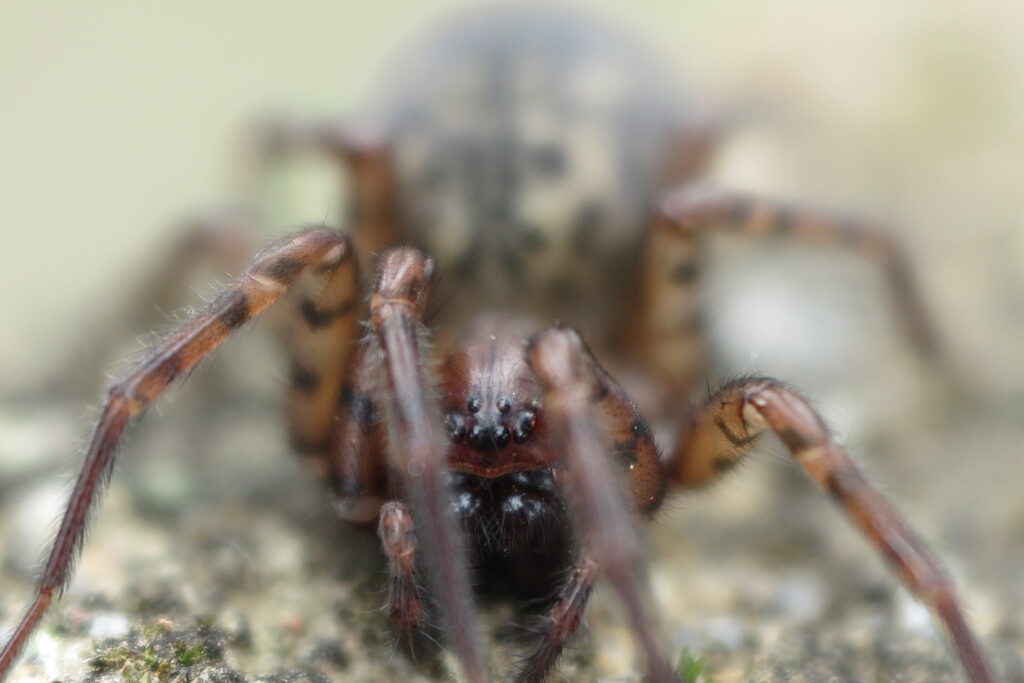
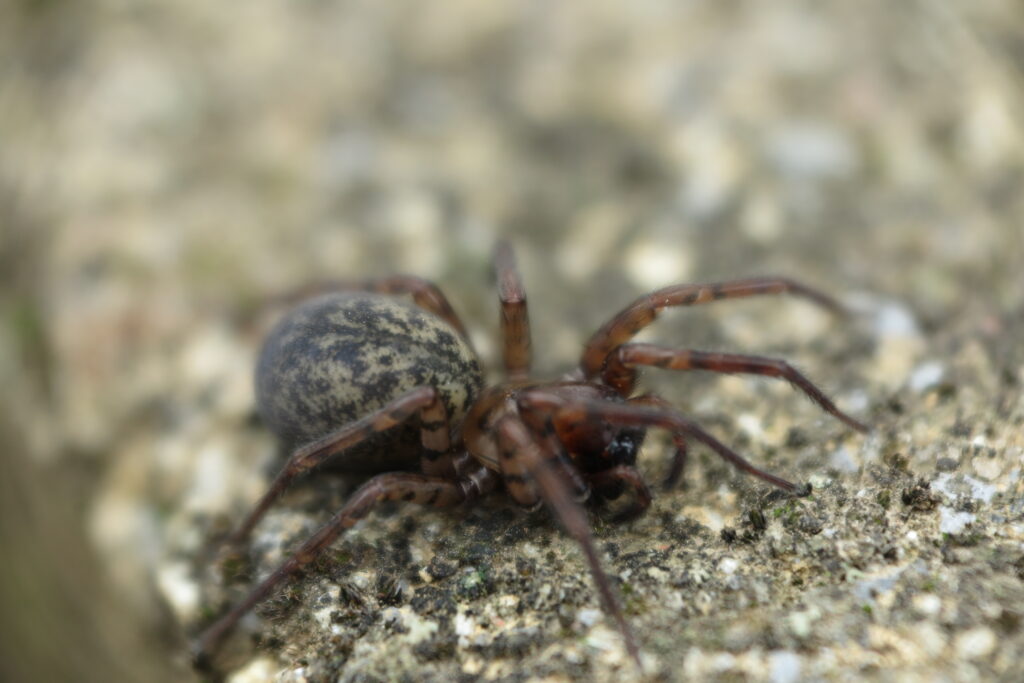
One of the easiest ways to distinguish these spiders is by examining body patterning. Coras funnel weavers typically display mottled, marbled, or stone-like markings across the abdomen. These patterns often resemble weathered rock surfaces or irregular brush strokes rather than clearly defined stripes.
Grass spiders generally exhibit a more organized appearance. Most species possess obvious longitudinal striping running along the cephalothorax and abdomen. These stripes create a cleaner and more structured pattern that stands out more prominently than the mottled markings of Coras spiders.
Body texture can also provide useful clues. Coras funnel weavers often appear darker and somewhat heavier-bodied, with a compact appearance that blends naturally against rocks and shaded surfaces. Grass spiders frequently look lighter and more streamlined, especially when viewed from above.
The cephalothorax offers another identifying feature. In grass spiders, pale stripes commonly border a darker central region, producing a highly recognizable pattern. Coras spiders may contain darker markings, but these patterns are usually less sharply defined and more irregular in appearance.
When viewed side by side, the difference can be compared to camouflage styles used in nature. Coras funnel weavers resemble mottled stone or bark textures, while grass spiders resemble linear patterns often seen in grasses and vegetation. This contrast becomes increasingly obvious with experience.
Spinnerets and Web Structure Differences
The most reliable physical difference between these spiders involves the spinnerets located at the rear of the abdomen. Grass spiders possess exceptionally long spinnerets that extend noticeably beyond the end of the body. These structures are often visible even from several feet away and serve as one of the best field identification features.
Coras funnel weavers also possess visible spinnerets, but they are generally shorter and less prominent. While still noticeable upon close examination, they rarely project as dramatically as those of grass spiders. This distinction often provides the quickest method of separating the two groups.
Both spiders construct funnel-shaped sheet webs, yet subtle differences can occur in placement and appearance. Grass spider webs are commonly built in lawns, shrubs, ornamental vegetation, and grassy areas. Their sheet webs often spread openly across vegetation where they can be easily seen.
Coras funnel weavers frequently place their webs in more concealed locations. Funnel retreats are often hidden beneath rocks, within crevices, or inside protected spaces where much of the structure remains partially concealed. The web itself may be less obvious than the large sheet webs commonly associated with grass spiders.
A useful comparison is to think of grass spider webs as more exposed and visible, while Coras funnel weaver webs often function from hidden positions. Although both employ similar engineering principles, their placement can provide valuable identification clues.
Coras Funnel Weaver vs Grass Spider Identification in the Field
Field identification becomes easier when multiple characteristics are considered together. Observers should avoid relying on a single feature and instead evaluate coloration, spinnerets, web placement, and overall appearance. Combining several clues produces far more accurate results than focusing on one trait alone.
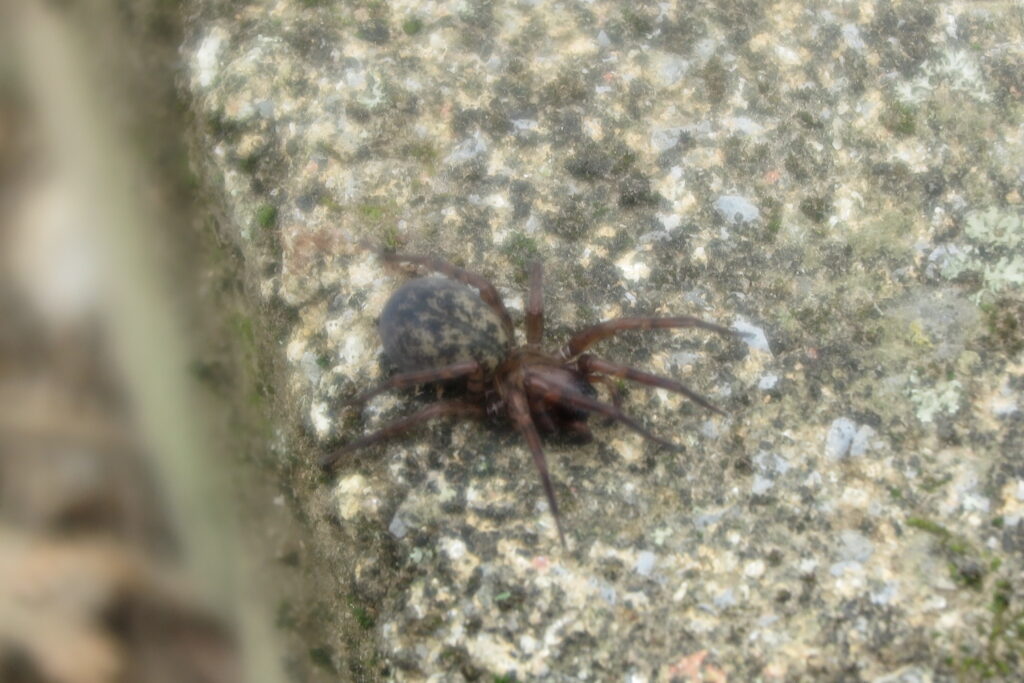
A spider discovered beneath a rock with a mottled abdomen and moderately visible spinnerets is more likely to be a Coras funnel weaver. The marbled appearance and preference for concealed retreats strongly support identification within the genus. These spiders often appear well adapted to blending into stone surfaces and shaded environments.
A spider found within a lawn web displaying long spinnerets and bold stripes is more likely to be a grass spider. The highly visible spinnerets alone often provide enough evidence for confident identification. Their appearance tends to look cleaner and more linear than that of Coras species.
Many people initially mistake both species for wolf spiders because of their brown coloration and ground-level presence. However, the presence of a funnel web immediately separates these funnel weavers from wolf spiders, which actively hunt without constructing such structures. This distinction eliminates one of the most common identification errors.
For photographers, the rear portion of the abdomen is often the most important area to capture. A clear image of the spinnerets can frequently resolve identification questions within seconds. This single feature is one of the most valuable diagnostic tools available when comparing Coras funnel weavers and grass spiders.
Although they share ancestry, web-building habits, and similar coloration, Coras funnel weavers and grass spiders possess enough unique characteristics to be distinguished reliably. Careful observation of body patterning, spinneret length, web placement, and overall appearance allows even beginners to separate these two commonly confused funnel-weaving spiders with confidence.
Popular Searches About Funnel Weaver Spiders
Explore Funnel Weaver Spider Guide
Explore More Wildlife

Support Encounters World
Help support wildlife photography and get behind the scenes discoveries on Patreon.