
Spring Field Cricket Identification Guide: How to Identify Spring Field Crickets in the Wild
Quick Facts
Identification Difficulty: Moderate
Primary Coloration: Black to Dark Brown
Average Adult Size: 0.6–1 inch (15–25 mm)
Body Shape: Robust and Compact
Key Identification Features: Dark body, long antennae, enlarged hind legs, broad pronotum
Most Common Confusion Species: Fall Field Cricket and other Gryllus species
Spring Field Cricket Identification Introduction and Species Recognition
The Spring Field Cricket (Gryllus veletis) is one of the most frequently encountered field cricket species across portions of eastern and central North America. Although many people recognize crickets in a general sense, distinguishing one species from another can be surprisingly challenging. Several closely related field crickets share similar body shapes, coloration, and overall appearance, making careful observation important for accurate identification.
A naturalist walking through a meadow, inspecting vegetation near a woodland edge, or turning over a rock may encounter this species without immediately realizing it. At first glance, a Spring Field Cricket often appears as a dark, sturdy insect that quickly blends into its surroundings. Closer examination reveals a combination of physical characteristics that separate it from many other common crickets.
The species is widely distributed throughout much of its range and may be encountered in a variety of landscapes during the warmer months of the year. Because it emerges relatively early compared to some related species, seasonal timing can provide an additional clue when attempting identification. Observers often notice these insects during spring and early summer before other field cricket species become more abundant.
Successful identification requires looking beyond a single characteristic. Body coloration, proportions, antenna length, overall build, and visible structural features all contribute to the identification process. When these traits are considered together, the Spring Field Cricket becomes much easier to recognize in the field.
Spring Field Cricket Physical Appearance and Visible Traits
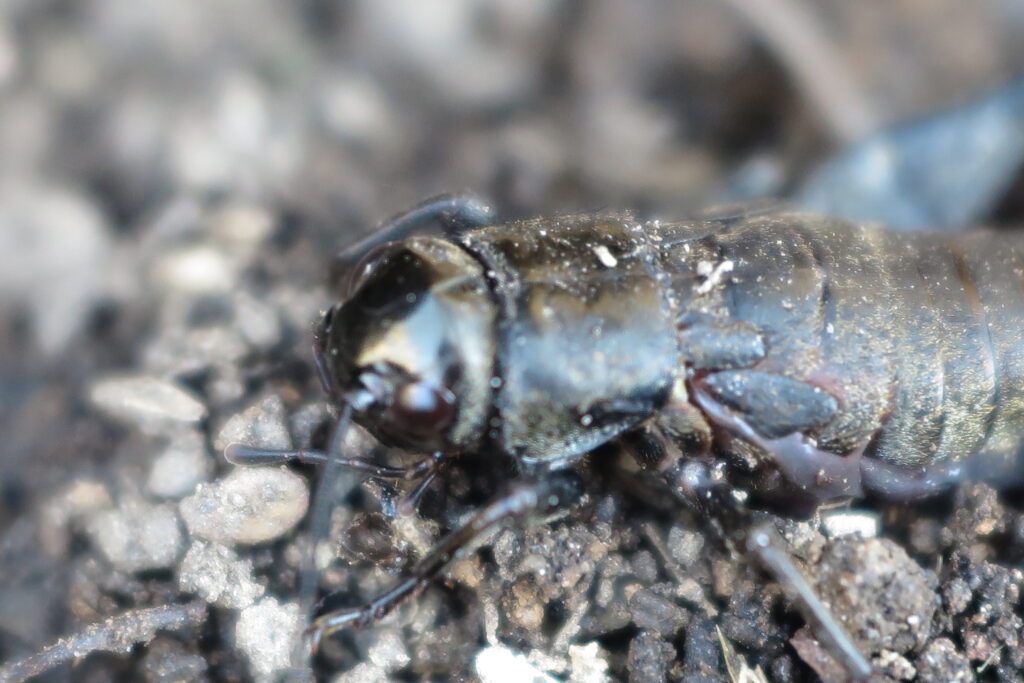
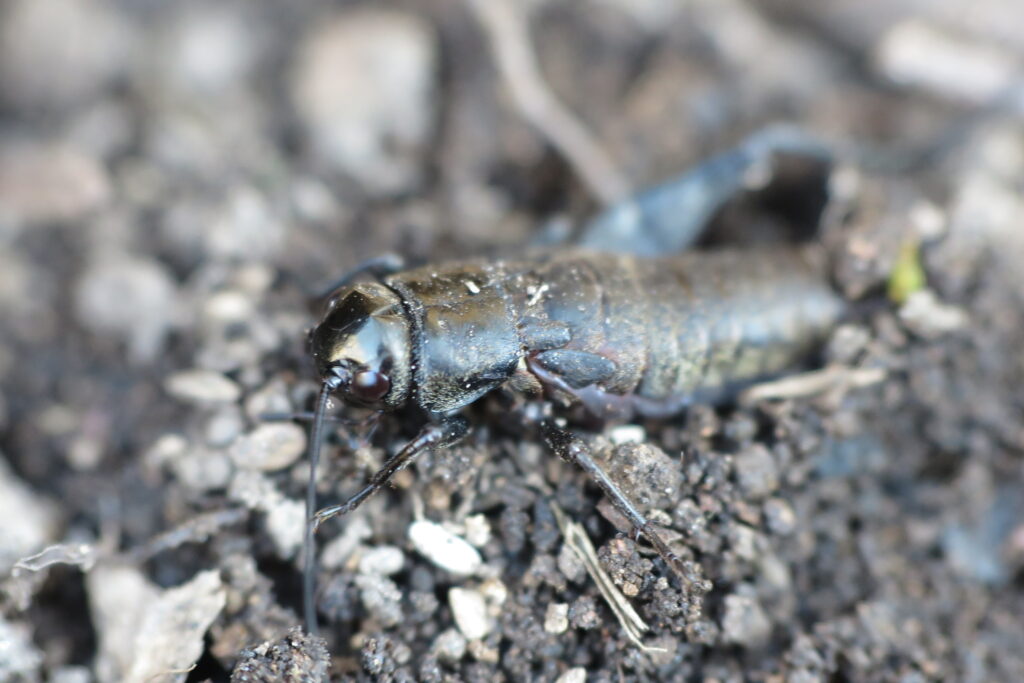
One of the first features most observers notice is the cricket’s dark coloration. Adult Spring Field Crickets are typically black, charcoal gray, or very dark brown. Under direct sunlight, subtle bronze or reddish highlights may occasionally appear across portions of the body, creating slight variation between individuals.
The body itself appears compact and heavily built. Compared to many slender insects of similar length, the Spring Field Cricket possesses a noticeably thicker thorax and abdomen. This robust appearance gives it a sturdy look that often stands out when viewed closely against soil, leaves, or vegetation.
Adult individuals generally measure between 15 and 25 millimeters in length. A useful comparison is the size of a large grape or the width of an adult thumb. While not particularly large by insect standards, the species often appears bigger than expected because of its broad body structure and powerful legs.
Long antennae extend forward from the head and frequently exceed the length of the body itself. These threadlike structures are among the most recognizable cricket features and help distinguish the species from many grasshoppers. When viewed from above, the antennae create a balanced profile that contributes significantly to the insect’s overall appearance.
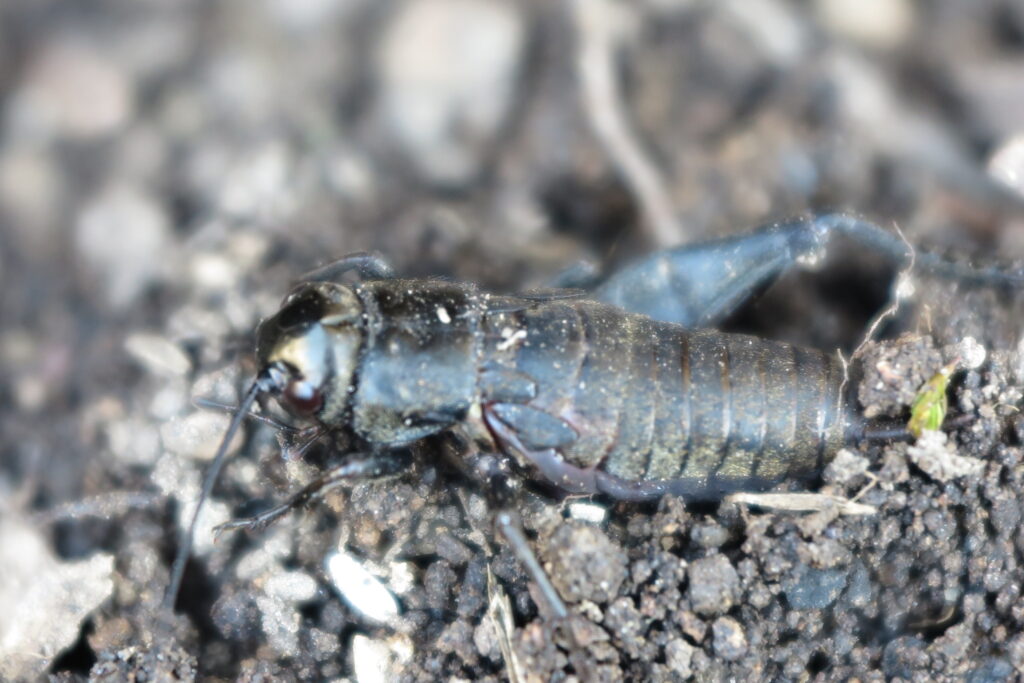
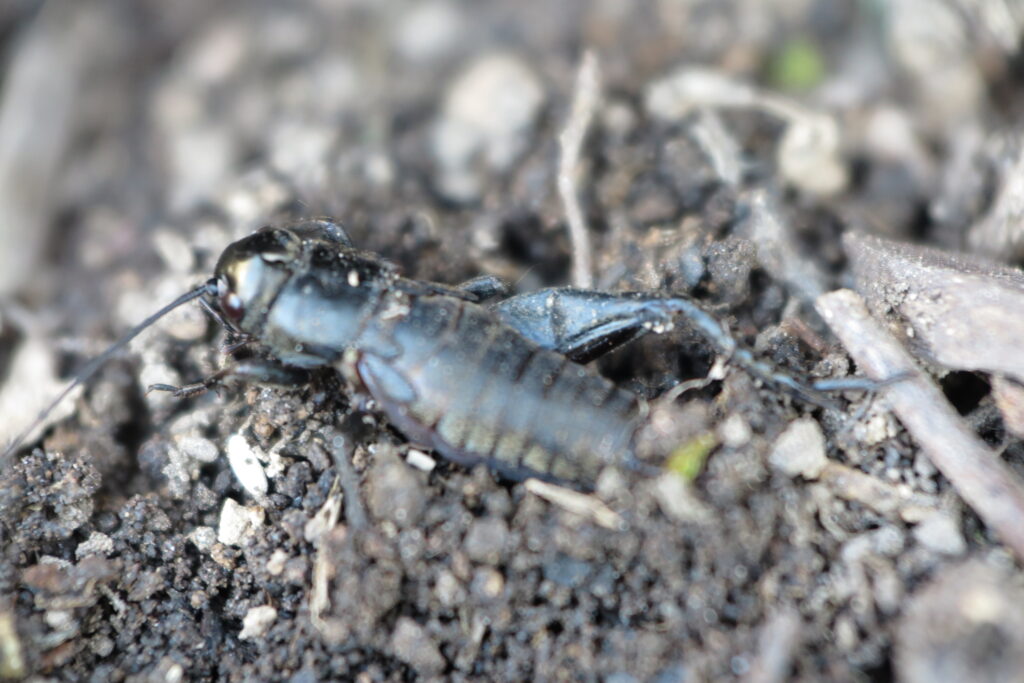
The hind legs are enlarged and muscular compared to the front legs. Their size immediately attracts attention and creates a distinctive silhouette. Even when the cricket is resting motionless, these powerful legs remain one of the easiest features to observe and recognize.
Key Characteristics Used to Identify Spring Field Crickets
Beyond overall appearance, several structural traits help separate the Spring Field Cricket from similar species. One of the most important is the shape of the pronotum, the shield-like plate located directly behind the head. This structure appears broad, smooth, and slightly rounded, contributing to the insect’s characteristic profile.
The head is proportionally large and rounded when viewed from the front. Large compound eyes sit on either side, creating a symmetrical appearance. Combined with the long antennae, the head gives the insect a recognizable facial profile that differs subtly from other cricket species.
The abdomen consists of clearly visible segments arranged in a layered pattern. Under close observation, these segments resemble overlapping plates and add texture to the insect’s appearance. This segmented structure becomes especially noticeable in high-quality photographs or magnified views.
Wing appearance can also provide useful clues. Adult Spring Field Crickets possess folded wings positioned along the back, though wing length and visibility may vary somewhat between individuals. The wings typically remain close to the body, creating a streamlined appearance rather than an exaggerated or elongated profile.
Identification becomes more reliable when multiple characteristics are examined together. Color alone is rarely sufficient because several related species display similar shades. By combining body shape, size, pronotum structure, antenna length, and overall proportions, observers can make a much more confident identification.
Spring Field Cricket vs Similar Cricket Species
The species most frequently confused with the Spring Field Cricket is the Fall Field Cricket (Gryllus pennsylvanicus). Both belong to the same genus and share many visual similarities. In many cases, seasonal timing provides one of the most practical clues, as Spring Field Crickets generally become active earlier in the year.
Other members of the Gryllus genus can also create identification challenges. Many possess dark coloration, enlarged hind legs, and similar body proportions. Because of this overlap, photographs showing multiple body angles often improve identification accuracy compared to observations based on a single view.
Grasshoppers are another group commonly confused with field crickets by inexperienced observers. However, grasshoppers typically possess shorter antennae and a different body profile. The Spring Field Cricket’s exceptionally long antennae provide one of the quickest ways to separate it from most grasshopper species.
Camel crickets present a different type of confusion. Although both belong to the broader cricket group, camel crickets possess a humpbacked appearance and lack the typical field cricket body structure. Their elongated legs and arched bodies create a noticeably different silhouette when compared side by side.
For most observers, successful identification comes from recognizing the overall combination of traits rather than focusing on a single feature. A dark, compact cricket with long antennae, enlarged hind legs, a broad pronotum, and seasonal spring occurrence strongly suggests a Spring Field Cricket. When these characteristics are evaluated together, distinguishing the species becomes considerably easier even among closely related crickets.
Popular Searches About Spring Field Crickets
Explore Spring Field Cricket Guide
Explore More Wildlife

Support Encounters World
Help support wildlife photography and get behind the scenes discoveries on Patreon.