Bugleweed Flower Guide: Blooming Season, Flower Structure, and Identification
Quick Facts
Flower Color: Blue, Violet, Purple, Pink, or White
Blooming Season: Spring to Early Summer
Flower Type: Two-Lipped Tubular Flowers
Flower Arrangement: Dense Vertical Spikes
Pollination Method: Insect Pollination
Flowering Height: 4–12 Inches
Most Distinctive Feature: Upright Purple Flower Spikes Above Groundcover Foliage
Bugleweed Flowers and Seasonal Color Displays
Among the most noticeable features of Bugleweed (Ajuga reptans) are its colorful flower spikes that emerge during spring. These blooms transform low-growing patches of foliage into vibrant displays that attract attention from gardeners, pollinators, and nature enthusiasts alike. The flowering period often represents the plant’s most visually striking stage of the year.
Native to parts of Europe, western Asia, and North Africa, Bugleweed has become widely cultivated throughout temperate regions because of its ornamental value. While the foliage remains attractive for much of the growing season, the flowers provide the dramatic burst of color that has helped make the species a favorite landscape plant. Large colonies in bloom can create impressive carpets of blue and purple across garden beds and borders.
The flowering display is particularly eye-catching because it rises above the dense leaf layer below. This creates a distinct visual contrast that makes the blooms stand out even from a distance. In many landscapes, Bugleweed becomes one of the most noticeable flowering groundcovers during peak bloom.
Flowering also serves an important ecological purpose. The blooms provide nectar and pollen for a variety of insects while supporting the plant’s reproductive processes. As a result, the flowers are not only attractive but also play a central role in the species’ life cycle.
Bugleweed Flower Structure and Appearance
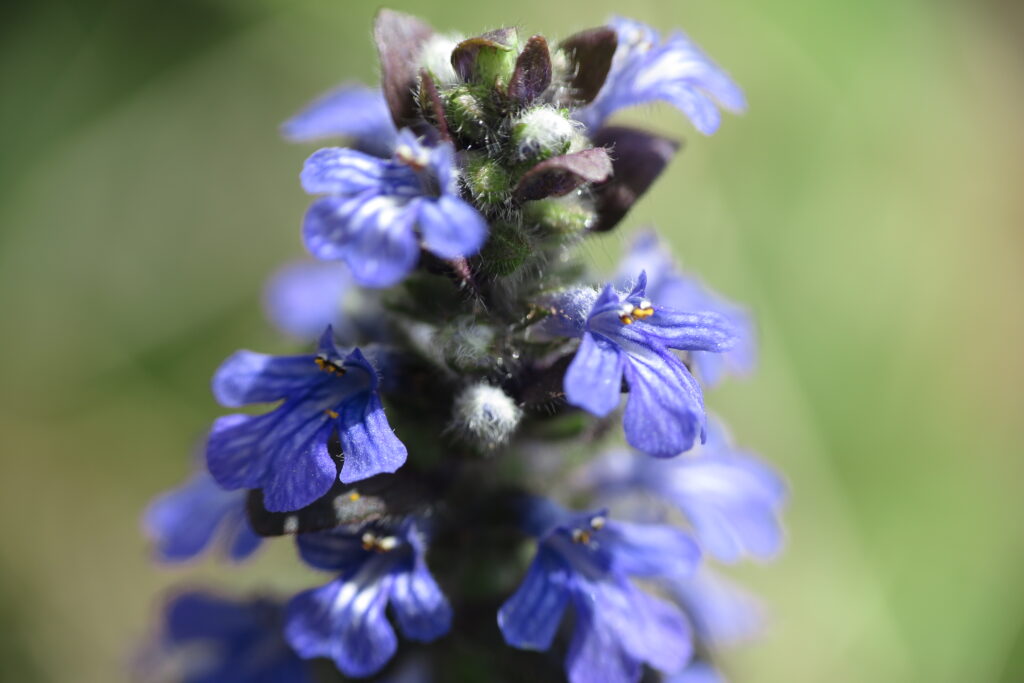
Each Bugleweed flower is relatively small when viewed individually, but the arrangement of many flowers together creates a highly visible floral display. The blooms are tubular and possess the two-lipped structure typical of many members of the mint family. This shape provides a useful clue when identifying the plant.
The upper portion of the flower forms a protective hood-like structure, while the lower portion creates a landing platform for visiting insects. This design allows pollinators to access nectar while making contact with reproductive structures. The arrangement is both functional and visually distinctive.
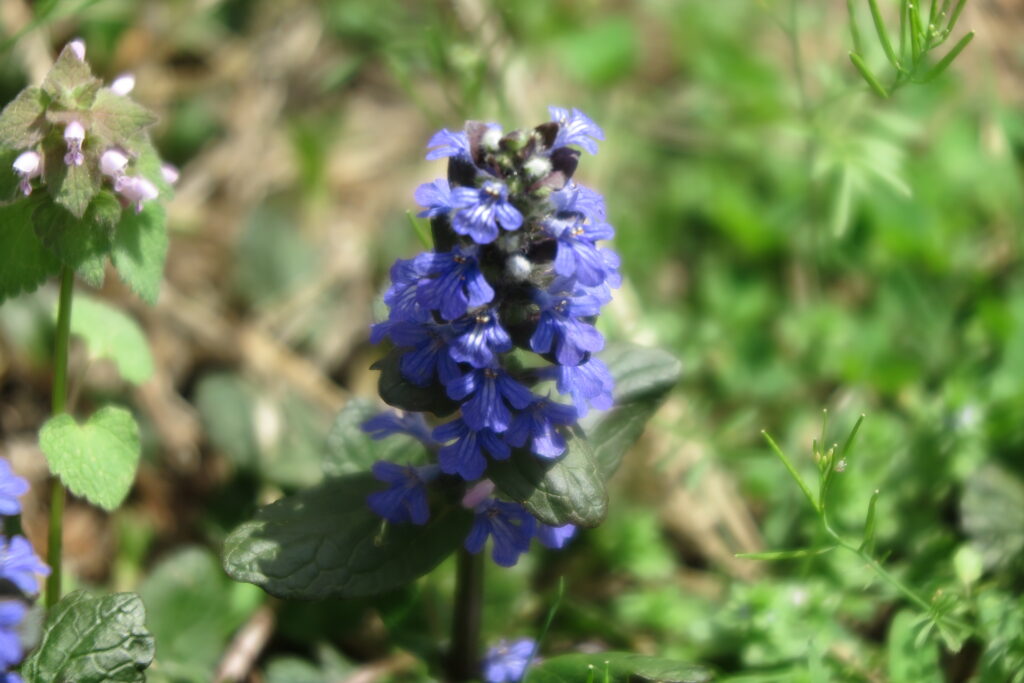
Flowers are stacked in tiers along upright stems, producing dense spikes that may contain dozens of individual blooms. A useful comparison is a decorative candle covered with rows of tiny blossoms from base to tip. This vertical arrangement distinguishes Bugleweed from many other low-growing flowering plants.
Color variation is another notable feature. Most wild and cultivated plants display shades of blue, violet, or purple, though pink and white varieties also occur. The cooler color palette contributes significantly to the plant’s ornamental appeal and helps explain its popularity in gardens.
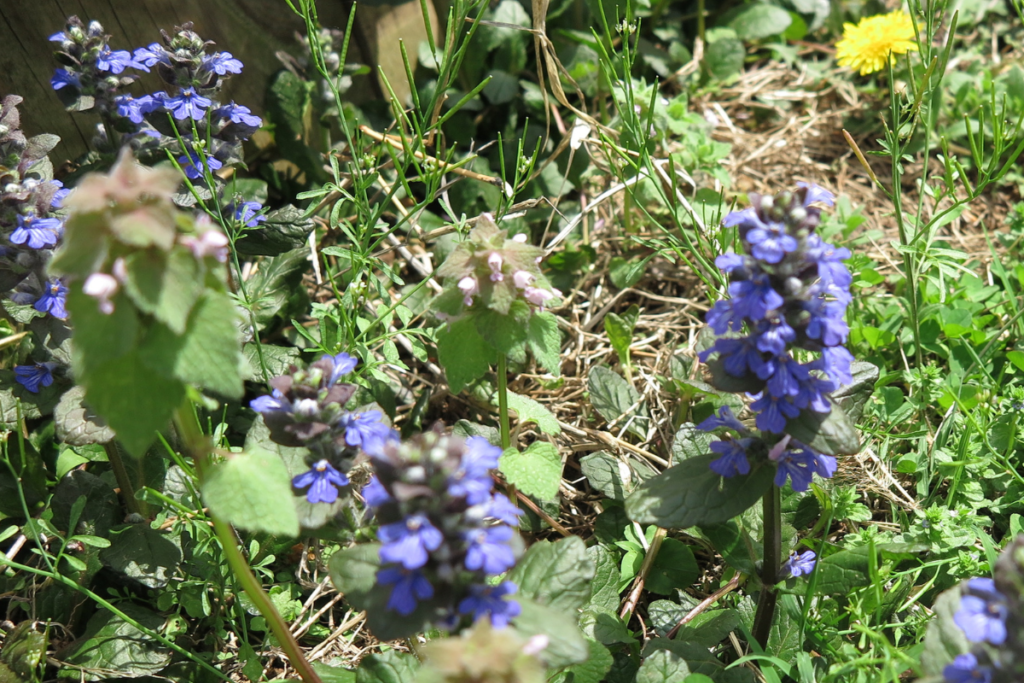
Flower spikes often extend well above the foliage layer. This elevation improves visibility to pollinators and creates a striking contrast between the colorful blooms and the darker leaves below. Together, flower shape, arrangement, and color make Bugleweed one of the most recognizable flowering groundcovers available.
Bugleweed Blooming Season and Flower Development
The flowering season typically begins during spring when temperatures become consistently mild. At this time, developing flower stems emerge from the foliage and gradually elongate. Over the following weeks, buds open sequentially along the spike, creating an extended display rather than a brief burst of color.
Bloom duration varies depending on climate, weather, and growing conditions. In many regions, flowering continues from mid-spring into early summer. Cooler temperatures may prolong the display, while unusually hot conditions can shorten the blooming period.
A useful comparison is a series of lights turning on one section at a time. Rather than all flowers opening simultaneously, blooms often appear progressively along the stem. This staggered development helps maintain visual interest for a longer period.
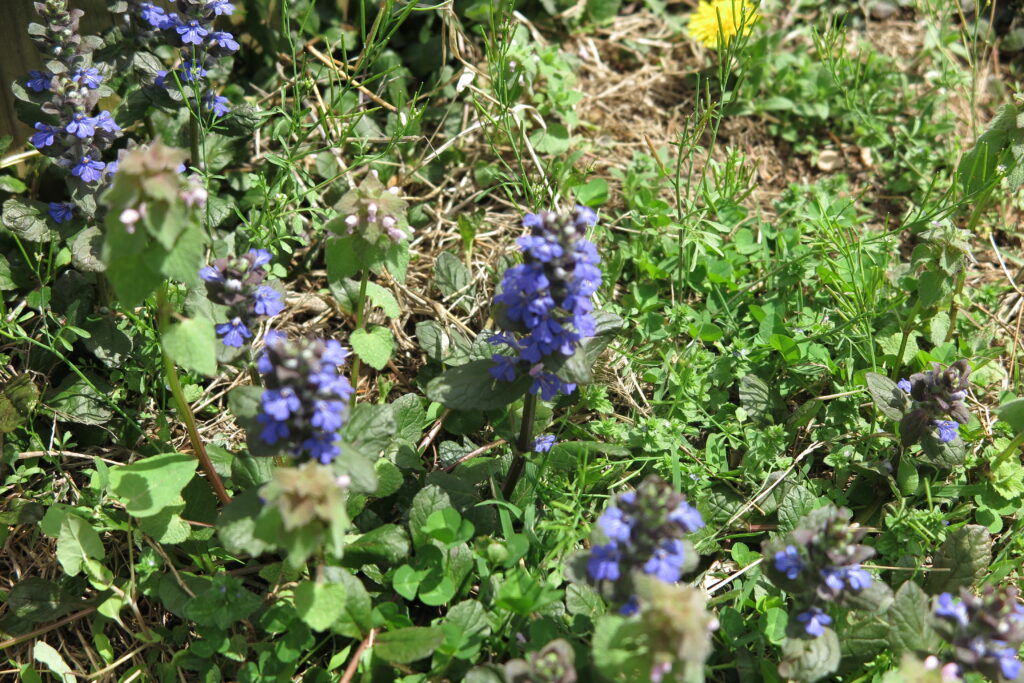
Peak flowering occurs when multiple spikes bloom at once across a colony. During this stage, patches of Bugleweed may appear almost entirely covered in blue-purple flowers. Large plantings can create dramatic seasonal displays that rival those of much larger ornamental species.
As flowering concludes, the blooms gradually fade and reproductive structures begin developing. Although the colorful display eventually ends, the foliage continues contributing ornamental value throughout much of the remaining growing season.
Identifying Bugleweed Flowers and Avoiding Common Mistakes
Flower spikes are often the easiest feature to use when identifying Bugleweed in the field. Few groundcover plants combine dense creeping foliage with such prominent upright floral columns. Observing this combination immediately narrows the range of possible species.
One common source of confusion involves Creeping Charlie (Glechoma hederacea). Both plants belong to the mint family and produce purple-toned flowers. However, Creeping Charlie flowers appear individually or in small clusters along creeping stems rather than forming tall, dense flower spikes.
Another useful identification clue is the arrangement of blossoms. Bugleweed flowers occur in distinct whorls stacked vertically along the stem. This pattern resembles floors within a small tower, creating a structured appearance that differs from the looser flower arrangements found in many similar plants.
Color alone should not be used for identification because several unrelated species also produce blue or purple flowers. Instead, observers should examine flower placement, stem structure, and overall plant form. Combining multiple characteristics provides a much more reliable identification.
A useful comparison is recognizing a building by both its shape and architecture rather than its paint color. The flower spikes, tiered bloom arrangement, and two-lipped blossoms work together to create a unique floral signature. When these features are observed together, Bugleweed becomes one of the easiest flowering groundcovers to identify in gardens, landscapes, and naturalized settings.
Popular Searches About Bugleweed
Explore Bugleweed Guide
Explore More Plants

Support Encounters World
Help support wildlife photography and get behind the scenes discoveries on Patreon.