Red Lionfish Lifespan Guide: How Long Do Red Lionfish Live?
Quick Facts
Average Lifespan: 10–15 Years
Maximum Recorded Lifespan: Approximately 15+ Years
Average Adult Size: 12–15 Inches (30–38 cm)
Global Range: Indo-Pacific; Invasive in the Atlantic, Caribbean, and Gulf of Mexico
Conservation Status: Least Concern
Notable Feature: Venomous Spines and Long Ornamental Fins
Introduction: Understanding the Lifespan of the Red Lionfish
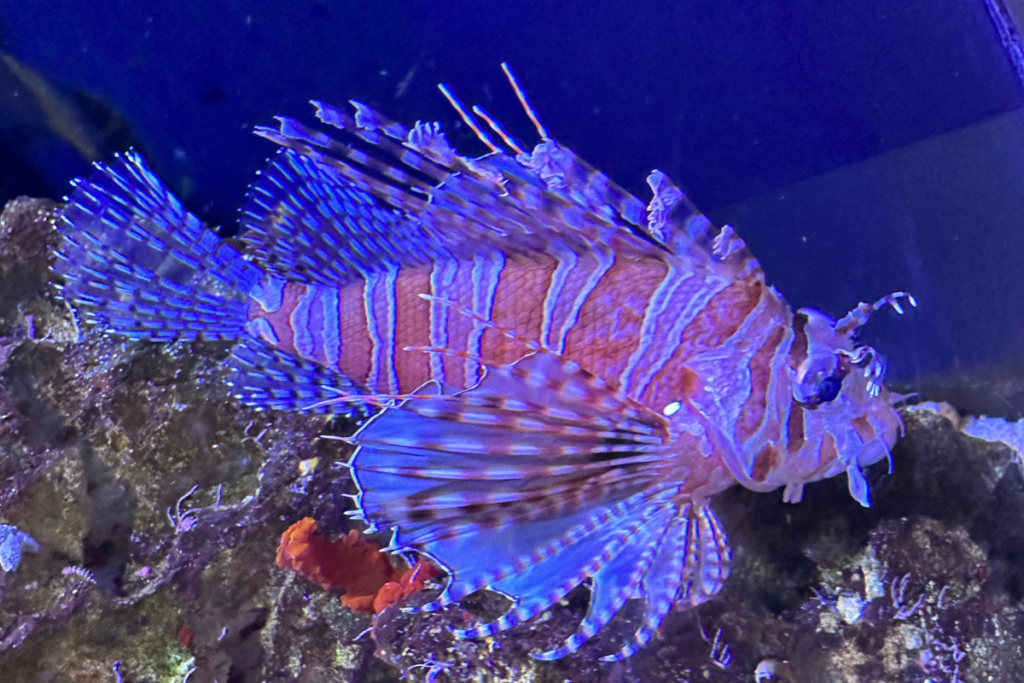
The red lionfish is one of the most recognizable marine fish found in tropical waters around the world. Known for its dramatic striped pattern and flowing fins, this species has become famous both within its native Indo-Pacific range and throughout regions where it has established invasive populations. Its distinctive appearance often attracts immediate attention from divers and aquarium enthusiasts alike.
Lionfish are commonly encountered throughout warm coastal waters, particularly in tropical and subtropical regions. Their range extends from the Indian Ocean through parts of the Pacific Ocean, while invasive populations now occupy large portions of the Caribbean Sea, Gulf of Mexico, and western Atlantic coastline. This widespread distribution exposes the species to a variety of environmental conditions throughout its life.
One aspect of the red lionfish that receives less attention than its appearance is its longevity. Many reef fish live relatively short lives, while others survive for decades. The lionfish falls somewhere in between, possessing a lifespan that allows individuals to persist long enough to influence ecosystems and establish stable populations.
Understanding how long red lionfish live provides important insight into their success as a species. Lifespan influences population growth, reproduction, and long-term survival. By examining the life expectancy of lionfish, researchers gain a clearer picture of how these fish maintain their presence across such a vast geographic range.
Red Lionfish Lifespan Overview and Life Expectancy
Red lionfish commonly live between 10 and 15 years under favorable conditions. This lifespan places them among the longer-lived reef fish species, particularly when compared to smaller tropical fish that may survive only a few years. Their ability to persist for more than a decade contributes significantly to their success in marine ecosystems.
Not every lionfish reaches its maximum potential age. Environmental factors, predation pressure during early life stages, disease, and competition can all influence survival rates. Individuals that successfully navigate these challenges often enjoy relatively long adult lives compared to many other reef-associated fish.
In aquarium settings, red lionfish have occasionally reached or exceeded the upper end of their expected lifespan when provided with stable conditions and consistent care. Controlled environments reduce many of the natural challenges faced by wild populations. While captive lifespans do not always reflect conditions in nature, they provide useful insight into the species’ biological potential.
Compared to species such as clownfish, which may occasionally exceed twenty years in captivity, lionfish generally have somewhat shorter maximum lifespans. However, they live considerably longer than many small reef fish that complete their entire life cycle within only a few years. This balance of moderate growth and relatively long survival helps explain their ability to maintain strong populations over time.
Growth, Maturity, and Lifespan Development in Red Lionfish
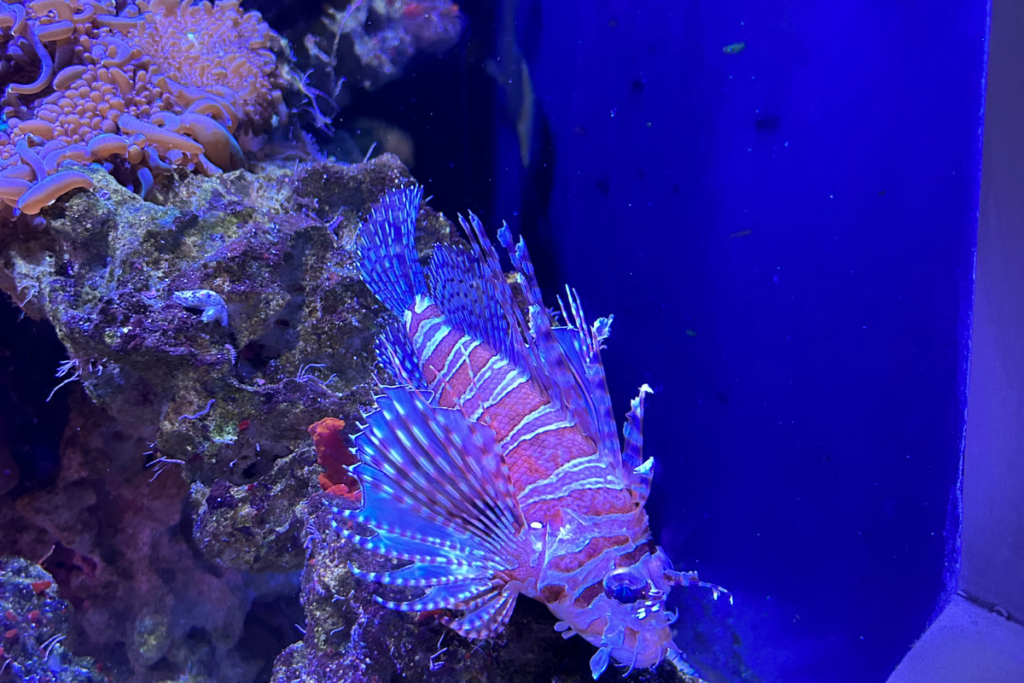
The lifespan of a lionfish can be better understood by examining its growth process. Young lionfish begin life as tiny larvae drifting within ocean currents before gradually developing into recognizable juveniles. During this stage, survival rates are often lower due to the numerous challenges faced by developing marine organisms.
As juveniles mature, growth occurs steadily over several years. Lionfish reach reproductive maturity relatively early compared to their overall lifespan, allowing individuals to contribute to future generations while still having many years of life ahead. This combination of early maturity and extended longevity provides a significant population advantage.
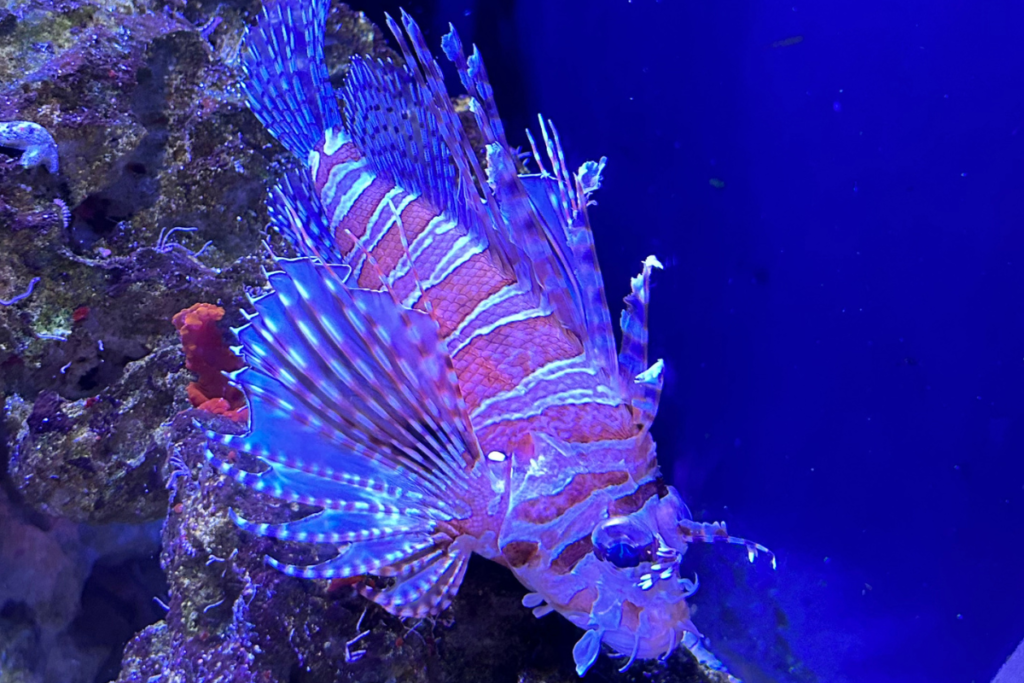
Adult lionfish spend the majority of their lives within their mature growth phase. During this period, physical development slows while body condition and overall health become increasingly important. Well-established adults may remain active members of marine communities for many years after reaching full size.
Older lionfish often display subtle signs of aging, although determining age in wild individuals can be difficult without scientific examination. Researchers frequently use growth structures and other biological indicators to estimate age. These methods help reveal how long individuals survive and provide valuable information for population studies throughout their range.
Why Red Lionfish Longevity Matters in Marine Ecosystems
The relatively long lifespan of the red lionfish influences its ecological significance. Species that survive for many years have more opportunities to reproduce and contribute to population stability. In the case of lionfish, longevity supports the continued presence of established populations across broad geographic areas.
Long-lived fish often occupy important positions within marine communities because they remain part of the ecosystem for extended periods. Their continued presence contributes to overall ecological structure and influences the balance of species within tropical marine environments. This effect becomes especially noticeable when populations reach high densities.
In regions where lionfish are considered invasive, lifespan becomes an important factor in management efforts. Individuals that survive for more than a decade can continue contributing to population growth for many years. As a result, understanding longevity helps researchers estimate future population trends and evaluate long-term ecological impacts.
From a broader biological perspective, the lifespan of the red lionfish demonstrates the advantages of combining moderate growth, early maturity, and long-term survival. These characteristics have helped the species thrive across both native and introduced regions. Whether observed on Indo-Pacific reefs or Atlantic coastlines, the lionfish’s lifespan remains one of the key factors behind its remarkable success as a marine fish.
Popular Searches About Red Lionfish
Explore Red Lionfish Guide
Explore More Exhibits

Support Encounters World
Help support wildlife photography and get behind the scenes discoveries on Patreon.