Red Lionfish Anatomy Guide: Exploring the Body Structure of a Red Lionfish
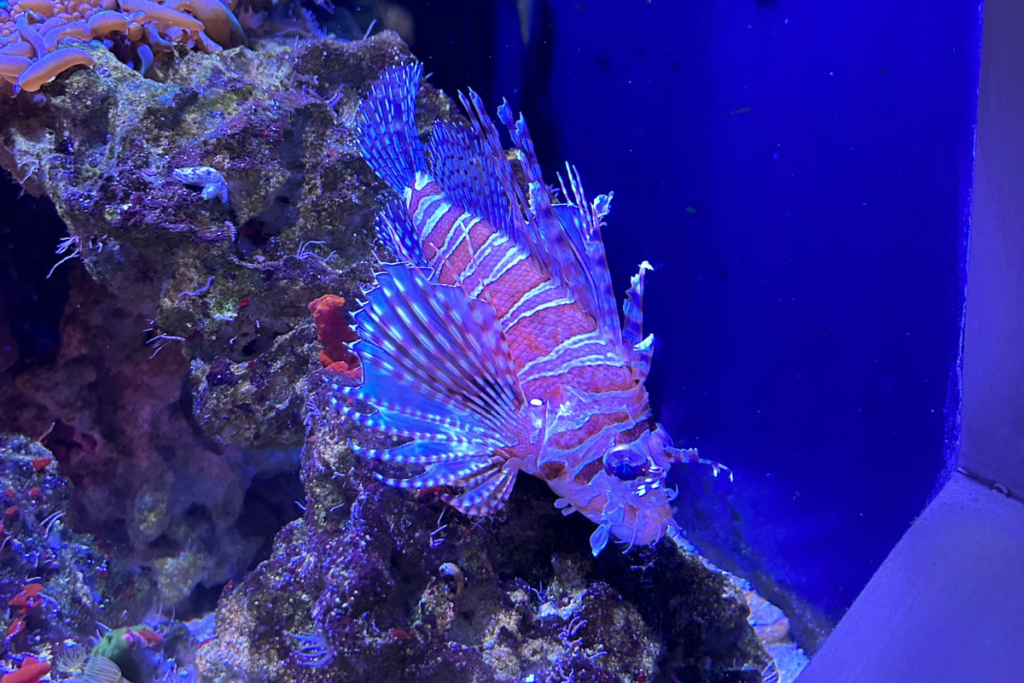
Quick Facts
Body Type: Deep-Bodied Marine Fish
Average Length: 12–15 Inches (30–38 cm)
Lifespan: 10–15 Years
Global Range: Indo-Pacific; Atlantic, Caribbean, and Gulf of Mexico (Invasive Range)
Conservation Status: Least Concern
Notable Anatomical Feature: Venomous Dorsal, Pelvic, and Anal Spines
Introduction: Understanding Red Lionfish Anatomy
The red lionfish is one of the most recognizable fish found in tropical marine environments. Instantly identifiable by its dramatic fins and striped appearance, this species possesses a body structure unlike most other reef fish. Its anatomy combines ornamental features with specialized adaptations that make it one of the most distinctive fish in the ocean.
Native to the Indo-Pacific region, the red lionfish naturally occurs throughout a vast area extending from eastern Africa to parts of Southeast Asia and the western Pacific. Today, it is also widely known throughout the Caribbean Sea, Gulf of Mexico, and western Atlantic Ocean. Across this extensive range, its physical appearance remains remarkably consistent.
Unlike many fish that rely on streamlined shapes for speed, the lionfish exhibits a more elaborate body design. Long spines, broad fins, and striking color patterns create a unique silhouette that can be recognized even from a considerable distance underwater. Few marine species possess such a combination of structural complexity and visual impact.
Studying lionfish anatomy provides insight into how form and function work together in marine animals. Every part of the fish, from its head structure to its fin arrangement, contributes to its overall design. These features make the red lionfish an excellent example of specialized anatomy within tropical reef ecosystems.
Red Lionfish Body Structure and External Appearance
The body of a red lionfish is relatively deep and laterally compressed, meaning it appears narrow when viewed head-on but broad from the side. This shape creates a substantial profile without requiring a large overall body mass. Compared to long, torpedo-shaped fish such as barracudas, lionfish appear wider and more ornate.
Adult red lionfish typically reach lengths between 12 and 15 inches, though larger individuals can exceed 18 inches. A fully grown specimen is roughly comparable in length to a standard ruler. Despite this moderate size, the extended fins often make the fish appear significantly larger than its actual body dimensions.
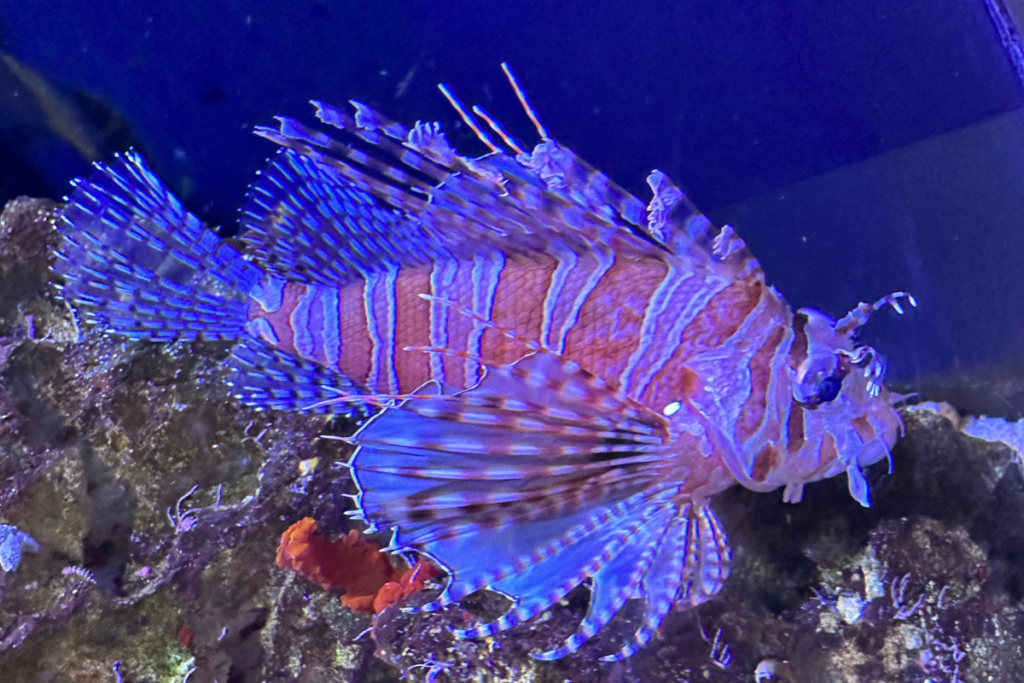
Coloration is among the most noticeable elements of lionfish anatomy. Alternating bands of reddish-brown, cream, white, and darker markings cover the body from head to tail. These contrasting stripes highlight the contours of the fish and emphasize its unusual form. The pattern remains visible across individuals throughout much of the species’ range.
The overall appearance is often compared to an elaborate underwater fan or a floating feather arrangement. Large pectoral fins extend outward from the body, while long fin rays create a delicate yet dramatic outline. This combination of coloration and structure makes the lionfish one of the most visually distinctive fish inhabiting tropical waters.
Specialized Anatomical Features of the Red Lionfish
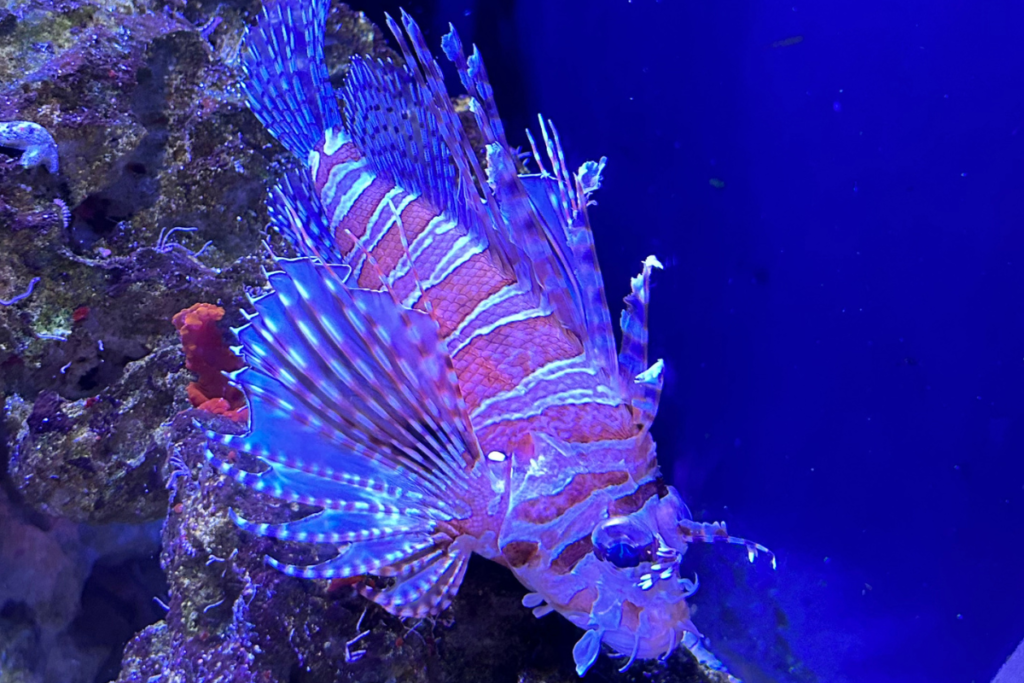
The dorsal fin is perhaps the most famous anatomical feature of the red lionfish. Running along the top of the body are numerous elongated spines that project upward and backward. These structures create the fish’s signature profile and immediately distinguish it from most reef fish species.
Additional spines occur along the pelvic and anal fins. Together, these structures form a defensive network surrounding key areas of the body. While many fish possess sharp fin rays, the lionfish displays a far more elaborate arrangement that extends outward in multiple directions.
The head structure also contains several distinctive features. Large eyes provide excellent visual awareness, while the mouth is positioned to accommodate the fish’s broad head profile. Compared to fish with pointed snouts, lionfish possess a more robust facial structure that contributes to their unmistakable appearance.
The pectoral fins represent another remarkable anatomical characteristic. These fins are unusually broad and composed of long rays connected by thin membranes. When fully extended, they resemble decorative fans or wings. Few reef fish possess fins that are as visually dramatic, making them one of the defining features of lionfish anatomy.
How Red Lionfish Anatomy Supports Its Ecological Role
The anatomy of the red lionfish influences how it fits into marine ecosystems. Physical structures determine how animals interact with their surroundings, and lionfish possess several features that contribute to their ecological success. Their distinctive form sets them apart from many other reef-associated species.
Large fins increase the fish’s visual presence within reef communities. A lionfish occupies more apparent space than many fish of similar body length because of its extensive fin development. This creates a commanding appearance that makes the species highly noticeable within diverse marine environments.
Protective anatomical features also contribute to long-term survival. The arrangement of defensive spines reduces vulnerability to potential threats and forms one of the species’ most important biological characteristics. Similar defensive structures are found in other fish, but few species exhibit such a comprehensive system.
From an ecological perspective, lionfish anatomy demonstrates how specialized body structures can shape a species’ identity. The combination of striped coloration, broad fins, venomous spines, and a deep-bodied profile creates one of the most recognizable forms in tropical marine ecosystems. These features not only define the red lionfish visually but also help explain why it remains one of the most studied and recognizable fish in the world’s oceans.
Popular Searches About Red Lionfish
Explore Red Lionfish Guide
Explore More Exhibits

Support Encounters World
Help support wildlife photography and get behind the scenes discoveries on Patreon.