Red Lionfish Predators Guide: What Eats Red Lionfish?
Quick Facts
Known Predators: Groupers, Sharks, Moray Eels, and Large Predatory Fish
Average Size: 12–15 Inches (30–38 cm)
Lifespan: 10–15 Years
Global Range: Indo-Pacific; Atlantic, Caribbean, and Gulf of Mexico (Invasive Range)
Conservation Status: Least Concern
Notable Feature: Venomous Defensive Spines Reduce Predation Risk
Introduction: Understanding Red Lionfish Predators
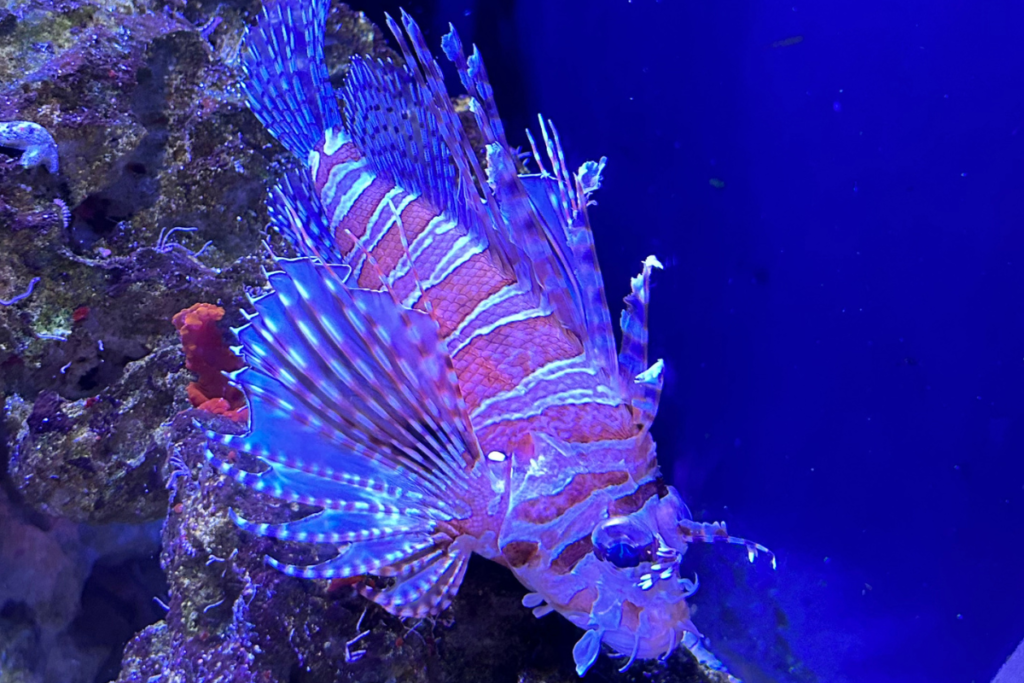
The red lionfish is among the most recognizable fish inhabiting tropical marine waters. Its striped coloration, feather-like fins, and dramatic silhouette make it stand out from nearly every other reef fish. While the species is famous for its venomous spines, it is not completely free from predation within marine ecosystems.
Native populations occur throughout the Indo-Pacific region, where lionfish have existed alongside other marine species for thousands of years. In these waters, ecological relationships have developed over long periods of time, allowing certain predators to coexist with lionfish despite their defenses. These natural interactions help maintain balance within reef communities.
Outside their native range, lionfish have become established throughout the Caribbean Sea, Gulf of Mexico, and western Atlantic Ocean. Their rapid expansion has raised questions about predator-prey relationships and whether native predators are capable of controlling invasive populations. Understanding these relationships remains an important area of marine research.
Predators influence the structure of every ecosystem, from forests and grasslands to coral reefs and open oceans. Even species with strong defenses can become part of the food web under the right circumstances. Examining what eats lionfish provides valuable insight into how marine ecosystems function and respond to the presence of a venomous fish.
Natural Predators of Red Lionfish in Marine Ecosystems
Although lionfish possess venomous spines, several large marine predators have been documented consuming them. Groupers are among the most frequently discussed examples. These powerful reef fish possess large mouths and strong bodies, allowing them to consume a variety of prey items that smaller predators may avoid.
Moray eels have also been observed feeding on lionfish in some locations. Their flexible bodies and specialized hunting abilities allow them to pursue prey within complex reef structures. Because moray eels often target fish hidden among rocky crevices, encounters with lionfish occasionally occur despite the presence of defensive spines.
Large predatory fish, including certain snapper species and other reef-associated hunters, may opportunistically consume lionfish under specific circumstances. While lionfish are not necessarily a preferred food source, they can still become part of the diet of larger predators capable of handling venomous prey. Similar patterns occur throughout nature, where predators learn to exploit animals that appear difficult to consume.
Some shark species have also been reported feeding on lionfish. Sharks possess highly specialized feeding adaptations and often consume a wide variety of marine organisms. While lionfish are unlikely to represent a major component of most shark diets, documented cases demonstrate that even heavily defended fish remain vulnerable to sufficiently large predators.
Why Red Lionfish Have Relatively Few Predators
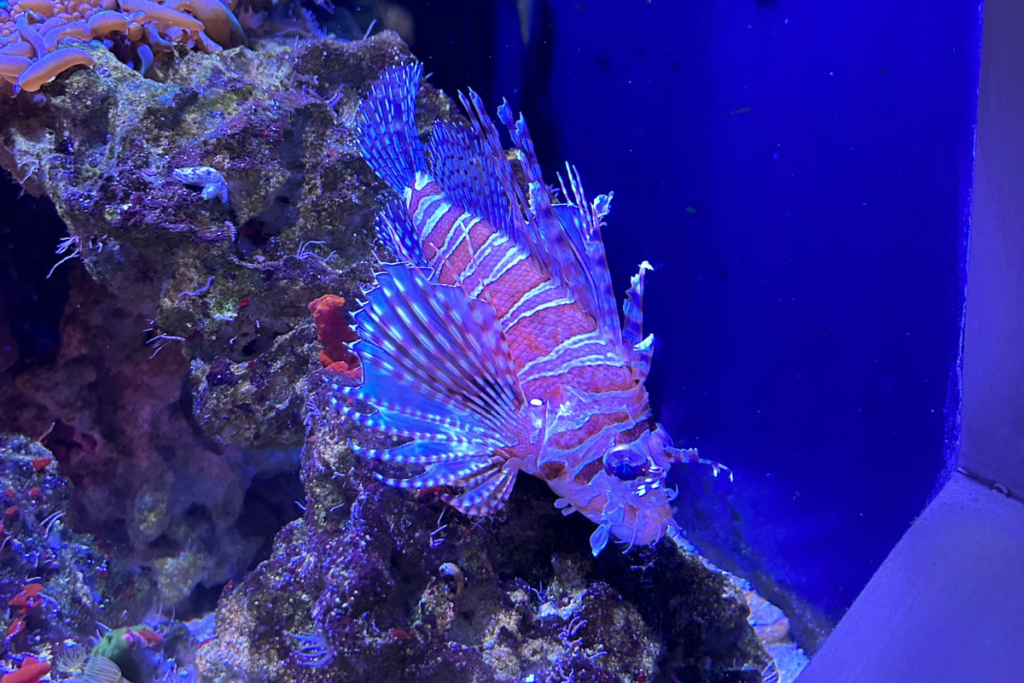
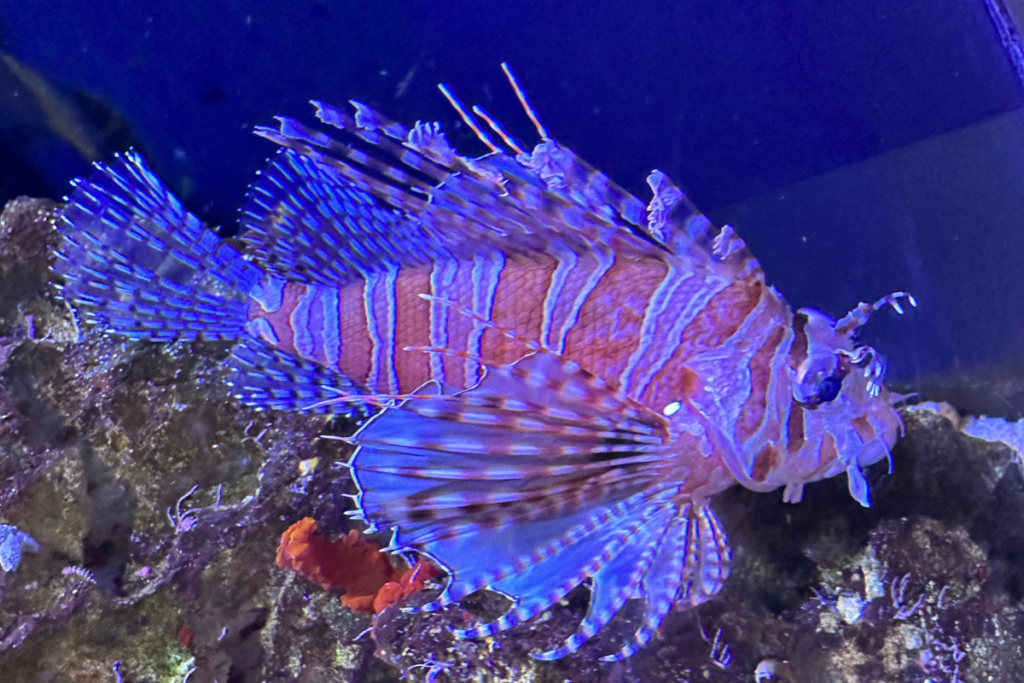
The primary reason lionfish experience limited predation is their venomous spine system. Long dorsal, pelvic, and anal spines create an effective protective barrier around the body. Many predators instinctively avoid animals capable of causing pain or injury, reducing the number of species willing to attack lionfish.
Their appearance may also contribute to predator avoidance. Bright contrasting stripes and highly visible spines create a distinctive warning signal. Similar warning displays occur throughout the animal kingdom, where conspicuous colors often advertise defensive capabilities. Lionfish stand out visually in a way that may discourage unnecessary encounters.
Body structure further strengthens their defenses. Broad fins and extended spines increase the fish’s apparent size, making it look larger and more difficult to handle. A predator considering whether to attack must weigh potential benefits against possible injury. In many cases, easier prey items may simply be a safer choice.
Compared to unprotected reef fish, lionfish enjoy a significant defensive advantage. Small reef species often rely on camouflage, speed, or hiding places for protection. Lionfish combine visual warnings with physical defenses, creating multiple layers of protection. This combination helps explain why relatively few predators regularly target them.
The Role of Predators in Managing Lionfish Populations
Predators play a crucial role in maintaining ecological balance throughout marine ecosystems. By consuming various prey species, they help regulate population sizes and prevent any single species from becoming overwhelmingly dominant. This process contributes to overall biodiversity and ecosystem stability.
In the Indo-Pacific region, lionfish exist within ecosystems that have evolved alongside them for countless generations. Predators, competitors, and other ecological pressures collectively influence population levels. These long-established relationships help maintain a balance that supports diverse marine communities.
The situation differs in many parts of the Atlantic Ocean, where lionfish are considered invasive. Researchers have investigated whether native predators can help control expanding populations. While some native predators consume lionfish, current evidence suggests that natural predation alone is often insufficient to significantly reduce invasive populations across large geographic areas.
Even so, predator interactions remain ecologically important. Every documented predator contributes to understanding how lionfish fit into marine food webs. Studying these relationships helps scientists evaluate ecosystem responses, improve management strategies, and better understand one of the most successful marine invasive species in the world. The presence of predators, even in limited numbers, demonstrates that lionfish remain connected to the broader ecological networks that shape life beneath the ocean’s surface.
Popular Searches About Red Lionfish
Explore Red Lionfish Guide
Explore More Exhibits

Support Encounters World
Help support wildlife photography and get behind the scenes discoveries on Patreon.