Red Lionfish Facts Guide: Fascinating Facts About Red Lionfish
Quick Facts
Animal Type: Marine Ray-Finned Fish
Average Size: 12–15 Inches (30–38 cm)
Lifespan: 10–15 Years
Global Range: Indo-Pacific; Atlantic, Caribbean, and Gulf of Mexico (Introduced Range)
Conservation Status: Least Concern
Most Famous Fact: Possesses Venomous Defensive Spines
Introduction: Interesting Facts About the Red Lionfish
The red lionfish is one of the most recognizable fish found in tropical oceans around the world. Its striking striped pattern, dramatic fins, and unusual appearance have made it a favorite subject for divers, photographers, and marine enthusiasts. Few fish are as instantly identifiable, even to people with limited knowledge of marine life.
Originally native to the Indo-Pacific region, the red lionfish naturally occurs across a vast area that includes the Indian Ocean, Southeast Asia, Australia, and portions of the Pacific Ocean. Today, it is also widely known throughout the Caribbean Sea, Gulf of Mexico, and western Atlantic Ocean. This expanded distribution has made it one of the most studied fish species in modern marine biology.
Many people first notice the lionfish because of its beauty, but the species is far more remarkable than its appearance alone suggests. Its anatomy, geographic range, defensive adaptations, and ecological significance have all contributed to its reputation as one of the ocean’s most fascinating fish. Scientists continue to study lionfish because they offer valuable insights into marine ecology and species distribution.
Whether observed on a coral reef, featured in an aquarium exhibit, or discussed in scientific research, the red lionfish consistently attracts attention. Learning the most interesting facts about this species helps explain why it has become one of the best-known fish in tropical marine ecosystems.
Red Lionfish Appearance Facts and Identifying Features
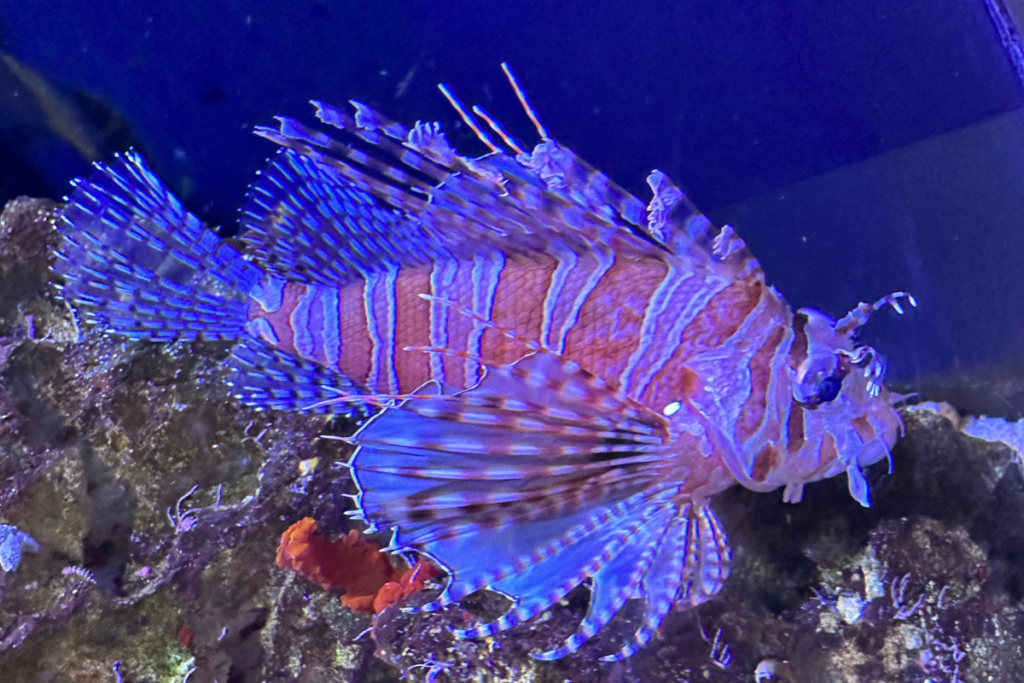
One of the most surprising facts about the red lionfish is that it often appears larger than it actually is. While most adults measure between 12 and 15 inches in length, their long fins dramatically increase their visual profile. To an observer underwater, a lionfish can seem much larger than a similarly sized reef fish.
The fish’s body is decorated with bold vertical stripes that alternate between reddish-brown, cream, white, and darker shades. These patterns create a highly distinctive appearance that remains recognizable throughout its range. Unlike many fish whose coloration varies greatly between regions, lionfish generally maintain the same iconic pattern wherever they occur.
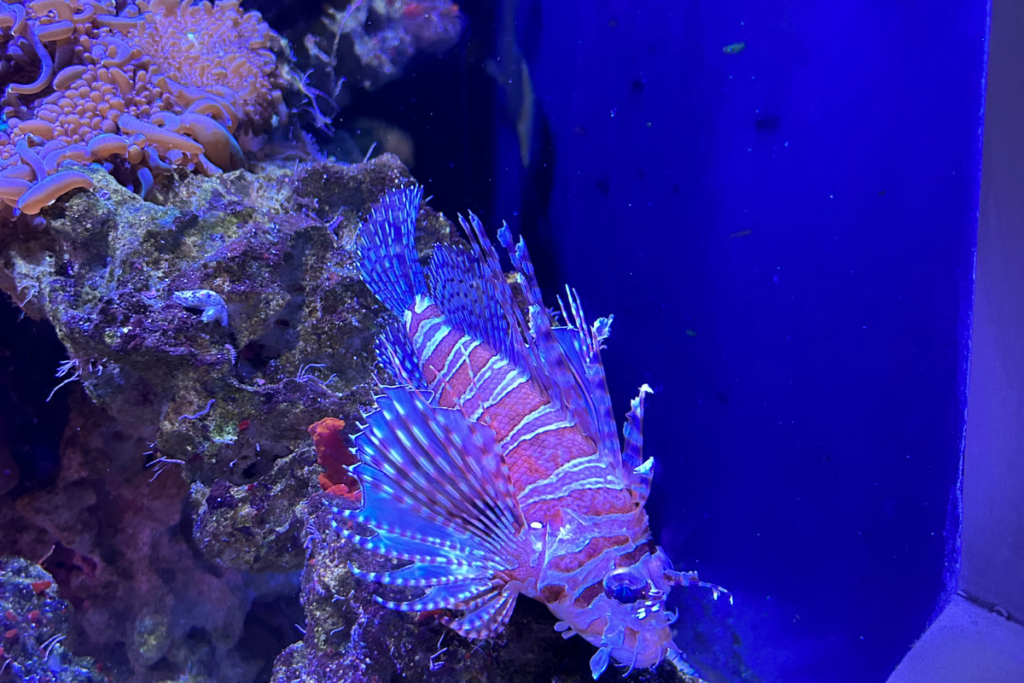
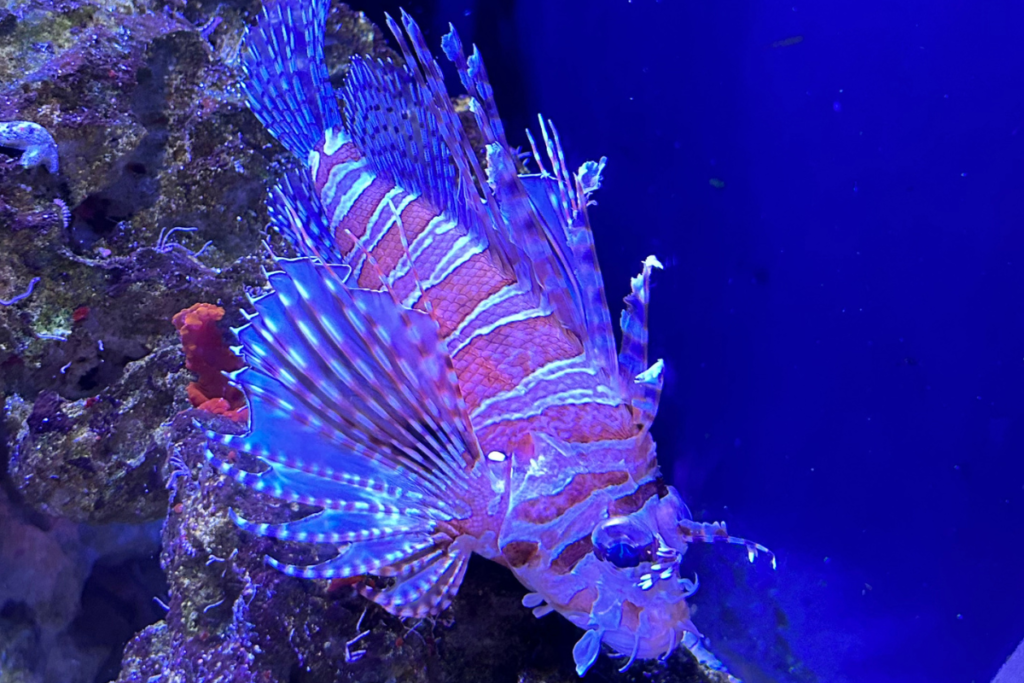
Another notable fact is the complexity of the fin structure. Long dorsal spines extend from the back, while broad pectoral fins spread outward like decorative fans. The overall appearance is often compared to an ornate costume, feather display, or underwater firework. Few marine fish possess such elaborate anatomical features.
Despite their exotic appearance, lionfish belong to a larger group of fish known as scorpionfish relatives. However, most of their relatives lack the same dramatic visual characteristics. This combination of recognizable coloration, extended fins, and unique body shape makes the red lionfish one of the easiest fish species to identify in tropical waters.
Unique Red Lionfish Facts That Set Them Apart
Perhaps the most famous fact about red lionfish is that they are venomous. Specialized glands associated with certain fin spines contain venom that serves as a defensive mechanism. This feature distinguishes lionfish from many other reef fish and contributes significantly to their reputation.
Another interesting fact is the species’ remarkable geographic success. Few marine fish have become established across such large areas outside their native range. The lionfish’s expansion throughout the Atlantic Ocean and Caribbean Sea has made it one of the most widely discussed invasive marine species in the world.
Lionfish are also known for their impressive lifespan. Many individuals can survive for more than a decade, which is relatively long compared to numerous small reef fish. This longevity allows populations to remain stable and contributes to their ecological influence over time.
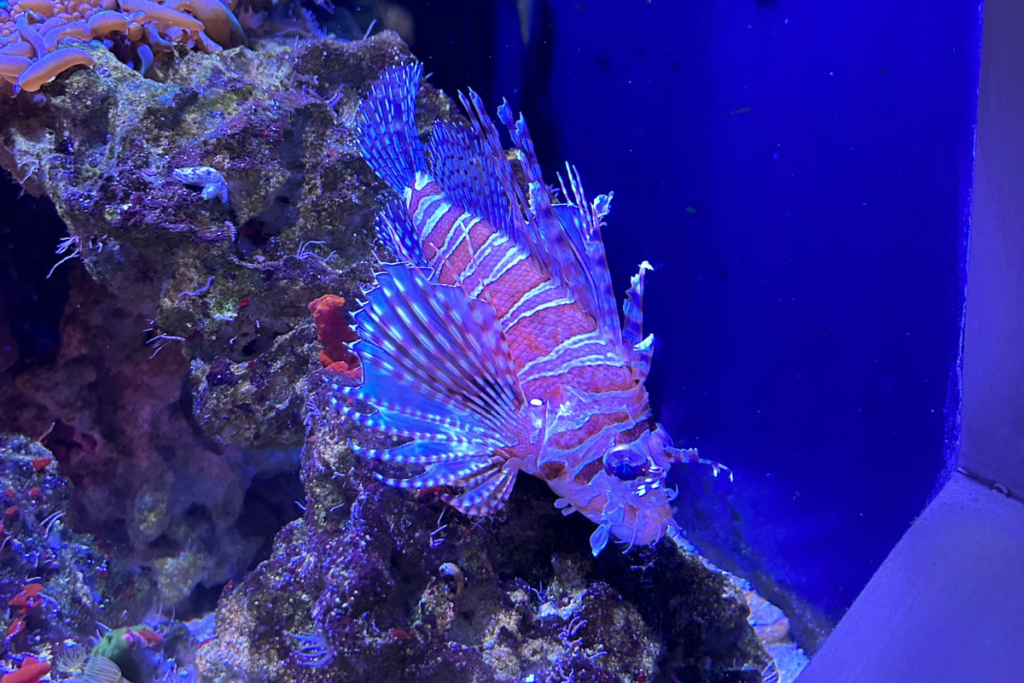
A lesser-known fact is that lionfish are often considered among the most photographed reef fish. Their slow, graceful appearance and striking coloration make them popular subjects for underwater photographers. Images of lionfish frequently appear in marine field guides, educational materials, and conservation campaigns due to their instantly recognizable form.
Why Red Lionfish Matter in Marine Ecosystems
The red lionfish occupies an important place within marine ecosystems because of its position within ocean food webs. Like many predatory reef fish, it contributes to the overall structure of tropical marine communities. Every species within an ecosystem plays a role, and lionfish are no exception.
In their native Indo-Pacific range, lionfish have existed alongside other marine organisms for thousands of years. During this time, ecological relationships developed that helped shape balanced reef environments. Their presence contributes to the diversity that makes tropical marine ecosystems among the most complex habitats on Earth.
The species has also become a valuable subject for scientific research. Marine biologists frequently study lionfish to better understand invasive species, ecological adaptation, population dynamics, and conservation challenges. As a result, lionfish have contributed significantly to modern marine science.
One of the most important facts about red lionfish is that they demonstrate how interconnected ocean ecosystems can be. Their movement beyond their native range has highlighted the impact that species introductions can have on marine environments. Whether viewed as a beautiful reef fish, a scientific case study, or a fascinating example of adaptation, the red lionfish remains one of the most interesting and widely recognized fish in tropical oceans today.
Popular Searches About Red Lionfish
Explore Red Lionfish Guide
Explore More Exhibits

Support Encounters World
Help support wildlife photography and get behind the scenes discoveries on Patreon.