Ocellaris Clownfish Life Cycle Guide: From Egg to Adult
Quick Facts
Life Cycle Type: Egg → Larva → Juvenile → Adult
Average Adult Size: 3–4 inches (7.5–10 cm)
Lifespan: 6–10 years in the wild, 10–20+ years in captivity
Age at Maturity: Approximately 1–2 years
Global Range: Indo-Pacific Region
Conservation Status: Least Concern
Notable Feature: All individuals begin life as males and can change sex during adulthood
Ocellaris Clownfish Life Cycle Overview and Early Development
The ocellaris clownfish undergoes a fascinating life cycle that transforms it from a tiny drifting larva into one of the most recognizable reef fish in the world. Native to the tropical waters of the Indo-Pacific, this species progresses through several distinct stages before reaching adulthood. Each phase brings dramatic physical changes that prepare the fish for survival in complex marine environments.
Life begins when fertilized eggs develop on carefully selected surfaces near reef habitats. These eggs are small, bright orange, and arranged in dense clusters. At first glance, they resemble tiny grains of amber attached closely together. Within each egg, an embryo gradually develops as organs, fins, and eyes begin forming.
The incubation period generally lasts between six and ten days, depending on environmental conditions. During this stage, the developing fish relies entirely on nutrients contained within the egg. As hatching approaches, the eggs darken and the eyes become clearly visible through the outer membrane. This transformation signals the beginning of the next life stage.
Once hatching occurs, the newly emerged larvae enter a completely different phase of development. These tiny fish are nearly transparent and measure only a few millimeters long. Unlike the brightly colored adults familiar to most people, young larvae possess little resemblance to mature clownfish, highlighting just how dramatic the species’ life cycle truly is.
Ocellaris Clownfish Larval Stage and Juvenile Growth
The larval stage represents one of the most vulnerable periods in the clownfish life cycle. Newly hatched larvae drift through open ocean waters where they remain suspended among microscopic marine organisms. At this point, survival depends heavily on environmental conditions and the ability to avoid countless natural hazards.
During this phase, rapid growth occurs. Internal organs continue developing while the body gradually becomes stronger and more capable of independent movement. Although still extremely small, larvae begin acquiring the features that will eventually define the species. Their transparent appearance slowly gives way to visible coloration and structural development.
After several days to weeks, depending on local conditions, the fish undergoes a remarkable transformation. The famous orange pigmentation begins appearing, followed by the development of distinctive white bands. At this stage, the young clownfish starts resembling a miniature version of the adult fish recognized worldwide.
Juveniles continue growing steadily as body proportions become more refined. Their fins strengthen, coloration intensifies, and overall appearance becomes increasingly recognizable. While still far smaller than adults, juvenile clownfish possess many of the physical characteristics that make the species one of the most iconic fish inhabiting tropical reef systems.
Ocellaris Clownfish Adult Stage and Reproductive Maturity
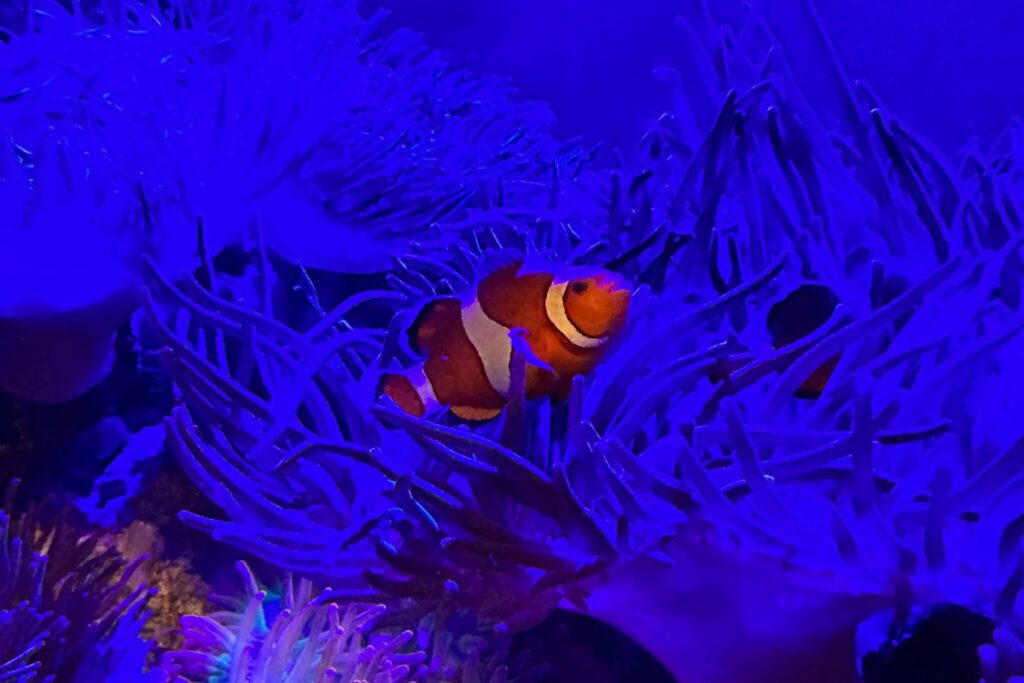
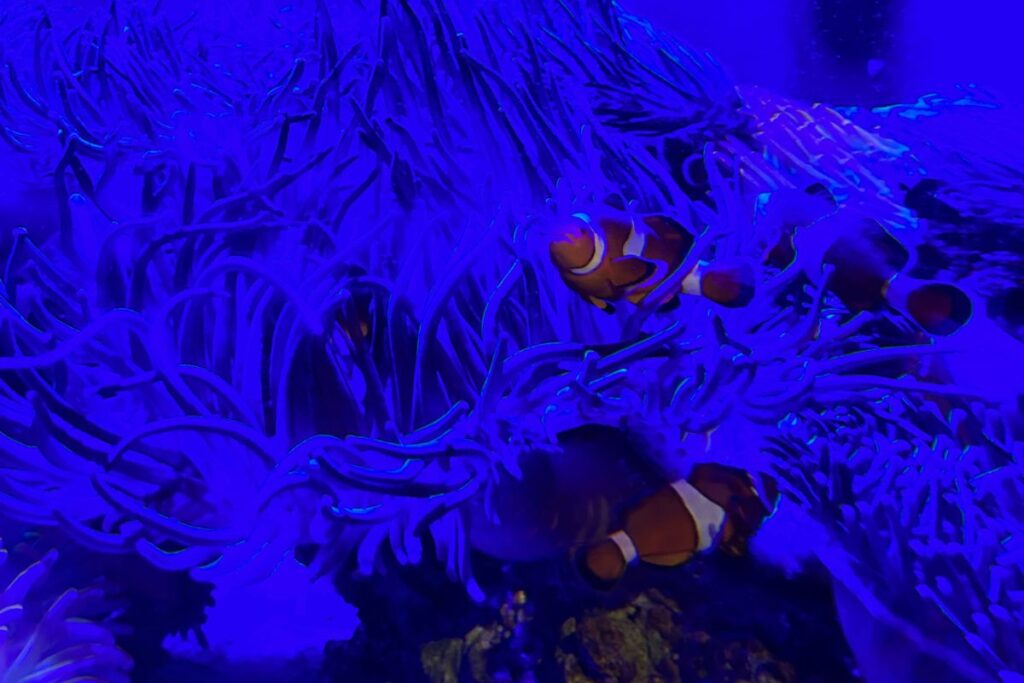
As growth continues, juvenile clownfish gradually transition into adulthood. Most individuals reach reproductive maturity at approximately one to two years of age. By this point, the fish displays the bright orange body, bold white bands, and compact shape associated with the species. Adult size generally ranges from three to four inches in length.
One of the most unusual aspects of the ocellaris clownfish life cycle involves its reproductive biology. All individuals begin life as males, but the dominant fish within a social group can transform into a female. This process, known as sequential hermaphroditism, allows groups to maintain breeding capability even when social circumstances change.
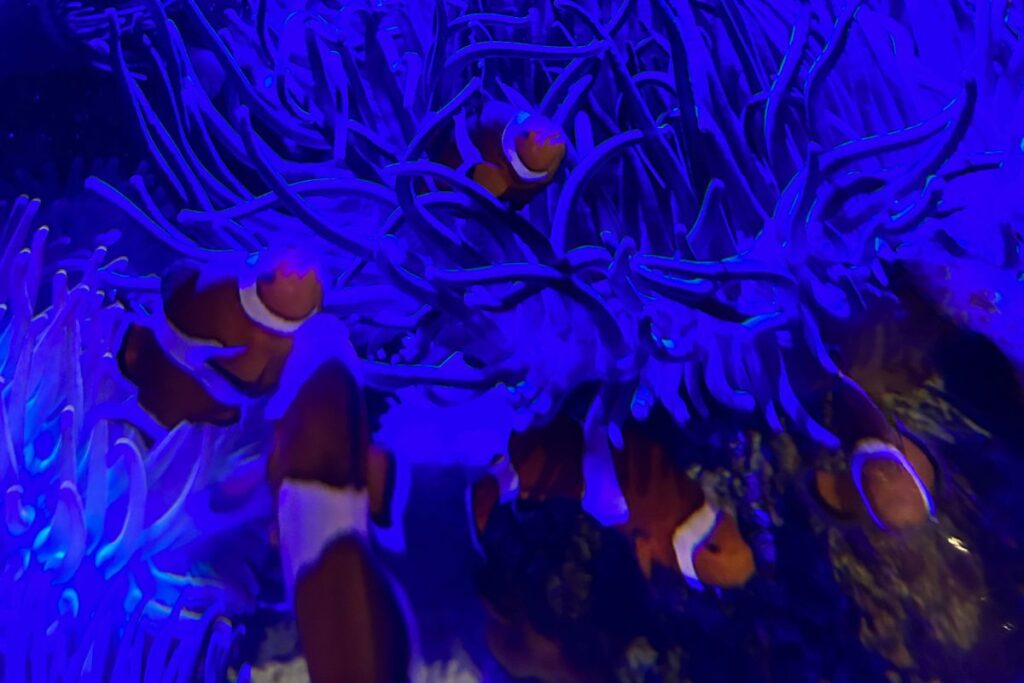
Adult clownfish continue growing slowly after reaching maturity. Females typically become larger than males and occupy the highest position within the social hierarchy. These differences become increasingly noticeable over time, particularly among long-established groups. Size, maturity, and social rank all play important roles during this stage of life.
Once adulthood is reached, the fish enters the longest phase of its life cycle. Wild individuals commonly survive between six and ten years, while captive specimens often live considerably longer. Some aquarium-maintained clownfish have surpassed twenty years of age, demonstrating the species’ potential for remarkable longevity when conditions remain favorable.
Ocellaris Clownfish Life Cycle Importance in Reef Ecosystems
Each stage of the ocellaris clownfish life cycle contributes to the broader health of reef ecosystems. Eggs, larvae, juveniles, and adults all occupy different ecological roles throughout their development. This progression helps integrate the species into multiple levels of the marine environment.
The larval phase is particularly important because it supports population dispersal across large geographic areas. Ocean currents can transport young fish far from their place of origin, helping maintain genetic diversity among populations. This movement allows the species to colonize new locations and sustain healthy populations across its extensive range.
Juvenile and adult clownfish contribute to reef biodiversity by occupying ecological niches that support overall ecosystem complexity. Coral reefs depend on countless species performing different functions, and clownfish represent one component of this intricate network. Their presence helps illustrate the extraordinary diversity found within tropical marine habitats.
The complete life cycle of the ocellaris clownfish demonstrates the remarkable adaptations that have allowed the species to thrive throughout the Indo-Pacific for countless generations. From a microscopic embryo developing within an egg to a mature adult capable of reproduction, each stage reflects a carefully refined process shaped by evolution. Understanding this life cycle provides valuable insight into one of the ocean’s most famous and recognizable reef fish.
Popular Searches About Ocellaris Clownfish
Explore Ocellaris Clownfish Guide
Explore More Exhibits

Support Encounters World
Help support wildlife photography and get behind the scenes discoveries on Patreon.