Ocellaris Clownfish Predators Guide: What Eats Ocellaris Clownfish in the Wild?
Quick Facts
Primary Predators: Groupers, snappers, lionfish, moray eels, and larger reef fish
Average Size: 3–4 inches (7.5–10 cm)
Lifespan: 6–10 years in the wild, 10–20+ years in captivity
Global Range: Indo-Pacific Region
Conservation Status: Least Concern
Notable Defense: Protective relationship with sea anemones helps reduce predation
Ocellaris Clownfish Predators and Survival Challenges
The ocellaris clownfish may be one of the most recognizable reef fish in the world, but its bright appearance also makes it noticeable to potential predators. Native to the tropical Indo-Pacific, this species inhabits marine environments where countless animals compete for survival. Although clownfish benefit from unique protective adaptations, they still face dangers throughout their lives.
Predation begins early in the life cycle. Newly hatched larvae drifting through open water are especially vulnerable because they lack the size and experience needed to avoid larger animals. Many marine species consume fish larvae, making this stage one of the most hazardous periods of development. Only a small percentage survive long enough to reach juvenile status.
As clownfish grow, the types of predators they encounter change. Juveniles face threats from a variety of reef-dwelling fish capable of swallowing small prey. Their compact size makes them attractive targets for opportunistic hunters searching among coral formations. Remaining hidden and close to protective shelter becomes essential during this period.
Even adults are not completely safe. Although mature clownfish possess effective defenses, large predatory fish can still pose significant risks. The constant presence of predators has shaped the evolution of the species, influencing everything from body size to survival strategies. Understanding these threats provides valuable insight into how clownfish fit within complex reef ecosystems.
Common Reef Predators That Hunt Ocellaris Clownfish
Numerous reef predators are capable of eating ocellaris clownfish under the right circumstances. Groupers are among the most notable examples. These powerful fish possess large mouths and ambush-hunting abilities that allow them to consume a wide variety of reef inhabitants. A clownfish that ventures too far from shelter may become an easy target.
Snappers represent another important predator group. Many species patrol coral reefs searching for smaller fish and invertebrates. Their quick strikes and excellent vision make them effective hunters in environments where clownfish live. Even relatively small snappers can prey upon juvenile clownfish.
Moray eels also pose a threat. These elongated predators spend much of their time hidden within reef crevices before lunging at nearby prey. Their ability to access narrow spaces allows them to hunt in areas that other predators cannot easily reach. While clownfish possess defenses, encounters with large moray eels can still be dangerous.
Lionfish and other predatory reef fish may occasionally consume young clownfish as well. Juveniles are particularly vulnerable because they have not yet reached full size or developed the experience of mature individuals. Across tropical reefs, a wide range of predators contribute to natural mortality rates and influence population dynamics.
Ocellaris Clownfish Defenses Against Predators
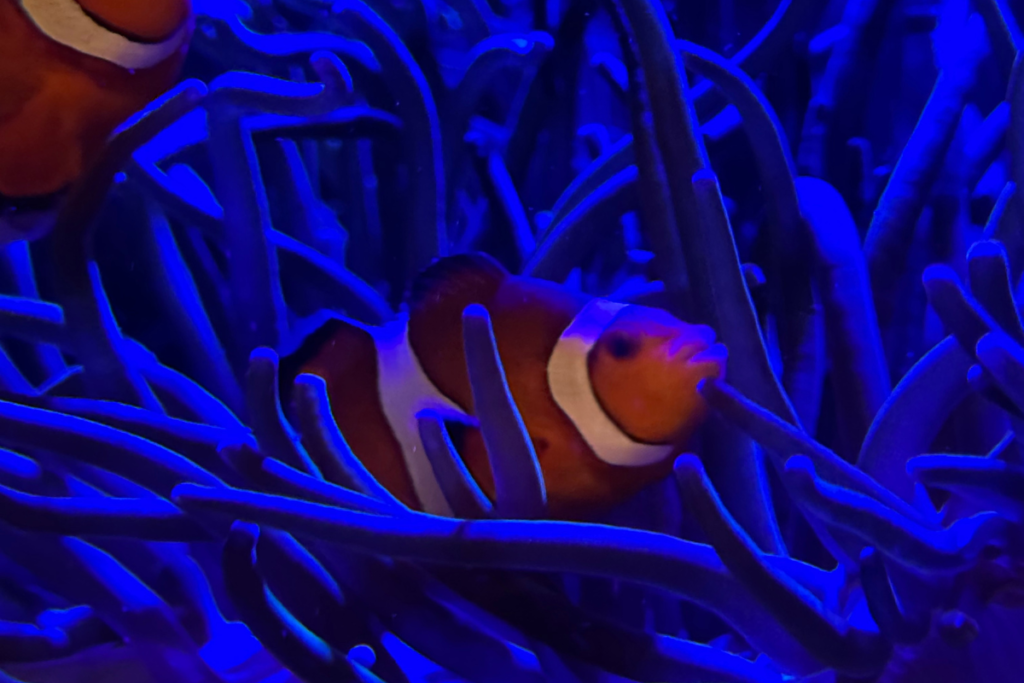
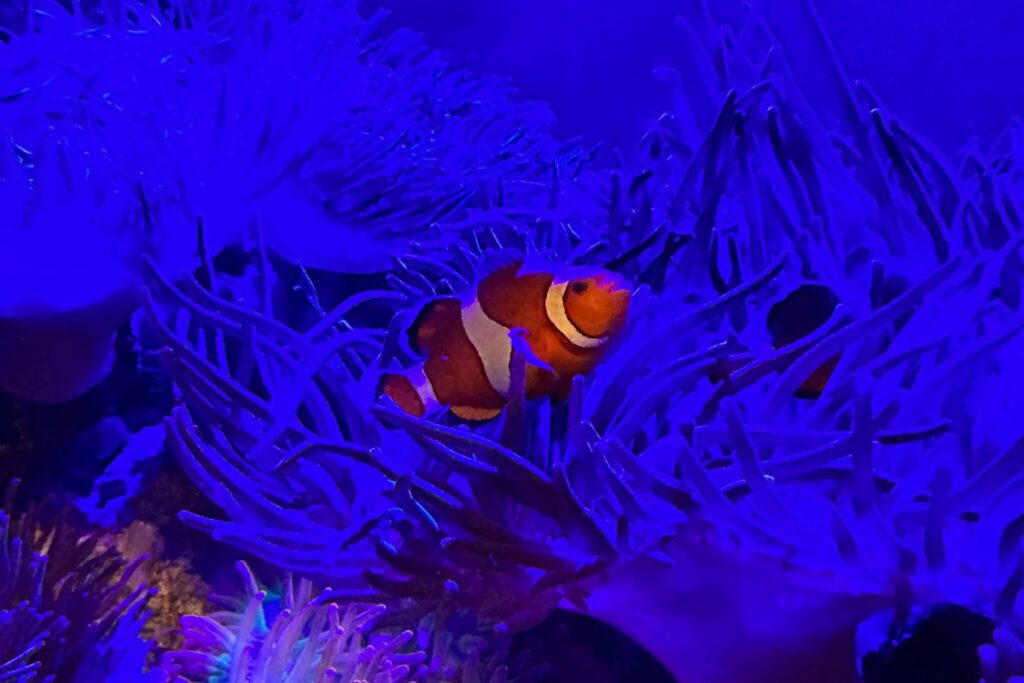
One of the most famous defenses of the ocellaris clownfish is its association with sea anemones. Unlike most fish, clownfish possess a specialized mucus coating that allows them to tolerate anemone tentacles. These tentacles contain stinging cells that discourage many predators from approaching too closely.
This protective relationship functions almost like a living fortress. While predators may be capable of catching clownfish in open water, pursuing them into the tentacles often carries significant risks. As a result, many potential hunters avoid direct encounters once the fish retreats into safety.
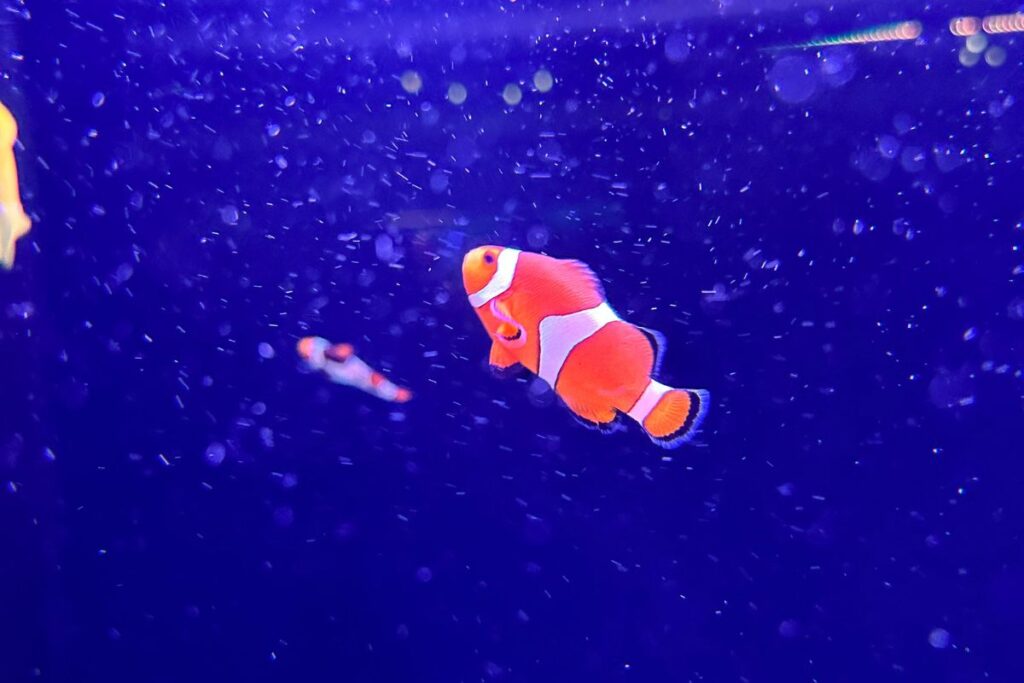
The clownfish’s small size also serves as an advantage. Compact fish can move quickly through confined spaces and navigate areas that larger predators may struggle to access. Combined with their familiarity with local surroundings, this agility improves their chances of escaping danger.
Coloration may contribute to predator awareness as well. Although the bright orange body appears conspicuous to human observers, reef environments contain countless colors and visual distractions. Coral formations, sunlight patterns, and diverse marine life create a complex backdrop that can make locating individual fish more challenging than it initially seems.
Ocellaris Clownfish Predators and Their Role in Reef Ecosystems
Predators play an important role in maintaining balanced reef ecosystems. By feeding on smaller fish, they help regulate population sizes and prevent any single species from becoming overly dominant. The relationship between clownfish and their predators is therefore an essential component of natural ecological processes.
Predation also encourages healthy populations. Individuals that successfully avoid predators often possess traits that improve survival, such as strong awareness, efficient movement, and effective use of protective habitats. Over time, these characteristics contribute to the overall resilience of the species.
The presence of predators influences reef behavior patterns and habitat use throughout marine communities. Fish constantly respond to risks within their environment, creating complex interactions that shape ecosystem structure. Clownfish are part of this larger network, participating in relationships that extend far beyond their immediate surroundings.
Although predators may seem like a threat, they contribute significantly to ecological stability. Healthy reefs depend on interactions between hunters and prey to maintain balance and biodiversity. The ocellaris clownfish survives within this system through a combination of specialized defenses, environmental awareness, and evolutionary adaptations that have allowed the species to persist throughout the Indo-Pacific for countless generations.
Popular Searches About Ocellaris Clownfish
Explore Ocellaris Clownfish Guide
Explore More Exhibits

Support Encounters World
Help support wildlife photography and get behind the scenes discoveries on Patreon.