Grape Hyacinth Overview: Identification, Appearance, and Plant Facts
Quick Facts
Scientific Name: Muscari armeniacum
Common Name: Grape Hyacinth
Plant Type: Perennial Bulb
Average Height: 6–12 inches (15–30 cm)
Spread Width: 3–6 inches (8–15 cm) per clump
Leaf Type: Grass-like
Growth Form: Clumping
Bloom Color: Blue, Purple-Blue, White
Native Range: Southeastern Europe and Western Asia
Toxicity: Toxic to humans & pets if consumed in large quantities
Location Observed: Pennsylvania, USA
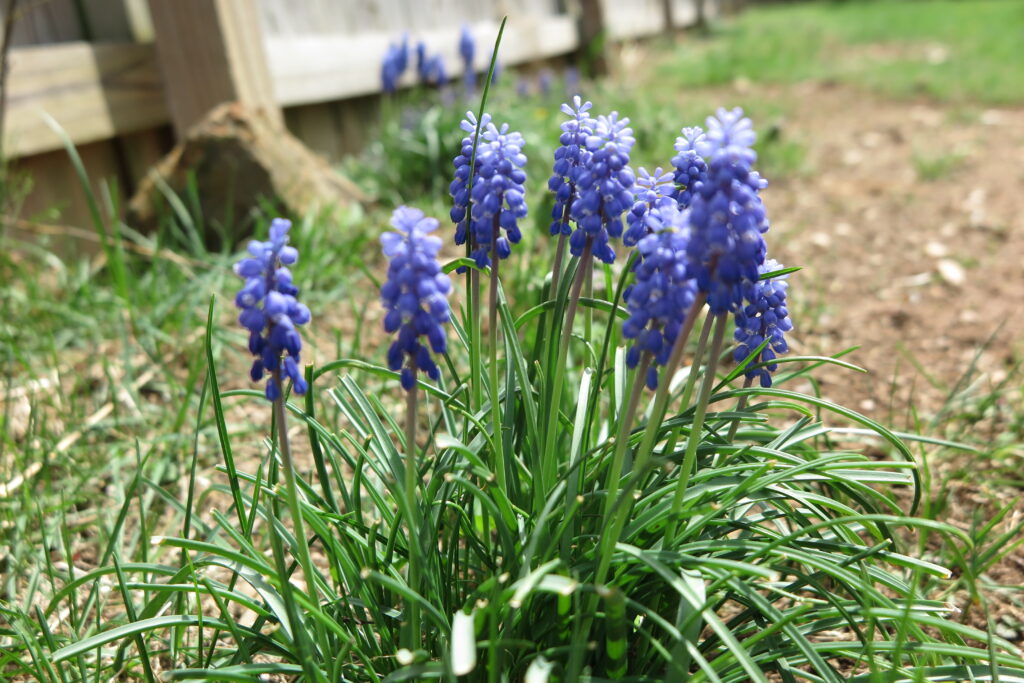
Field Observation
I observed a group of grape hyacinths growing in a controlled planting, where each purple flower cluster emerged neatly from its stem. The blooms stood above the surrounding foliage, creating an organized and visually appealing display. Their upright growth and soft coloration gave the area a calm, settled appearance that naturally drew attention without overwhelming the landscape.
Introduction to Grape Hyacinth Spring Flowers
Grape hyacinth is a small flowering bulb best known for producing dense clusters of colorful blooms during early spring. Although often associated with cottage gardens and landscaped flower beds, the plant has become naturalized in many regions far beyond its original range. Its bright color and compact size make it one of the most recognizable spring-flowering bulbs in temperate climates.
The species belongs to the asparagus family and is grouped within the genus Muscari. Several species exist within the genus, but Muscari armeniacum is the variety most frequently encountered in gardens, parks, and naturalized landscapes. The flowers emerge at a time when many other plants are only beginning to awaken from winter dormancy.
Native populations originated across parts of southeastern Europe and western Asia. Over time, horticultural use spread the plant throughout North America and much of Europe, where it now appears in both cultivated and semi-wild settings. Many established colonies persist for decades with little human assistance.
Gardeners often value grape hyacinth for its ability to create striking displays despite its relatively small stature. Large groups of blooming plants can transform a landscape with vivid color, creating the appearance of a blue-purple carpet stretching across lawns, borders, and garden edges.
Grape Hyacinth Plant Appearance and Growth Form
At a broad level, grape hyacinth is a compact perennial that grows from underground bulbs. Most plants remain relatively short throughout their lives, forming clusters that sit close to the ground. Despite their modest size, large plantings can create a dramatic visual effect when flowering begins.
The overall shape is tidy and organized compared to many wildflowers. Narrow leaves rise from the base while flower stalks emerge from the center of the clump. This arrangement creates a balanced appearance that works well in both formal gardens and naturalized landscapes.
When viewed from a distance, mature colonies often resemble patches of blue haze scattered across green grass. Individual plants may seem small, but hundreds of blooms flowering simultaneously can make entire sections of a landscape stand out. This collective effect is one reason the species remains popular among gardeners worldwide.
Adaptability has also contributed to the plant’s success. Grape hyacinth has established itself across a wide variety of climates, from cool northern regions to areas with milder winters. As long as seasonal conditions support bulb dormancy and spring growth, the species can thrive and gradually expand over time.
Unlike sprawling groundcovers or tall flowering perennials, grape hyacinth maintains a compact footprint. The plant’s restrained growth habit allows it to fit comfortably between larger ornamental species while still providing noticeable seasonal interest. Its neat growth form often makes it appear intentionally placed even when growing naturally.
Distinctive Features of Grape Hyacinth Plants
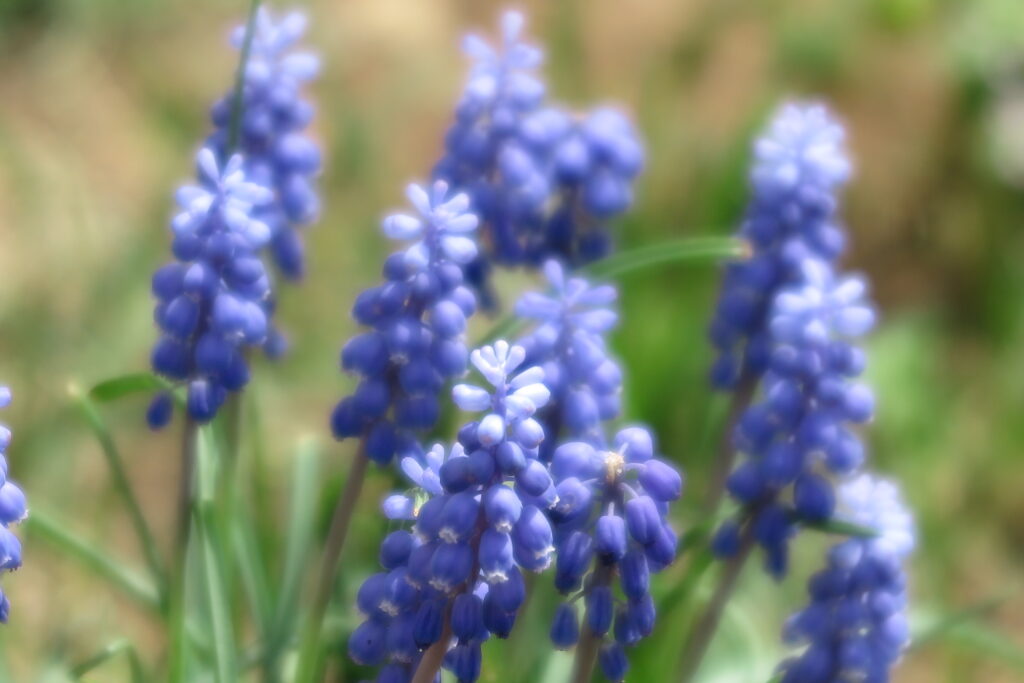
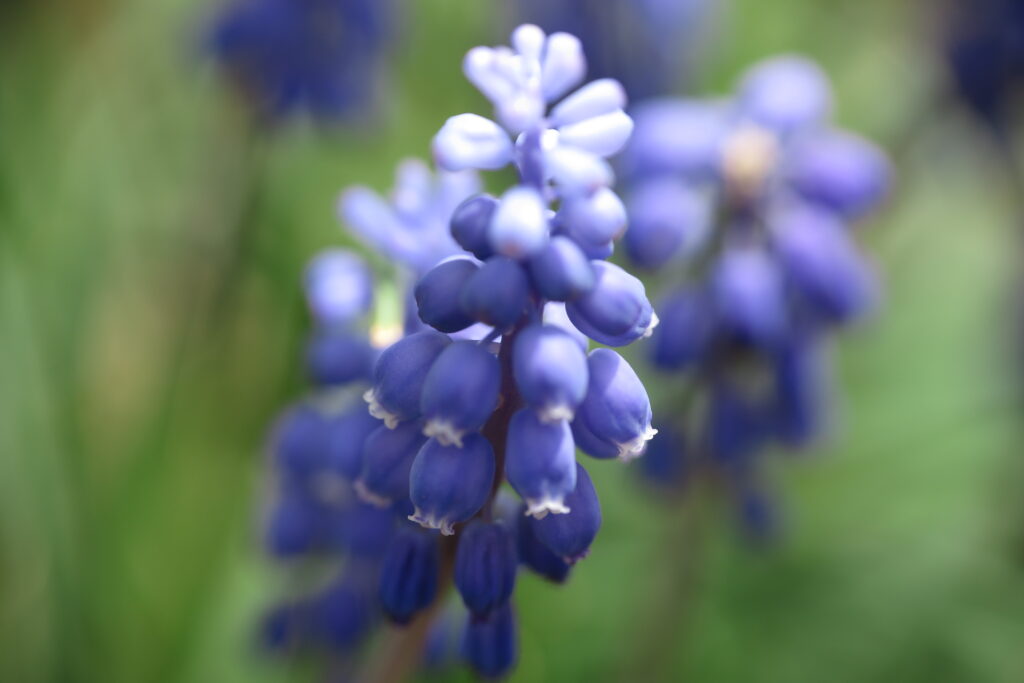
One of the most recognizable characteristics of grape hyacinth is the structure of its flowers. Individual blooms are tightly packed together along a central stem, creating a cluster that resembles a miniature bunch of grapes. This unusual arrangement is responsible for the common name used throughout much of the world.
The flowers possess a smooth, waxy appearance that helps them stand out in spring sunlight. Colors range from deep blue to violet-blue, although white cultivars also exist. Many blooms display subtle gradients of color, with slightly lighter tones near the opening of each flower.
The foliage provides another useful identifying feature. Leaves emerge as long, narrow blades that resemble thick grass. Unlike many broad-leaved flowering plants, grape hyacinth maintains a simple leaf structure that directs attention toward the blooms themselves.
The texture of the plant differs noticeably from many common spring flowers. Tulips present broad leaves and large blossoms, while daffodils feature trumpet-shaped flowers. Grape hyacinth instead produces numerous small flowers packed tightly together, giving the plant a more intricate and detailed appearance.
A useful comparison is to imagine a cluster of tiny beads arranged along a vertical stem. Each flower contributes to the overall shape, and together they create a dense floral column. This distinctive design allows the species to remain recognizable even when viewed from several feet away.
How to Identify Grape Hyacinth in the Field
The easiest way to identify grape hyacinth is by examining the flower cluster. Few spring plants produce blooms arranged in such a compact, grape-like formation. Each flower appears rounded and slightly urn-shaped, creating a texture unlike most neighboring species.
Color serves as another valuable field marker. The rich blue-purple shades commonly associated with grape hyacinth are among the most distinctive features of the plant. During peak bloom, clusters often appear almost luminous against surrounding green vegetation, making them easy to spot from a distance.
Confusion occasionally occurs with bluebells because both species produce blue spring flowers. However, bluebells typically display larger, bell-shaped blooms hanging individually from arching stems. Grape hyacinth flowers remain tightly grouped into upright clusters, creating a much denser and more compact appearance.
Another identification clue comes from overall size. Grape hyacinths generally stay below one foot in height, whereas some similar flowering plants grow considerably taller. Their low-growing nature allows them to form colorful patches close to the ground without dominating surrounding vegetation.
A practical real-world comparison is to imagine a miniature cluster of blueberries attached to the top of a slender stem. While not identical in shape, this comparison helps explain the dense grouping that distinguishes grape hyacinth from many other spring-blooming species. When combined with the narrow grass-like leaves and vivid coloration, these characteristics make field identification relatively straightforward for most observers.
Observation Location
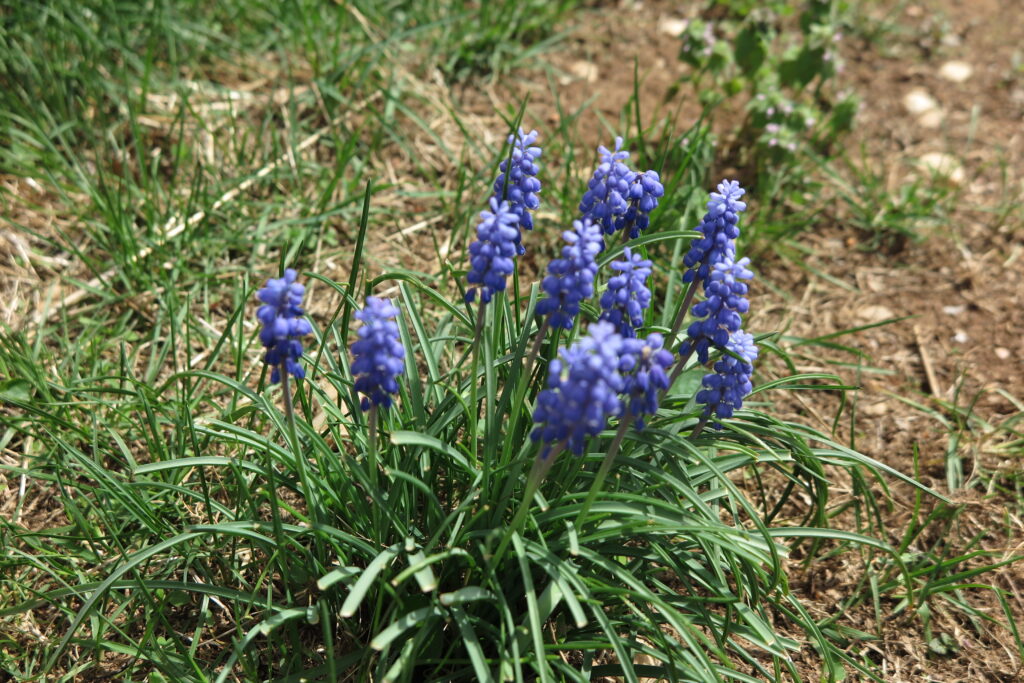
Observed in York County, Pennsylvania, USA
Popular Searches About Grape Hyacinth
Explore Grape Hyacinth Guide
Explore More Plants

Support Encounters World
Help support wildlife photography and get behind the scenes discoveries on Patreon.