Grape Hyacinth Growth Guide: Growth Rate, Development, and Life Cycle
Quick Facts
Growth Rate: Moderate
Growth Pattern: Clumping and Expanding Colonies
Reproduction Method: Bulbs, Offsets, and Seeds
Dormancy Period: Summer through Winter
Sunlight Needs: Full Sun to Partial Shade
Water Needs: Moderate Moisture During Active Growth
Seasonal Changes: Dormant in Warm Months, Active in Late Winter and Spring
Understanding Grape Hyacinth Growth Throughout the Year
Grape hyacinth (Muscari armeniacum) is a perennial bulb known for its dependable seasonal development and long-term persistence. Native to southeastern Europe and western Asia, the species has become widely established across temperate regions around the world. Its ability to return each year from underground bulbs makes it one of the most reliable spring-flowering plants in cultivation.
In many landscapes, grape hyacinth follows a predictable annual cycle that repeats with remarkable consistency. Unlike annual flowers that must complete their entire lives within a single growing season, this species survives for many years through underground storage structures. This strategy allows it to reappear each spring without requiring replanting.
The plant is commonly encountered in gardens, parks, lawns, and naturalized colonies where seasonal growth can be observed from year to year. During active periods, growth occurs rapidly compared to the plant’s small overall size. Much of its visible development takes place within a relatively short portion of the calendar year.
Because grape hyacinth has been cultivated across numerous regions, its growth behavior has become familiar to gardeners and plant enthusiasts worldwide. Whether growing in formal landscapes or unmanaged colonies, the species demonstrates a development pattern that balances efficiency, resilience, and seasonal timing.
Grape Hyacinth Growth Rate and Seasonal Development
Grape hyacinth is generally considered a moderate-growing perennial bulb. Individual plants do not reach large sizes, but they establish themselves steadily and reliably over time. Once bulbs become established, annual growth follows a consistent schedule that requires little intervention.
The growing season begins long before many other flowering plants become active. During late winter or early spring, leaves emerge from the soil as temperatures gradually increase. Growth accelerates quickly, allowing the plant to take advantage of favorable conditions before larger vegetation begins competing for sunlight.
Compared to slower-developing ornamental bulbs, grape hyacinth often reaches flowering size relatively quickly after establishment. While it does not spread explosively in a single season, its progress is dependable and cumulative. Over several years, small groups can develop into impressive displays through steady expansion.
Seasonal changes play a major role in shaping growth. Active development occurs during cooler portions of the year, while above-ground growth gradually declines following the flowering period. By early summer, much of the visible plant disappears as energy reserves are stored underground.
One reason for the species’ popularity is the consistency of its growth cycle. Even under varying weather conditions, grape hyacinth often maintains a reliable schedule from emergence to dormancy. This predictability makes it easier to cultivate than many flowering plants that respond unpredictably to environmental fluctuations.
Physical Growth Patterns of Grape Hyacinth Colonies
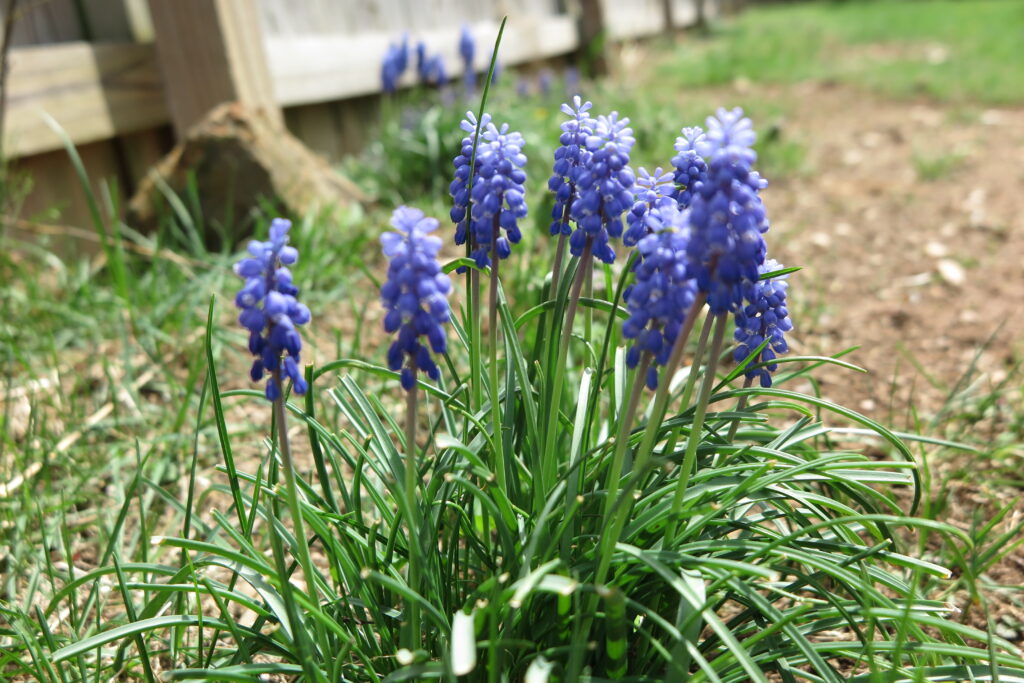
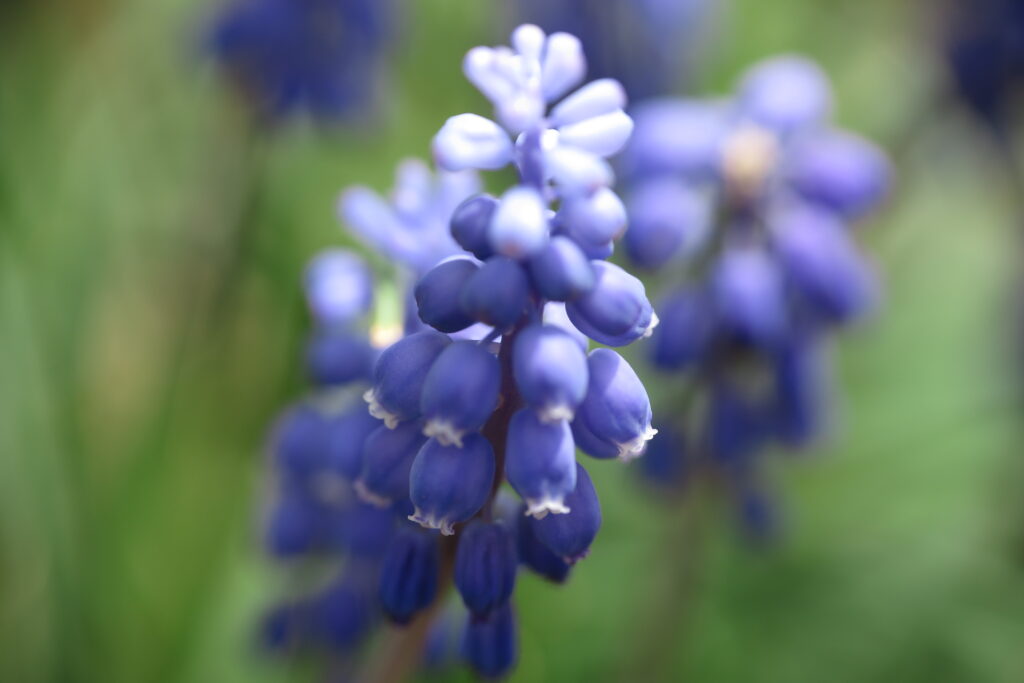
The physical growth form of grape hyacinth is best described as clumping. Individual bulbs produce compact groups of leaves and flower stalks that emerge from a central point. Over time, these clusters gradually increase in size as additional bulbs develop nearby.
Rather than spreading through creeping stems or extensive runners, expansion occurs through concentrated grouping. New bulbs typically form close to the parent bulb, creating dense colonies that become increasingly noticeable with age. This growth style allows the plant to occupy space without becoming excessively invasive in most situations.
A useful comparison is a slowly expanding patch of decorative paving stones. Each bulb contributes another small section to the colony, and together they create a larger visual display. The result is organized expansion rather than random spreading.
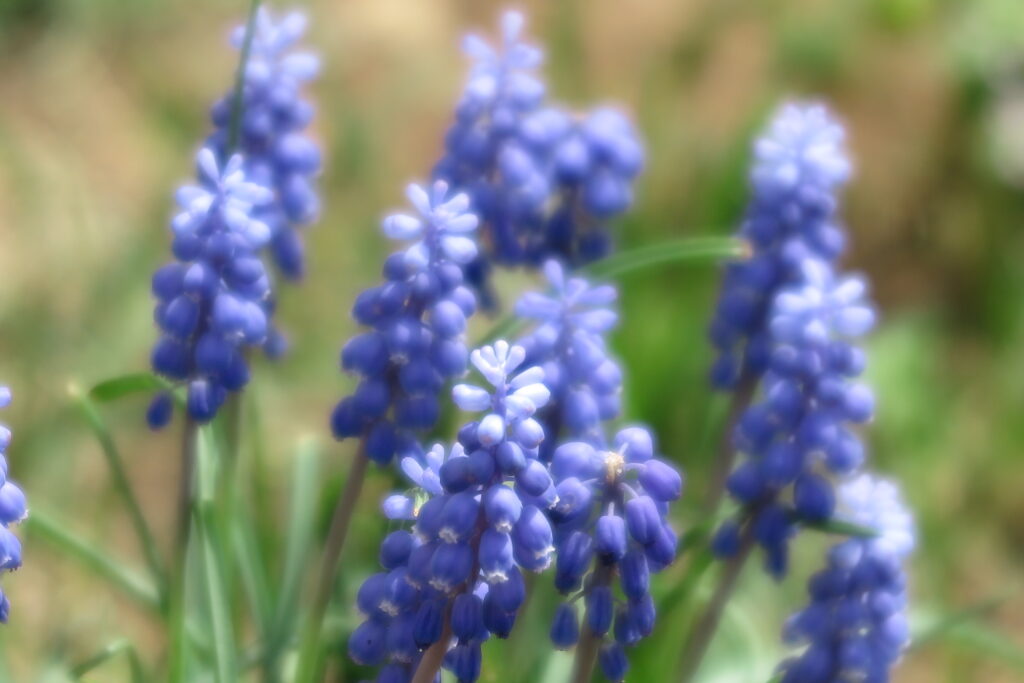
As colonies mature, the plants often create broad drifts of foliage and flowers. Large groupings can appear almost carpet-like when viewed from a distance. However, close inspection reveals that the colony is actually composed of countless individual bulbs growing in close proximity.
The species also demonstrates efficient vertical growth during active periods. Flower stems rise above the foliage, creating distinct layers within the plant structure. This arrangement helps maximize visibility of the blooms while maintaining a compact overall footprint within the landscape.
Grape Hyacinth Reproduction and Annual Life Cycle
The life cycle of grape hyacinth revolves around underground bulbs that serve as storage organs and reproductive structures. These bulbs allow the plant to survive unfavorable seasons while retaining resources needed for future growth. Each year begins with the reactivation of stored energy accumulated during previous growing periods.
Bulb multiplication is the primary method of reproduction. Mature bulbs produce smaller offsets, often called daughter bulbs, which gradually develop into independent plants. As these offsets mature, colonies expand naturally without requiring outside assistance.
Seed production provides a secondary reproductive pathway. Following flowering, successful pollination may result in the formation of seeds capable of producing new plants. Although seed-based establishment generally occurs more slowly than bulb multiplication, it contributes to long-term population persistence in suitable environments.
The seasonal sequence follows a predictable pattern. Growth begins as dormant bulbs become active, followed by leaf development and flowering. After the flowering period concludes, energy is redirected back into the bulb before above-ground portions gradually disappear.
This reproductive strategy helps explain why grape hyacinth often remains present in the same location for decades. A single planting can slowly increase through bulb production while maintaining annual cycles of dormancy and renewal. The combination of bulb multiplication and occasional seed production allows populations to persist long after the original bulbs were introduced to an area.
Popular Searches About Grape Hyacinth
Explore Grape Hyacinth Guide
Explore More Plants

Support Encounters World
Help support wildlife photography and get behind the scenes discoveries on Patreon.