Hyacinth vs Bluebell: Key Differences, Identification, and Comparison Guide
Quick Facts
Plant 1: Grape Hyacinth (Muscari armeniacum)
Plant 2: Bluebell (Hyacinthoides non-scripta)
Plant Type: Perennial Bulbs
Flower Color: Blue, Purple-Blue, Violet
Blooming Season: Spring
Growth Form: Clumping vs Arching Clumps
Leaf Shape: Narrow Strap-Like Leaves
Identification Difficulty: Moderate for Beginners
Most Common Confusion: Similar Blue Spring Flowers
Understanding the Difference Between Hyacinths and Bluebells
Many gardeners and nature enthusiasts confuse grape hyacinths and bluebells because both produce blue-toned flowers during the spring season. At a glance, their blooms can appear similar, especially when viewed from a distance. However, these plants belong to different genera and possess several noticeable differences once examined more closely.
Grape hyacinths originated in southeastern Europe and western Asia, while true bluebells are native to parts of western Europe. Both have become popular ornamental plants and are now cultivated far beyond their native ranges. Their widespread use in gardens contributes to the frequent confusion between the two species.
The misunderstanding often begins with color. Both plants display shades of blue, violet, and purple that stand out against spring greenery. When encountered in photographs or from across a garden bed, casual observers may assume they are looking at the same plant.
Although they share a flowering season and bulb-based growth habit, grape hyacinths and bluebells create very different visual impressions. Learning a few key identification features can quickly eliminate uncertainty. Once these differences are understood, distinguishing between the two becomes relatively straightforward even for beginner gardeners.
Grape Hyacinth vs Bluebell Appearance and Growth Form
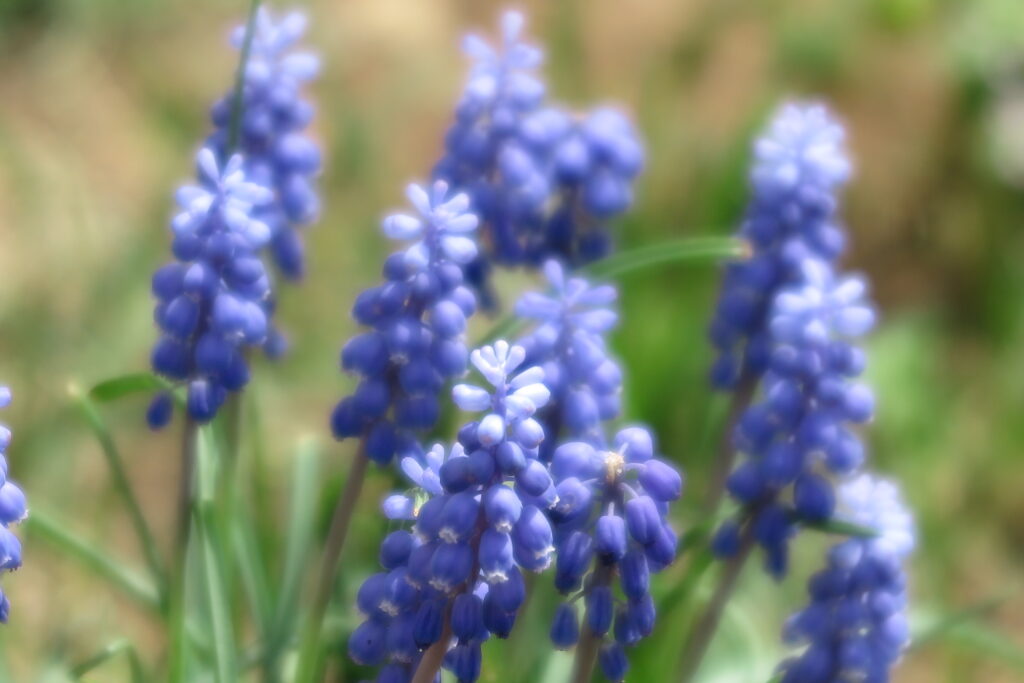
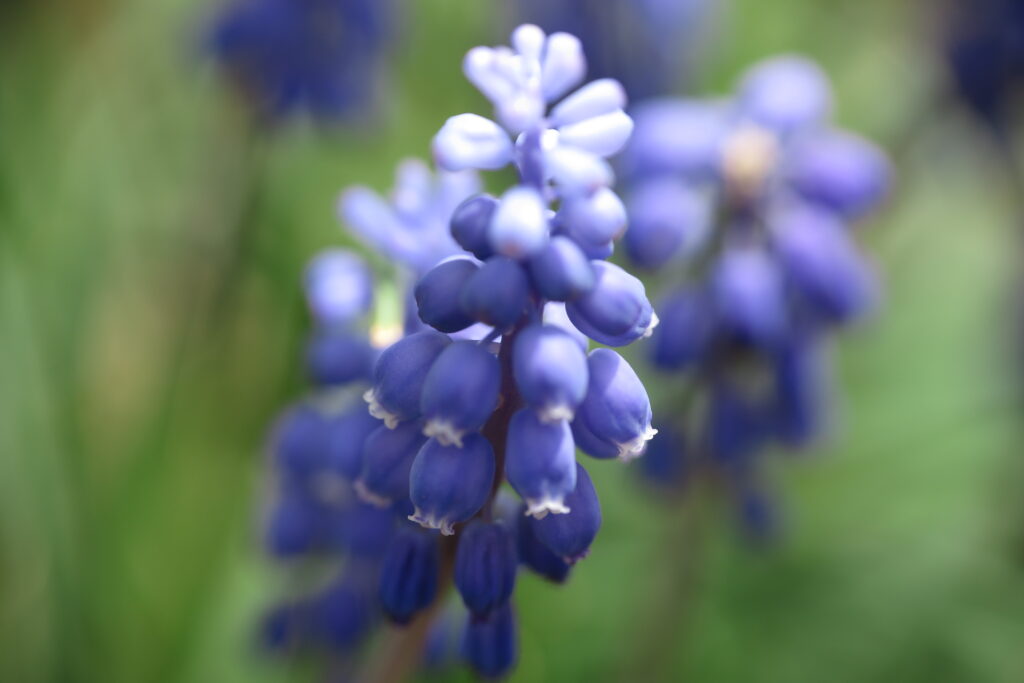
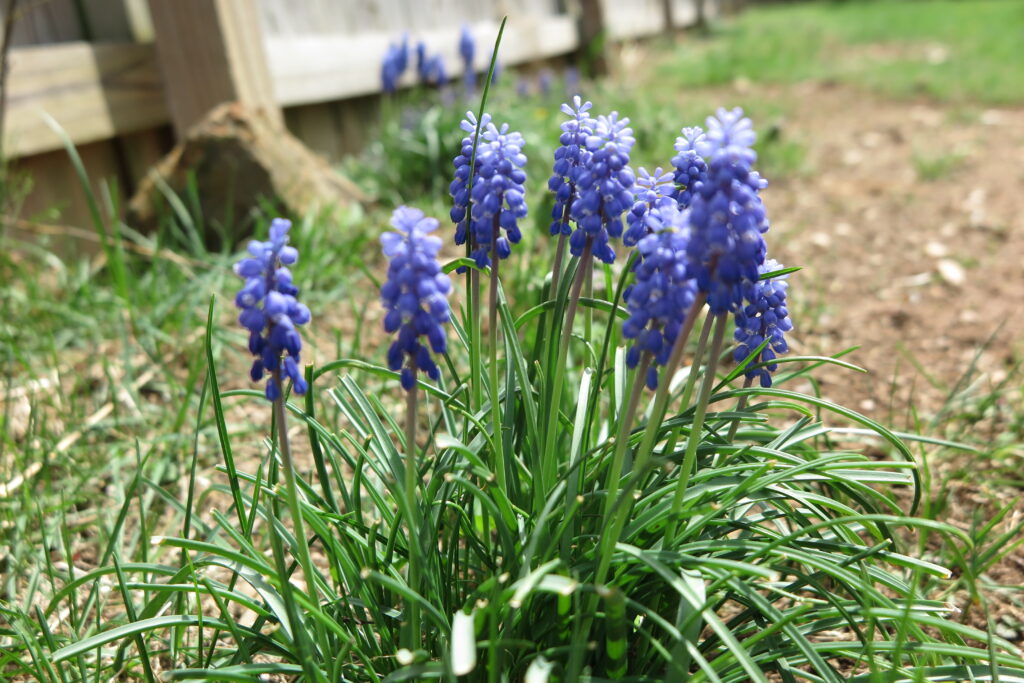
The overall shape of each plant provides one of the easiest ways to tell them apart. Grape hyacinths produce upright flower spikes that rise directly above the foliage. Their blooms remain tightly grouped into dense clusters, creating a compact and structured appearance.
Bluebells display a softer and more relaxed growth form. Instead of upright flower spikes, the stems arch gently downward. This creates a graceful drooping effect that is one of the species’ most recognizable characteristics.
A useful comparison is a bunch of grapes versus a string of hanging bells. Grape hyacinth flowers remain tightly packed together in a dense column, while bluebell flowers hang individually along one side of a curved stem. The difference becomes obvious when both plants are viewed side by side.
Size can also help with identification. Bluebells often appear taller and more open than grape hyacinths. Their flowering stems create greater spacing between blooms, resulting in a lighter and more delicate appearance overall.
From a distance, grape hyacinths frequently resemble small blue spikes emerging from the ground. Bluebells, by contrast, often create flowing drifts of arching flowers that sway gently in the breeze. These contrasting silhouettes provide one of the quickest ways to separate the two species in the landscape.
Flower and Leaf Identification Differences
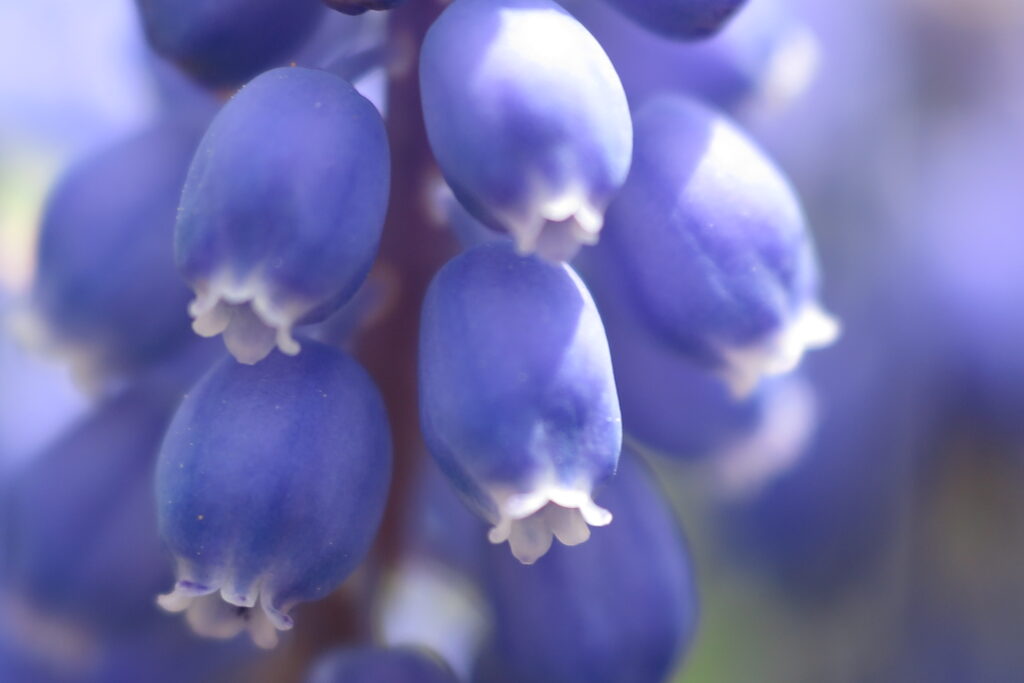
The flowers themselves provide the most reliable identification features. Grape hyacinth blooms are small, rounded, and tightly clustered. Each flower resembles a tiny bead or urn attached directly to the flowering spike.
Bluebell flowers are larger and distinctly bell-shaped. Instead of forming dense clusters, individual flowers hang downward from the stem. The open bell structure gives bluebells their common name and creates a noticeably different visual texture.
Leaf shape offers another helpful clue. Grape hyacinths produce narrow grass-like leaves that emerge from the base of the plant. These leaves are generally slender and upright, contributing to the plant’s compact appearance.
Bluebell leaves are broader and more flexible. They often arch outward rather than remaining upright. When viewed together, bluebell foliage appears softer and less structured than the foliage of grape hyacinths.
A practical comparison would be comparing a bundle of narrow ribbons to a collection of broader straps. Both plants possess elongated leaves, but the proportions and posture differ enough to aid identification when flowers are not fully developed.
Which Plant Is Easier to Identify in the Field?
For most people, grape hyacinths are actually easier to identify once their flower clusters become visible. Few spring flowers produce the distinctive grape-like arrangement that gives the species its name. The dense clusters immediately separate it from many other garden plants.
Bluebells require slightly more careful observation because several species produce bell-shaped flowers. However, the combination of arching stems, drooping blooms, and woodland associations often makes identification straightforward. The one-sided arrangement of flowers along the stem is particularly useful.
Common identification mistakes usually occur when observers focus only on flower color. Since both species commonly display blue and purple shades, relying on color alone often leads to confusion. Examining flower arrangement is generally far more reliable than comparing color.
Photographs taken from a distance can also be misleading. A patch of grape hyacinths may appear similar to bluebells when individual flowers are not visible. Close-up examination almost always reveals the differences immediately.
Ultimately, the easiest rule to remember is simple: if the flowers form a dense upright cluster resembling a bunch of grapes, it is likely a grape hyacinth. If the flowers hang like tiny bells from a curved stem, it is likely a bluebell. This single observation is often enough to distinguish the two species with confidence.
Popular Searches About Grape Hyacinth
Explore Grape Hyacinth Guide
Explore More Plants

Support Encounters World
Help support wildlife photography and get behind the scenes discoveries on Patreon.