Grape Hyacinth Facts Guide: 25 Fascinating Facts About Grape Hyacinth Plants
Quick Facts
Plant Type: Perennial Bulb
Family: Asparagaceae
Native Range: Southeastern Europe and Western Asia
Average Height: 6–12 Inches (15–30 cm)
Bloom Color: Blue, Purple-Blue, Violet, White
Blooming Season: Early to Mid Spring
Lifespan: Many Years
Interesting Grape Hyacinth Facts and Background Information
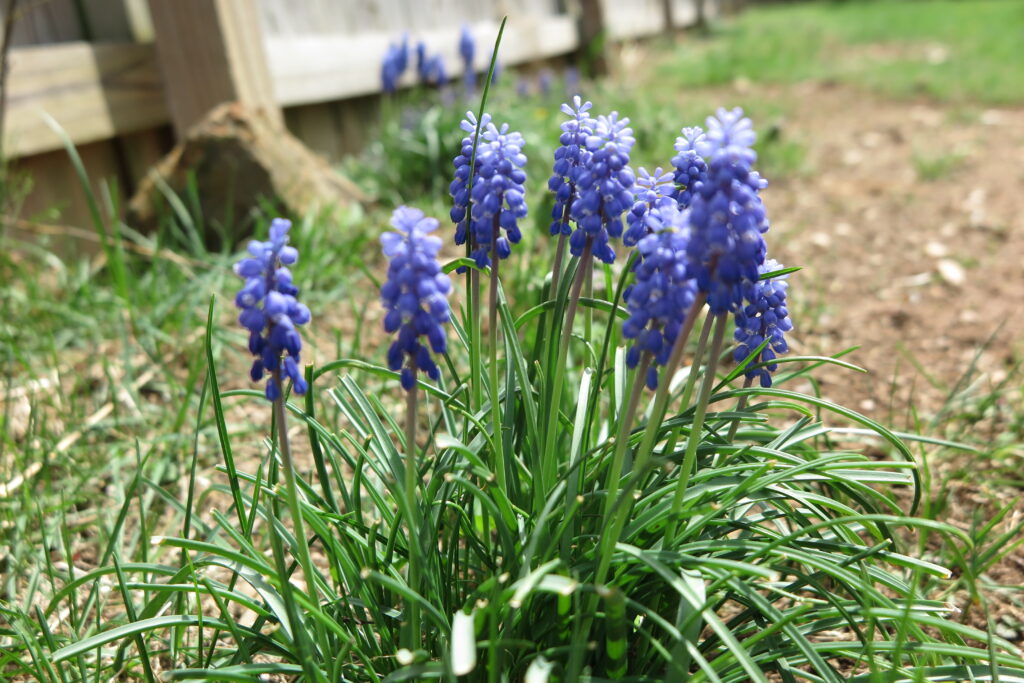
Grape hyacinth is one of the most recognizable spring-flowering bulbs found in gardens throughout the world. Despite its common name, it is not a true hyacinth. The name comes from the plant’s clustered flowers, which resemble a miniature bunch of grapes growing at the top of each stem.
The species belongs to the genus Muscari, a group containing dozens of closely related plants. The most commonly cultivated species is Muscari armeniacum, which is responsible for many of the blue flowering displays seen in parks, gardens, and naturalized landscapes. Its popularity has helped spread the plant far beyond its native range.
One of the most surprising facts about grape hyacinth is its longevity. Individual bulbs can survive for many years underground, returning each spring with little maintenance. Some naturalized colonies have persisted for decades after the original planting.
Unlike many ornamental flowers that require intensive care, grape hyacinths often thrive with minimal attention. This combination of beauty and reliability has made them one of the most widely planted spring bulbs in temperate climates. Their ability to naturalize successfully contributes to their continued popularity among gardeners and landscape designers.
Unique Characteristics That Make Grape Hyacinths Stand Out
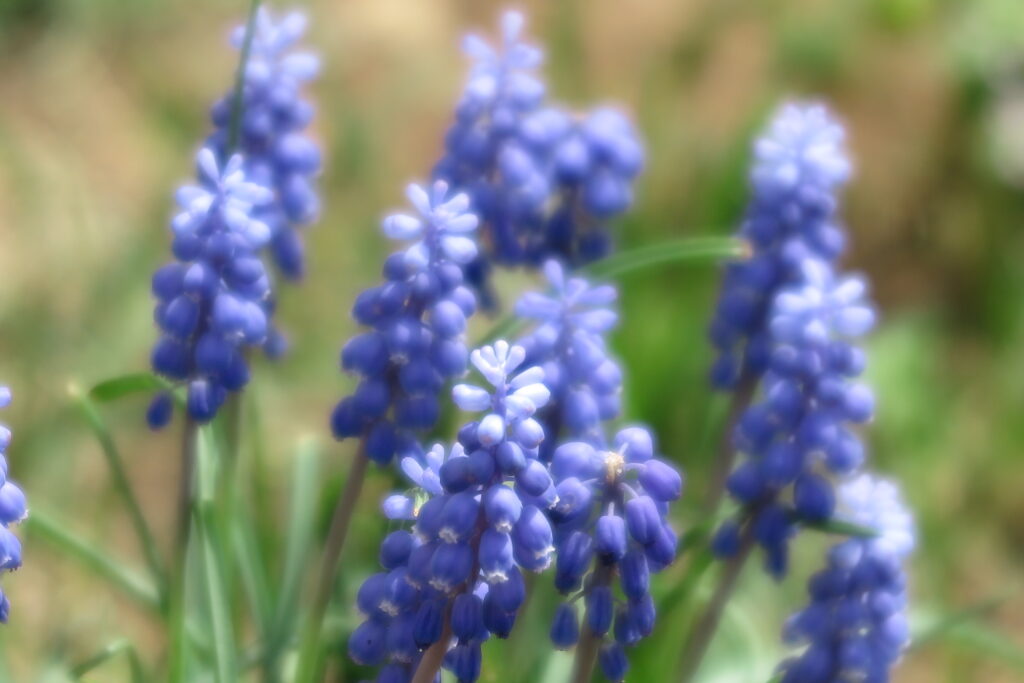
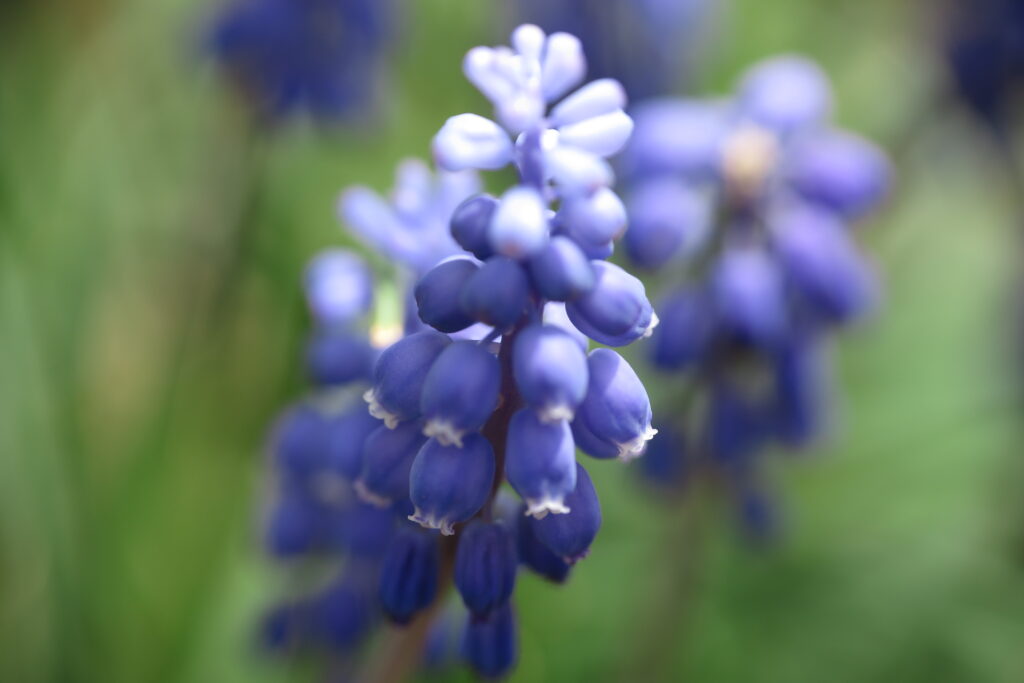
The flower clusters are the feature most people notice first. Each stem supports dozens of tiny flowers packed tightly together, creating a shape remarkably similar to a cluster of grapes. Few other spring flowers possess such a distinctive floral arrangement.
Color is another defining characteristic. Although blue varieties are the most common, grape hyacinths can also produce white, pale violet, and deeper purple blooms. The rich blue shades often stand out dramatically against fresh spring greenery.
A lesser-known fact is that the flowers sometimes possess a light fragrance. While not as strongly scented as traditional hyacinths, some varieties produce a subtle sweet aroma that attracts pollinators. This fragrance is often most noticeable on calm spring mornings.
The leaves are surprisingly simple compared to the flowers. Long, narrow blades emerge from the base of the plant and resemble thick grass. This understated foliage helps draw attention toward the colorful blooms, allowing the flowers to become the primary visual feature.
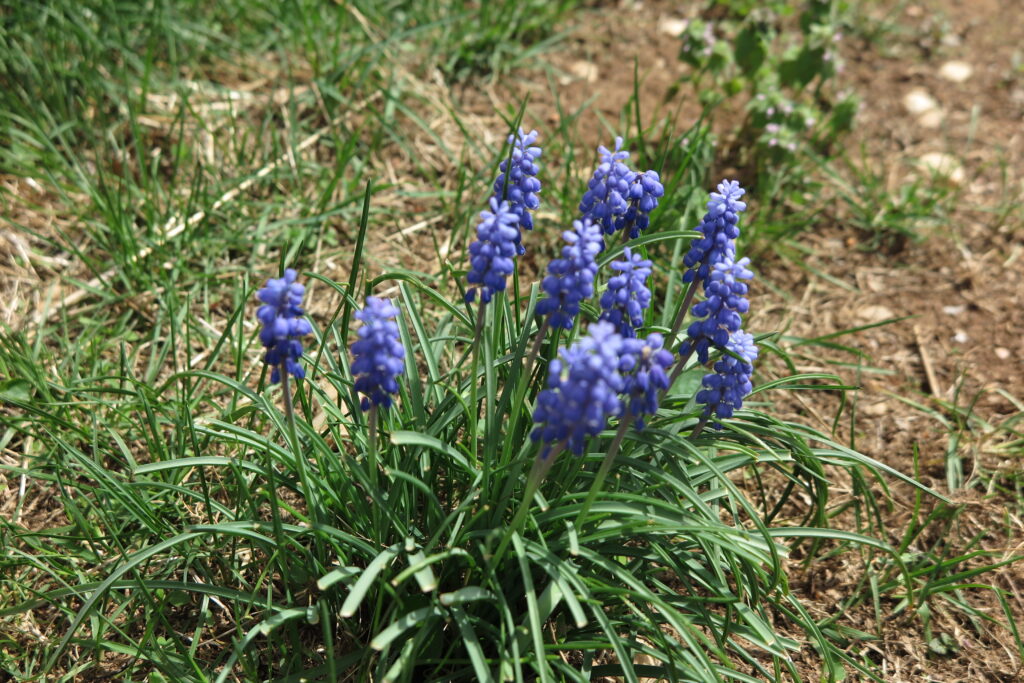
Another interesting characteristic is the plant’s compact size. Most grape hyacinths remain under a foot tall, yet large colonies can create dramatic displays. This contrast between small individual plants and impressive group plantings is one reason they remain so effective in landscape design.
Surprising Facts About Grape Hyacinth Growth and Survival
Grape hyacinths survive unfavorable seasons through underground bulbs that store energy and nutrients. These bulbs function like natural storage containers, allowing the plant to remain dormant during periods when active growth would be difficult. This adaptation helps explain the species’ long-term success.
The bulbs multiply naturally over time. Mature bulbs produce smaller daughter bulbs, which eventually become independent plants. A small planting can gradually develop into a large colony without requiring additional planting by the gardener.
Many people assume the flowers spread primarily through seeds, but bulb multiplication is usually the dominant method of expansion. This underground growth allows colonies to increase steadily while remaining concentrated within a particular area.
A useful comparison is a savings account. During the growing season, the leaves collect energy through photosynthesis and deposit those resources into the bulb. The following spring, the plant withdraws those stored reserves to support new growth and flowering.
Another remarkable fact is the species’ cold tolerance. Grape hyacinth bulbs can survive harsh winter conditions beneath the soil. Their ability to endure freezing temperatures has helped the plant establish itself across a wide range of climates.
Fascinating Facts About Grape Hyacinths in Gardens and Nature
Grape hyacinths are frequently planted alongside tulips and daffodils because they bloom at similar times. The contrast between blue grape hyacinths and yellow daffodils is particularly popular in spring landscapes. This combination appears in countless public gardens around the world.
The plant attracts a variety of early-season pollinators. Bees are among the most common visitors, taking advantage of the flowers when relatively few nectar sources are available. These interactions help support pollinator activity during the early stages of spring.
In some regions, grape hyacinths have become naturalized outside cultivated gardens. While they are generally not considered highly invasive, they can spread gradually through bulb multiplication and occasional seed production. This ability allows colonies to persist long after initial planting.
A surprising fact is that many people mistake grape hyacinths for bluebells. Both species produce blue flowers during spring, but their flower structures are entirely different. Grape hyacinths form dense upright clusters, while bluebells produce hanging bell-shaped blooms on arching stems.
Perhaps the most impressive fact is how much visual impact such a small plant can create. A single grape hyacinth may seem modest, but hundreds flowering together can transform an ordinary landscape into a striking display of blue and purple color. This combination of compact size, reliability, and beauty has secured grape hyacinth’s place as one of the world’s most beloved spring-flowering bulbs.
Popular Searches About Grape Hyacinth
Explore Grape Hyacinth Guide
Explore More Plants

Support Encounters World
Help support wildlife photography and get behind the scenes discoveries on Patreon.