Grape Hyacinth Identification Guide: How to Identify Grape Hyacinth Plants
Quick Facts
Leaf Shape: Narrow, Strap-Like, Grass-Like
Stem Type: Upright Flowering Stem
Root System: Fibrous Roots from Underground Bulbs
Flower Structure: Dense Cluster of Bell-Shaped Flowers
Growth Form: Clumping
Texture: Smooth and Waxy
Color Variations: Deep Blue, Violet-Blue, Purple, White
Identifying Grape Hyacinth in the Landscape
Grape hyacinth (Muscari armeniacum) is one of the most recognizable spring-flowering bulbs found throughout temperate regions of the world. Native to southeastern Europe and western Asia, the species has been cultivated so widely that it now appears far beyond its original range. Its compact size and distinctive flower clusters make it a familiar sight in gardens, parks, and naturalized landscapes.
During the spring season, grape hyacinth often stands out against freshly emerging vegetation. While many plants are still developing leaves or preparing to bloom, this species quickly produces colorful flower spikes that attract attention. Large groups can create striking displays of blue and purple shades that are visible from considerable distances.
The plant is commonly encountered in ornamental settings, but established colonies are not limited to managed gardens. Naturalized populations frequently occur in areas where bulbs have persisted for years or spread beyond their original planting sites. These recurring displays contribute to the plant’s widespread recognition among gardeners and nature enthusiasts alike.
Unlike many spring flowers that rely on a single large bloom for identification, grape hyacinth is known for the arrangement of numerous small flowers gathered together on a single stem. This unique appearance allows observers to recognize the species even before examining individual plant parts closely. Although several plants share similar coloration, few possess the same overall visual presentation.
Grape Hyacinth Structure and Overall Growth Form
At a broad level, grape hyacinth is a compact perennial that develops from underground bulbs. Most plants remain relatively small, typically reaching heights of only several inches above the ground. Despite this modest stature, groups of flowering plants often create a surprisingly bold visual presence.
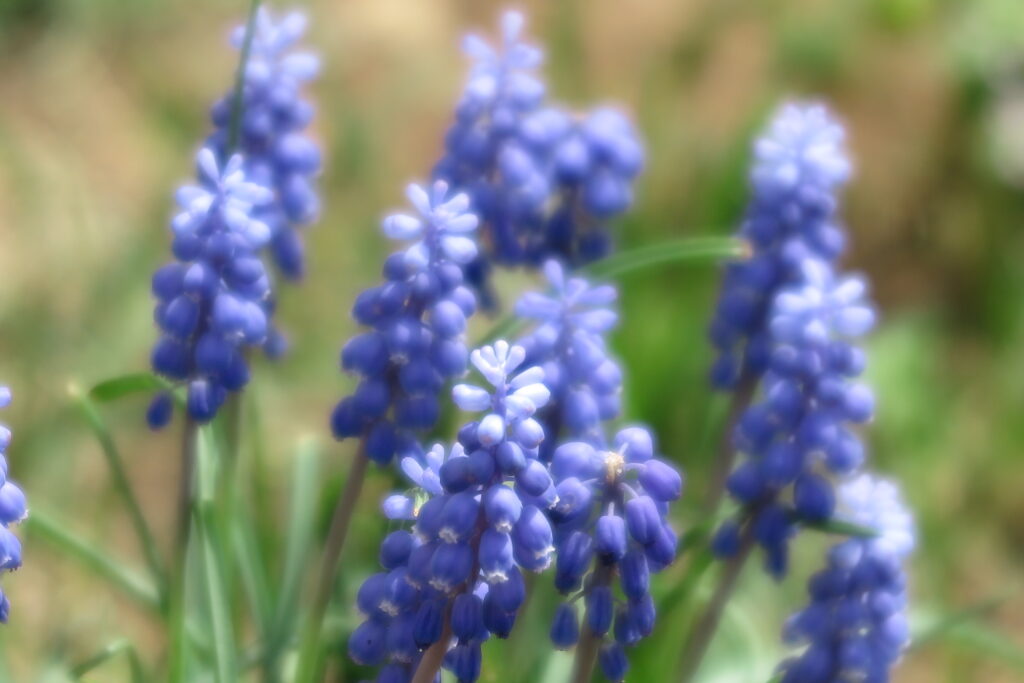
The species grows in organized clusters rather than sprawling outward across large areas. Individual plants emerge close together, producing concentrated patches that become denser over time. This clustered appearance helps distinguish grape hyacinth from many spring flowers that grow as isolated stems or scattered individuals.
From a distance, flowering colonies often resemble patches of blue mist resting just above the landscape. The blooms rise slightly above the foliage, creating distinct layers within the plant’s overall form. This arrangement gives the species a balanced and symmetrical appearance that many gardeners find appealing.
A useful comparison is a miniature bouquet emerging directly from the soil. Instead of producing long branching stems, grape hyacinth keeps its growth compact and upright. Each flowering stem contributes to the overall shape without creating a tangled or irregular appearance.
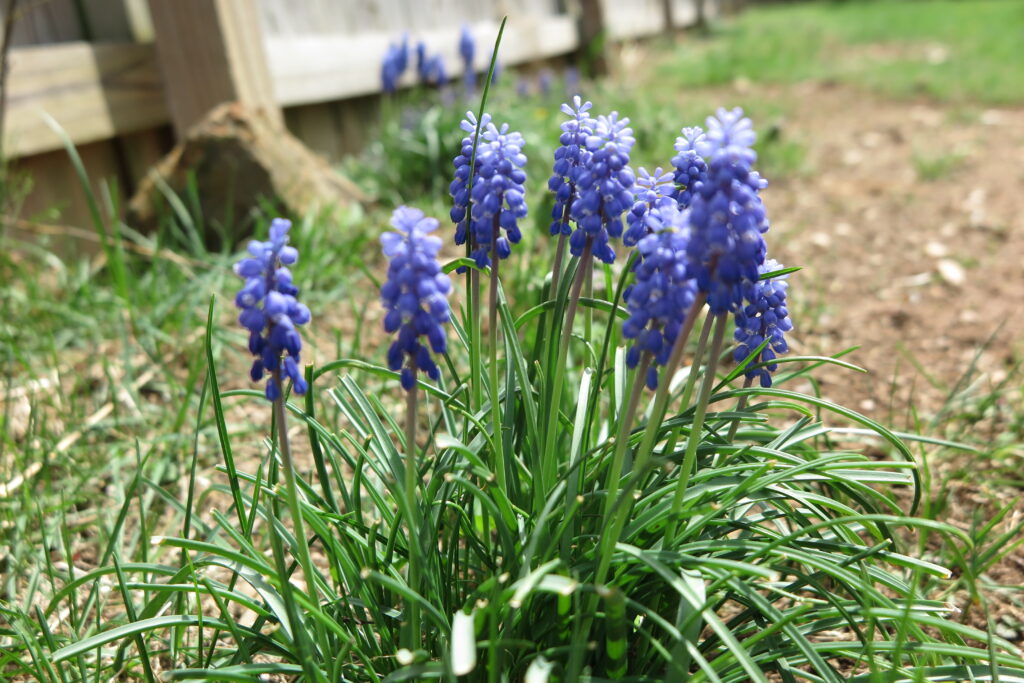
When viewed as a whole, the plant appears orderly and structured. The narrow foliage remains concentrated near the base while flower spikes rise above it in neat clusters. This combination creates a clean silhouette that remains recognizable even when the flowers are not examined closely.
Grape Hyacinth Leaves, Stems, and Root Structure
The leaves of grape hyacinth are among the easiest vegetative features to recognize. They are long, narrow, and strap-like, resembling thick blades of grass. Most leaves emerge directly from the base of the plant, creating a fountain-like arrangement around the flowering stems.
Leaf coloration is typically medium to dark green, providing a strong contrast against the blue flowers. The surface is generally smooth and lacks the prominent veins found in many broadleaf plants. Their simple appearance directs attention toward the flowering structures while still serving as an important identification feature.
Flowering stems emerge from the center of the leaf cluster and grow upright throughout the blooming period. These stems are smooth, sturdy, and usually unbranched. Unlike some flowering plants that produce multiple branching stalks, grape hyacinth typically supports a single flower cluster on each stem.
Beneath the soil, the plant develops from a bulb rather than an extensive root crown. Fibrous roots extend outward from the bulb and anchor it securely in the ground. This underground structure acts as a storage organ, holding nutrients and energy reserves that support future growth.
A helpful comparison is to imagine the root system as a compact underground storage container connected to a network of fine cords. The bulb remains central while the roots spread outward in search of moisture and nutrients. Together, the leaves, stems, and bulb-based root system create a structural design that is both efficient and easy to recognize.
Grape Hyacinth Flowers and Reproductive Features
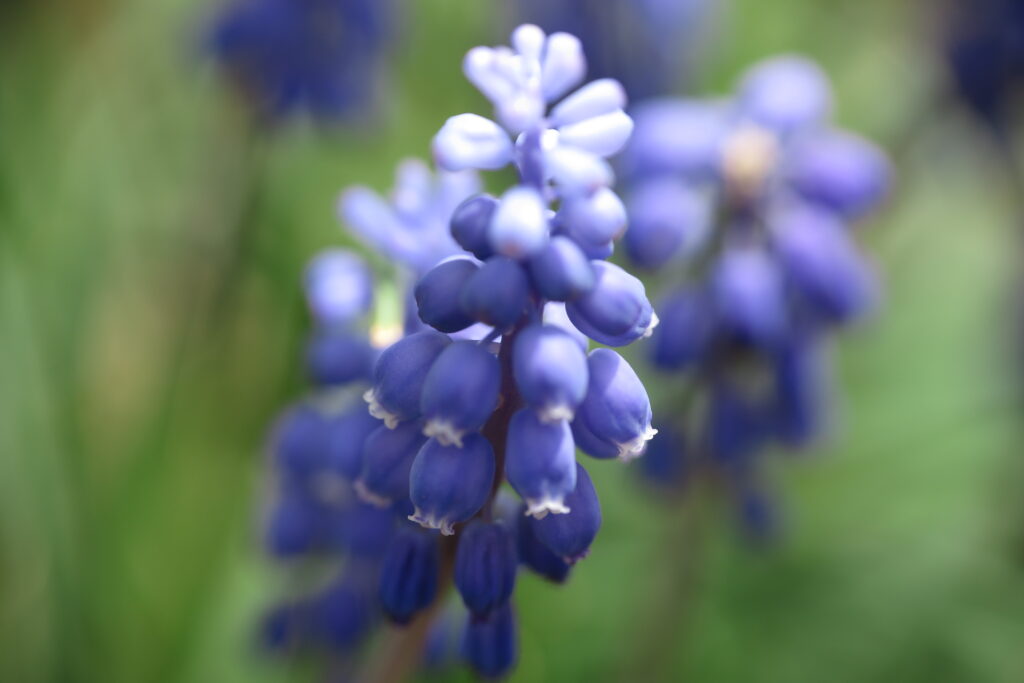
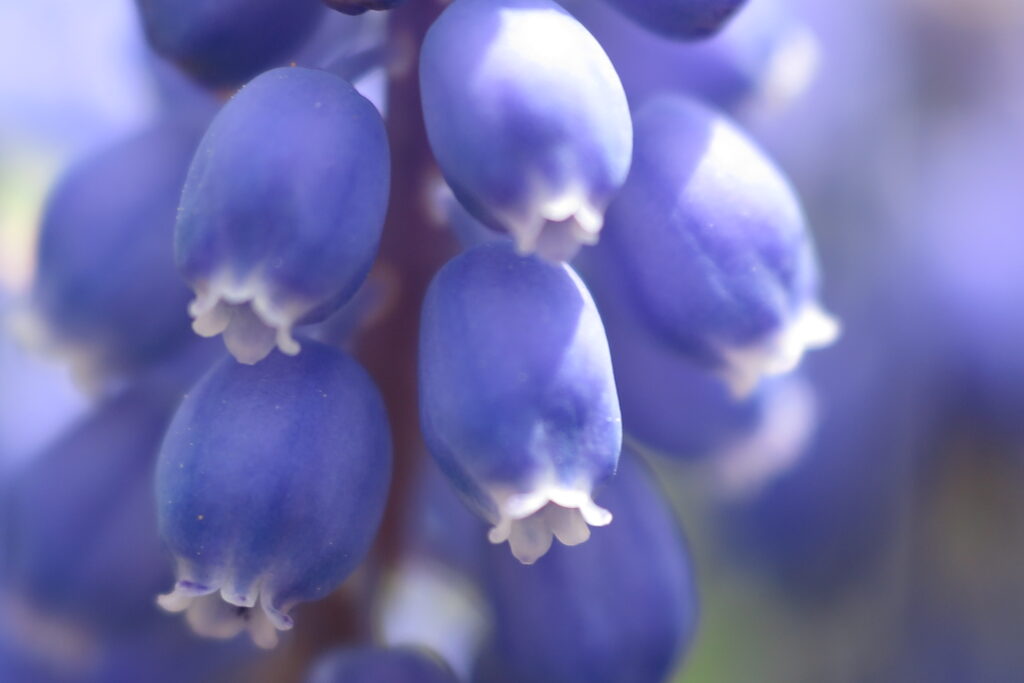
The flowers are the defining characteristic of grape hyacinth and the feature responsible for its common name. Individual blooms are tightly packed together along the upper portion of the flowering stem, creating a shape that closely resembles a cluster of grapes. This distinctive arrangement separates the species from nearly all other common spring flowers.
Each flower is small, rounded, and slightly bell-shaped. The opening at the tip is narrow, giving the bloom an urn-like appearance. When viewed closely, dozens of these miniature flowers combine to create a dense floral spike with remarkable texture and detail.
Coloration varies among cultivated varieties, although shades of blue and violet-blue are most common. Some selections display deeper purple tones, while others produce nearly white flowers. Despite these variations, the clustered structure remains consistent and serves as the most reliable identification feature.
Following flowering, the plant may produce seed capsules that develop from pollinated blooms. These structures are relatively small and less noticeable than the flowers themselves. Most observers identify the species long before seeds become visible because the flowering display is so distinctive.
A useful real-world comparison is a bunch of tiny blueberries attached to the top of a slender stem. While not identical in shape, the overall visual effect is surprisingly similar. Combined with the narrow leaves and upright growth habit, the dense flower clusters provide one of the easiest and most reliable ways to identify grape hyacinth in the field.
Popular Searches About Grape Hyacinth
Explore Grape Hyacinth Guide
Explore More Plants

Support Encounters World
Help support wildlife photography and get behind the scenes discoveries on Patreon.