Eastern Spring Beauty Identification Guide: How to Recognize This Native Wildflower
Quick Facts
Leaf Shape: Narrow, Linear to Lance-Shaped
Stem Type: Slender, Smooth, Herbaceous
Root System: Underground Corm with Fibrous Roots
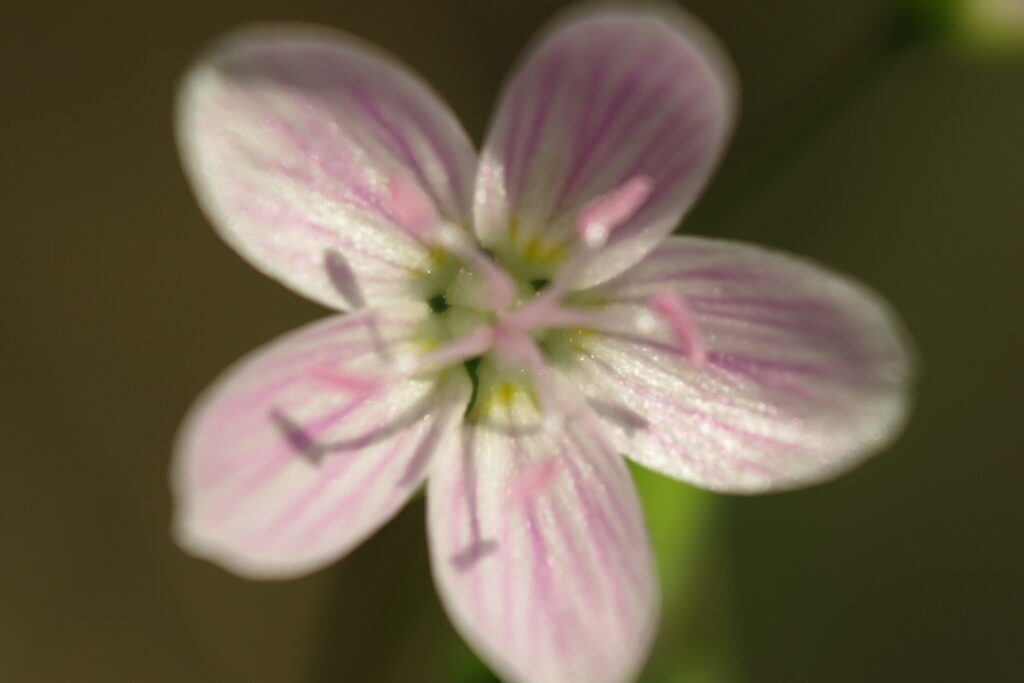
Flower Structure: Five Petals with Distinct Pink Veining
Growth Form: Upright, Clumping
Texture: Smooth and Delicate
Color Variations: White, Pale Pink, Deep Pink Veining
Identifying Eastern Spring Beauty in the Wild
Eastern Spring Beauty (Claytonia virginica) is one of the most recognizable spring wildflowers found across eastern North America. Despite its small size, the species possesses several distinctive features that allow it to stand out among the many plants emerging during early spring. Careful observation reveals a combination of delicate flowers, slender foliage, and graceful structure that is difficult to overlook.
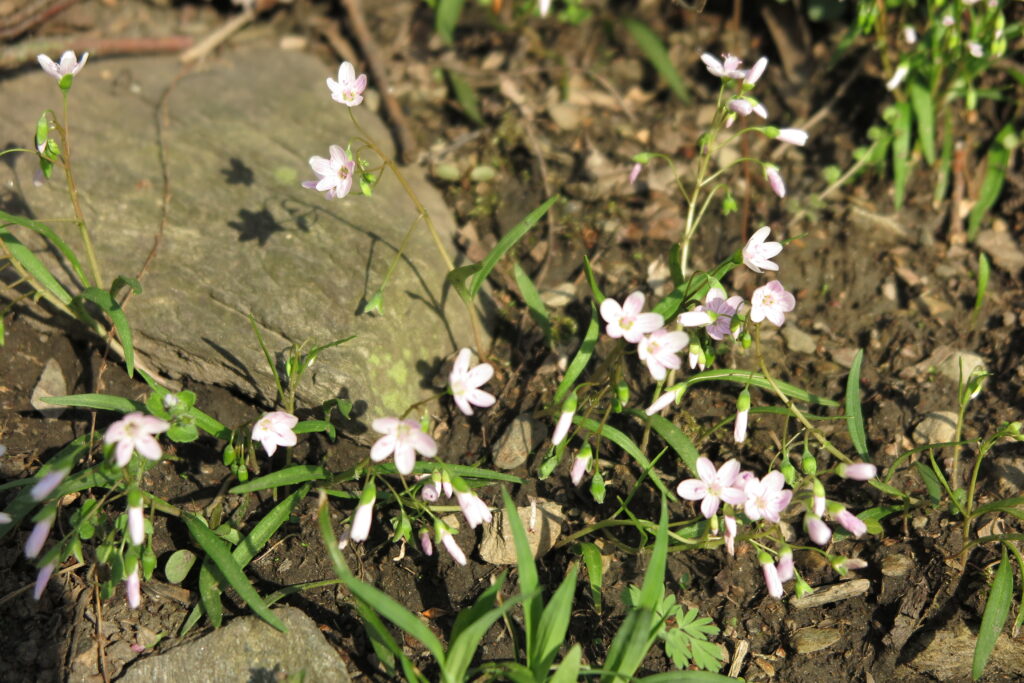
Throughout its native range, Eastern Spring Beauty is often encountered by hikers, photographers, and nature enthusiasts searching for signs of seasonal change. The plant frequently appears in groups, creating patches of soft color that contrast against the darker tones of the forest floor. Even from a distance, these blooming colonies can attract attention due to their bright appearance.
At first glance, some observers may mistake Eastern Spring Beauty for other small spring-blooming wildflowers. However, several structural features quickly separate it from similar species. Its distinctive flower pattern, narrow foliage, and upright growth habit create a recognizable combination that becomes easier to identify with experience.
Learning to recognize Eastern Spring Beauty requires examining the plant as a whole rather than focusing on a single characteristic. The relationship between its leaves, stems, flowers, and underground structures creates a unique profile. When these features are considered together, identification becomes straightforward even for beginning wildflower enthusiasts.
Eastern Spring Beauty Overall Form and Physical Appearance
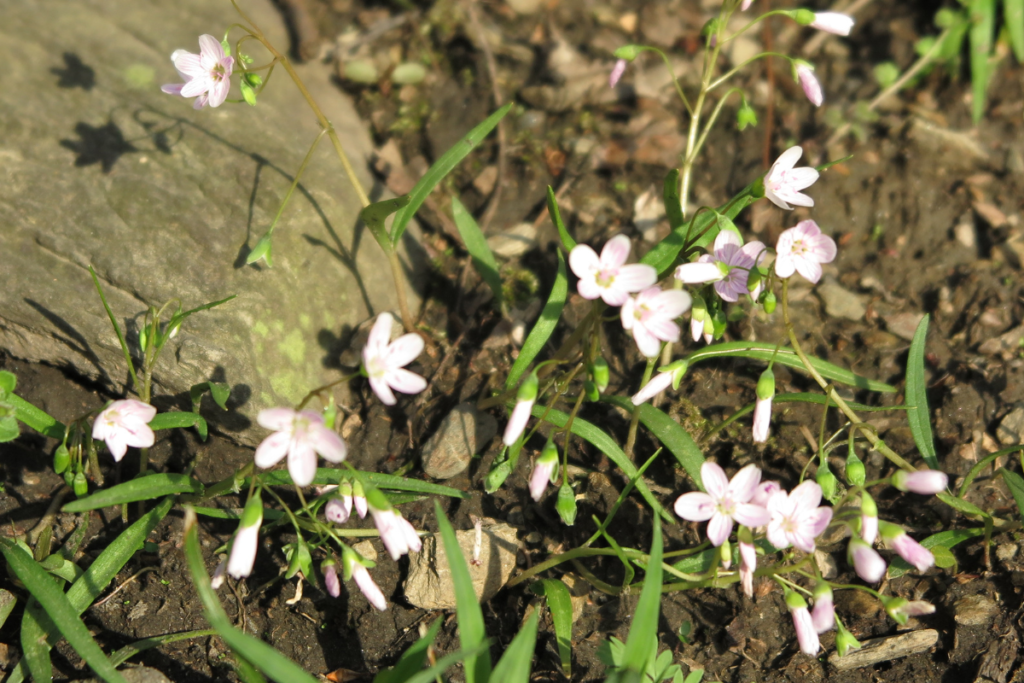
Eastern Spring Beauty is a relatively small perennial wildflower that maintains a compact yet elegant appearance. Most plants remain only a few inches tall, producing a delicate profile that blends naturally into surrounding vegetation. Although individual plants are modest in size, colonies can create impressive displays across larger areas.
The species grows in an upright clumping form rather than spreading as a dense mat. Individual stems emerge from the ground and support flowers above the foliage, creating a light and airy appearance. This arrangement allows each bloom to remain visible while preventing the plant from appearing crowded.
When viewed from a distance, a flowering patch often resembles a scattering of tiny pink stars across the landscape. The combination of numerous blossoms and slender stems creates a soft visual texture that stands apart from larger, coarser plants. This distinctive appearance makes colonies particularly noticeable during peak bloom.
The overall shape remains balanced and refined throughout the flowering period. Unlike sprawling ground covers or towering herbaceous plants, Eastern Spring Beauty occupies a middle ground characterized by compact elegance. Its growth habit allows it to attract attention without dominating the surrounding plant community.
A useful comparison is to imagine a miniature bouquet emerging directly from the forest floor. Each stem contributes to a larger display while retaining its own individual form. This organized yet natural arrangement is one of the easiest characteristics to recognize when observing the species in the field.
Eastern Spring Beauty Leaves, Stems, and Underground Structures
The leaves of Eastern Spring Beauty are among its most useful identifying features. They are narrow, elongated, and generally linear to lance-shaped in appearance. Many leaves resemble thin blades of grass at first glance, although closer inspection reveals a broader and smoother structure.
Leaf coloration is typically bright green, providing a fresh appearance during early spring. The surface remains smooth without noticeable hairs, giving the foliage a clean and polished look. Most leaves emerge near the base of the plant, helping create a compact overall profile.
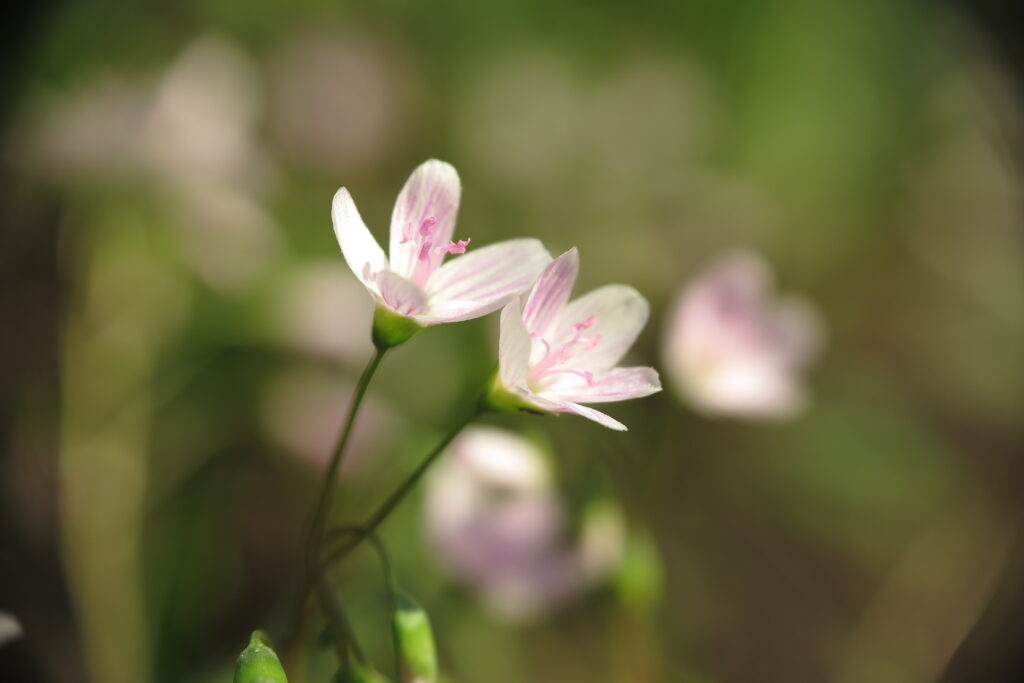
The stems are slender, smooth, and herbaceous. Their thin structure allows flowers to appear elevated above the surrounding foliage without adding visual bulk. Despite their delicate appearance, these stems are strong enough to support blooms through changing spring weather conditions.
Below ground, Eastern Spring Beauty relies on a corm rather than a traditional taproot. This underground storage structure resembles a small bulb-like organ that contains nutrients and energy reserves. Fibrous roots extend outward from the corm, anchoring the plant and absorbing water from the surrounding soil.
A helpful comparison is to think of the root system as a rechargeable battery buried beneath the surface. The corm stores resources throughout the year and supports new growth when favorable conditions return. This hidden structure plays a major role in the plant’s ability to reappear reliably each spring.
Eastern Spring Beauty Flowers and Reproductive Features
The flowers provide the most recognizable feature of Eastern Spring Beauty and are often the first characteristic people notice. Each bloom consists of five petals arranged in a symmetrical star-like pattern. When fully open, the flower presents a broad, flat face that is highly visible despite its small size.
Coloration varies from nearly pure white to soft shades of pink. Regardless of the base color, most flowers display darker pink veins extending outward across the petals. These lines create one of the most reliable identification markers and help distinguish the species from many similar wildflowers.
At the center of each flower are the reproductive structures responsible for pollination and seed production. The stamens and pistil are positioned prominently within the bloom, creating a contrasting focal point against the lighter petals. Close-up observation often reveals yellow or pinkish tones concentrated near the flower’s center.
The veined petal pattern can be compared to fine brushstrokes painted across a white canvas. Few spring wildflowers display such consistent striping, making this feature particularly useful for identification. Even photographs taken from several feet away often capture these distinctive markings.
Following pollination, small seed capsules develop where flowers once bloomed. These reproductive structures remain considerably less noticeable than the flowers themselves but contribute to the plant’s continued presence across its range. For identification purposes, however, the combination of five petals, prominent pink veining, and a star-like shape remains the defining characteristic of Eastern Spring Beauty.
Popular Searches About Eastern Spring Beauty
Explore Eastern Spring Beauty Guide
Explore More Plants

Support Encounters World
Help support wildlife photography and get behind the scenes discoveries on Patreon.