Eastern Spring Beauty Life Cycle Guide: From Seed to Spring Bloom
Quick Facts
Life Cycle Type: Perennial
Primary Reproduction: Seeds and Corms
Active Growth Season: Early Spring
Flowering Period: March–May
Seed Production: Late Spring
Dormancy Period: Late Spring through Winter
Average Lifespan: Multiple Years
Understanding the Eastern Spring Beauty Life Cycle
Eastern Spring Beauty (Claytonia virginica) follows a fascinating life cycle that differs significantly from many common garden flowers. Rather than remaining visible throughout the growing season, this native wildflower completes most of its above-ground activity during a brief period in spring. The rest of the year is spent hidden beneath the soil.
Native to eastern North America, Eastern Spring Beauty has evolved a strategy that allows it to take advantage of favorable conditions before trees and larger plants fully leaf out. This timing provides access to sunlight and resources that become less available later in the year. As a result, the species follows a highly specialized seasonal schedule.
The plant’s annual cycle revolves around periods of rapid activity followed by extended dormancy. During its active phase, Eastern Spring Beauty must emerge, grow leaves, flower, reproduce, and store energy for the future. These processes occur within a surprisingly short time frame.
Although the flowers often attract the most attention, they represent only one stage of a much larger life cycle. Beneath the surface, important developmental processes continue throughout the year. Understanding the full sequence helps explain how this delicate wildflower persists across such a broad geographic range.
Eastern Spring Beauty Early Growth and Spring Emergence
The life cycle begins beneath the soil where a small underground corm survives through winter. This storage structure contains nutrients and energy accumulated during previous growing seasons. Even while snow may still cover the ground, the corm remains ready to support new growth when conditions improve.
As temperatures gradually rise, new shoots begin developing from the corm. These shoots push upward through the soil and quickly produce leaves. Because the plant emerges early, it often becomes visible before many neighboring species have begun active growth.
Leaf development occurs rapidly once emergence begins. The narrow green leaves capture sunlight and immediately begin producing energy through photosynthesis. This early growth period is critical because it provides resources needed for flowering and future survival.
The plant’s emergence strategy can be compared to an early riser taking advantage of a quiet morning before the rest of the world wakes up. By becoming active before many competitors, Eastern Spring Beauty gains access to sunlight and resources that later become less available.
Within a relatively short period after emergence, the plant transitions toward its next life stage. What begins as a small cluster of leaves soon develops into a flowering wildflower capable of reproduction. This rapid progression is one of the defining features of the species.
Eastern Spring Beauty Flowering and Seed Production
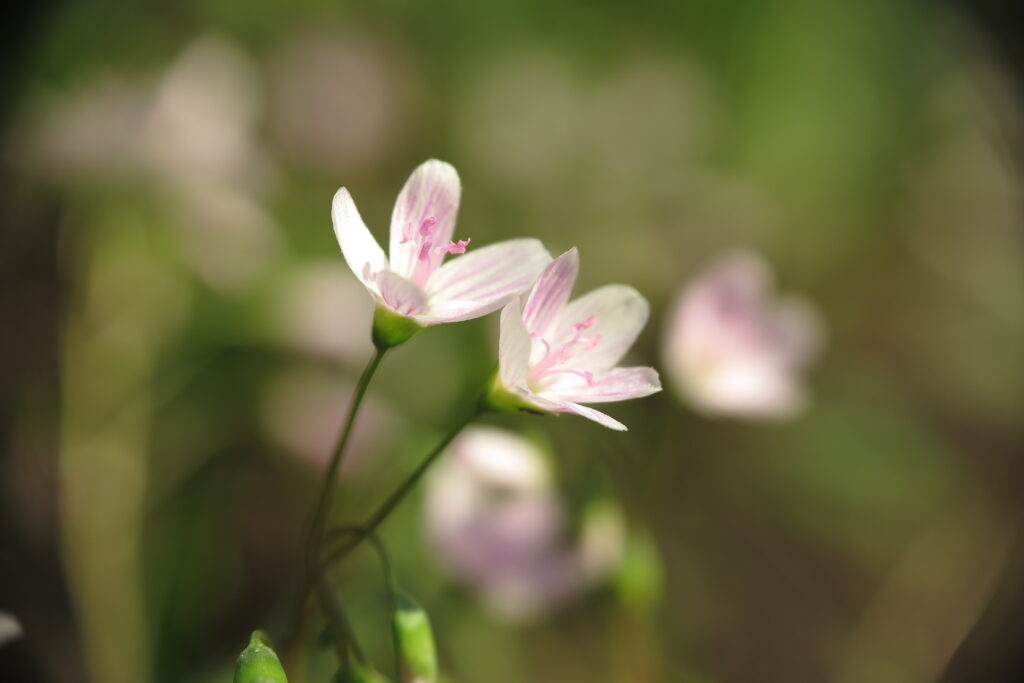
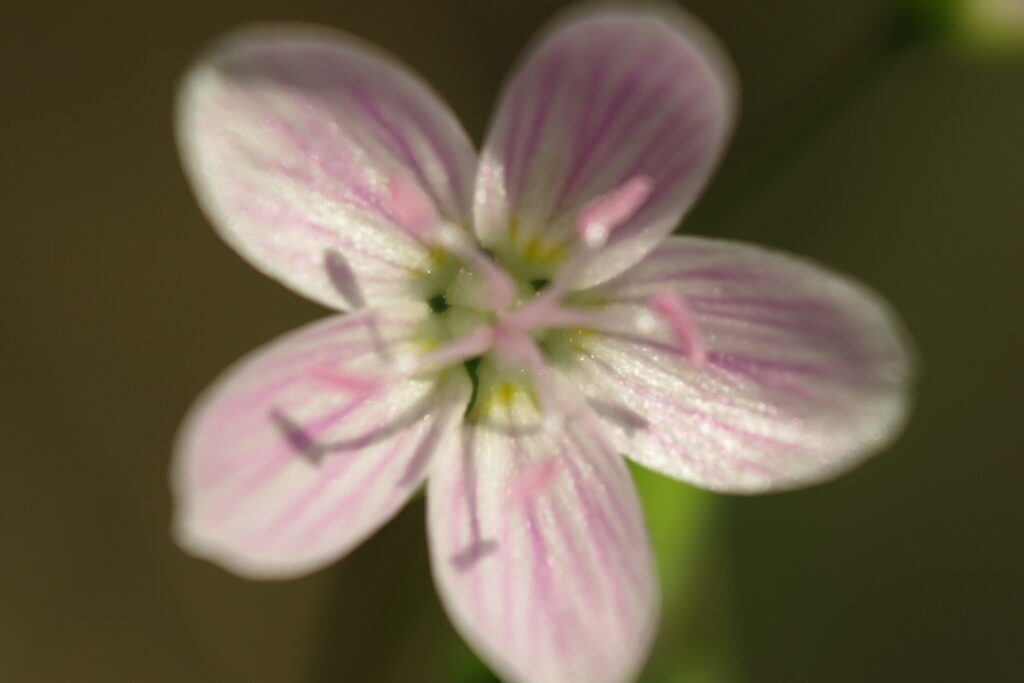
Following leaf development, flowering stems begin to form and elevate the blooms above the foliage. The characteristic pink-veined flowers open during favorable weather conditions and become highly visible within spring landscapes. This flowering stage represents the reproductive centerpiece of the plant’s annual cycle.
Pollinating insects play an important role during this phase. Native bees and other spring-active insects visit the flowers while collecting nectar and pollen. Their movements between blooms transfer pollen and allow successful fertilization to occur.
After pollination, the flowers gradually begin transitioning into seed-producing structures. Petals eventually fade, while developing seed capsules become increasingly important. Although less visually striking than the flowers themselves, these structures are essential for the continuation of future generations.
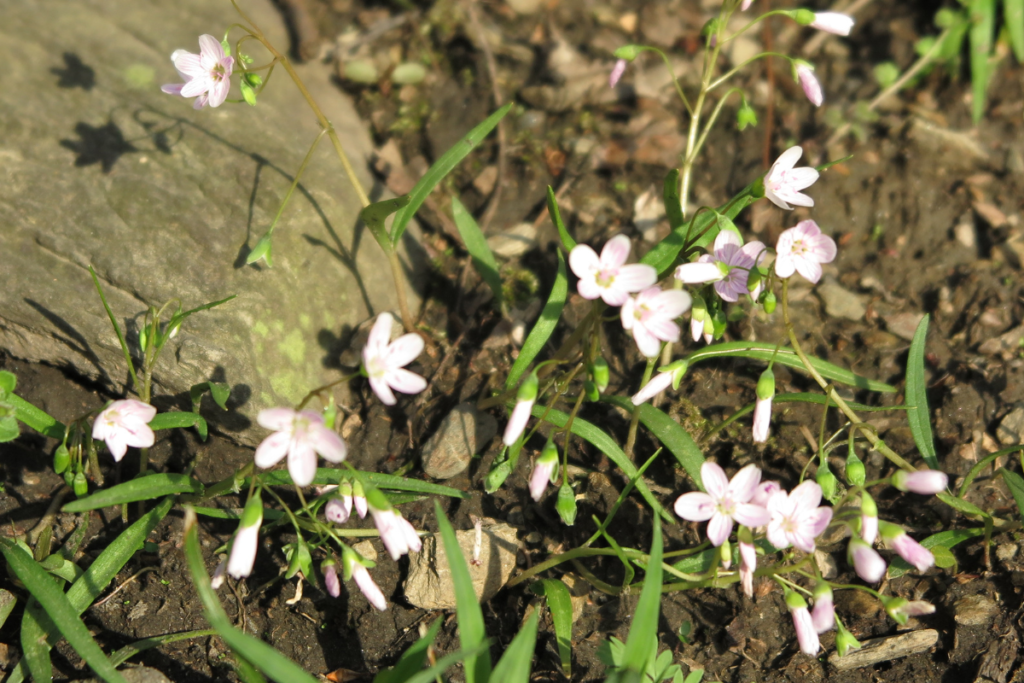
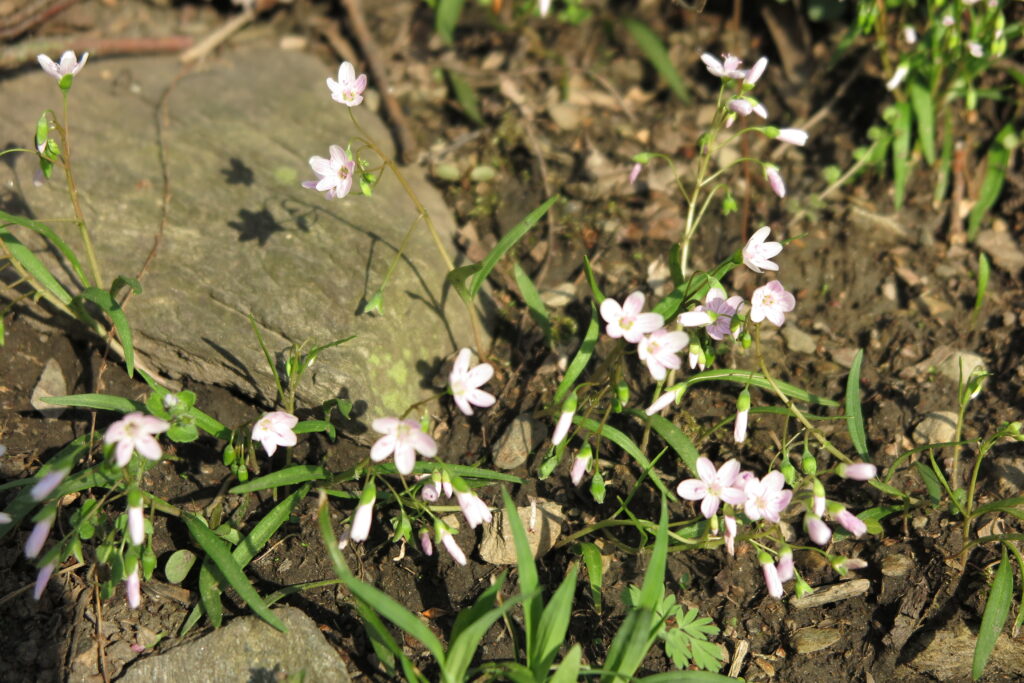
The seeds produced during this stage allow the species to establish new plants over time. Once mature, they are released near the parent plant and contribute to gradual colony expansion. This process helps explain how large patches of Eastern Spring Beauty can develop within suitable habitats.
Compared to plants that flower repeatedly throughout a growing season, Eastern Spring Beauty places all of its reproductive effort into a single concentrated spring event. This focused strategy has proven highly successful over countless generations.
Dormancy and Long-Term Survival of Eastern Spring Beauty
After flowering and seed production conclude, Eastern Spring Beauty begins preparing for dormancy. Energy generated during the growing season is transferred into the underground corm where it can be stored safely. This process allows the plant to survive periods when above-ground conditions are less favorable.
The leaves gradually yellow and die back as spring progresses. To inexperienced observers, it may appear that the plant has disappeared entirely. In reality, the most important structures remain alive beneath the soil surface.
Dormancy lasts through summer, autumn, and winter. During this extended period, the corm functions as a protected storage organ capable of withstanding changing environmental conditions. The plant remains inactive above ground but retains everything necessary for future growth.
This strategy resembles a bear storing energy before entering hibernation. Rather than remaining active year-round, Eastern Spring Beauty conserves resources during periods when growth would be less efficient. The stored reserves support emergence when favorable conditions return.
The cycle begins again the following spring as new shoots emerge from the corm. Through this repeating sequence of emergence, flowering, reproduction, dormancy, and renewal, Eastern Spring Beauty can persist for many years. This dependable life cycle has helped make the species one of the most recognizable and successful spring wildflowers in eastern North America.
Popular Searches About Eastern Spring Beauty
Explore Eastern Spring Beauty Guide
Explore More Plants

Support Encounters World
Help support wildlife photography and get behind the scenes discoveries on Patreon.