Eastern Spring Beauty vs Carolina Spring Beauty: How to Tell These Native Wildflowers Apart
Quick Facts
Species Compared: Eastern Spring Beauty vs Carolina Spring Beauty
Scientific Names: Claytonia virginica vs Claytonia caroliniana
Family: Montiaceae
Flower Similarity: Very High
Leaf Differences: One of the Best Identification Clues
Bloom Season: Early Spring
Identification Difficulty: Moderate
Comparing Eastern Spring Beauty and Carolina Spring Beauty
Eastern Spring Beauty (Claytonia virginica) and Carolina Spring Beauty (Claytonia caroliniana) are two closely related wildflowers that often create confusion among plant enthusiasts. Both belong to the same genus and share many visual characteristics, including delicate pink-striped flowers and an early spring blooming season. Because of these similarities, they are frequently mistaken for one another when encountered in the field.
Both species occur within portions of eastern North America and are associated with spring wildflower displays. Their flowers emerge during a time of year when few other plants are blooming, making them highly noticeable despite their relatively small size. Casual observers often assume they are identical plants until closer inspection reveals important differences.
Although the flowers look remarkably similar, Eastern Spring Beauty and Carolina Spring Beauty possess distinct structural characteristics that allow reliable identification. Most of these differences involve foliage, overall proportions, and growth appearance rather than flower color. Learning these features makes separating the species much easier.
For naturalists, photographers, and wildflower enthusiasts, understanding these distinctions adds depth to spring plant identification. Rather than viewing every pink-striped spring beauty as the same species, observers can begin recognizing subtle traits that reveal which plant they are seeing. Careful observation is often rewarded with a more accurate identification.
Eastern Spring Beauty vs Carolina Spring Beauty Appearance
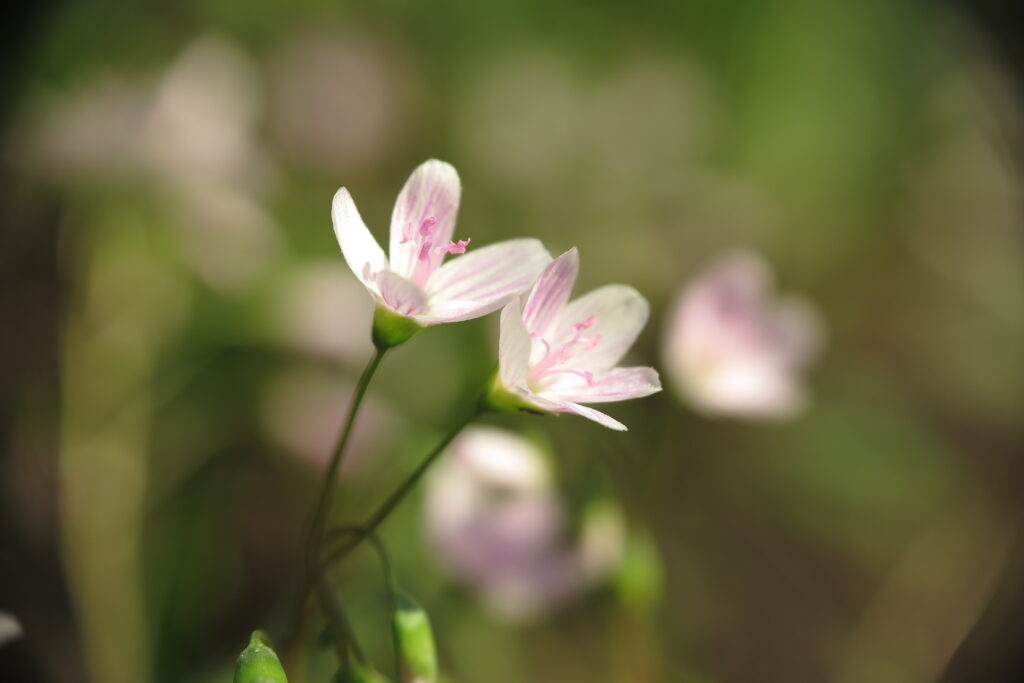
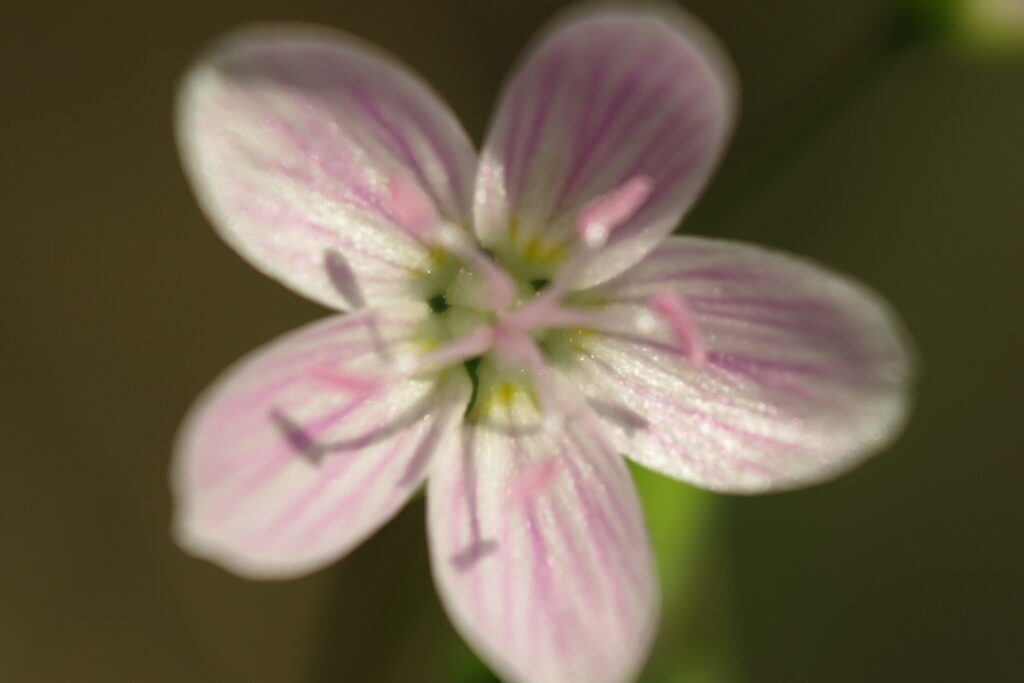
At first glance, the flowers of both species appear nearly identical. Each produces five-petaled blooms that range from white to pale pink and display darker pink veins running across the petals. This shared floral pattern is one reason misidentification is so common.
Eastern Spring Beauty generally appears more delicate and slender overall. Its stems often look thinner, and the plant tends to have a lighter, more graceful appearance when viewed from a distance. Large colonies can create an airy display across the forest floor.
Carolina Spring Beauty typically presents a somewhat sturdier appearance. While still a small wildflower, it often looks more robust due to differences in foliage and plant proportions. Individual plants can appear slightly fuller when compared side by side with Eastern Spring Beauty.
When viewed from a distance, Eastern Spring Beauty colonies may resemble a scattering of tiny stars floating above the ground. Carolina Spring Beauty often creates a slightly denser visual impression because of its broader foliage. This distinction is subtle but becomes easier to recognize with experience.
A useful comparison is to imagine two nearly identical twins wearing different clothing. The flowers may appear almost the same, but the surrounding plant structure provides clues that reveal their identity. Observers who focus only on blooms may overlook these important differences.
Leaf and Stem Differences Between Spring Beauty Species
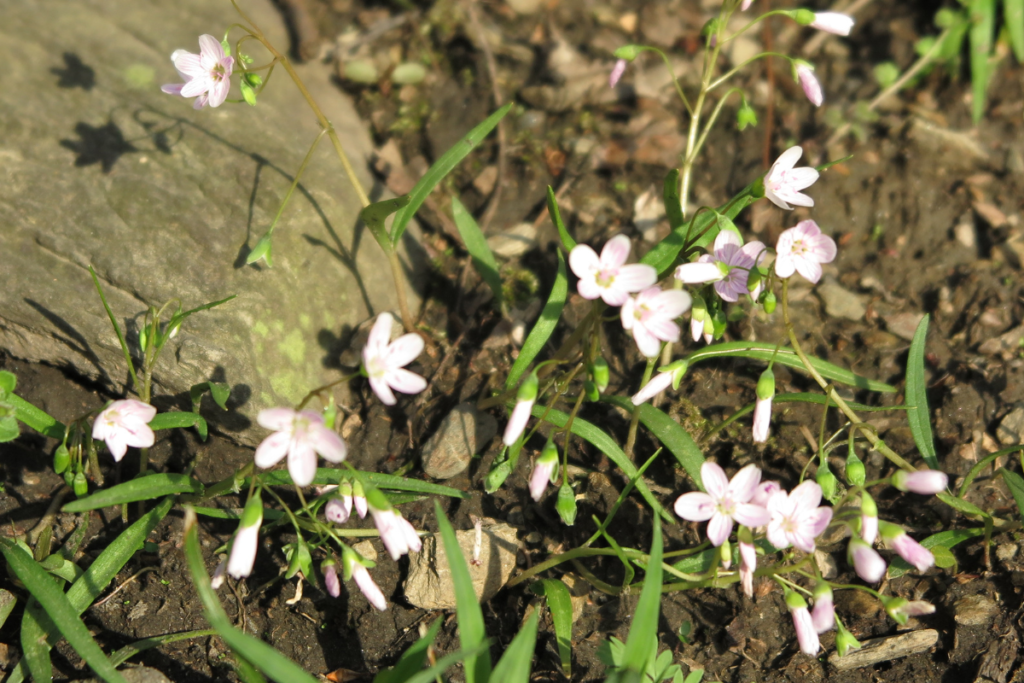
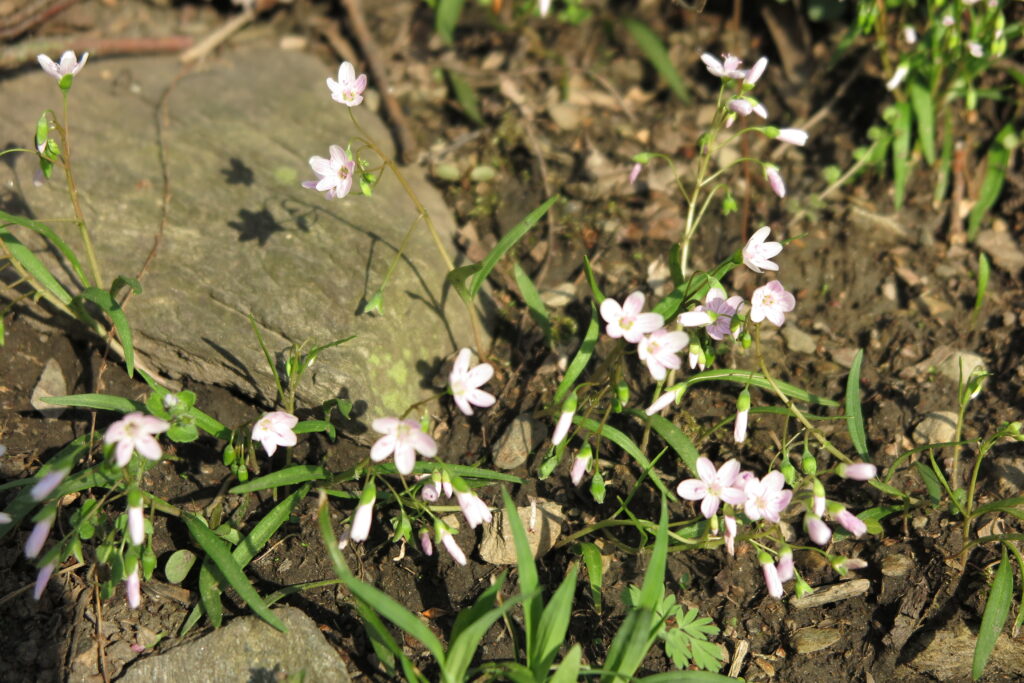
Leaf shape is one of the most reliable ways to separate Eastern Spring Beauty from Carolina Spring Beauty. Eastern Spring Beauty typically produces narrow, linear leaves that resemble elongated blades. These leaves are often only a small fraction of an inch wide and contribute to the plant’s delicate appearance.
Carolina Spring Beauty develops noticeably broader leaves. Instead of appearing grass-like, the foliage is often oval to lance-shaped with a wider profile. This broader leaf structure is frequently the quickest identification feature when flowers are present.
Stem characteristics also help distinguish the species. Eastern Spring Beauty often supports its flowers on slender stems that create an open and airy look. Carolina Spring Beauty generally appears somewhat more substantial due to the visual balance between stems and broader leaves.
In field situations where flowers have not fully opened, foliage can become the most valuable identification tool. Observers who focus on leaf width rather than flower color often achieve more accurate results. The difference is similar to comparing a narrow ribbon with a wider strip of fabric.
For beginners, leaf shape is usually the easiest characteristic to learn. While flower variations can sometimes overlap, foliage tends to remain a consistent distinction. A quick examination of leaf width often provides the answer long before more detailed features need to be considered.
How to Accurately Identify Eastern and Carolina Spring Beauty
The most reliable approach to identification involves examining multiple characteristics rather than relying on a single feature. Flower color, leaf shape, stem proportions, and overall plant appearance should all be considered together. This broader approach reduces the chances of misidentification.
If the leaves are long, narrow, and almost grass-like, Eastern Spring Beauty is generally the more likely species. If the leaves are noticeably broader and more oval in shape, Carolina Spring Beauty becomes the stronger candidate. In many cases, this single observation can provide a confident identification.
Geographic location may offer additional clues. Eastern Spring Beauty is considerably more widespread across eastern North America and is encountered far more frequently in many regions. Carolina Spring Beauty has a more limited distribution and may be less commonly observed depending on location.
Photographers often discover that close-up images of foliage are just as important as flower photographs when documenting these species. A beautiful flower image alone may not provide enough information for definitive identification. Including leaves and stems greatly improves accuracy.
Ultimately, the best way to distinguish these two spring wildflowers is to remember one simple rule: flowers are similar, leaves are different. Eastern Spring Beauty typically displays narrow, grass-like foliage, while Carolina Spring Beauty features broader leaves. Once this distinction becomes familiar, identifying these closely related species becomes much more straightforward.
Popular Searches About Eastern Spring Beauty
Explore Eastern Spring Beauty Guide
Explore More Plants

Support Encounters World
Help support wildlife photography and get behind the scenes discoveries on Patreon.