
Creeping Charlie Plant Overview: Identification, Appearance, and Key Characteristics Guide
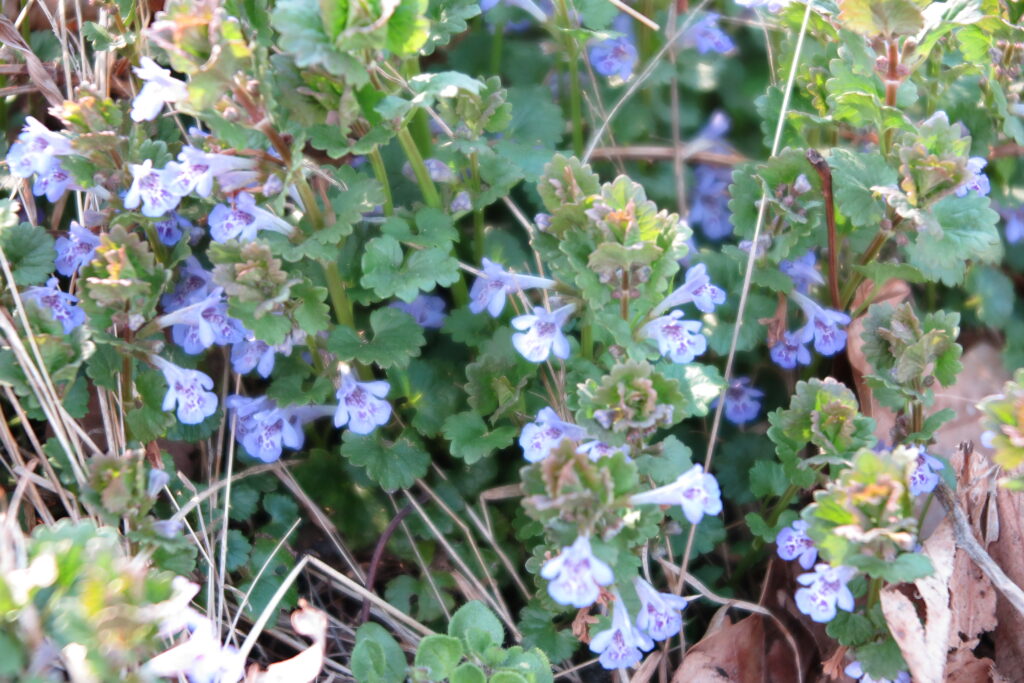
Quick Facts
Scientific Name: Glechoma hederacea
Common Name: Creeping Charlie
Plant Type: Perennial
Average Height: 2–8 inches (5–20 cm)
Spread Width: Up to several feet through creeping stems
Leaf Type: Broadleaf
Growth Form: Creeping
Bloom Color: Purple to bluish-purple
Native Range: Europe, Western Asia, and parts of Northern Africa
Toxicity: Toxic to some livestock; generally considered mildly toxic to pets if consumed in large amounts
Location Observed: Pennsylvania, USA
Field Observation
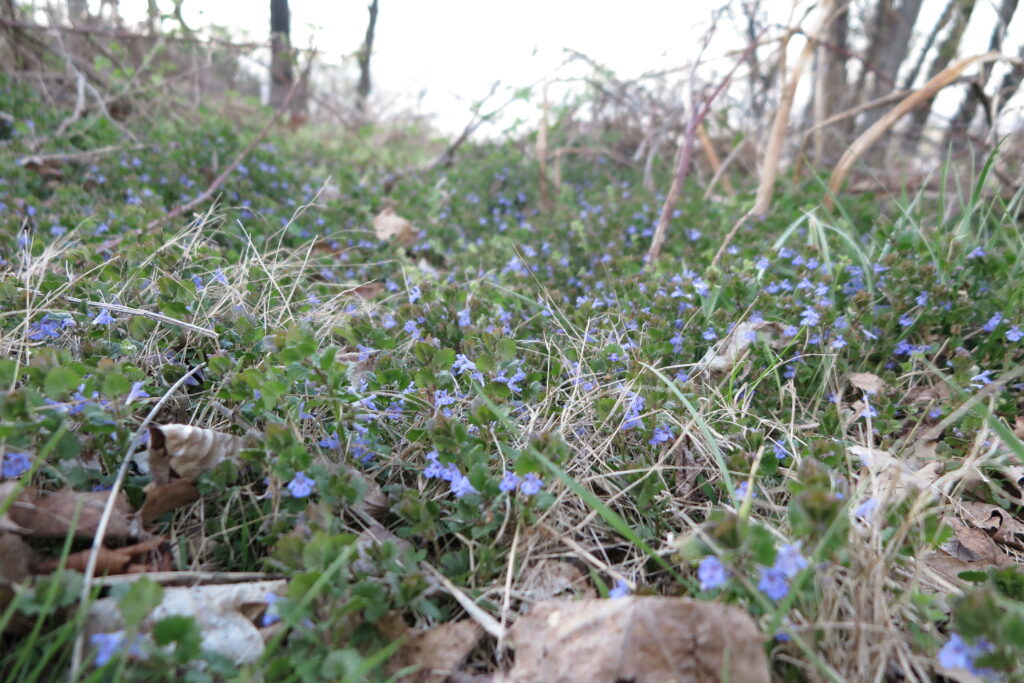
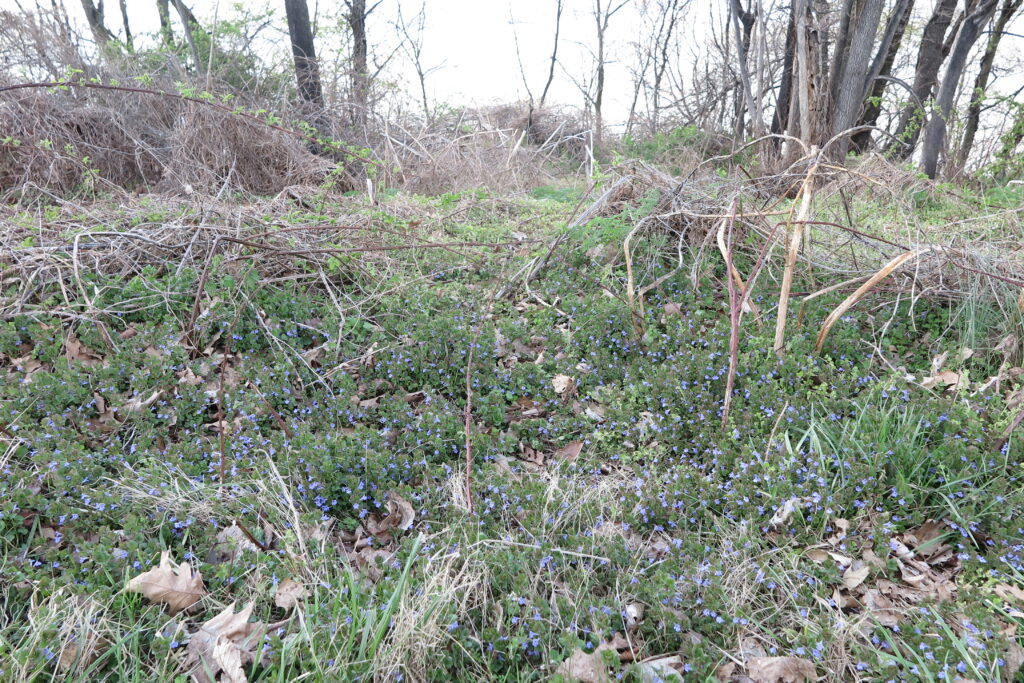
I observed a large patch of Creeping Charlie spreading across the ground in a dense mat approximately 10 feet wide and 10 feet long. The plant remained very low to the ground, with stems weaving together to create a thick carpet of green foliage.
Introduction to Creeping Charlie and Its Global Presence
Creeping Charlie is a low-growing perennial plant recognized for its ability to form dense green mats across the ground. Known scientifically as Glechoma hederacea, it belongs to the mint family and has become one of the most familiar broadleaf plants found in lawns, gardens, and naturalized landscapes. Its distinctive appearance makes it easy to notice even among thick vegetation.
The species originated across much of Europe and parts of western Asia, where it has existed for centuries in both cultivated and wild settings. Historical records suggest that people once valued the plant for medicinal and culinary purposes long before it became known primarily as a lawn weed. Over time, human movement helped spread it far beyond its original range.
Today, Creeping Charlie can be found across large portions of North America, where it has established itself in both urban and rural environments. It appears in residential neighborhoods, parklands, roadside edges, and countless other locations. In many regions it has become so widespread that people often encounter it without realizing its identity.
Although frequently discussed because of its persistence in lawns, Creeping Charlie is an interesting plant in its own right. Its compact growth, rounded leaves, and spring flowers create a recognizable appearance that stands apart from many surrounding species. Whether admired for its greenery or viewed as an unwanted invader, it remains one of the most commonly encountered ground-level plants in temperate climates.
Creeping Charlie Overview and General Appearance
One of the most noticeable aspects of Creeping Charlie is its ability to create broad carpets of vegetation across the soil surface. Rather than growing upright like many wildflowers, it spreads horizontally, producing a continuous layer of foliage that can cover surprisingly large areas. This growth pattern gives the plant a distinctly different visual presence compared to neighboring grasses and taller herbs.
The overall shape of a Creeping Charlie colony often resembles a patchwork blanket draped across the ground. Individual stems weave together and create an interconnected network that appears almost seamless from a distance. Large patches can appear as bright green islands surrounded by darker turfgrass or other vegetation.
Most plants remain relatively short throughout the year, rarely reaching more than several inches in height. This low profile allows the foliage to remain close to the ground while maintaining a dense and compact appearance. In managed landscapes, the plant often seems to flow beneath shrubs, along walkways, and around garden beds.
Its adaptability has contributed greatly to its success across different regions. Creeping Charlie can establish itself in a variety of climates and continues to maintain a similar overall appearance wherever it grows. Whether found in a suburban yard, a woodland edge, or an abandoned field, the plant generally retains its characteristic creeping form and dense green coverage.
The addition of small purple flowers during the blooming season adds another visual dimension to the plant. These blossoms emerge above the foliage and create subtle splashes of color that contrast against the surrounding greenery. While the flowers are not large, they often draw attention when numerous plants bloom together.

Distinctive Creeping Charlie Characteristics
The leaves of Creeping Charlie are among its most recognizable features. They are nearly circular to kidney-shaped and possess gently scalloped edges that create a decorative appearance. The rounded form gives the foliage a softer look than many other common lawn plants.
Leaf surfaces are typically smooth and slightly textured, with visible veins extending outward from the center. Depending on growing conditions, coloration may range from bright green to darker shades with subtle variations throughout a patch. New growth often appears particularly vibrant compared to older foliage.
Another defining characteristic is the plant’s membership in the mint family. Like many mint relatives, Creeping Charlie has square stems rather than perfectly round ones. When examined closely, this trait becomes a useful clue for identification and helps distinguish it from several lookalike species.
The arrangement of the leaves further contributes to its distinctive appearance. Pairs of leaves emerge opposite one another along the stem, creating a balanced and organized pattern. Viewed from above, the foliage can resemble rows of tiny green umbrellas connected by thin stems.
A useful comparison is to imagine miniature lily pads scattered across dry land. While the leaves are much smaller, their rounded shape and clustered arrangement often produce a similar visual impression. This resemblance helps explain why many people immediately recognize the plant even if they do not know its name.
The combination of rounded leaves, square stems, opposite leaf arrangement, and creeping growth creates a unique profile. Few common groundcover plants display all of these traits simultaneously, making Creeping Charlie relatively distinctive once observers become familiar with its characteristics.
How to Identify Creeping Charlie in the Field
Recognizing Creeping Charlie begins with observing how the plant spreads across the ground. Unlike clump-forming species that grow from a central point, this plant extends outward in interconnected strands. Following the stems often reveals an extensive network running beneath surrounding vegetation.
The rounded leaves provide the easiest visual marker for most observers. Their scalloped edges create a softly ruffled appearance that stands out from the narrow blades of lawn grasses. Even from several feet away, patches often appear textured because of these distinctive leaf margins.
One common identification mistake involves confusing Creeping Charlie with common mallow. While both species possess rounded leaves, mallow generally grows upright and produces larger foliage attached by longer stalks. Creeping Charlie remains lower to the ground and displays a much more interconnected growth pattern.
Another source of confusion can be young violet plants. At first glance, violets and Creeping Charlie may appear similar due to their broad leaves and low-growing nature. However, violet leaves are usually more heart-shaped and lack the consistently scalloped edges that characterize Creeping Charlie.
During blooming periods, the small purple flowers provide an additional clue. These blossoms emerge in clusters near the leaves and often resemble tiny tubular trumpets. Their shape differs noticeably from the flatter flowers of many common lawn species.
A practical field comparison is to imagine a miniature mint plant stretched across the ground like a vine. The square stems, opposite leaves, and purple flowers all reflect its mint-family heritage. When these features are observed together, identification becomes considerably easier.
For observers documenting plants in parks, trails, or residential areas, combining multiple characteristics is the most reliable approach. Rounded scalloped leaves, creeping stems, opposite leaf arrangement, and purple flowers form a combination that strongly points to Creeping Charlie. Once these traits become familiar, the species is often recognizable at a glance.
Observation Location
Observed in Turkey Hill Overlook Trail, Lancaster County, Pennsylvania, USA
Popular Searches About Creeping Charlie
Explore Creeping Charlie Guide
Explore More Plants

Support Encounters World
Help support wildlife photography and get behind the scenes discoveries on Patreon.