
Creeping Charlie Flowers Guide: Bloom Time, Flower Identification, and Pollinator Benefits

Quick Facts
Flower Color: Purple to Bluish-Purple
Bloom Season: Spring to Early Summer
Flower Shape: Tubular, Two-Lipped
Flower Size: Approximately 0.5–1 inch Long
Pollinator Attraction: High
Fragrance: Mild to Slightly Sweet
Native Range: Europe, Western Asia, and Northern Africa
Introduction to Creeping Charlie Flowers
While Creeping Charlie is often recognized for its sprawling green foliage, its flowers are among the plant’s most attractive and overlooked features. During the blooming season, patches of vegetation become dotted with small purple blossoms that stand out against the surrounding greenery. These flowers add color and visual interest to areas where the plant grows.
Native to Europe and parts of Asia, Creeping Charlie has spread across much of North America, bringing its distinctive blooms wherever populations become established. Although the flowers are relatively small, they often appear in large numbers. This abundance can transform a patch of foliage into a noticeable display during spring.
Many people encounter the plant long before they notice its flowers. The blooms tend to be hidden among the leaves and stems, requiring a closer look to fully appreciate their structure. Once observed up close, however, the flowers reveal a surprisingly intricate design.
The flowering period represents one of the most visually appealing stages of the plant’s annual cycle. Whether growing in lawns, woodland edges, or garden spaces, Creeping Charlie’s blossoms provide an important identifying feature and contribute significantly to its overall appearance.
Creeping Charlie Bloom Season and Flowering Display
Creeping Charlie typically begins flowering during spring, when warming temperatures and increasing daylight stimulate bloom production. In many regions, flowers appear from early to mid-spring and continue into early summer. The exact timing may vary depending on local climate conditions.
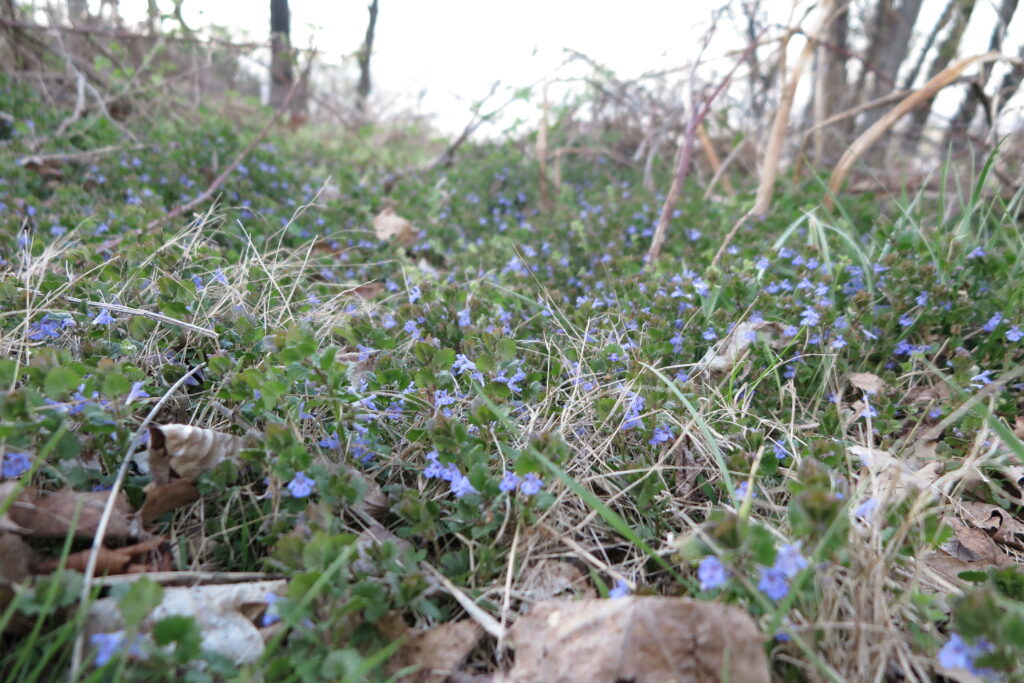
Large colonies often bloom simultaneously, creating widespread patches of purple scattered throughout the landscape. Individual flowers are relatively small, but their collective effect can be impressive. Areas covered by dense growth may appear lightly dusted with violet coloration from a distance.
Unlike some plants that produce a single dramatic flowering event, Creeping Charlie often maintains blooms over an extended period. New flowers continue appearing while older blossoms gradually fade. This prolonged display increases opportunities for pollinators and observers alike to encounter the flowers.
The flowering display is often most noticeable in areas receiving adequate sunlight. Patches growing under favorable conditions may produce significantly more blooms than those in heavily shaded locations. The result can be substantial variation in flowering intensity across different populations.
A useful comparison is a field sprinkled with tiny purple lanterns hidden among green leaves. The flowers are not large enough to dominate the landscape individually, but their numbers create a noticeable visual effect. This subtle yet attractive display contributes greatly to the plant’s recognition during spring.

Flower Structure and Distinctive Floral Features
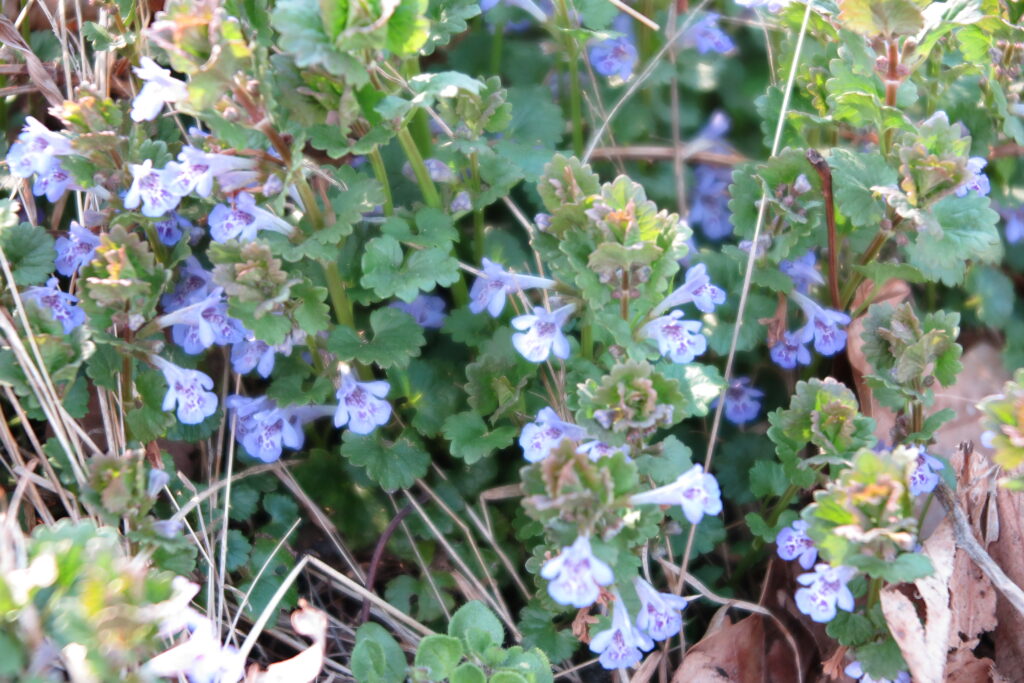
The flowers of Creeping Charlie possess a tubular shape characteristic of many members of the mint family. Each bloom consists of fused petals forming a narrow tube that widens toward the opening. This structure gives the flower a distinctive appearance compared to many common lawn plants.
One of the most recognizable features is the two-lipped arrangement of the petals. The upper portion forms a smaller hood-like structure, while the lower portion expands outward into a broader landing platform. This design helps visiting pollinators access the flower’s reproductive structures.
Coloration typically ranges from lavender-purple to bluish-purple. Subtle variations occur between populations and individual flowers, but shades of purple remain the dominant characteristic. These colors contrast strongly with the surrounding green foliage, making blooms easier to spot.
Fine markings often appear within the flower throat. These markings may include darker purple streaks or spots that guide pollinators toward nectar sources. Viewed closely, the flowers display a level of complexity that many casual observers never notice.
A useful comparison is to imagine a miniature snapdragon flower tucked among ground-level vegetation. The shape and structure share similarities, although Creeping Charlie flowers are generally smaller. This resemblance helps explain why the blossoms stand out among many other low-growing species.
The combination of tubular form, two-lipped petals, purple coloration, and clustered arrangement creates a floral profile that is highly distinctive. These characteristics provide valuable clues when identifying the plant during its flowering period.
Pollinators and the Ecological Importance of Creeping Charlie Flowers
Despite their modest size, Creeping Charlie flowers serve as valuable resources for numerous pollinating insects. Bees are among the most frequent visitors, often moving from flower to flower while collecting nectar and pollen. The blooms provide an accessible food source during an important part of the growing season.
Native bees frequently benefit from early flowering plants, and Creeping Charlie contributes to this seasonal resource availability. In areas where blooms emerge before many other flowering species, the plant may provide one of the first substantial nectar sources available to pollinators.
Butterflies and other beneficial insects occasionally visit the flowers as well. Although bees remain the primary pollinators, a variety of insects may take advantage of the available nectar. This activity adds ecological value beyond the plant’s visual appeal.
The flower structure is particularly well suited for pollinator interactions. The lower petal acts almost like a landing platform, allowing insects to position themselves while feeding. This design improves pollination efficiency and increases the likelihood of successful pollen transfer.
A comparison can be made to a small roadside café serving travelers during a long journey. While the flowers may not represent the largest nectar source in an ecosystem, they provide reliable food for insects moving through the landscape. Their availability can be especially important during early portions of the flowering season.
For nature observers, the flowers offer more than simple beauty. They reveal an active interaction between plants and pollinators occurring at ground level throughout spring. Watching bees navigate the purple blooms provides a fascinating glimpse into the ecological role of one of the most widespread flowering groundcovers in temperate regions.
Popular Searches About Creeping Charlie
Explore Creeping Charlie Guide
Explore More Plants

Support Encounters World
Help support wildlife photography and get behind the scenes discoveries on Patreon.