
Creeping Charlie Identification Guide: How to Recognize Ground Ivy in the Wild
Quick Facts
Leaf Shape: Rounded to Kidney-Shaped with Scalloped Edges
Stem Type: Square, Creeping Stems
Root System: Shallow Fibrous Roots with Rooting Nodes
Flower Structure: Small Tubular Flowers in Clusters
Growth Form: Creeping Groundcover
Texture: Soft and Slightly Wrinkled
Color Variations: Bright Green to Dark Green with Purple-Tinted Flowers
Introduction to Identifying Creeping Charlie
Creeping Charlie (Glechoma hederacea), often called Ground Ivy, is one of the most recognizable broadleaf plants found in temperate regions. Native to Europe and parts of Asia, the species has spread widely throughout North America and now occurs in countless residential and natural landscapes. Its familiar appearance makes it a plant that many people have seen, even if they do not immediately recognize its name.
Unlike many lawn plants that blend into surrounding vegetation, Creeping Charlie often stands out because of its distinct leaf shape and growth habit. Large patches can create noticeable areas of textured greenery that contrast with nearby grasses. This visual difference frequently attracts attention from gardeners, hikers, and plant enthusiasts.
The plant is commonly encountered in parks, yards, woodland edges, and along walking trails. Because it often forms dense colonies, observers rarely find just a single isolated stem. Instead, identification usually begins with noticing an entire patch before examining individual features more closely.
Successful identification relies on recognizing several characteristics together rather than focusing on a single trait. Leaf shape, stem structure, flower appearance, and growth style all contribute important clues. When these features are considered collectively, Creeping Charlie becomes relatively easy to distinguish from similar low-growing species.
Creeping Charlie Structure and Overall Growth Form
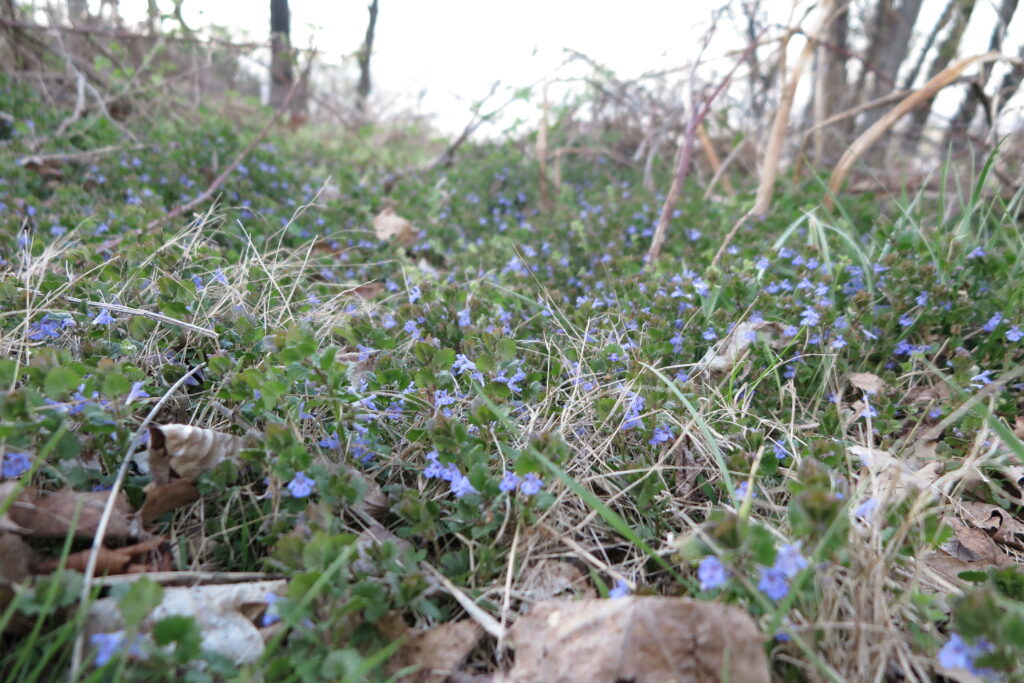
At a glance, Creeping Charlie appears as a low, sprawling layer of vegetation spread across the ground surface. The plant rarely develops significant height, choosing instead to extend outward horizontally. This creates a broad covering that often looks more like a living carpet than a collection of separate plants.
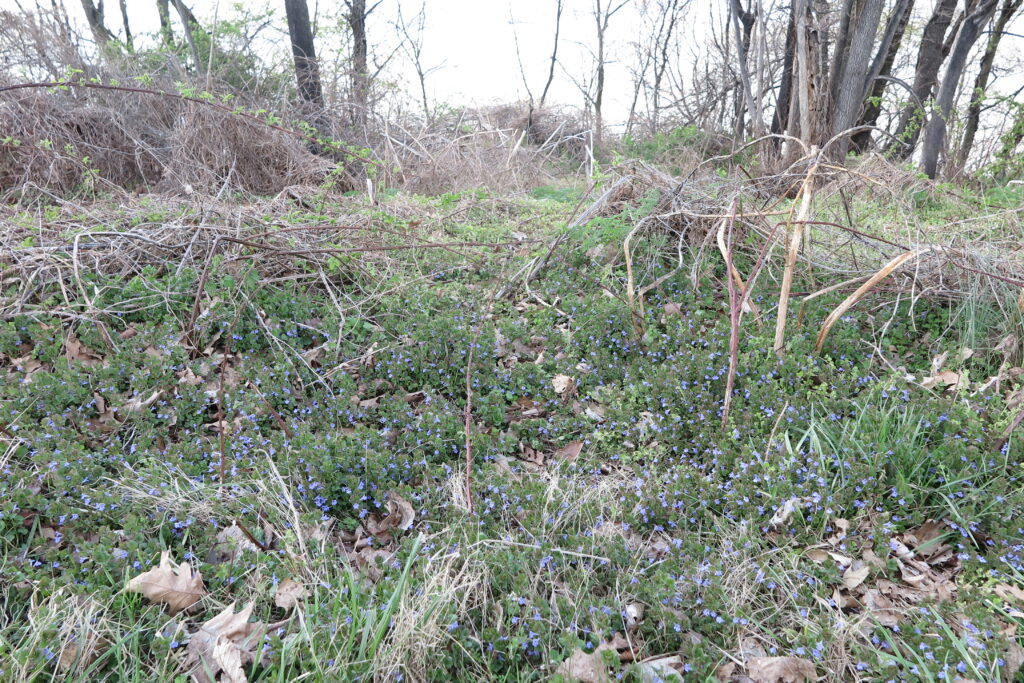
Large colonies frequently resemble a green blanket draped over the landscape. From a distance, individual stems disappear from view, leaving only a continuous mat of foliage visible. This characteristic appearance is often the first clue that observers are looking at Creeping Charlie.
The plant maintains a compact profile throughout most of the year. Even mature patches generally remain close to the soil surface rather than producing tall upright growth. This low-growing structure allows it to occupy spaces beneath taller vegetation while remaining highly visible from above.
Coverage area often exceeds what many people expect from such a short plant. A colony only a few inches tall may extend across several feet of ground. In established populations, connected stems create an extensive network that gives the plant its distinctive spreading appearance.
Compared to upright weeds such as dandelions or plantains, Creeping Charlie follows a completely different visual strategy. Rather than reaching upward for visibility, it expands laterally and dominates available ground space. This growth form helps explain why large patches can become so noticeable in lawns and gardens.
The combination of broad coverage, low height, and interconnected growth creates an appearance that is difficult to mistake once recognized. Observers often identify mature patches immediately because few other common plants produce the same mat-like effect.

Creeping Charlie Leaves, Stems, and Root Characteristics
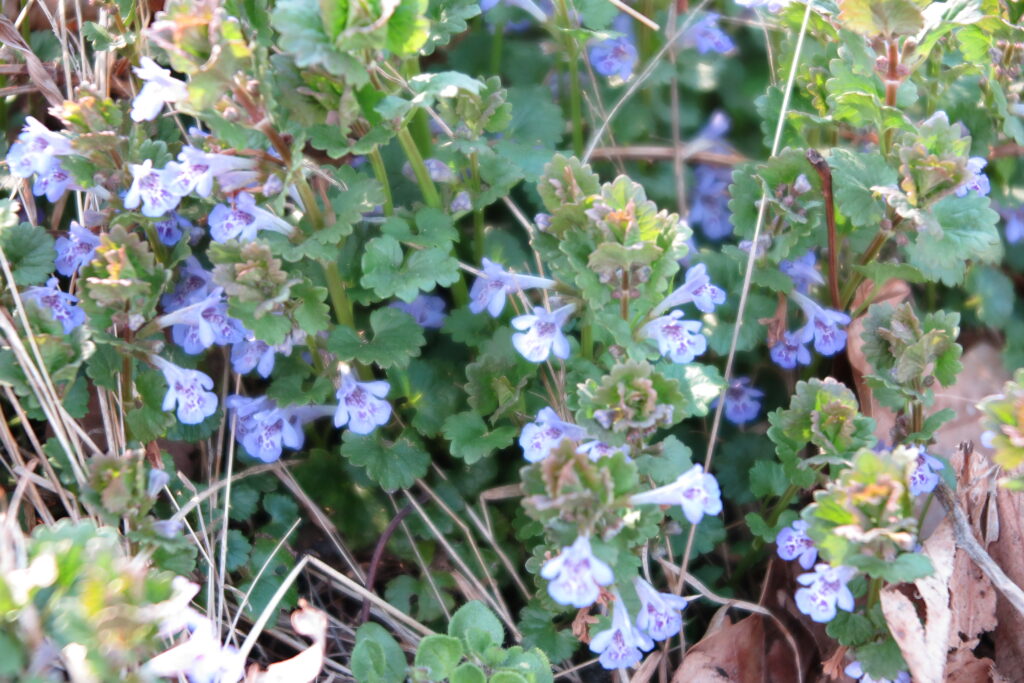
The leaves are among the most important identification features of Creeping Charlie. Individual leaves are typically rounded or kidney-shaped and display gently scalloped edges. These curved margins give the foliage a decorative appearance unlike the narrow blades of grass surrounding it.
Leaf surfaces are generally smooth but may show subtle wrinkling when viewed closely. Prominent veins radiate outward from the center, creating a textured look across the blade. Depending on growing conditions, coloration ranges from bright green to deeper shades of emerald.
Leaves occur in opposite pairs along the stem. This arrangement creates a balanced pattern that repeats throughout the plant. When examining a stem closely, observers can often see matching leaves emerging directly across from one another.
The stems provide another valuable identification clue. As a member of the mint family, Creeping Charlie possesses square stems rather than perfectly round ones. Running a finger along the stem often reveals distinct edges that separate it from many unrelated species.
A useful comparison is to imagine a miniature mint plant stretched flat across the ground. The square stems and opposite leaves strongly reflect its relationship to other members of the mint family. These traits remain consistent throughout the plant’s range.
Below the surface, the root system consists primarily of shallow fibrous roots. Additional roots frequently develop at stem nodes where stems contact the soil. These rooted points create a network resembling a series of anchor points securing the plant to the ground.
Creeping Charlie Flowers and Reproductive Structures
The flowers of Creeping Charlie provide some of the clearest identification features during the blooming season. Although relatively small, they stand out against the surrounding foliage because of their distinctive coloration and shape. Most blossoms range from bluish-purple to lavender-purple.
Individual flowers possess a tubular structure typical of many mint-family species. The petals flare outward at the opening, creating a shape that resembles a tiny trumpet or miniature snapdragon flower. This form immediately distinguishes them from many flat-petaled lawn plants.
Flowers typically occur in small clusters rather than appearing singly. These clusters emerge from leaf axils along the stems, creating pockets of color scattered throughout a colony. When numerous flowers bloom simultaneously, patches can take on a noticeably purple appearance from a distance.
The blossoms are often compared to tiny orchid-like flowers because of their complex petal arrangement. While far smaller than true orchids, they possess a similarly intricate appearance when viewed closely. This level of detail makes them surprisingly attractive despite their modest size.
Following flowering, the plant produces small seeds that contribute to reproduction. These seeds are considerably less noticeable than the flowers and are rarely used as the primary identification feature. Most observers identify the plant long before seed structures become important.
When attempting to confirm identification, the combination of tubular purple flowers, clustered arrangement, and mint-family appearance is highly useful. Few common lawn plants display all of these reproductive traits together. Observing these structures alongside the rounded leaves and square stems provides strong evidence that the plant is Creeping Charlie.
Popular Searches About Creeping Charlie
Explore Creeping Charlie Guide
Explore More Plants

Support Encounters World
Help support wildlife photography and get behind the scenes discoveries on Patreon.