
Creeping Charlie vs Henbit: How to Tell the Difference Between These Common Lawn Plants

Quick Facts
Comparison Species: Creeping Charlie vs Henbit
Scientific Name (Creeping Charlie): Glechoma hederacea
Scientific Name (Henbit): Lamium amplexicaule
Plant Family: Both Belong to the Mint Family (Lamiaceae)
Most Common Confusion: Similar Purple Flowers and Rounded Leaves
Growth Form Difference: Creeping Charlie Creeps Along the Ground; Henbit Grows Upright
Flower Color: Purple to Pinkish-Purple (Both Species)
Identification Difficulty: Moderate for Beginners
Native Range: Europe, Western Asia, and Northern Africa (Introduced Elsewhere)
Introduction to Creeping Charlie and Henbit Identification
Creeping Charlie and Henbit are two of the most commonly confused plants found in lawns, gardens, and disturbed landscapes. Both species belong to the mint family and share several visual similarities that often lead homeowners to misidentify them. Their overlapping ranges and similar flowering periods make confusion especially common during spring.
At first glance, both plants display rounded leaves and small purple flowers. From a distance, large patches can appear nearly identical, particularly when viewed from across a yard or field. This resemblance causes many people to assume they are looking at the same species.
Despite these similarities, Creeping Charlie (Glechoma hederacea) and Henbit (Lamium amplexicaule) are entirely different plants. Each has unique structural characteristics that become obvious once observers know what features to examine. Understanding these differences can greatly improve field identification.
Accurate identification is important because the two species behave differently within landscapes. Management strategies, growth habits, and ecological impacts can vary considerably. Learning to distinguish them allows gardeners, homeowners, and nature enthusiasts to make informed decisions about the plants they encounter.
Creeping Charlie vs Henbit Growth Form Comparison
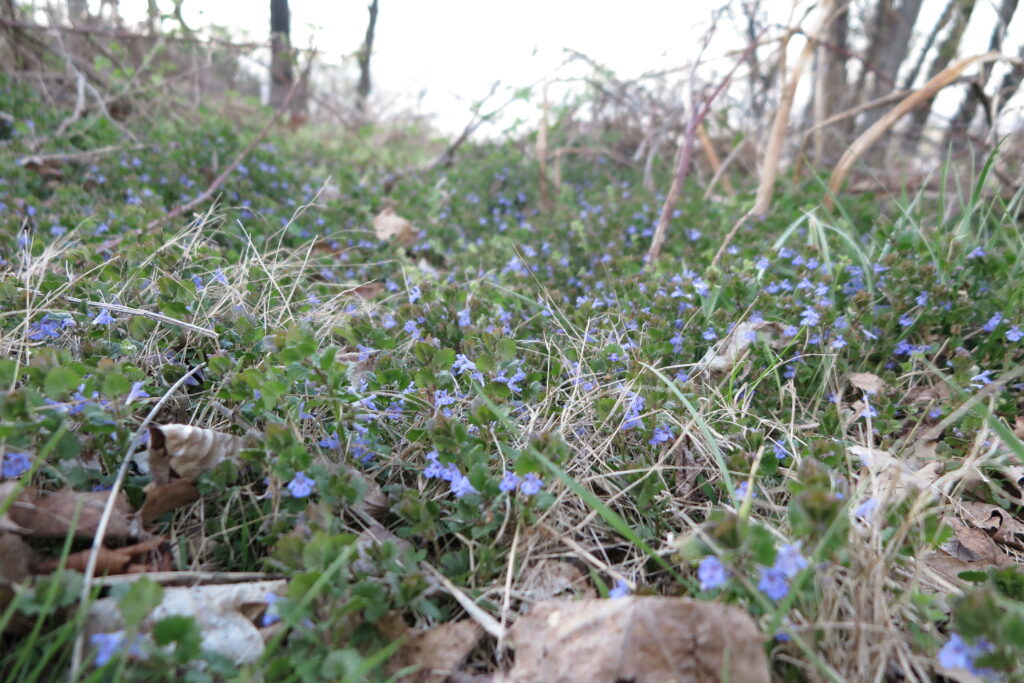
The easiest way to separate these two species is by examining how they grow. Creeping Charlie spreads horizontally across the ground, producing long stems that remain close to the soil surface. Large colonies often resemble a continuous green carpet extending across an area.
Henbit follows a very different strategy. Instead of creeping outward, it grows upward from a central stem. Mature plants frequently reach heights of 6 to 16 inches, creating small clusters of upright vegetation scattered throughout lawns and fields.
A useful comparison is to imagine the difference between a blanket and a bouquet. Creeping Charlie spreads outward like a blanket covering the ground, while Henbit resembles a collection of small upright stems emerging from a single point. This distinction is often visible even from several feet away.
As Creeping Charlie expands, its stems frequently root at contact points along the soil surface. Henbit lacks this sprawling network and remains largely concentrated around its primary stem. This structural difference contributes significantly to how each plant occupies space.
When observing large infestations, the contrast becomes even more obvious. Creeping Charlie forms dense interconnected mats, while Henbit appears as numerous individual plants growing close together. Simply stepping back and viewing the overall shape of a patch often provides the first clue toward proper identification.

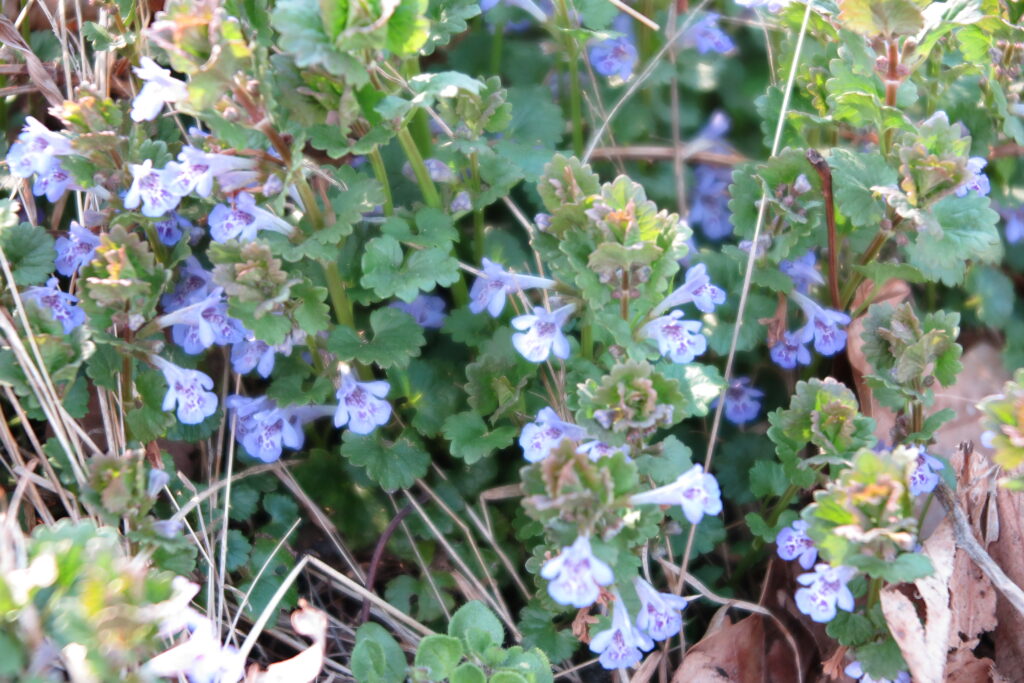
Leaf and Stem Differences Between Creeping Charlie and Henbit
Leaf structure provides another reliable way to distinguish these species. Creeping Charlie produces rounded to kidney-shaped leaves with gently scalloped edges. The leaves are attached to stems by noticeable leaf stalks, creating a slightly separated appearance.
Henbit leaves are generally rounder and often appear stacked around the stem. Upper leaves may clasp directly onto the stem without a noticeable stalk. This arrangement creates a layered appearance that differs significantly from Creeping Charlie’s more spread-out foliage.
The texture of the leaves also differs. Creeping Charlie leaves are typically smooth and somewhat glossy. Henbit leaves often appear fuzzier and display a softer, more textured surface when examined closely.
Stem growth offers one of the most dependable identification features. Creeping Charlie develops creeping square stems that run along the ground. Henbit also possesses square stems because it belongs to the mint family, but those stems grow upright rather than trailing across the soil.
A practical field comparison is to look for movement direction. If the stems travel horizontally across the ground, the plant is likely Creeping Charlie. If the stems rise vertically toward the sky, Henbit becomes the more likely identification.
These differences remain visible throughout much of the growing season and can often be observed without needing flowers. For many observers, leaf arrangement and stem position provide the quickest route to accurate identification.
Flower Characteristics and Common Identification Mistakes
The flowers of both species are purple, which explains why so many people confuse them. However, closer inspection reveals several important differences. Creeping Charlie flowers typically emerge in small clusters from leaf axils along the stem.
Henbit flowers appear in whorls surrounding the upper portions of the stem. Instead of being scattered along creeping stems, they concentrate near the top of the plant. This creates a distinctly different flowering pattern when viewed from the side.
Creeping Charlie flowers often resemble miniature trumpets extending outward from the foliage. Henbit flowers are also tubular but frequently appear more densely packed around the stem. The overall floral display tends to be more vertical in Henbit and more dispersed in Creeping Charlie.
One of the most common mistakes occurs when people focus only on flower color. Because both species produce shades of purple, color alone provides little value for identification. Structural characteristics almost always offer more reliable clues than bloom coloration.
Another frequent error involves examining only a single leaf. Individual leaves may appear similar at first glance, particularly when young. Looking at the entire plant—including growth form, stem position, leaf arrangement, and flower placement—provides a much more accurate assessment.
For most observers, the simplest identification rule is this: Creeping Charlie creeps, while Henbit stands upright. When combined with leaf shape and flower placement, this distinction allows even beginners to confidently separate two of the most commonly confused lawn plants.
Popular Searches About Creeping Charlie
Explore Creeping Charlie Guide
Explore More Plants

Support Encounters World
Help support wildlife photography and get behind the scenes discoveries on Patreon.