
Creeping Charlie Growth Guide: Growth Rate, Spread, and Life Cycle Explained

Quick Facts
Growth Rate: Fast
Growth Pattern: Creeping and Mat-Forming
Reproduction Method: Seeds and Vegetative Stem Nodes
Dormancy Period: Winter
Sunlight Needs: Partial Shade to Full Sun
Water Needs: Moderate
Seasonal Changes: Active Growth in Spring and Summer, Dormant in Winter
Introduction to Creeping Charlie Growth and Development
Creeping Charlie (Glechoma hederacea) is a perennial plant known for its ability to establish itself across large areas over time. Native to Europe, western Asia, and parts of northern Africa, it has expanded into numerous regions around the world and become especially common throughout North America. Its widespread success is closely tied to the way it develops and maintains growth throughout the year.
Unlike many ornamental plants that focus their energy on vertical growth, Creeping Charlie invests heavily in expansion across the ground. This approach allows it to occupy available space efficiently while maintaining a low profile. The result is a plant that often appears larger in coverage than its modest height would suggest.
Growth remains one of the defining characteristics of the species. Even small patches can gradually develop into extensive colonies when conditions remain favorable. Because of this ability, the plant is frequently recognized for its persistence and capacity to establish long-lasting populations.
Throughout much of its range, Creeping Charlie follows a predictable annual rhythm. New growth becomes increasingly visible during the warmer months, while colder seasons slow development considerably. This recurring cycle allows the plant to maintain its presence year after year across a wide variety of landscapes.
Creeping Charlie Growth Rate and Seasonal Development
Creeping Charlie is generally considered a fast-growing perennial. Once established, it can increase its coverage rapidly compared to many neighboring broadleaf plants. This growth rate contributes significantly to its reputation as a persistent groundcover in both natural and managed environments.
The most active development typically occurs during spring. As temperatures rise and daylight increases, the plant begins producing fresh foliage and extending new stems across available ground. During this period, growth can appear noticeably faster from week to week.
Summer continues to support active development, although growth speed may vary depending on moisture availability. Areas receiving consistent rainfall often maintain vigorous expansion throughout the season. In drier conditions, development may slow but rarely stops completely if adequate moisture remains available.
Autumn brings a gradual reduction in growth activity. The plant continues functioning during mild weather but directs less energy toward rapid expansion. As temperatures decline, foliage often remains visible while overall development slows substantially.
Winter serves as the dormancy period across much of its range. Although above-ground activity decreases, the plant survives unfavorable conditions and prepares for renewed growth when temperatures increase. This seasonal pattern allows populations to persist for many years.
Compared to many annual weeds that complete their life cycle within a single season, Creeping Charlie follows a more durable strategy. Rather than starting from scratch each year, established plants resume development from existing structures, allowing them to recover quickly when favorable conditions return.

Creeping Charlie Growth Patterns and Physical Expansion
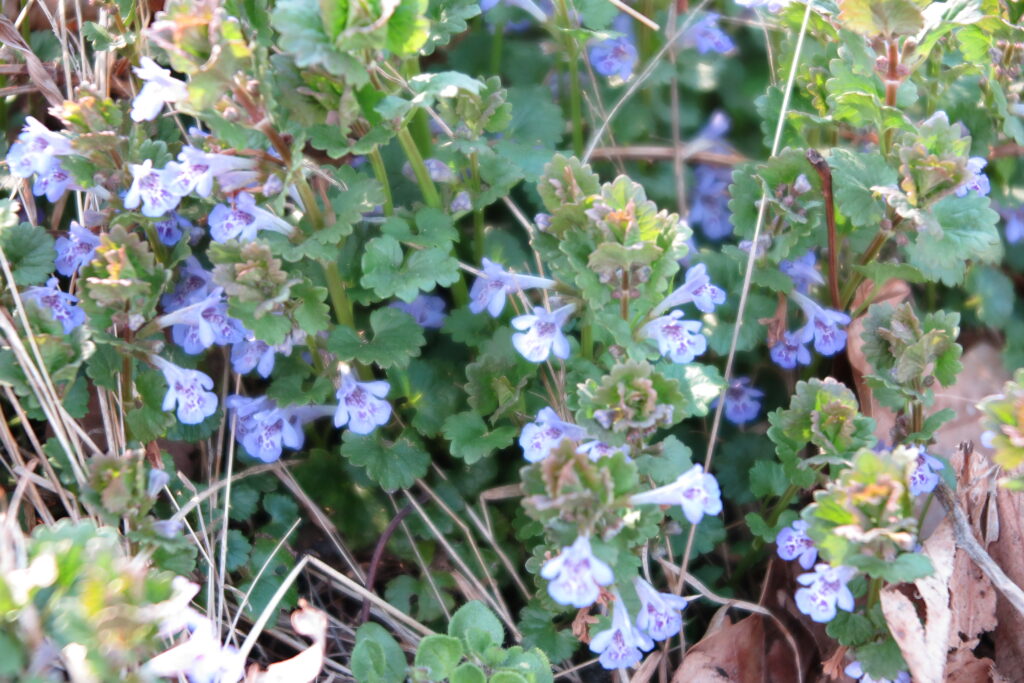
The defining growth pattern of Creeping Charlie is its creeping, ground-hugging structure. Instead of producing tall stems, the plant expands horizontally across the soil surface. This creates dense mats that can gradually occupy large areas over time.
Individual stems extend outward from existing growth and remain close to the ground. As these stems lengthen, they create an interconnected network that links different portions of the colony together. This arrangement contributes to the plant’s characteristic carpet-like appearance.
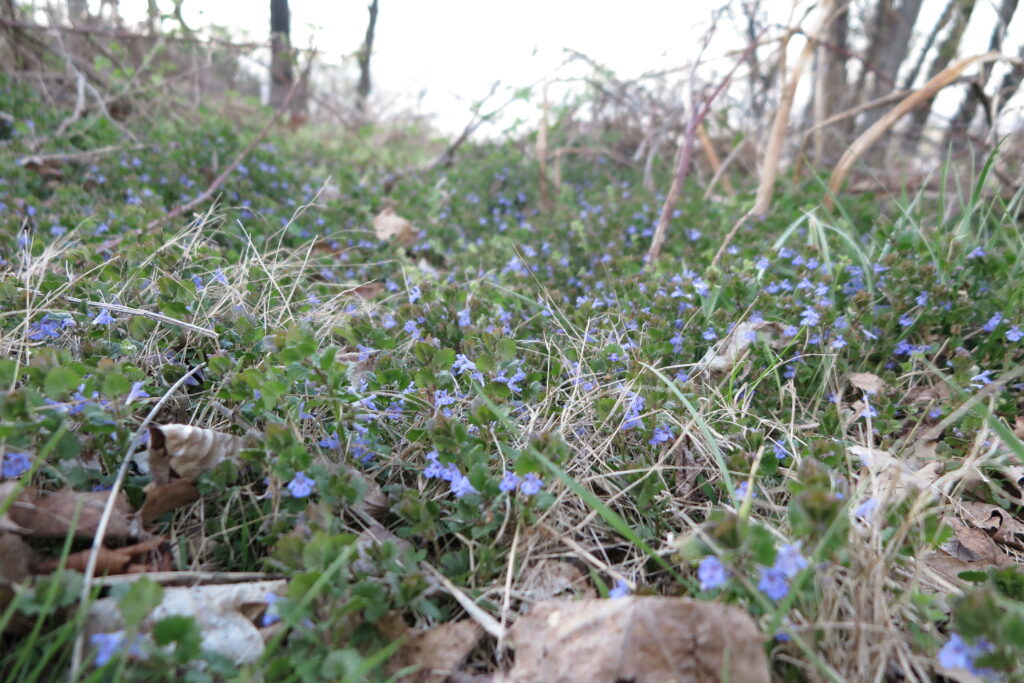
A useful comparison is a living green blanket spreading across the landscape. Each stem acts like a thread woven into a larger fabric, gradually increasing overall coverage. Over time, separate patches may merge into a nearly continuous layer of vegetation.
The plant’s low-growing form allows it to occupy spaces beneath taller vegetation. It frequently fills gaps between grasses, garden plants, or shrubs without competing through height. Instead, it succeeds by efficiently covering available ground.
As colonies mature, the density of growth often increases. New stems weave among older ones, creating a thicker and more complex structure. This layered arrangement contributes to the plant’s ability to maintain extensive coverage across a site.
Unlike clump-forming perennials that remain concentrated around a central point, Creeping Charlie continually pushes outward. The result is a broad, expanding colony that occupies space in multiple directions simultaneously. This growth style plays a major role in the plant’s ability to become dominant within suitable environments.
Creeping Charlie Reproduction and Annual Life Cycle
Creeping Charlie reproduces through both seed production and vegetative expansion. These two reproductive strategies allow the plant to establish new populations while also strengthening existing colonies. The combination contributes significantly to its long-term success across a wide geographic range.
Flowering typically occurs during spring and early summer. Following pollination, the plant produces seeds capable of developing into new individuals. While seed production contributes to reproduction, it is often not the primary reason for the plant’s spread within established populations.
Vegetative reproduction plays an especially important role in the species’ life cycle. As creeping stems extend across the ground, nodes along the stems can develop roots when they contact suitable soil. These rooted sections may eventually function as independent growth points while remaining connected to the original plant.
This process allows a single individual to gradually produce an extensive network of interconnected growth. A small patch can therefore expand into a much larger colony without relying solely on seed dispersal. This capability explains why established populations often persist even when portions of the plant are removed.
The annual life cycle follows a recurring pattern. Dormant winter plants become active during spring, produce foliage and flowers, continue expansion through summer, and gradually slow during autumn. The cycle then repeats when favorable conditions return the following year.
Because reproduction occurs through multiple pathways, Creeping Charlie demonstrates remarkable persistence. Even when environmental conditions fluctuate, established colonies often survive and continue expanding over time. This combination of perennial longevity and efficient reproduction has helped make the species one of the most successful groundcover plants throughout temperate regions.
Popular Searches About Creeping Charlie
Explore Creeping Charlie Guide
Explore More Plants

Support Encounters World
Help support wildlife photography and get behind the scenes discoveries on Patreon.