Wolf Spider Overview Guide: Identification, Appearance, and Ecological Importance
Quick Facts
Scientific Name: Family Lycosidae
Common Name: Wolf Spider
Location: Forest floors, grasslands, gardens, rocky areas, and leaf litter
Average Size: 0.5–2 inches including leg span
Lifespan: 1–3 years
Global Range: Found on every continent except Antarctica
Conservation Status: Not Evaluated (varies by species)
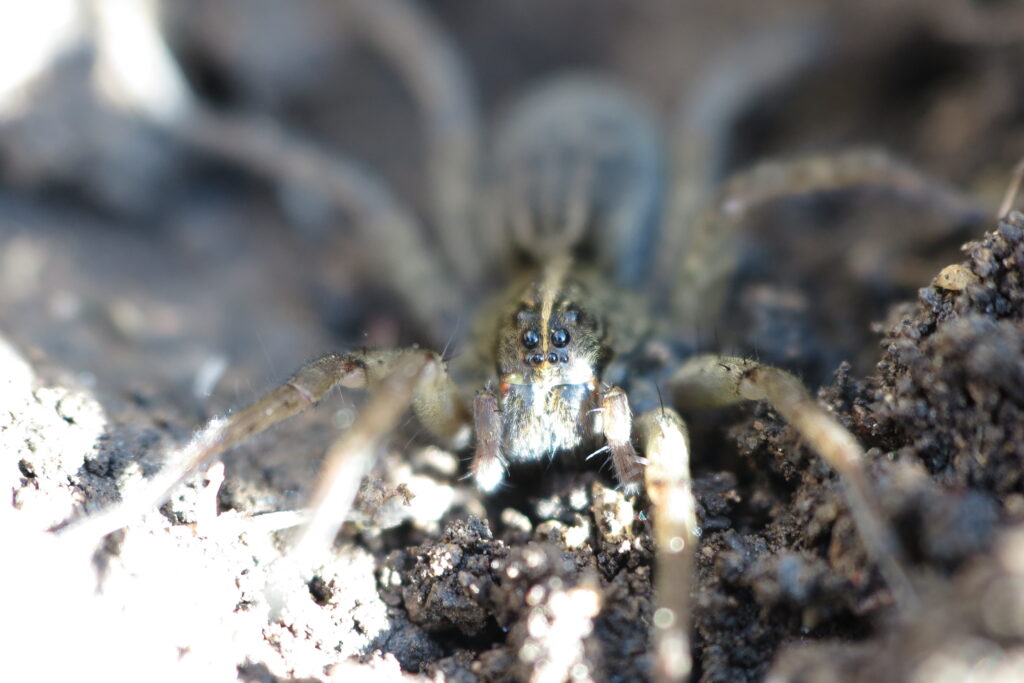
Notable Feature: Large forward-facing eyes and powerful ground-hunting appearance
Location Observed: Pennsylvania, USA
Field Observation
Introduction to the Wolf Spider’s Worldwide Presence
The Wolf Spider is one of the most recognizable ground-dwelling spiders in the world, known for its robust appearance and fast-moving nature. Members of the wolf spider family can be found across nearly every continent, occupying a wide range of climates and landscapes. Their broad distribution has made them familiar to hikers, gardeners, and nature observers alike.
Wolf spiders are commonly encountered in forests, grassy fields, woodland edges, and even suburban environments where natural cover remains available. Unlike delicate web-building spiders often suspended in corners or gardens, wolf spiders are typically noticed directly on the ground or moving through leaf litter. Their wandering appearance and sudden bursts of movement make them stand out immediately.
Many people first encounter wolf spiders during evening walks, while lifting rocks, or when one quickly crosses a trail or basement floor. Their size and speed can initially appear intimidating, especially because larger individuals resemble small tarantulas at first glance. Despite this dramatic appearance, they are a natural and widespread part of many ecosystems.
The family Lycosidae includes hundreds of species, leading to noticeable variation in size, coloration, and markings across different regions. Some wolf spiders appear sandy brown and blend perfectly into dry soil, while others carry darker striping patterns that resemble bark or stone textures. Across all variations, however, wolf spiders maintain a strong, muscular appearance that separates them from thinner-bodied spider species.
Wolf Spider Appearance and Physical Overview
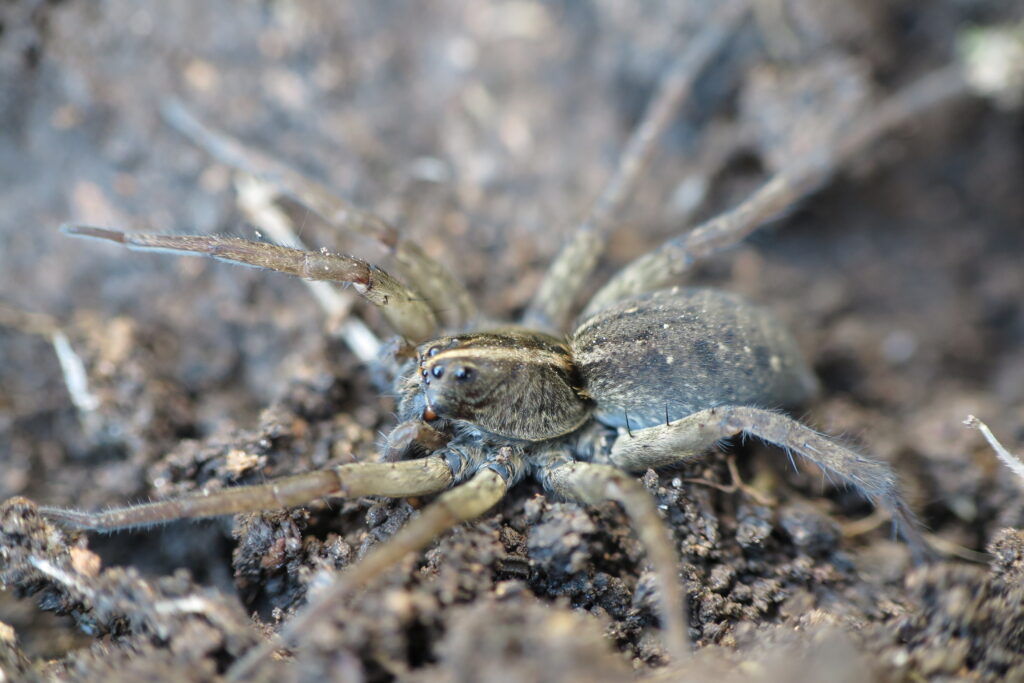
Wolf spiders possess a thick-bodied, low-profile shape designed for movement across the ground rather than delicate web suspension. Their bodies are covered in fine hairs that create a rough, textured appearance under close observation. This hairy surface often gives them a rugged, almost velvety look compared to smoother spider species.
Most wolf spiders display earthy coloration such as brown, gray, black, tan, or muted reddish tones. These colors frequently appear mixed together in stripes, mottled patches, or camouflage-like patterns that help the spider blend into surrounding terrain. Some individuals resemble dry leaves or bark fragments so closely that they become nearly invisible when motionless.
In size, larger wolf spiders can appear comparable to the width of a golf ball when including their leg span. Smaller species remain much more compact, though they still maintain the same thick and muscular structure. Their long legs extend outward in a sturdy stance that gives them a grounded, powerful appearance.
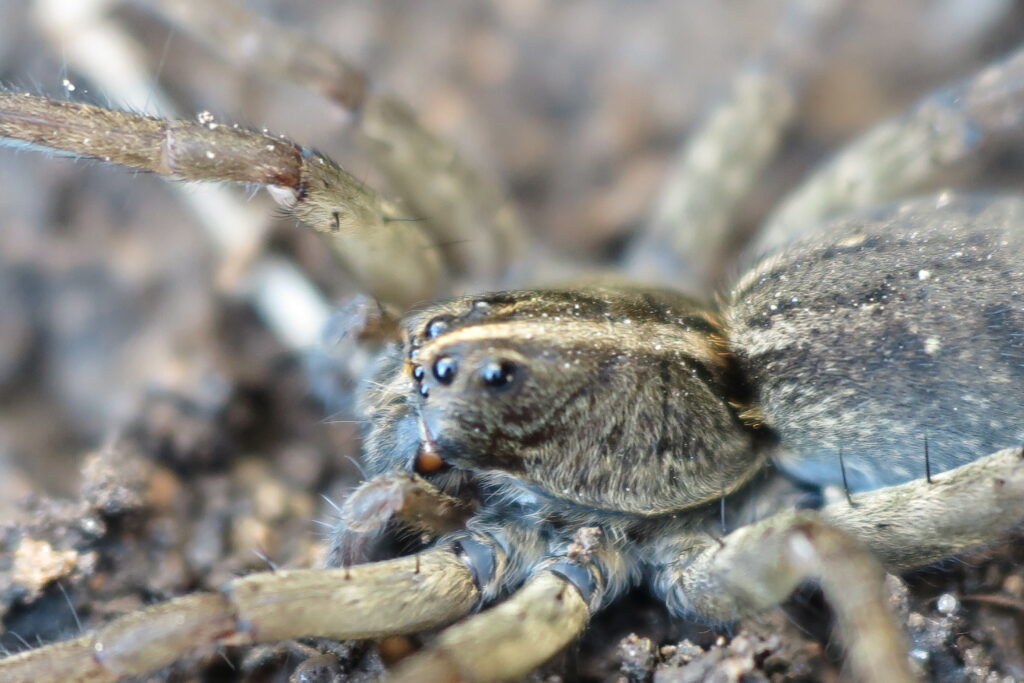
One of the most recognizable features of the wolf spider is its eye arrangement. Unlike many spiders with less obvious facial structure, wolf spiders possess large reflective eyes positioned prominently on the front of the head. Under flashlight beams at night, these eyes may reflect brightly, creating small glowing points visible from surprising distances.
The body is divided into two major segments: the cephalothorax and abdomen. The front section appears broader and more armored, while the abdomen is softer and more rounded. Fine markings often run along both sections, creating natural striping or camouflage patterns.
Compared to the Fishing Spider, wolf spiders generally appear stockier and more compact. Fishing spiders have longer, flatter legs suited for water-edge movement, while wolf spiders look heavier and more grounded. This compact build contributes to their powerful visual identity.
Their hairy legs and dark patterns often create an intimidating first impression, especially indoors where size appears exaggerated against plain surfaces. However, viewed closely in natural lighting, many wolf spiders display surprisingly intricate textures and subtle coloration. Fine gray bands, pale tan stripes, and reddish undertones can become visible across the body.
General Characteristics That Define Wolf Spiders
Wolf spiders are distinguished by their muscular structure, large forward-facing eyes, and highly visible body proportions. Their broad cephalothorax gives them a compact and sturdy appearance unlike the slender shape seen in web-building spiders. This heavier frame contributes to their unmistakable silhouette.
The eye arrangement is one of the family’s most defining features. Wolf spiders possess eight eyes arranged in three rows, with two especially large eyes positioned prominently near the front. This arrangement gives the spider a surprisingly alert appearance that resembles tiny headlights on the face.
Their legs are built thick and strong compared to many lightweight spider species. Rather than appearing fragile or delicate, wolf spider legs resemble jointed mechanical supports capable of sudden rapid movement. Fine hairs covering the legs increase the textured appearance and help break up the spider’s outline visually.
Another unique characteristic is the spider’s camouflage quality. Most wolf spiders naturally resemble their surroundings with impressive accuracy. Brown and gray species can disappear completely against soil, bark, gravel, or dried leaves, making them difficult to detect until they move.
Compared to the Jumping Spider, wolf spiders appear far larger and heavier. Jumping spiders are compact with exaggerated front eyes and shorter legs, while wolf spiders maintain a flatter, more elongated body structure. Both are active hunters, but their overall appearance differs dramatically.
Female wolf spiders are especially recognizable when carrying egg sacs attached to the rear of the abdomen. This creates a rounded extension behind the spider that resembles a pale orb or attached marble. In some cases, newly hatched spiderlings may later cover the female’s back, creating one of the most visually unusual sights among spiders.
The spider’s body surface also contributes to its identity. Instead of glossy smoothness, wolf spiders possess a matte, rugged texture that helps diffuse light and strengthen camouflage. This rough appearance reinforces their connection to ground-level environments and natural debris.
Wolf Spider Role in the Ecosystem and Environmental Balance
The Wolf Spider plays an important role in ecosystems as a widespread invertebrate predator that helps regulate insect populations. Across forests, grasslands, gardens, and agricultural environments, wolf spiders contribute to natural balance by reducing numbers of smaller invertebrates. Their presence supports healthier ecosystem stability in many regions.
Wolf spiders form an important middle layer within food webs. They act as predators to insects and smaller arthropods while also serving as prey for birds, reptiles, amphibians, and mammals. This dual role helps transfer energy through ecosystems and supports broader biodiversity.
In gardens and agricultural areas, wolf spiders can help reduce populations of pest insects naturally. Their presence may limit certain insects that damage vegetation or crops, making them beneficial components of healthy outdoor environments. Because they are widespread and adaptable, they contribute to ecological control across many habitat types.
Wolf spiders also help maintain balance within leaf litter ecosystems. The ground layer of forests contains countless small organisms competing for resources, and wolf spiders act as major predators within this hidden environment. Their activity influences insect distribution and population density at the soil level.
The species’ camouflage and ground-based lifestyle also make them indicators of healthy environmental structure. Areas containing natural debris, leaf litter, and stable vegetation often support strong wolf spider populations. Landscapes stripped of cover or heavily disturbed may support fewer individuals.
Wolf spiders additionally contribute to biodiversity by occupying ecological roles that web-building spiders do not fully fill. Rather than relying on stationary traps, they interact directly with the ground-level environment, influencing movement and distribution among many smaller organisms. This creates a different ecological impact compared to web-dependent spiders.
Even after death, wolf spiders continue contributing to ecosystem nutrient cycles. Their bodies become food for scavengers and decomposers, returning organic material back into the environment. Like many invertebrates, their ecological value extends beyond their active lifespan.
Although often misunderstood because of their size and appearance, wolf spiders are important components of natural ecosystems worldwide. Their role in controlling insect populations, supporting food webs, and contributing to biodiversity makes them a valuable part of the environments they inhabit.
Observation Location
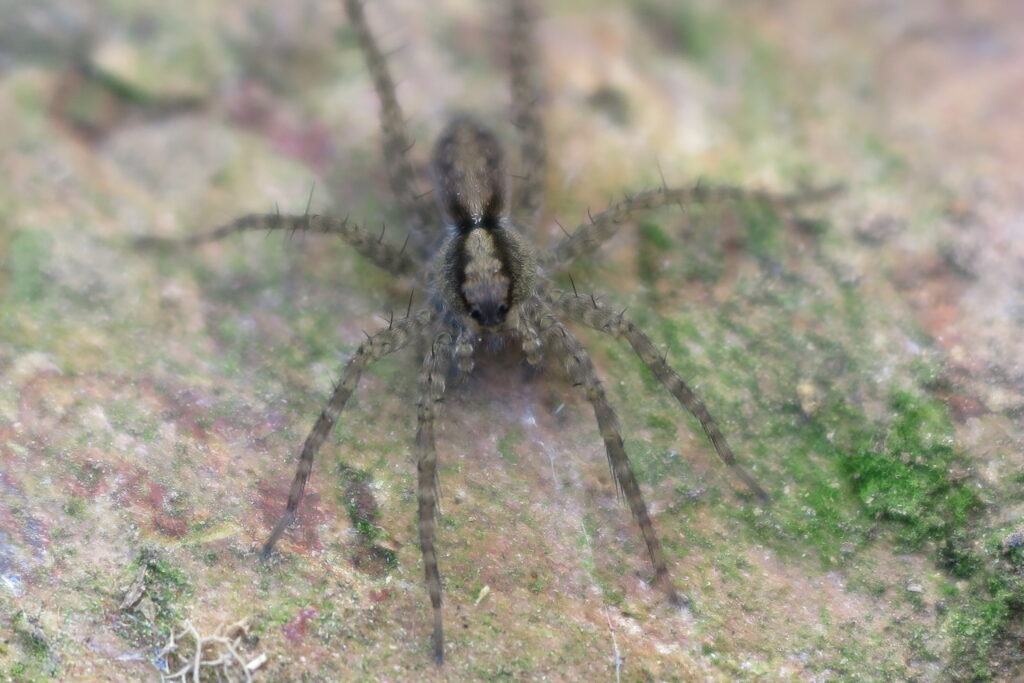
Observed in William County Park, Pennsylvania, USA
Popular Searches About Wolf Spiders
Explore Wolf Spider Guide
Explore More Wildlife

Support Encounters World
Help support wildlife photography and get behind the scenes discoveries on Patreon.