Wolf Spider House Guide: Why Wolf Spiders Enter Homes and Where They Hide
Quick Facts
Common Indoor Locations: Basements, garages, bathrooms, and dark corners
Average Indoor Size: 0.5–2 inches long depending on species
Global Range: Found worldwide except Antarctica
Conservation Status: Not Evaluated as a single species group
Most Active Season Indoors: Late summer through fall
Notable Feature: Fast-moving ground hunter often mistaken for dangerous house spiders
Introduction to Wolf Spiders Found in Houses
The Wolf Spider is one of the most commonly encountered large spiders inside homes across North America. Their sudden appearance on floors, walls, basements, garages, and bathrooms often alarms homeowners because of their speed and intimidating size. Unlike delicate web-building spiders that remain hidden in corners, wolf spiders actively roam across open surfaces, making them far more noticeable indoors.
Wolf spiders naturally live outdoors in forests, grasslands, gardens, rocky terrain, and leaf litter, but they occasionally wander into houses while searching for shelter, warmth, or prey. Indoor encounters become especially common during seasonal transitions when temperatures begin changing. Homes provide dark protected environments that resemble many of the spider’s natural hiding conditions.
Many people mistakenly believe wolf spiders are aggressive because they move quickly when discovered indoors. In reality, these spiders usually attempt to escape rather than confront humans. Their rapid movement and large size simply make encounters feel more dramatic compared to smaller household spiders.
Indoor wolf spiders are often discovered at night when they become more active searching for insects around floors and walls. Flashlights, dim lighting, and sudden movement can make the spider appear larger and more threatening than it truly is. Despite their intimidating appearance, wolf spiders inside homes are usually temporary wandering visitors rather than permanent indoor infestations.
Wolf Spider Appearance and Identification Inside Homes
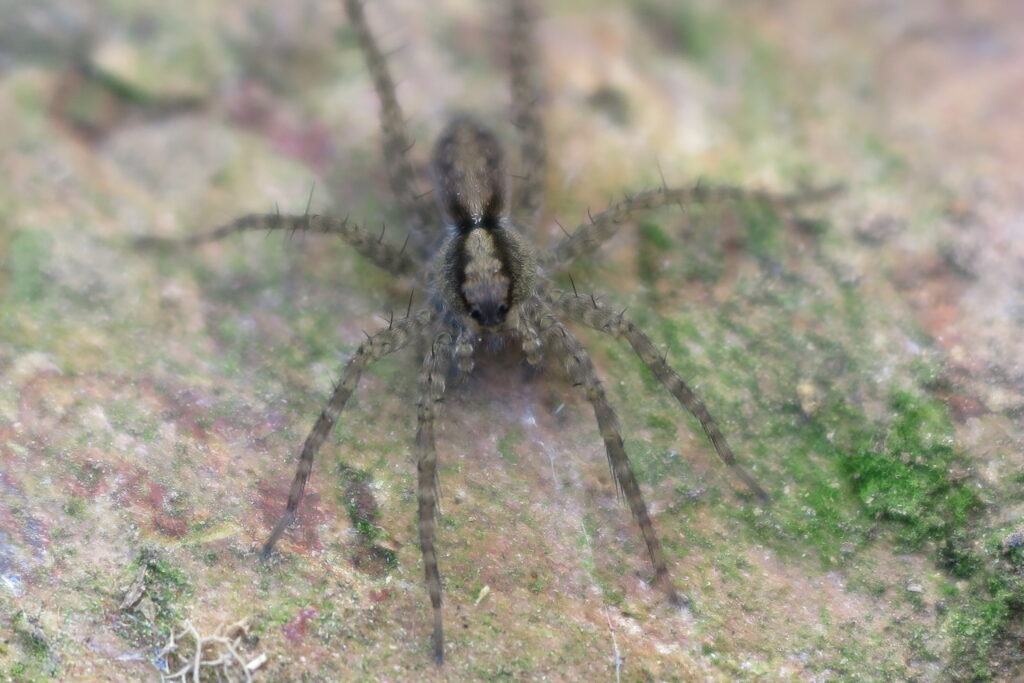
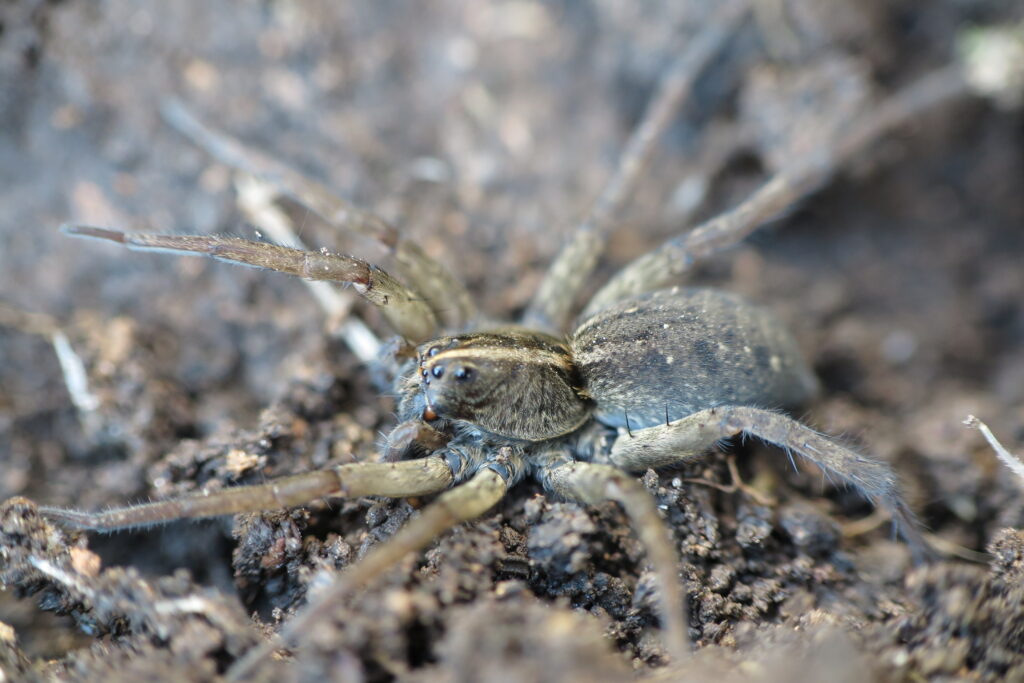
Wolf spiders found indoors usually appear large, thick-bodied, and heavily built compared to common household spiders. Most species display earthy coloration including shades of brown, gray, black, or tan that help them blend into soil, wood, and stone outdoors. Indoors, these same camouflage colors often make them difficult to notice against floors and basement walls.
Their long legs and low ground-hugging posture contribute heavily to their intimidating appearance. Larger species may stretch nearly the width of a human palm when legs are fully extended. Fast movement across open floors frequently exaggerates their perceived size even further.
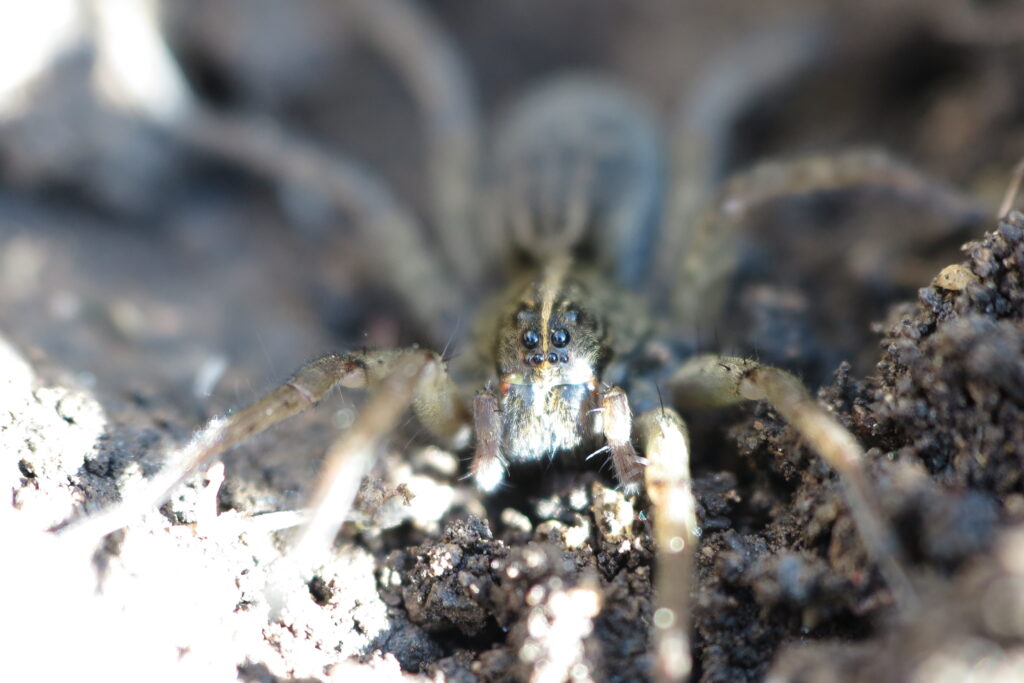
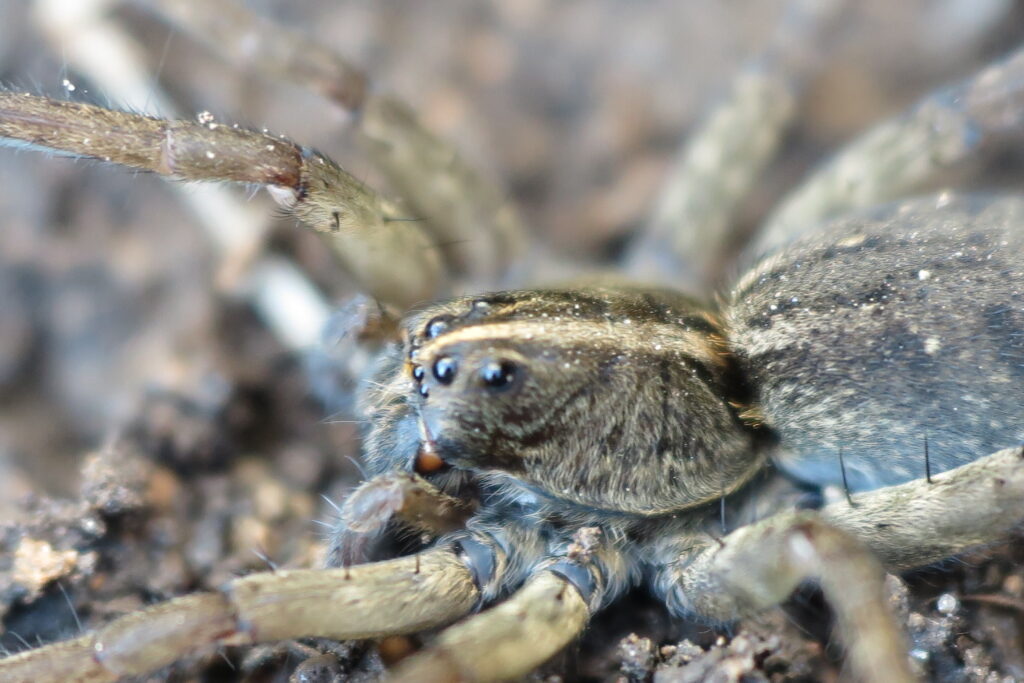
One of the easiest identification features is the spider’s eye arrangement. Wolf spiders possess eight eyes arranged in three rows, including two especially large forward-facing eyes that reflect light strongly at night. Flashlight reflection from these eyes often helps homeowners identify the spider quickly.
Compared to the Brown Recluse Spider, wolf spiders appear bulkier, hairier, and more muscular overall. Brown recluses possess thinner legs and smoother body structure, while wolf spiders look more powerful and heavily built. This distinction is important because many people mistakenly confuse the two species.
Indoor wolf spiders also differ from web-building spiders because they rarely remain suspended in large visible webs. Instead, they wander actively across floors, walls, and dark corners while hunting. Their movement pattern feels more similar to a tiny running animal than a stationary spider.
Females carrying egg sacs or spiderlings may appear especially alarming inside homes. A mother wolf spider covered with babies across her back creates one of the most recognizable spider sights in North America. Although startling, this behavior is completely natural and temporary.
Lighting conditions inside homes often intensify fear during encounters. A large spider suddenly crossing a dim basement floor at night may appear much larger than it truly is because shadows stretch outward beneath the legs. Their rapid movement contributes strongly to this effect.
General Characteristics of Wolf Spiders Inside Houses
Wolf spiders enter homes for several common reasons, with shelter being one of the most important. Cool temperatures, rain, drought, and seasonal weather shifts may drive spiders indoors temporarily. Basements, garages, crawlspaces, and cluttered storage areas often provide dark protected conditions similar to outdoor hiding locations.
Insects inside homes also attract wolf spiders naturally. Since wolf spiders actively hunt rather than rely on webs, indoor insect populations create feeding opportunities that encourage temporary exploration. Areas with crickets, roaches, ants, or other small insects may attract wandering individuals.
Most wolf spiders do not establish long-term breeding colonies inside houses like some pest insects. Instead, they tend to wander independently while searching for food or shelter. This means occasional sightings are usually isolated encounters rather than signs of severe infestation.
Compared to the House Spider, wolf spiders behave much more actively indoors. House spiders usually remain hidden within webs near ceilings or corners, while wolf spiders roam visibly across open surfaces. Their movement style makes them far more noticeable to homeowners.
Wolf spiders are generally nocturnal or crepuscular, meaning they become most active during nighttime and low-light conditions. This explains why many indoor sightings occur suddenly after lights are turned on in dark rooms or basements. During daytime hours, they often remain hidden beneath objects or within cracks.
Another defining characteristic is their strong running ability. Wolf spiders rely on speed rather than web trapping to survive, allowing them to move rapidly across tile, concrete, wood, and carpet. Their quick bursts of movement frequently startle people far more than the spider’s actual size.
Despite their intimidating appearance, wolf spiders rarely bite humans unless directly trapped or threatened. Most indoor encounters end with the spider attempting to flee immediately. Their primary instinct is escape rather than confrontation.
Wolf Spiders in Homes and Their Ecological Importance
Even inside homes, wolf spiders continue serving an ecological role as active insect predators. By hunting crickets, flies, roaches, ants, and other small pests, they help reduce insect populations naturally without relying on chemicals. Their presence may indirectly limit nuisance insects in basements, garages, and storage spaces.
Outdoors, wolf spiders remain highly important predators within forests, gardens, grasslands, and woodland ecosystems. Their active hunting behavior helps regulate insect populations while contributing to broader ecological balance. Indoor encounters represent only a tiny portion of their natural environmental role.
Wolf spiders themselves also provide food for birds, reptiles, amphibians, mammals, and larger predatory insects. Even large species remain important prey animals within local ecosystems. This predator-prey relationship helps maintain stable food web interactions.
Because wolf spiders do not build large trapping webs across indoor surfaces, they often remain less disruptive than many other house spiders. Their wandering hunting style means they usually pass through homes quietly unless directly encountered. Many individuals eventually return outdoors or die naturally indoors.
Compared to pesticide-based insect control, wolf spiders provide a completely natural form of predation. While most homeowners still prefer removing them from indoor spaces, their ecological value remains beneficial overall. They are important indicators of functioning insect populations and environmental diversity.
Wolf spiders also help people become more aware of the diversity of local wildlife living around homes and neighborhoods. Basements, gardens, sheds, and wooded yards often contain far more hidden biodiversity than many people realize. Encounters with wolf spiders frequently spark curiosity about spiders and local ecosystems.
Seasonal indoor appearances additionally reflect changing environmental conditions outside the home. Heavy rainfall, drought, temperature shifts, and insect movement patterns may all increase the likelihood of indoor spider sightings. These environmental links connect homes directly to surrounding ecosystems.
Through insect control, predator-prey relationships, and ecological interaction, wolf spiders remain highly important animals even when occasionally encountered indoors. Although their appearance inside houses may seem alarming at first, these wandering hunters are usually temporary visitors simply following natural survival instincts within changing environments.
Popular Searches About Wolf Spiders
Explore Wolf Spider Guide
Explore More Wildlife

Support Encounters World
Help support wildlife photography and get behind the scenes discoveries on Patreon.