Wolf Spider Behavior Guide: Hunting Activity, Movement, and Survival Instincts
Quick Facts
Activity Type: Primarily nocturnal
Social Structure: Solitary
Territorial Behavior: Defensive of shelter and hunting space
Movement Style: Fast bursts of running with sudden stops
Communication Method: Vibrations, body posture, and touch signals
Defense Strategy: Camouflage, rapid escape, and threat displays
Introduction to Wolf Spider Activity and Natural Behavior
The Wolf Spider is one of the most active ground-dwelling spiders found across the world, recognized for its wandering lifestyle and highly alert behavior. Members of the wolf spider family occur on every continent except Antarctica, appearing in forests, grasslands, rocky terrain, and even suburban environments. Unlike delicate web-building spiders that remain suspended in fixed locations, wolf spiders are often encountered directly on the ground while moving through leaf litter or open soil.
Many observations of wolf spiders happen suddenly. A motionless spider may appear almost invisible against dirt or stone until it unexpectedly darts across the ground with impressive speed. This contrast between complete stillness and explosive movement gives the species a dramatic and highly recognizable behavioral style.
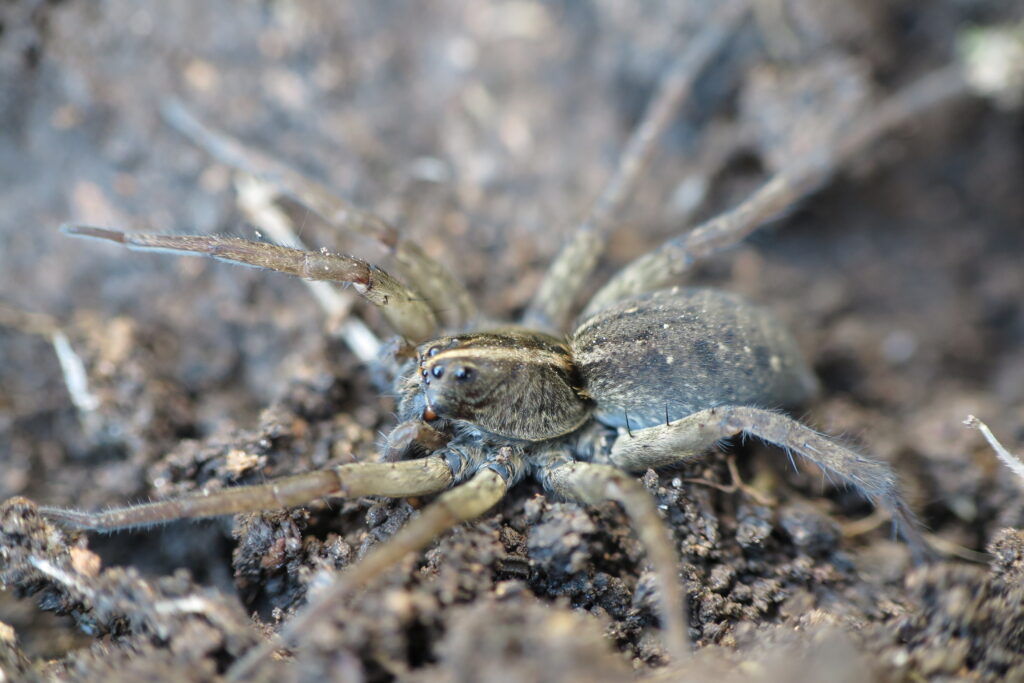
Wolf spiders often create the impression of constant awareness. Even when resting, their posture appears tense and prepared, with legs spread outward and eyes directed toward nearby movement. This alert stance allows them to respond quickly to disturbances within their surroundings.
Their behavior can feel surprisingly calculated for an invertebrate. A wolf spider sitting beneath a rock or tucked within shadows may remain motionless for long periods, almost resembling a small predator patiently observing its environment. This combination of patience, stealth, and sudden action defines much of the species’ natural behavior across different habitats worldwide.
Wolf Spider Behavior Overview and General Activity Tendencies
Wolf spiders are highly responsive predators that spend much of their lives actively monitoring nearby movement and vibration. Unlike web-dependent spiders that wait passively for prey to become trapped, wolf spiders remain directly engaged with their surroundings. Their posture and behavior often suggest constant readiness rather than relaxed inactivity.
When undisturbed, wolf spiders may appear surprisingly calm and motionless. Individuals commonly remain hidden beneath rocks, logs, leaf litter, or shaded crevices for extended periods without noticeable movement. This stillness acts almost like camouflage, helping the spider blend naturally into its environment.
Despite these quiet periods, wolf spiders are capable of extremely rapid reactions when stimulated by movement or danger. A nearby vibration or sudden shadow may instantly trigger a burst of activity. Their response speed resembles the sudden launch of a spring-loaded mechanism, shifting from complete stillness to motion in a fraction of a second.
The species generally behaves in a solitary manner. Most wolf spiders spend their lives alone except during mating periods or when females carry young spiderlings. Unlike ants or social spiders that form colonies, wolf spiders operate independently and maintain personal space from one another.
Wolf spiders also display strong environmental awareness. Their large forward-facing eyes allow them to visually track movement more effectively than many spider species. Combined with sensitivity to ground vibrations, this awareness helps them remain highly responsive to nearby activity.
Compared to the Orb-weaver Spider, wolf spiders appear far more active and direct in their behavior. Orb-weavers often remain stationary in webs waiting for prey, while wolf spiders continuously assess and react to the terrain around them. This difference gives wolf spiders a more aggressive and mobile behavioral presence.
Although intimidating in appearance, wolf spiders usually avoid unnecessary confrontation. Most individuals prefer retreat or concealment over direct interaction with large animals. Their behavior emphasizes survival through awareness and rapid decision-making rather than prolonged conflict.


Wolf Spider Movement Patterns and Daily Activity Cycles
Wolf spiders are primarily nocturnal, becoming most active during evening and nighttime hours. Darkness provides cover while also reducing exposure to predators that rely heavily on vision. Many wolf spiders remain hidden during the brightest parts of the day before emerging once temperatures cool and light levels drop.
Their movement style combines stealthy stalking with sudden bursts of speed. A wolf spider may creep forward slowly for several seconds and then accelerate rapidly in a straight-line sprint. These fast movements can appear almost startling because they happen so abruptly after long periods of stillness.
The spider’s legs move in coordinated patterns that keep the body low to the ground. This creates smooth, gliding motion across soil, stone, or leaf litter. Larger individuals often resemble tiny furry crabs sprinting across the forest floor due to their wide stance and quick directional changes.
Wolf spiders frequently pause between movements to reassess their surroundings. These pauses conserve energy while allowing the spider to detect nearby vibration or motion. The stop-and-go pattern helps them avoid unnecessary activity and reduces exposure to threats.
Seasonal conditions strongly influence activity levels. During warmer months, wolf spiders are far more visible and active, especially at night after rainfall or during humid evenings. Colder weather often reduces surface activity as spiders retreat into protected shelter areas for insulation.
Younger wolf spiders generally move more cautiously than fully mature adults. Small juveniles tend to remain closer to cover and use shorter movement bursts. Larger adults appear more confident crossing open terrain, especially under low-light conditions.
When startled, wolf spiders can reach impressive speeds for their size. Their escape response resembles a tiny remote-controlled vehicle suddenly accelerating across rough terrain. Rapid directional shifts help them disappear into cracks, vegetation, or debris within seconds.
Unlike jumping spiders that rely heavily on leaping movement, wolf spiders depend more on running speed and direct pursuit. Their movement style emphasizes endurance, control, and sudden acceleration rather than aerial motion. This ground-focused mobility defines much of their daily activity pattern.
Wolf Spider Interaction and Survival Behavior in the Wild
Wolf spiders rely heavily on camouflage, awareness, and fast reactions to survive in environments filled with predators. Their earthy coloration helps them blend into dirt, bark, gravel, and dried leaves, often making them difficult to detect until they move. Remaining unnoticed is one of their most effective survival strategies.
When threatened, wolf spiders usually choose escape over confrontation. A nearby disturbance may cause the spider to freeze briefly before sprinting toward shelter. Rocks, crevices, loose bark, and leaf litter provide immediate protection during these rapid retreats.
Some wolf spiders display defensive postures when escape is impossible. The spider may raise its front legs slightly and angle its body upward in an attempt to appear larger and more intimidating. Although visually dramatic, these displays are generally defensive warnings rather than aggressive attacks.
Females carrying egg sacs or spiderlings often behave more cautiously and defensively than solitary individuals. A female protecting young may remain hidden longer or react more strongly to disturbance. This parental instinct increases survival chances for developing offspring.
Wolf spiders communicate largely through vibration and physical signaling rather than sound. Subtle ground vibrations and body positioning help individuals detect nearby movement or interact during mating encounters. Their sensitivity to vibration allows them to interpret environmental changes quickly.
Compared to the Tarantula, wolf spiders depend more heavily on speed and stealth for survival. Tarantulas often rely on size and intimidation, while wolf spiders survive through rapid movement and camouflage. Their smaller size requires more evasive survival tactics.
One especially effective instinctive response occurs when a wolf spider senses shadow movement overhead. Many individuals instantly flatten against the ground or rush beneath nearby cover. This rapid reaction helps reduce vulnerability to birds and other visual predators.
Despite their intimidating appearance, wolf spiders are generally cautious animals focused primarily on avoiding danger. Their combination of camouflage, alertness, and explosive movement allows them to survive successfully across diverse environments worldwide. These behaviors make them one of the most effective and recognizable wandering spider groups in nature.
Popular Searches About Wolf Spiders
Explore Wolf Spider Guide
Explore More Wildlife

Support Encounters World
Help support wildlife photography and get behind the scenes discoveries on Patreon.