Wolf Spider Diet Guide: What Wolf Spiders Eat and How They Hunt
Quick Facts
Diet Type: Carnivore
Main Food Sources: Insects, smaller spiders, and other invertebrates
Feeding Time: Primarily nighttime and low-light periods
Foraging Method: Active ground hunting and ambush attacks
Seasonal Diet Changes: Increased feeding during warmer months with reduced winter activity
Predatory Adaptations: Excellent eyesight, speed, camouflage, and venomous bite
Introduction to the Wolf Spider’s Hunting Diet
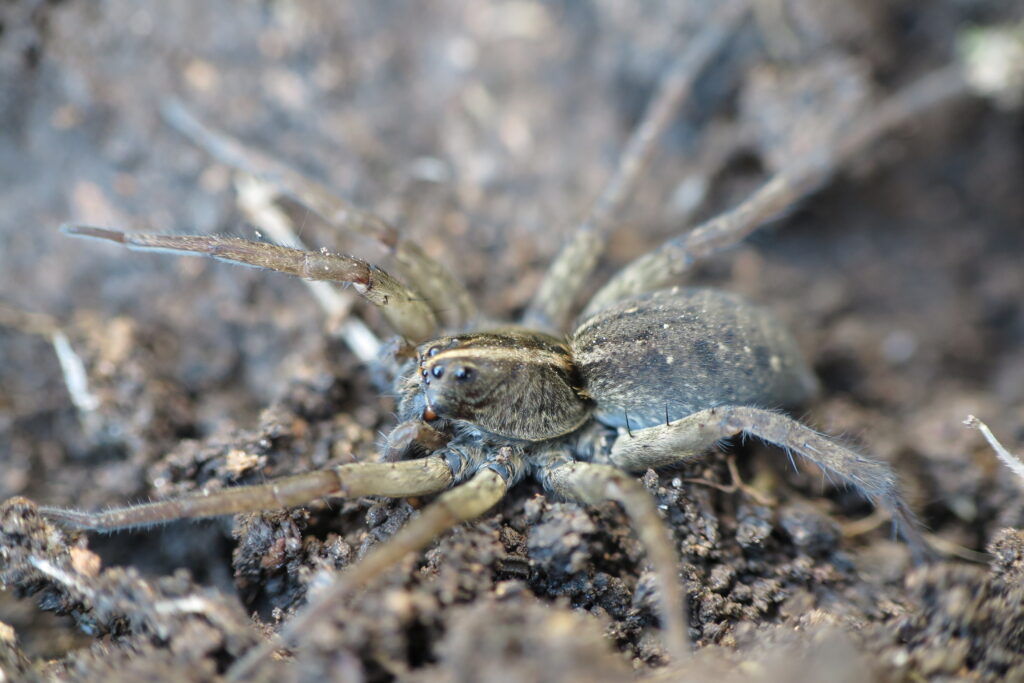
The Wolf Spider is an active predatory spider found across nearly every continent except Antarctica. Unlike spiders that rely on webs to trap food, wolf spiders roam directly across the ground searching for prey. Their diet and feeding style are closely tied to their wandering lifestyle and strong visual hunting abilities.
Wolf spiders are commonly observed in forests, grasslands, gardens, rocky terrain, and leaf litter where insect activity remains high. Many encounters occur during evening hours when these spiders emerge from cover and begin searching for movement along the ground. Their low-profile posture and camouflage help them approach prey without being detected immediately.
Because the wolf spider family includes hundreds of species, diet can vary somewhat depending on size and location. Smaller species target tiny insects and soft-bodied prey, while larger individuals are capable of overpowering surprisingly large invertebrates. Despite these differences, all wolf spiders remain dedicated carnivorous hunters.
Their feeding strategy reflects speed and direct pursuit rather than passive trapping. Instead of waiting inside a web for food to arrive, wolf spiders actively patrol and react to nearby movement. This roaming predatory lifestyle makes them one of the most visually dynamic hunting spiders in the natural world.
Wolf Spider Diet Overview and Predatory Feeding Style
Wolf spiders are strict carnivores that feed almost entirely on living prey. Their diet consists primarily of insects and other small invertebrates captured directly through active hunting. This makes them highly different from scavenging arthropods that rely on dead organic material or plant matter.
Unlike web-building spiders that specialize in trapping airborne prey, wolf spiders maintain a highly flexible hunting strategy focused on ground-level movement. They consume a wide variety of prey depending on size, availability, and environmental conditions. This adaptability allows them to survive in many different ecosystems worldwide.
Compared to the Orb-weaver Spider, which depends heavily on flying insects becoming trapped in webs, wolf spiders are far more mobile and opportunistic. Orb-weavers remain tied to web placement and environmental positioning, while wolf spiders actively pursue prey wherever it appears.
Most wolf spider species prefer live moving prey rather than inactive or dead material. Movement acts as a major trigger for hunting response, with spiders reacting quickly to vibrations or visible motion nearby. This sensitivity helps them detect potential prey even in dim lighting conditions.
Their feeding habits also shift somewhat according to body size and maturity. Juvenile wolf spiders generally consume very small insects and tiny invertebrates, while adults can handle much larger prey items. As the spider grows, its hunting capabilities and prey range expand significantly.
Regional variation influences diet composition as well. Forest-dwelling wolf spiders may encounter different prey than desert or grassland species. Despite these differences, the overall feeding strategy remains remarkably consistent across the family: locate movement, attack rapidly, and subdue prey directly.
The wolf spider’s feeding behavior resembles a roaming predator rather than a stationary trap-builder. Much like a miniature ground-hunting cat patrolling through vegetation, wolf spiders depend on awareness, stealth, and sudden bursts of action to secure food successfully.
Natural Food Sources Wolf Spiders Consume in the Wild
Wolf spiders consume a broad variety of insects and small invertebrates found near the ground. Crickets, beetles, ants, flies, grasshoppers, caterpillars, and roaches are among the most commonly targeted prey items. Their diet reflects whatever appropriately sized animals are active within the surrounding environment.
Smaller wolf spiders often focus on softer-bodied prey that can be subdued quickly. Tiny flies, springtails, young insects, and delicate arthropods provide manageable food sources during early growth stages. These prey items supply enough nutrients without requiring large amounts of energy to overpower.
Larger species are capable of taking significantly bigger prey relative to their body size. Some adult wolf spiders can capture sizable beetles, large crickets, or even smaller spiders. Their powerful legs and venom allow them to control struggling prey efficiently once contact is made.
Cannibalism occasionally occurs among wolf spiders, particularly when food becomes scarce or individuals encounter vulnerable juveniles. Although not their preferred feeding method, larger spiders may prey upon smaller members of their own species under difficult conditions. This behavior is not uncommon among predatory arthropods.
Insect availability strongly influences feeding opportunities throughout the year. Warm months with high insect activity generally provide abundant food, while colder seasons reduce prey availability significantly. During winter or drought periods, feeding frequency may decline as prey becomes harder to locate.
One commonly consumed prey item is the cricket, which provides substantial nutrition due to its relatively large size and soft internal tissue. Capturing a cricket offers enough energy to support the spider for extended periods. For larger wolf spiders, a successful capture can represent a major feeding event.
Certain species may also target soft-bodied larvae, moths, termites, or ground-dwelling insects hidden beneath debris. Their diet remains heavily tied to whatever prey is active at the soil surface or within leaf litter. This flexibility helps wolf spiders remain successful predators across varied environments.
Wolf Spider Feeding Behavior and Survival Hunting Strategies
Wolf spiders rely on active pursuit and ambush tactics rather than webs when capturing prey. Many individuals remain motionless for long periods before suddenly charging toward nearby movement. This attack strategy combines patience with explosive speed.
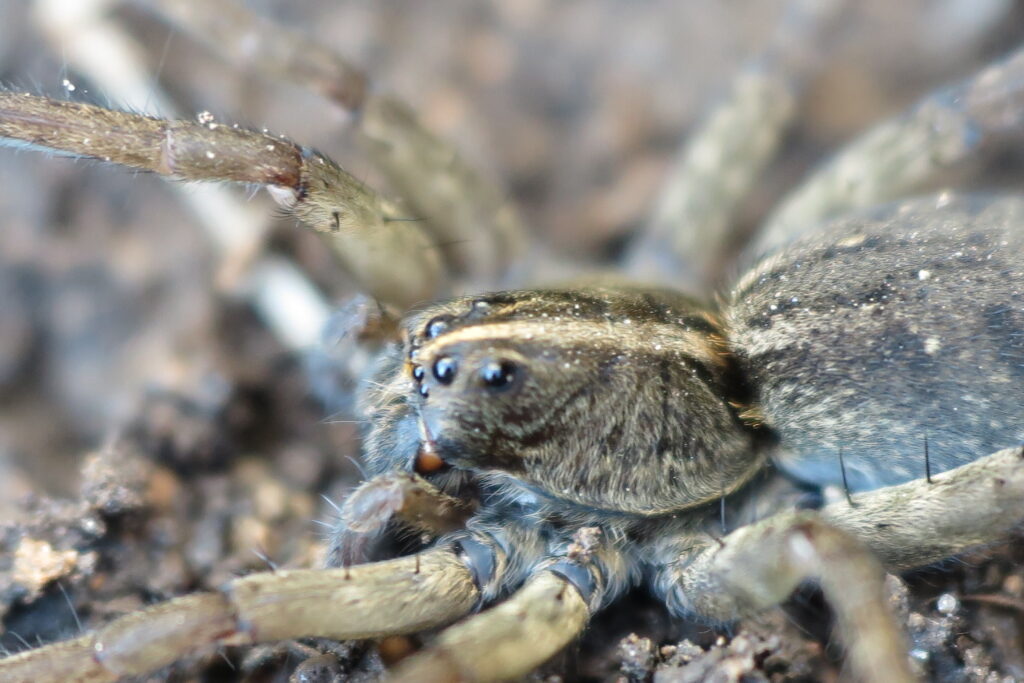
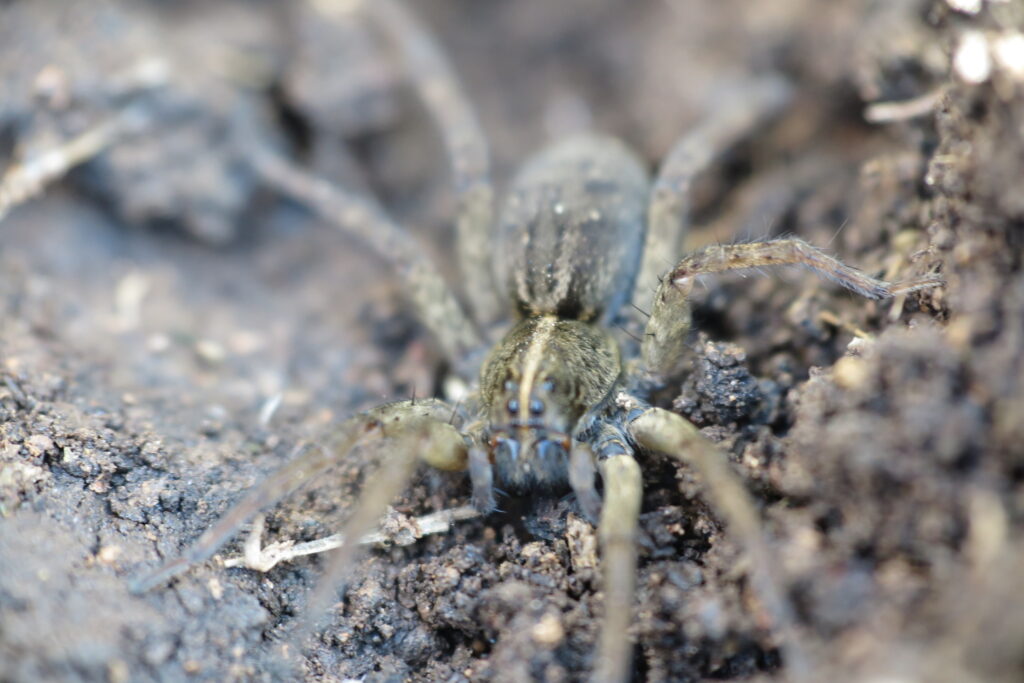
Their eyesight plays a major role in hunting success. Large forward-facing eyes help detect subtle movement even under low-light conditions. Combined with sensitivity to vibration, this awareness allows wolf spiders to react quickly to nearby prey activity.
When approaching prey, wolf spiders often move slowly and cautiously at first. They may creep forward in short controlled motions before accelerating rapidly during the final attack. The sudden burst resembles a tiny sprinter launching from starting blocks toward a target.
Once prey is captured, the spider uses venom to immobilize it quickly. Strong jaws called chelicerae pierce the prey’s body while venom begins breaking down internal tissues. This process allows the spider to consume liquefied nutrients efficiently after the prey is subdued.
Competition for prey can occur in areas with high predator density. Larger wolf spiders may dominate feeding opportunities over smaller individuals, especially when resources become limited. Solitary hunting behavior reduces direct competition most of the time, but overlap still occurs occasionally.
During periods of food scarcity, wolf spiders conserve energy by remaining hidden and reducing unnecessary movement. Instead of constantly searching for prey, they may rely more heavily on ambush positioning near areas of likely insect activity. This strategy limits wasted energy expenditure.
Compared to the Jumping Spider, wolf spiders depend less on aerial leaps and more on sustained ground pursuit. Jumping spiders use quick visual targeting and short-range leaps, while wolf spiders excel at fast direct chases across terrain. Their hunting style feels heavier and more force-driven.
Wolf spiders ultimately survive through a combination of camouflage, patience, speed, and sensory awareness. Their ability to locate prey without webs gives them flexibility across countless environments worldwide. This roaming hunting strategy has helped make wolf spiders one of the most widespread and successful predatory spider families on Earth.
Popular Searches About Wolf Spiders
Explore Wolf Spider Guide
Explore More Wildlife

Support Encounters World
Help support wildlife photography and get behind the scenes discoveries on Patreon.