
Creeping Charlie Habitat Guide: Where Ground Ivy Grows and Thrives
Quick Facts
Primary Habitat: Woodland Edges and Disturbed Ground
Secondary Habitat: Lawns, Gardens, Roadsides, and Open Woodlands
Soil Type: Loamy, Clay, and Organic-Rich Soils
Soil pH Preference: Slightly Acidic to Neutral
Moisture Level: Moderate to Moist
Climate Zone: Temperate Regions
Light Requirements: Partial Shade to Full Sun
Introduction to Creeping Charlie Habitats Across the World
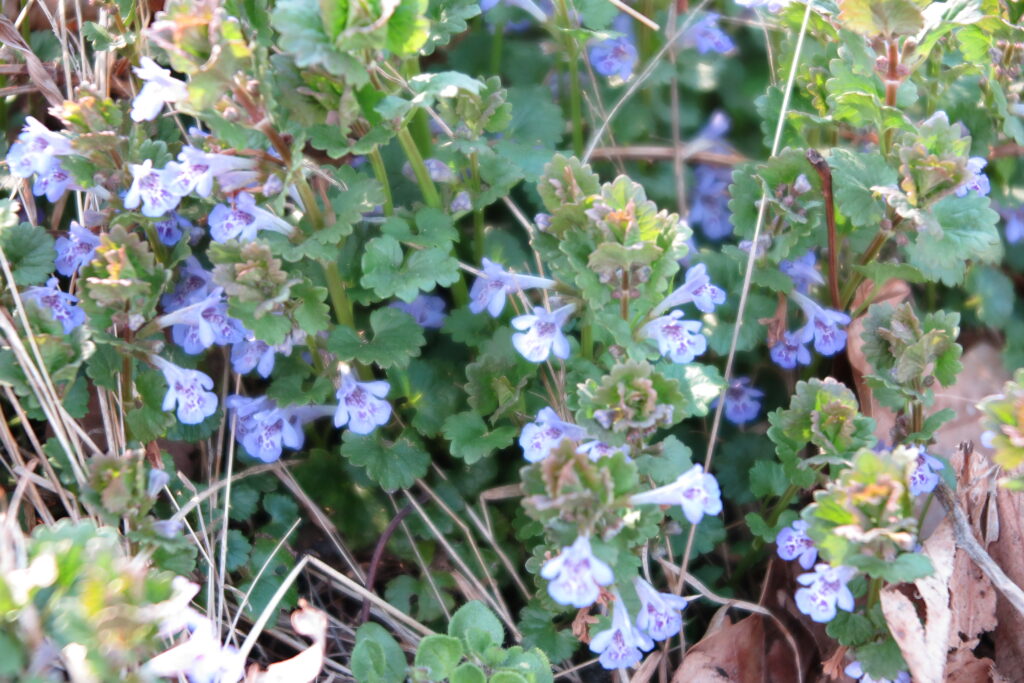
Creeping Charlie (Glechoma hederacea), also known as Ground Ivy, is a perennial member of the mint family that has established itself across a remarkable portion of the temperate world. Native to Europe, western Asia, and parts of northern Africa, the plant has successfully expanded far beyond its original range and now occurs across much of North America. Its ability to settle into a variety of landscapes has made it one of the most recognizable low-growing plants in many regions.
The species is commonly encountered in both developed and natural environments. While many people first notice it growing near homes or along walking paths, its presence extends well beyond urban settings. Its widespread occurrence demonstrates an unusual ability to persist wherever environmental conditions remain favorable.
Across continents, Creeping Charlie occupies areas that experience moderate seasonal changes throughout the year. It performs especially well in regions that receive regular rainfall and maintain sufficient soil moisture. Unlike plants restricted to a narrow climate range, this species can tolerate a surprisingly broad spectrum of seasonal conditions.
Its success across multiple countries has transformed it into one of the most familiar ground-covering plants in temperate landscapes. Whether encountered in Europe, Canada, or the United States, observers often recognize the same dense green patches spreading across the landscape. This consistency has helped make Creeping Charlie one of the best-known members of the mint family outside of cultivated herbs.
Creeping Charlie Geographic Distribution and Habitat Overview
Creeping Charlie has become one of the most widely distributed perennial groundcovers in temperate regions. Although its origins trace back to Europe and parts of Asia, human activity has transported the species across oceans and into entirely new ecosystems. Today, it occupies a far larger range than many native plants found within the same regions.
Throughout North America, the plant occurs from southern Canada through much of the United States. It appears in both densely populated communities and less developed landscapes. This broad distribution demonstrates a level of adaptability that exceeds many comparable ground-level species.
Unlike plants limited to specific mountain ranges, coastal zones, or specialized ecosystems, Creeping Charlie is capable of establishing populations across diverse geographic regions. Its range spans areas with differing rainfall patterns, temperature fluctuations, and seasonal cycles. As a result, it often appears more widespread than many native wildflowers occupying the same region.
The species is particularly successful throughout regions with moderate climates. Areas that experience extreme heat year-round or prolonged drought tend to support fewer populations. Nevertheless, its overall distribution remains extensive compared to many other members of the mint family.
Observers traveling across temperate regions may encounter Creeping Charlie repeatedly despite covering hundreds of miles. Its widespread presence often creates the impression of a nearly universal groundcover. Few broadleaf plants achieve such extensive geographic coverage while maintaining a relatively consistent appearance throughout their range.
Common Growing Environments of Creeping Charlie
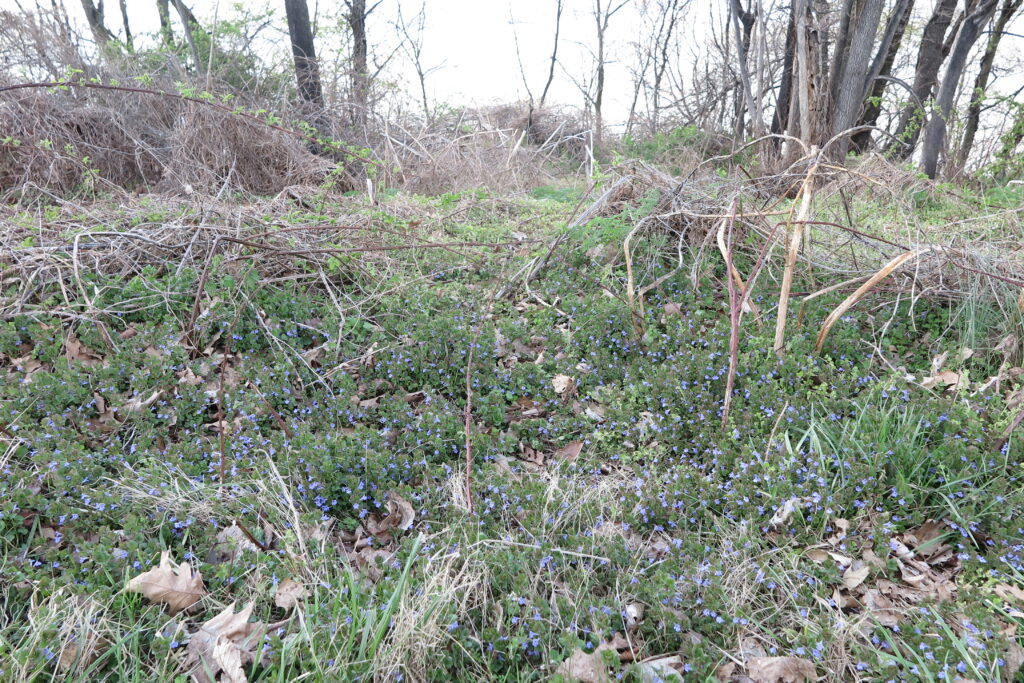
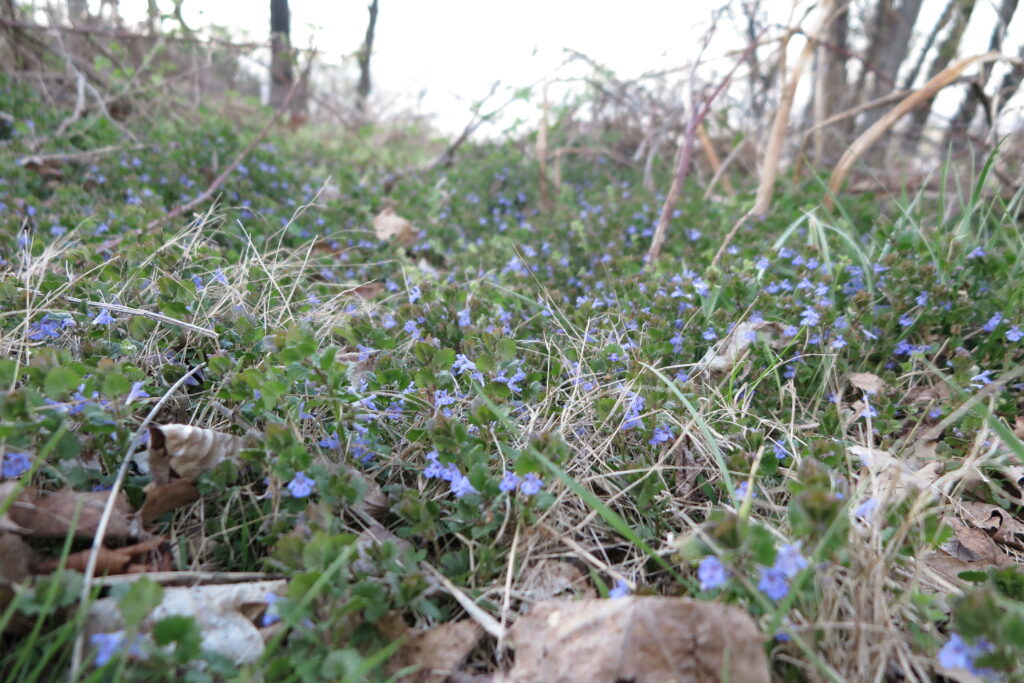
Creeping Charlie thrives in a variety of environments where ground-level vegetation can establish uninterrupted coverage. Woodland margins represent one of its most common growing locations. These transitional zones often provide a balance of sunlight and shelter that supports dense patches of foliage.
Residential landscapes have become another important environment for the species. Lawns, garden borders, flower beds, and landscaped areas frequently provide conditions that allow the plant to establish itself successfully. Because these locations often receive regular watering and soil disturbance, they can create favorable opportunities for long-term persistence.
The plant is also frequently observed along roadsides, trails, and pathways. These disturbed environments often contain exposed soil and reduced competition from taller vegetation. In such locations, Creeping Charlie may form continuous green mats extending across large sections of ground.
Open woodlands provide another suitable setting, particularly where tree canopies create filtered sunlight. Rather than occupying deep forest interiors, the species often performs best in locations receiving intermittent light throughout the day. Woodland edges commonly support larger populations than heavily shaded forest centers.
Environmental variation can influence exactly where the plant becomes most abundant within a given area. In suburban landscapes it may dominate shaded lawn sections, while in natural settings it often flourishes near forest boundaries or clearings. This flexibility allows it to take advantage of opportunities across multiple habitat types without being restricted to a single environment.
Environmental Conditions That Support Creeping Charlie
Moisture plays an important role in supporting healthy Creeping Charlie populations. The plant performs particularly well in soils that retain water without becoming permanently saturated. Locations that remain consistently moist often support denser and more vigorous growth than excessively dry sites.
Soil composition also influences habitat suitability. Loamy soils rich in organic material tend to provide ideal conditions because they balance drainage with moisture retention. Clay-based soils can also support the species, especially when sufficient organic matter is present. Extremely sandy soils are generally less favorable because they dry out more rapidly.
The preferred environment often resembles the conditions found on a woodland floor. Moderately moist soil, scattered leaf litter, and partial shade create a setting similar to many natural locations where the plant thrives. These conditions help explain why it frequently appears beneath trees or near wooded boundaries.
Climate further contributes to habitat success. Temperate regions with seasonal rainfall and moderate winters provide favorable conditions for long-term persistence. Areas that experience prolonged drought or severe heat stress may reduce population density, although established patches often remain surprisingly resilient.
Light availability influences where the plant becomes most noticeable. Partial shade frequently supports the healthiest populations, though many patches also tolerate considerable sunlight. The combination of adequate moisture, productive soil, moderate temperatures, and balanced light creates an environment where Creeping Charlie can maintain dense ground coverage and remain a familiar feature of the landscape.

Popular Searches About Creeping Charlie
Explore Creeping Charlie Guide
Explore More Plants

Support Encounters World
Help support wildlife photography and get behind the scenes discoveries on Patreon.