Eastern Skunk Cabbage Facts Guide: Fascinating Facts, Unique Traits, and Surprising Discoveries
Quick Facts
Scientific Name: Symplocarpus foetidus
Common Name: Eastern Skunk Cabbage
Plant Family: Arum Family (Araceae)
Native Range: Eastern North America
Flowering Season: Late Winter to Early Spring
Unique Ability: Thermogenesis (Heat Production)
Interesting Fact: Can bloom while snow is still on the ground
Remarkable Eastern Skunk Cabbage Facts and Background
Eastern Skunk Cabbage is often considered one of the most unusual native plants in North America. While countless wildflowers wait for warm spring weather before becoming active, this species begins flowering during a time when winter still has a firm hold on the landscape. Its ability to emerge so early has fascinated naturalists for generations.
The plant belongs to the arum family, a group that includes many species known for unusual flower structures. While some arums grow in tropical environments, Eastern Skunk Cabbage has adapted to cold temperate forests and wetlands. This contrast makes it one of the most distinctive members of its botanical family.
Its scientific name, Symplocarpus foetidus, reflects one of the plant’s most famous characteristics. The term “foetidus” refers to its strong odor, which can resemble a skunk when plant tissues are disturbed. This scent may not appeal to people, but it serves an important purpose in the plant’s survival strategy.
Eastern Skunk Cabbage has existed in North America for thousands of years. Long before roads, cities, and farms covered the landscape, the species occupied wetlands and forested floodplains throughout much of the eastern continent. Modern populations continue to thrive in many of the same ecosystems.
Unlike many ornamental plants grown for colorful flowers, Eastern Skunk Cabbage is admired for its unusual biology rather than traditional beauty. Its reputation comes from adaptations and ecological importance rather than showy blooms. This difference has made it a favorite subject among botanists and wildlife enthusiasts.
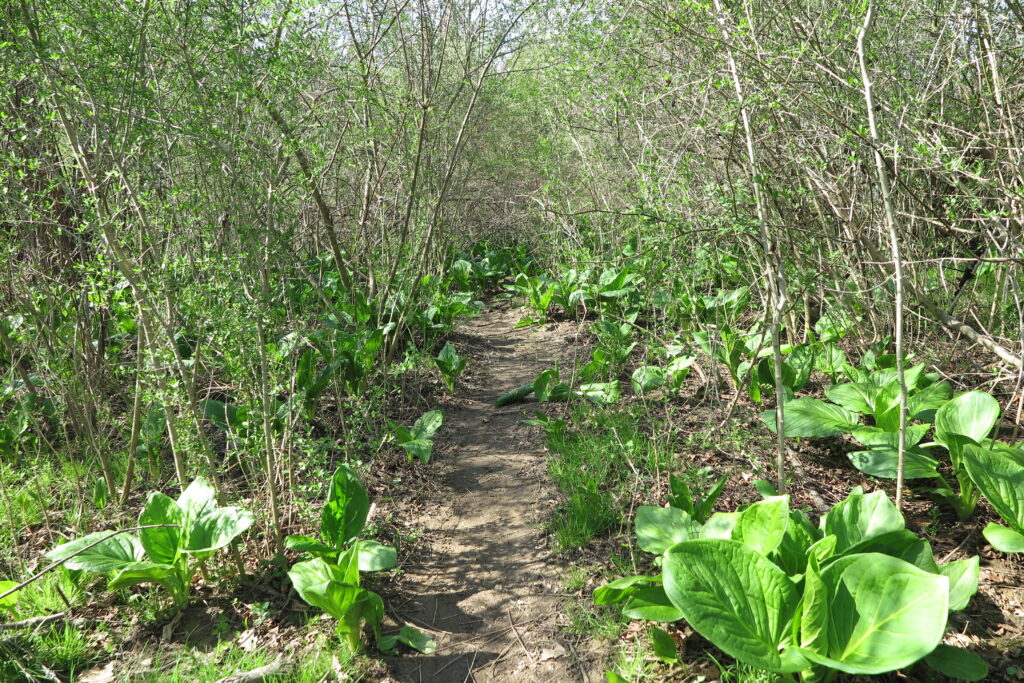
Many people encounter the plant without realizing how extraordinary it is. Large green leaves are easy to notice during spring and summer, but the fascinating adaptations hidden behind those leaves often go unnoticed. Learning about the species reveals a level of complexity that surprises even experienced naturalists.
Another interesting fact is its longevity. Individual plants can survive for decades under favorable conditions. Over time, they develop extensive underground structures that support repeated cycles of growth and reproduction.
Because of its unusual appearance, Eastern Skunk Cabbage is frequently featured in field guides, nature centers, and educational programs. It serves as an excellent example of how native plants can evolve specialized strategies for survival in challenging environments.
Surprising Facts About Heat Production and Early Flowering
Perhaps the most famous fact about Eastern Skunk Cabbage is its ability to generate heat. Through a process known as thermogenesis, the flowering structure can become significantly warmer than the surrounding air. Very few North American plants possess this remarkable capability.
This heat production allows flowers to emerge during periods when snow and ice may still cover the landscape. In some cases, the warmth generated by the plant can contribute to melting surrounding snow. Seeing flowers emerge from patches of snow is one of the most memorable sights associated with the species.
The process is powered by intense metabolic activity within the flower’s spadix. Rather than simply absorbing warmth from sunlight, the plant actively creates its own heat. This makes Eastern Skunk Cabbage one of the closest botanical equivalents to a warm-blooded organism.
Scientists have studied thermogenesis for decades because it is so uncommon among flowering plants. The ability demonstrates how plants can evolve solutions to environmental challenges that appear almost animal-like in their complexity.
Early flowering provides another advantage. By blooming before most other species become active, Eastern Skunk Cabbage faces less competition for pollinators. This timing helps improve reproductive success while allowing the plant to occupy a unique ecological niche.
The flower’s unusual schedule means it often becomes one of the first flowering plants visible in many forests. For hikers and naturalists, spotting Eastern Skunk Cabbage can feel like witnessing the official arrival of spring.
Its flowering structures are equally unusual in appearance. Instead of producing traditional petals, the plant develops a hooded spathe surrounding a rounded spadix. These features create a flower unlike almost any other native wildflower in eastern North America.
Together, thermogenesis and early flowering make Eastern Skunk Cabbage one of the most biologically fascinating plants on the continent. Few species possess such a distinctive combination of adaptations.
Unique Eastern Skunk Cabbage Adaptations and Survival Traits
Eastern Skunk Cabbage has evolved several adaptations that contribute to its long-term survival. One of the most important is its extensive root system. Thick roots anchor the plant securely in wet soils and help it access resources even when environmental conditions fluctuate.
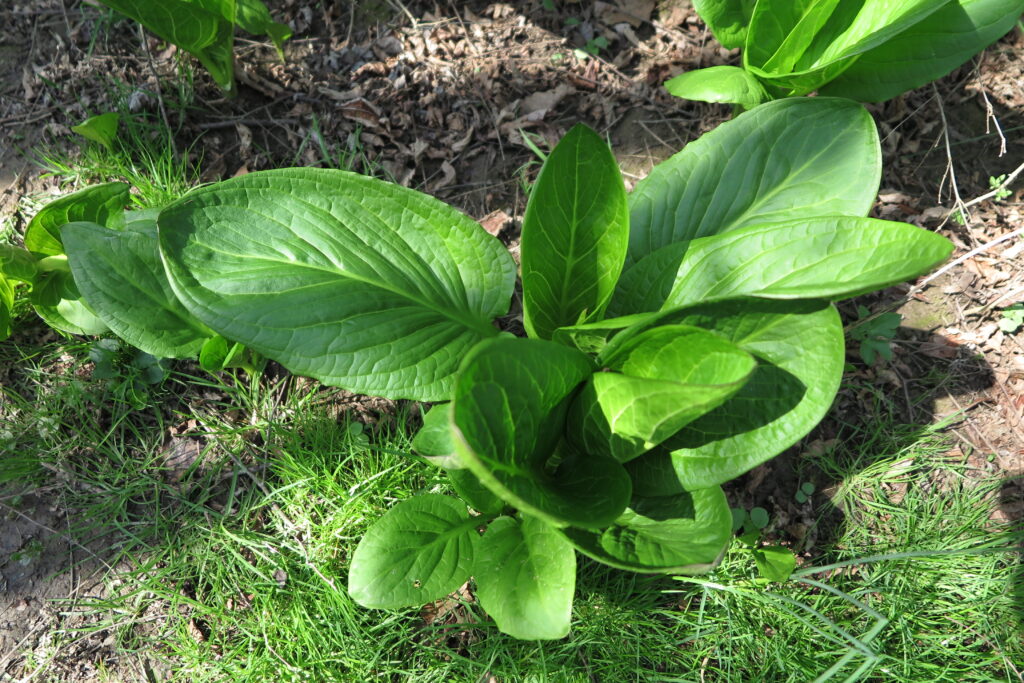
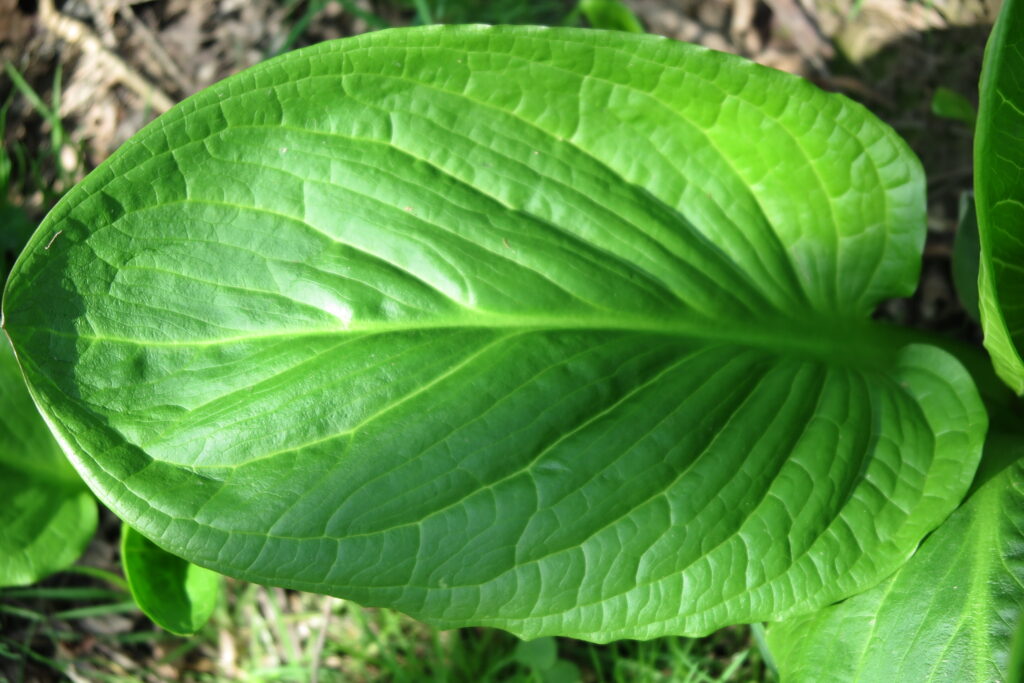
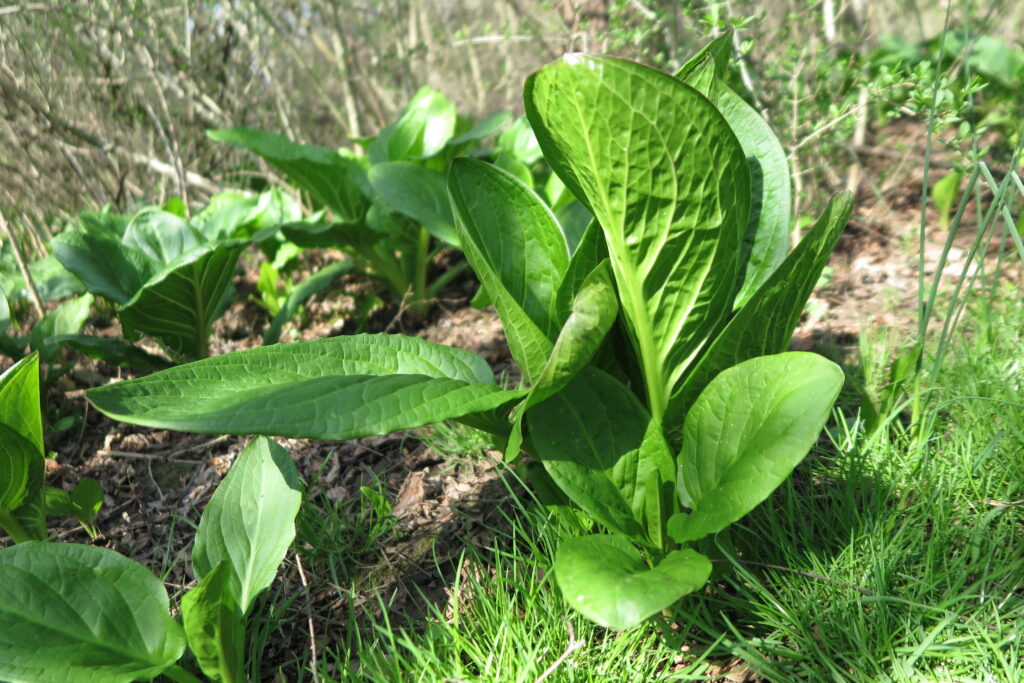
The plant’s leaves are another impressive adaptation. Mature foliage can reach remarkable sizes, allowing the plant to capture substantial amounts of sunlight. These large leaves function like efficient solar panels that help replenish energy reserves following flowering.
A surprising fact is that the species thrives in environments where many plants struggle. Saturated soils, seasonal flooding, and prolonged moisture are often viewed as difficult conditions for vegetation. Eastern Skunk Cabbage, however, is exceptionally well suited to these settings.
The plant also benefits from strong seasonal timing. Its leaves emerge after flowering and continue gathering resources throughout much of the growing season. This sequence allows the species to balance reproduction and energy storage effectively.
Its distinctive odor serves as more than a curious feature. The scent helps attract pollinating insects, particularly flies and beetles. What humans perceive as unpleasant can function as an effective communication signal within natural ecosystems.
The protective flower chamber offers another advantage. Pollinators visiting the flower encounter a sheltered environment that provides warmth and protection from harsh weather. This combination of benefits encourages insect visitation during a season when conditions can remain challenging.
Eastern Skunk Cabbage is also remarkably resilient. Mature plants often survive floods, cold winters, and seasonal disturbances that would damage less specialized species. Their persistence helps maintain stable populations across large portions of their native range.
These adaptations work together as an integrated survival system. Rather than relying on a single advantage, Eastern Skunk Cabbage combines structural, physiological, and ecological traits that support long-term success.
Lesser-Known Eastern Skunk Cabbage Trivia
One lesser-known fact is that Eastern Skunk Cabbage is sometimes mistaken for tropical plants because of its enormous leaves. Visitors encountering large colonies often compare them to vegetation found in rainforests rather than native woodland species. This exotic appearance contributes to the plant’s popularity among photographers.
The flowers often remain hidden from casual observers. Because they emerge before the leaves and stay close to the ground, many people walk past them without noticing. As a result, countless individuals are familiar with the leaves but have never actually seen the flowers.
The species has appeared in traditional Indigenous knowledge systems for centuries. Various Native American communities recognized the plant and developed an understanding of its properties long before modern botanical research began documenting its biology.
Another interesting fact involves its seeds. After flowering, fruit develops near ground level where it may go unnoticed beneath surrounding vegetation. This hidden development stage contrasts sharply with the highly visible leaves that dominate later in the season.
Eastern Skunk Cabbage also plays an important role in environmental education. Its ability to generate heat, flower during winter, and thrive in wetlands makes it a powerful teaching tool for explaining plant adaptation and ecological relationships.
Researchers continue studying the species because thermogenesis remains an active area of scientific interest. Even after decades of investigation, Eastern Skunk Cabbage still provides valuable insights into plant physiology and evolution.
Few native plants inspire as much curiosity among beginning naturalists. The combination of giant leaves, unusual flowers, strong odors, and heat production creates an unforgettable species that often becomes a favorite subject for nature enthusiasts.
Among North America’s native plants, Eastern Skunk Cabbage occupies a category of its own. Its unique traits, ecological importance, and remarkable adaptations make it one of the most fascinating wildflowers found in forests and wetlands throughout the eastern United States and Canada.
Popular Searches About Skunk Cabbage
Explore Skunk Cabbage Guide
Explore More Plants

Support Encounters World
Help support wildlife photography and get behind the scenes discoveries on Patreon.