Eastern Skunk Cabbage Life Cycle: From Winter Emergence to Seasonal Dormancy
Quick Facts
Life Cycle Type: Perennial
Emergence Period: Late Winter to Early Spring
Flowering Stage: Before Full Leaf Development
Pollination Method: Insect Pollination
Seed Development: Spring to Early Summer
Dormancy Period: Late Autumn Through Winter
Lifespan: Multiple Decades Under Favorable Conditions
Understanding the Eastern Skunk Cabbage Life Cycle
Eastern Skunk Cabbage (Symplocarpus foetidus) follows one of the most unusual life cycles among native North American plants. While many woodland species wait for warm spring temperatures before becoming active, this perennial begins its annual cycle during a period when winter still dominates much of the landscape. Its timing allows it to occupy a unique position within the seasonal rhythm of eastern forests and wetlands.
Native to eastern North America, Eastern Skunk Cabbage has adapted to environments where seasonal changes strongly influence plant development. Generations of plants have evolved to take advantage of brief opportunities that occur before trees fully leaf out and before dense vegetation develops across the forest floor. This strategy has helped the species persist for thousands of years.
The plant’s annual cycle is remarkably consistent despite variation in weather conditions. Some years may bring longer winters or unusually warm springs, but the general sequence remains the same. Flowering, leaf production, seed development, and dormancy occur in a predictable order that repeats year after year.
Unlike short-lived annual plants that complete their entire lives within a single growing season, Eastern Skunk Cabbage survives through multiple decades. Individual plants continue repeating the same life cycle while gradually increasing in size and developing stronger underground structures. This long lifespan contributes to the stability of populations across its range.
Eastern Skunk Cabbage Early Emergence and Flowering Stage
The life cycle begins with one of the most remarkable events in the plant kingdom. During late winter or very early spring, flowering structures emerge from the soil while many surrounding plants remain dormant. In some years, flowers appear while patches of snow still cover the ground.
These early flowers develop before the large leaves that most people associate with Eastern Skunk Cabbage. The hooded spathe emerges first, protecting the rounded spadix hidden within. This sequence allows the plant to focus on reproduction before investing energy into extensive foliage growth.
The flowering period represents a critical stage in the annual cycle. Pollinating insects begin visiting the flowers, transferring pollen between plants and supporting successful fertilization. Because relatively few flowers are available during this season, Eastern Skunk Cabbage occupies a unique ecological niche.
A useful comparison is arriving at an event before the crowd. By becoming active long before most neighboring plants, Eastern Skunk Cabbage reduces competition for pollinators and available resources. This timing advantage helps explain why the species has remained successful across much of eastern North America.
Flowering eventually concludes as environmental conditions continue improving. Once reproductive structures have completed their primary role, the plant transitions into the next stage of its annual development.
Leaf Development and Summer Growth Phase
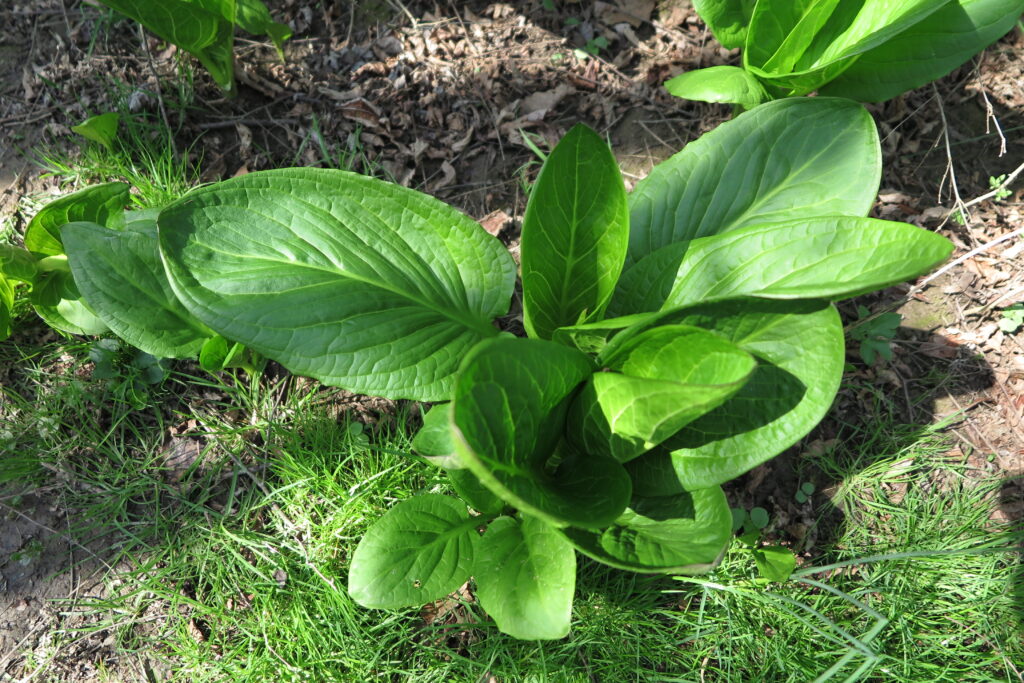
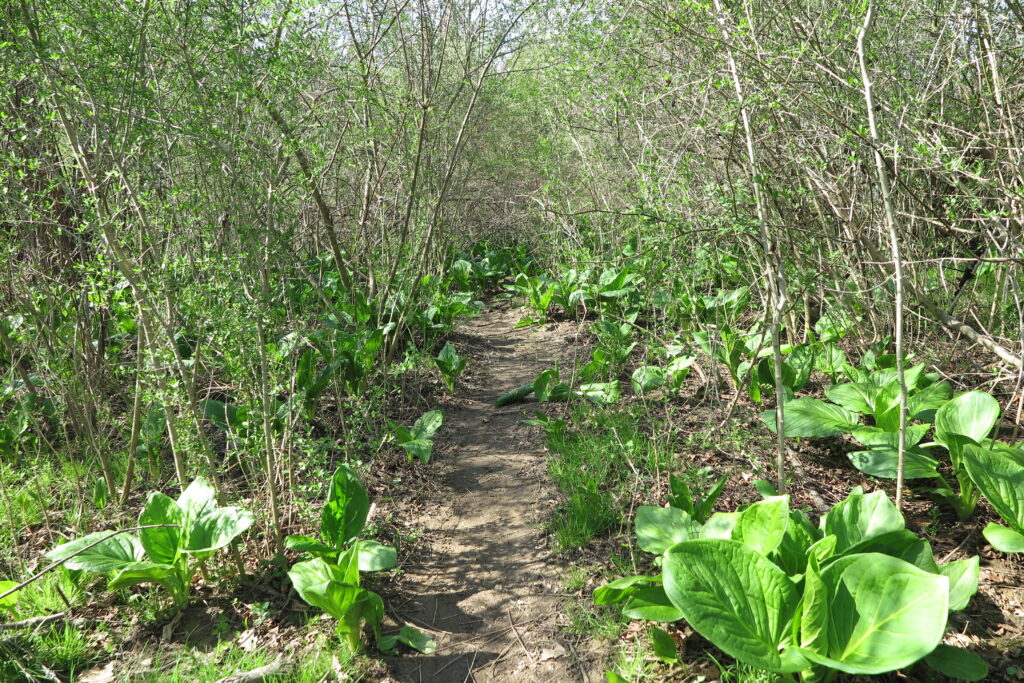
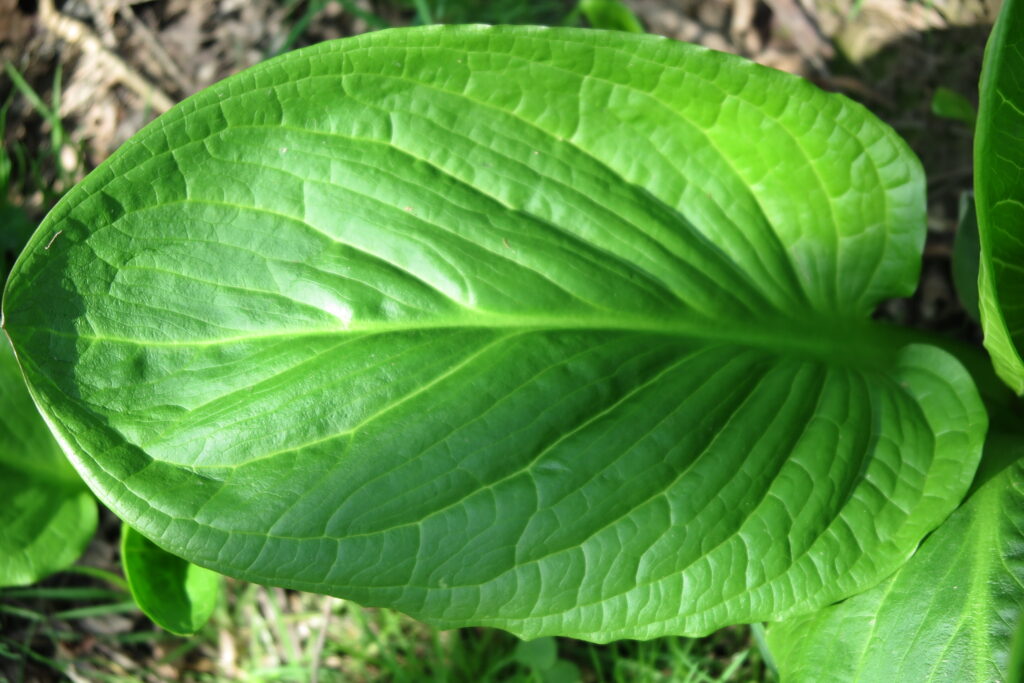
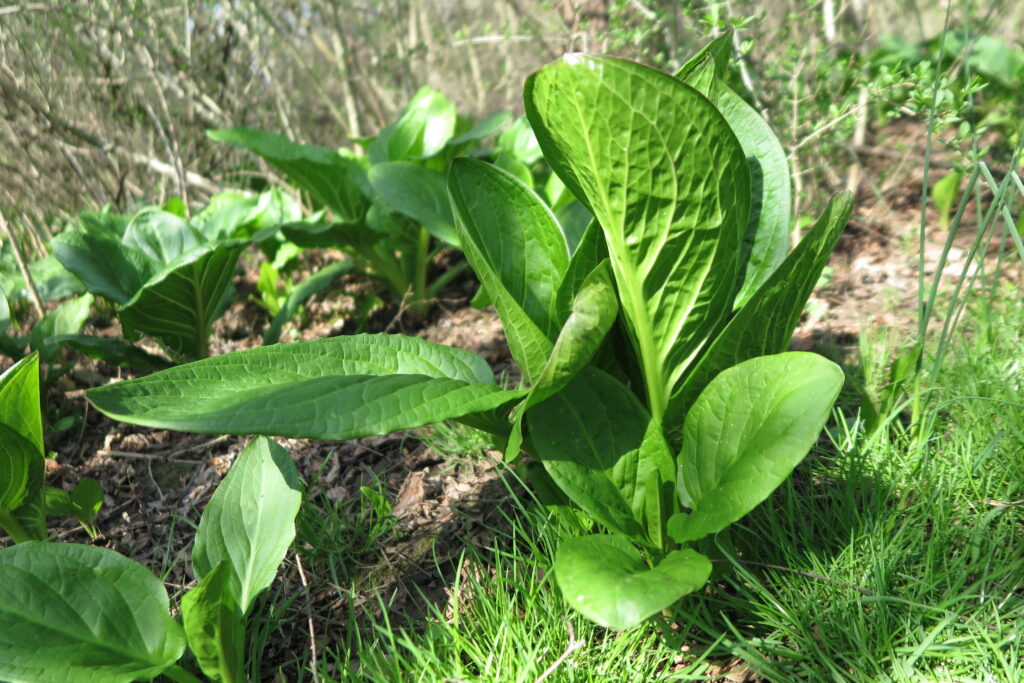
Following flowering, Eastern Skunk Cabbage begins producing its enormous leaves. These broad green structures rapidly expand and become the most visible part of the plant. Within a relatively short period, the landscape may transform from displaying isolated flowers to supporting massive clumps of foliage.
The leaves serve as the plant’s primary energy-producing structures. Through photosynthesis, they capture sunlight and convert it into resources needed for future growth and survival. This stage is essential because it allows the plant to replenish energy reserves used during flowering.
As spring progresses into summer, foliage reaches its maximum size. Mature plants may develop leaves exceeding two feet in length, creating a bold visual presence within the landscape. The plant’s focus during this period shifts away from flowering and toward resource accumulation.
A useful comparison is a solar power system operating at peak capacity. The large leaves function like biological solar panels, gathering energy that will later support future reproductive activity and long-term survival. The larger and healthier the foliage, the more resources can be stored underground.
Throughout summer, Eastern Skunk Cabbage remains one of the most recognizable plants in suitable habitats. Its foliage often dominates local vegetation and provides the resources needed for the final stages of the annual cycle.
Seed Production, Dormancy, and Long-Term Survival
Following successful pollination, seeds begin developing near the base of the plant. These seeds represent the next generation and provide opportunities for new individuals to establish in suitable locations. Although seed production is important, many plants may take years before reaching maturity themselves.
As autumn approaches, Eastern Skunk Cabbage gradually begins preparing for dormancy. The large leaves lose their vibrant appearance and eventually die back. Nutrients and energy are redirected into underground rhizomes and roots where they can be stored safely through winter.
The dormant stage is often invisible to casual observers. Above-ground growth disappears, giving the impression that the plant has vanished entirely. Beneath the soil surface, however, extensive underground structures remain alive and protected from harsh environmental conditions.
A useful comparison is a bear entering hibernation. While activity above ground ceases, important biological processes continue at a reduced level until favorable conditions return. Eastern Skunk Cabbage follows a similar strategy by retreating underground during the least productive part of the year.
When late winter arrives once again, the cycle begins anew. Flowering structures emerge, pollination occurs, leaves develop, seeds mature, and dormancy returns. This repeating sequence has allowed Eastern Skunk Cabbage to thrive across eastern North America for countless generations, making its life cycle one of the most fascinating among native woodland and wetland plants.
Popular Searches About Skunk Cabbage
Explore Skunk Cabbage Guide
Explore More Plants

Support Encounters World
Help support wildlife photography and get behind the scenes discoveries on Patreon.