Clown Triggerfish Behavior Guide: Activity Patterns, Movement, and Survival Strategies
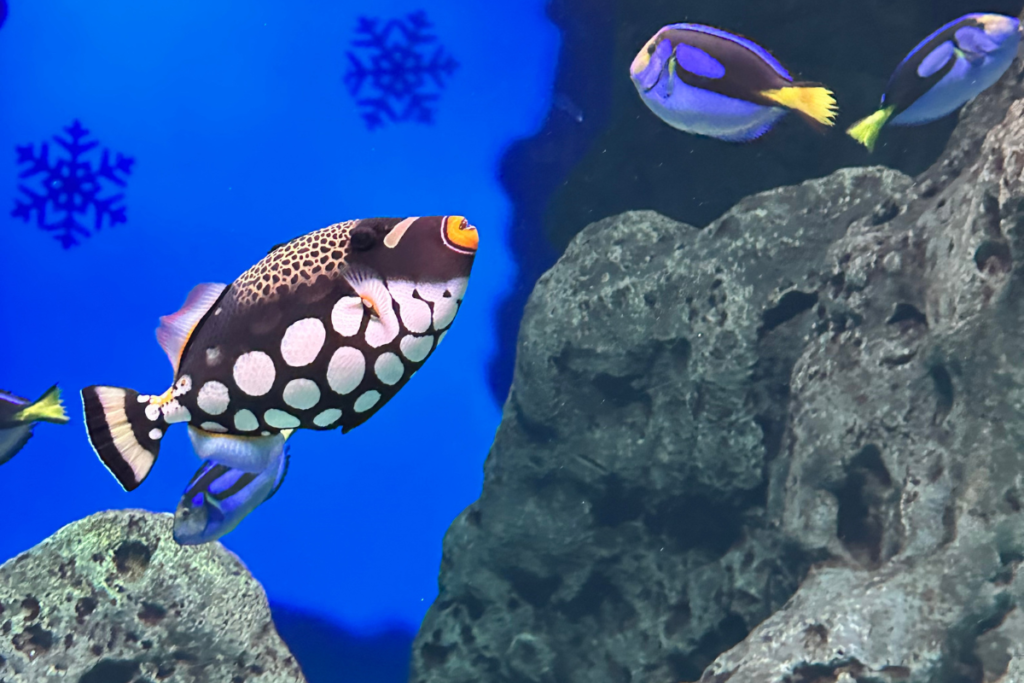
Quick Facts
Activity Type: Primarily Diurnal
Social Structure: Mostly Solitary or Loosely Associated
Territorial Behavior: Moderately to Highly Territorial
Movement Style: Controlled Swimming with Short Bursts of Speed
Communication Method: Visual Displays and Body Positioning
Defense Strategy: Trigger Spine Locking, Threat Displays, and Aggression
Introduction to Clown Triggerfish Behavior in Tropical Oceans
The Clown Triggerfish (Balistoides conspicillum) is one of the most recognizable reef fish inhabiting warm tropical waters of the Indo-Pacific region. Found from the coastlines of eastern Africa to island chains across the Pacific Ocean, this species occupies marine environments that support diverse fish communities. Its striking appearance often draws immediate attention, but its behavioral traits are equally fascinating.
A Clown Triggerfish moving through a reef rarely appears rushed. Instead, it often gives the impression of a fish carefully evaluating its surroundings while traveling through a busy underwater landscape. This measured presence allows observers to appreciate the animal’s confidence and awareness.
In public aquariums and natural reef settings alike, the species displays a noticeable sense of independence. While many reef fish remain tightly grouped in schools, Clown Triggerfish frequently appear comfortable maintaining personal space while sharing the same general area with other marine life. This balance between independence and coexistence contributes to their unique reputation among reef fishes.
Watching a Clown Triggerfish often feels similar to observing a large bird of prey gliding over a landscape. It moves with purpose, remains attentive to activity around it, and rarely seems distracted by the constant motion of smaller reef inhabitants. These first impressions provide insight into a species whose behavior is shaped by awareness, confidence, and adaptability.
Clown Triggerfish Behavioral Tendencies and Daily Habits
The overall behavior of the Clown Triggerfish can best be described as alert, deliberate, and highly responsive. Unlike fish that constantly dart between shelters or remain hidden for long periods, this species frequently appears comfortable moving through open areas while monitoring nearby activity. Its actions often suggest a continual assessment of the environment.
When undisturbed, individuals typically exhibit calm and controlled behavior. They may patrol sections of reef, inspect objects within their surroundings, or slowly travel through areas occupied by numerous other fish. This steady routine creates an impression of patience rather than constant urgency.
Many observers compare the demeanor of a Clown Triggerfish to that of a watchful hawk surveying a field. The animal remains active and engaged but does not waste unnecessary energy. Instead of reacting impulsively to every movement nearby, it selectively responds to changes it considers important.
Behavioral flexibility is another notable characteristic. Clown Triggerfish can adjust their responses based on the circumstances around them. In environments with frequent disturbances, they may become more cautious and defensive, while stable conditions often result in more relaxed and predictable activity.
Even during periods of apparent inactivity, the fish remains observant. Eye movements, slight adjustments in body position, and subtle changes in orientation reveal that it is continuously processing information. This constant awareness helps define the species and contributes to its reputation as one of the more intelligent-looking reef fish encountered in tropical waters.
Clown Triggerfish Movement and Activity Patterns Throughout the Day
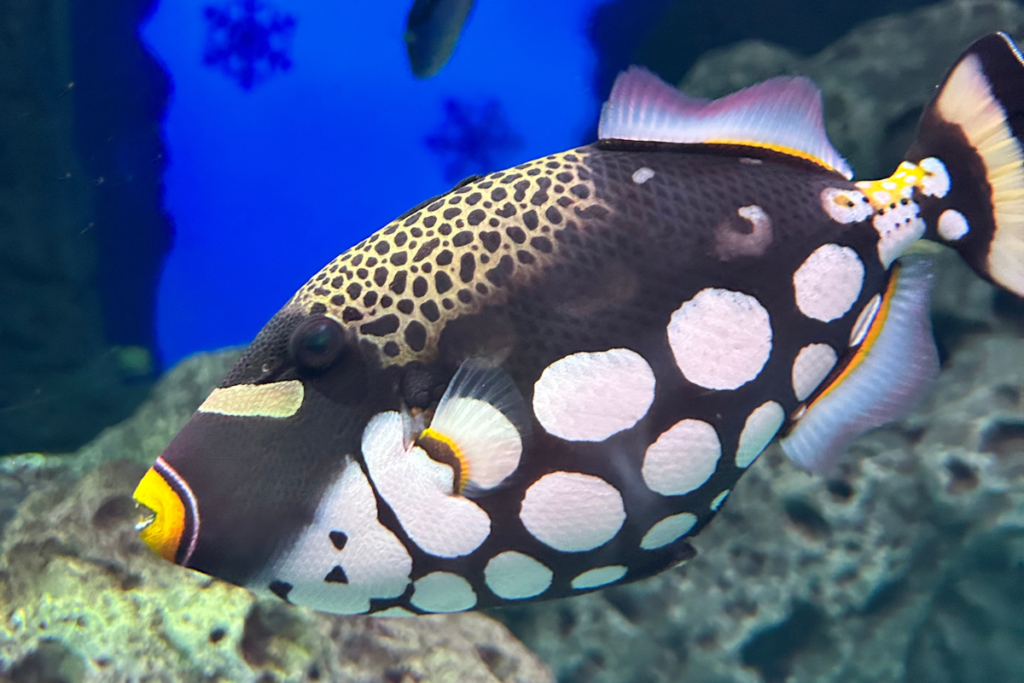
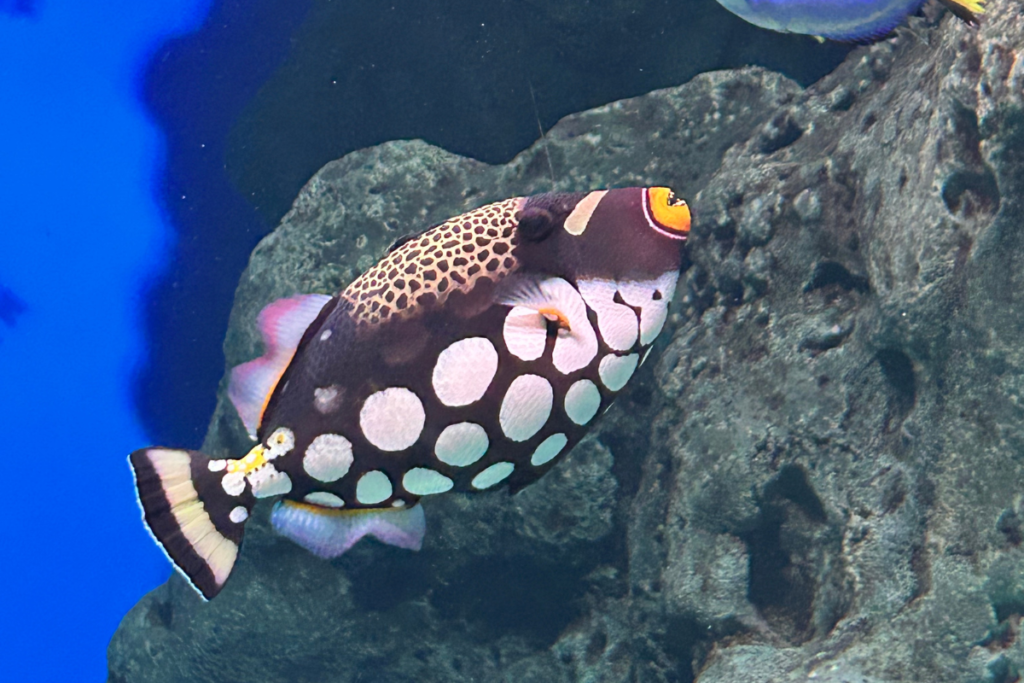
Movement in the Clown Triggerfish is characterized by smooth control and efficient energy use. Rather than relying on constant rapid swimming, the fish typically moves using coordinated fin motions that allow it to travel steadily through the water column. This method creates a fluid and controlled appearance.
Most activity occurs during daylight hours. As sunlight illuminates coral reefs, Clown Triggerfish become increasingly visible while traveling through their surroundings and engaging with nearby marine life. The brighter conditions support their visually oriented lifestyle and allow them to maintain awareness of activity across a larger area.
Swimming movements often resemble a slow-moving drone surveying a landscape. The fish progresses steadily forward while making subtle directional adjustments. This approach allows efficient movement without the energy demands associated with repeated bursts of speed.
Although usually calm, the species is capable of sudden acceleration when necessary. Powerful body movements can propel it forward quickly over short distances. These brief bursts contrast sharply with its normal pace and demonstrate the flexibility of its movement system.
Activity levels may fluctuate depending on environmental conditions and seasonal influences. During periods of increased reproductive activity or changes within local reef communities, individuals can become more active and cover larger areas. At other times, movement may become more predictable and concentrated within familiar locations, helping conserve energy while maintaining environmental awareness.
Clown Triggerfish Interactions, Defense Mechanisms, and Survival Responses
Interactions with other marine animals are often governed by confidence and caution. Clown Triggerfish generally tolerate the presence of many neighboring species but remain prepared to defend themselves when necessary. Their responses depend heavily on the perceived level of threat or competition.
One of the species’ most remarkable defense mechanisms is the trigger spine located on the top of the body. When raised and locked into position, this spine becomes difficult for predators to overcome. The adaptation acts as both a physical defense and a visual warning signal.
Threat responses frequently begin with posture changes rather than immediate aggression. A Clown Triggerfish may orient its body toward a perceived threat, raise fins, or alter its swimming pattern to communicate awareness. These displays often serve as an early warning before stronger defensive actions become necessary.
Social interactions vary depending on the circumstances. While individuals can share reef spaces with many other fish species, they often maintain a noticeable personal boundary. This behavior helps reduce unnecessary conflict while still allowing participation within larger reef communities.
A useful example of survival instinct occurs when the fish encounters a sudden disturbance. Instead of panicking and fleeing blindly, it often reacts in a controlled manner by assessing the situation, positioning itself strategically, and preparing defensive options if required. This measured response reflects a behavioral strategy centered on awareness rather than constant avoidance. Combined with its physical adaptations and observational nature, this approach has helped the Clown Triggerfish remain a successful and recognizable resident of tropical reef ecosystems.
Popular Searches About Clown Triggerfish
Explore Clown Triggerfish Guide
Explore More Exhibits

Support Encounters World
Help support wildlife photography and get behind the scenes discoveries on Patreon.