Clown Triggerfish Predators Guide: Natural Threats, Defense Strategies, and Survival
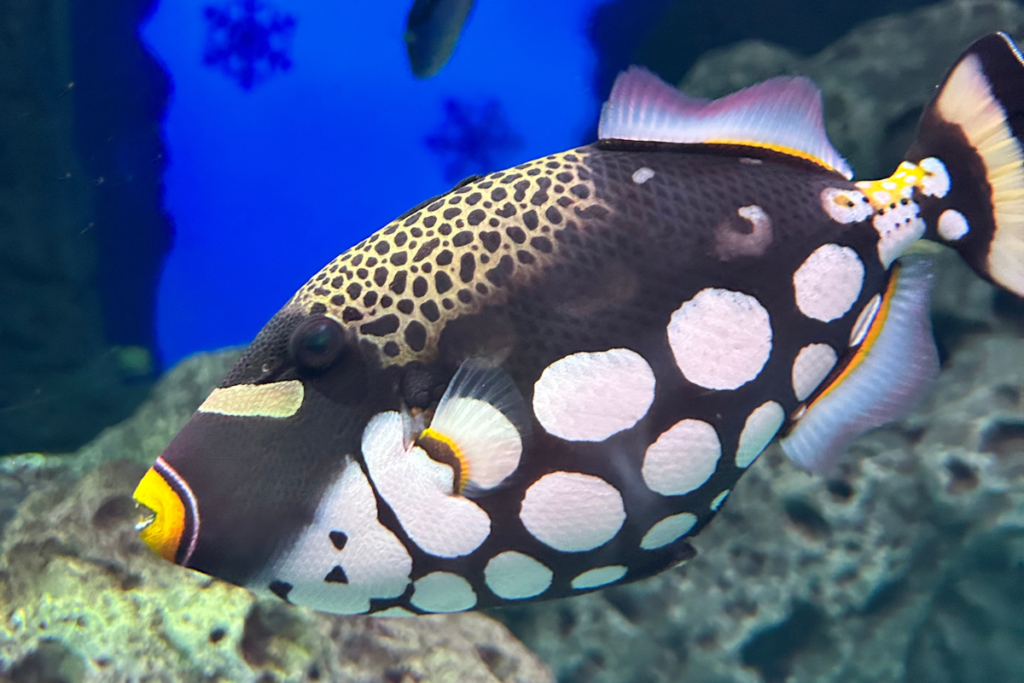
Quick Facts
Predator Type: Large Marine Predators
Primary Predators: Sharks, Groupers, Moray Eels, and Large Reef Fish
Most Vulnerable Stage: Egg and Juvenile Stages
Main Defense: Trigger Spine Locking Mechanism
Predator Avoidance Strategy: Awareness and Protective Positioning
Survival Rate: Increases Significantly with Age and Size
Introduction to Clown Triggerfish Predators in the Wild
The Clown Triggerfish (Balistoides conspicillum) is a striking reef fish found throughout tropical regions of the Indo-Pacific Ocean. Despite its bold appearance and strong physical build, it remains part of a larger marine food web where numerous predators pose potential threats. Survival depends on a combination of physical adaptations, awareness, and growth through various life stages.
Every stage of the Clown Triggerfish’s life presents different challenges. Tiny eggs and larvae face dangers from countless marine animals, while juveniles must contend with larger predators capable of overwhelming their developing defenses. As the fish matures, the number of species capable of successfully preying upon it gradually decreases.
Coral reef ecosystems contain intense competition and constant predator-prey interactions. Large fish, marine reptiles, and other predators continuously search for opportunities to secure food. Within these environments, the Clown Triggerfish must balance feeding, growth, and survival while avoiding becoming prey itself.
Although adult Clown Triggerfish are not among the most frequently targeted reef fish, they are far from invulnerable. Their place in the food web illustrates how even well-defended species remain connected to larger ecological processes. Understanding their predators helps reveal the challenges faced throughout their lives.
Clown Triggerfish Predators Throughout Different Life Stages
Predation pressure begins almost immediately after reproduction. Eggs deposited on the reef are vulnerable to numerous marine animals capable of consuming them if protective measures fail. Many reef fish species opportunistically feed on exposed eggs whenever the chance arises.
After hatching, larvae enter one of the most dangerous periods of their life cycle. Drifting within the water column exposes them to a vast array of predators ranging from small fish to larger plankton-feeding organisms. At this stage, survival often depends more on numbers and chance than physical defense.
Juvenile Clown Triggerfish face a different set of threats. Although larger and more capable than larvae, they remain small enough to be targeted by many predatory reef fish. Groupers, snappers, and various ambush predators may view young triggerfish as suitable prey opportunities.
As body size increases, vulnerability gradually declines. Larger individuals become more difficult to capture and consume, reducing the number of species capable of successfully preying upon them. This shift is comparable to a young deer becoming a mature adult; many predators that threaten juveniles no longer pose the same level of danger.
Adult Clown Triggerfish still encounter predators, but the list becomes significantly shorter. Their robust bodies, defensive adaptations, and larger size create challenges that many reef predators prefer to avoid when easier prey is available.
Major Natural Predators of the Clown Triggerfish
Large sharks represent some of the most significant potential predators of adult Clown Triggerfish. Species that regularly patrol reef systems possess the size and strength necessary to overcome many defensive adaptations. Although encounters are not constant, sharks remain among the few animals capable of preying on fully grown individuals.
Groupers are another important predator within reef ecosystems. These powerful fish possess large mouths and tremendous suction-feeding abilities that allow them to capture a variety of prey. Larger grouper species may target juvenile or smaller adult triggerfish when opportunities arise.
Moray eels also present a threat, particularly to younger individuals. Hidden among reef structures, these elongated predators can launch rapid attacks against nearby prey. Their ability to exploit confined spaces makes them effective hunters within complex reef environments.
Large predatory reef fish such as jacks and barracudas may occasionally prey upon younger Clown Triggerfish. These fast-moving hunters rely on speed and precision to capture suitable prey. Juveniles are especially vulnerable before reaching sizes that discourage many predators.
Predatory pressure varies across different regions of the Indo-Pacific. Some reef systems contain higher populations of large predators than others, influencing the level of risk faced by local triggerfish populations. Nevertheless, sharks, groupers, eels, and large reef predators remain among the most consistent natural threats throughout the species’ range.
Clown Triggerfish Survival Adaptations Against Predators
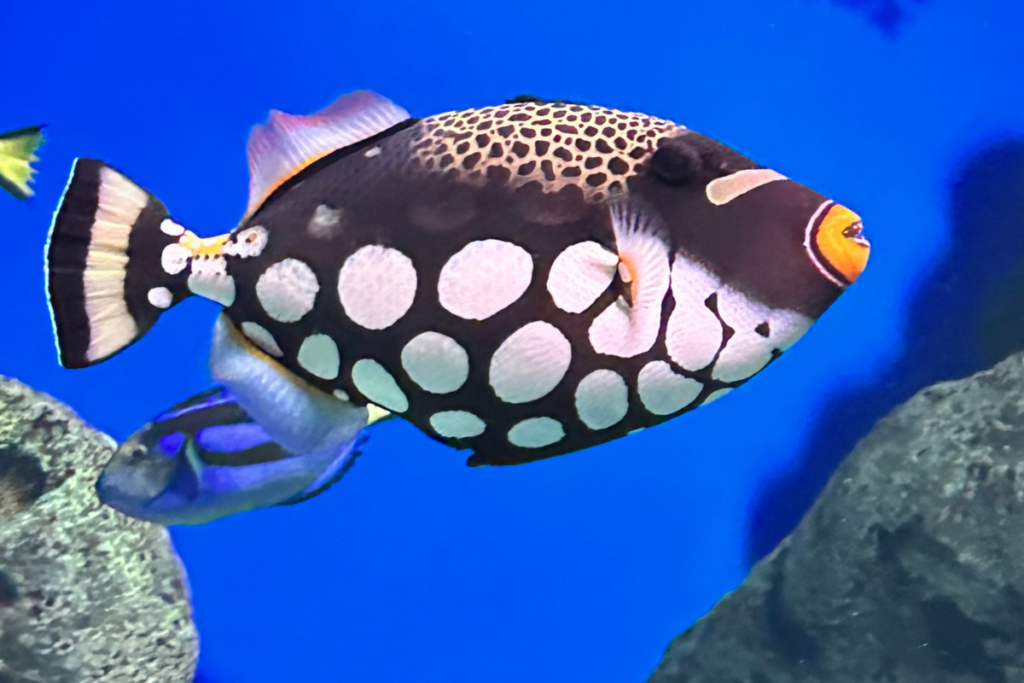
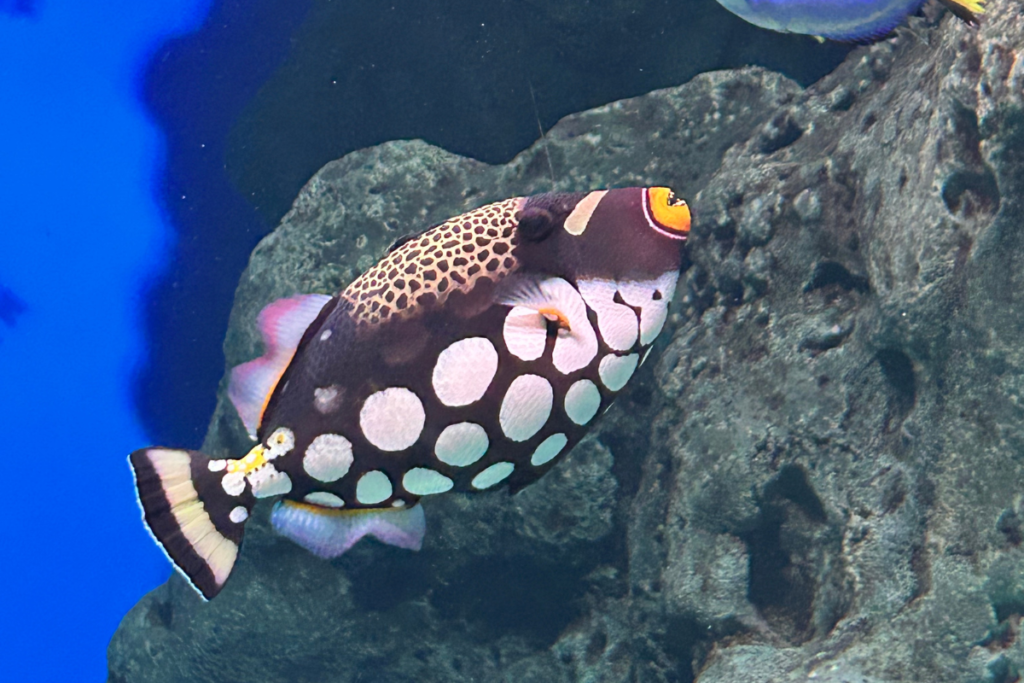
One of the most famous defensive features of the Clown Triggerfish is its trigger spine mechanism. Located on the top of the body, this spine can be locked into position, making it difficult for predators to swallow or remove the fish from protective spaces. The adaptation functions much like a built-in safety lock.
Body shape also contributes to survival. The species possesses a deep, compressed profile that creates handling challenges for predators. Compared to slender fish that can be swallowed quickly, the Clown Triggerfish presents a more awkward target.
Awareness plays an equally important role. The fish constantly monitors its surroundings and often reacts quickly to potential threats. This vigilance allows it to detect danger before a predator closes the distance required for a successful attack.
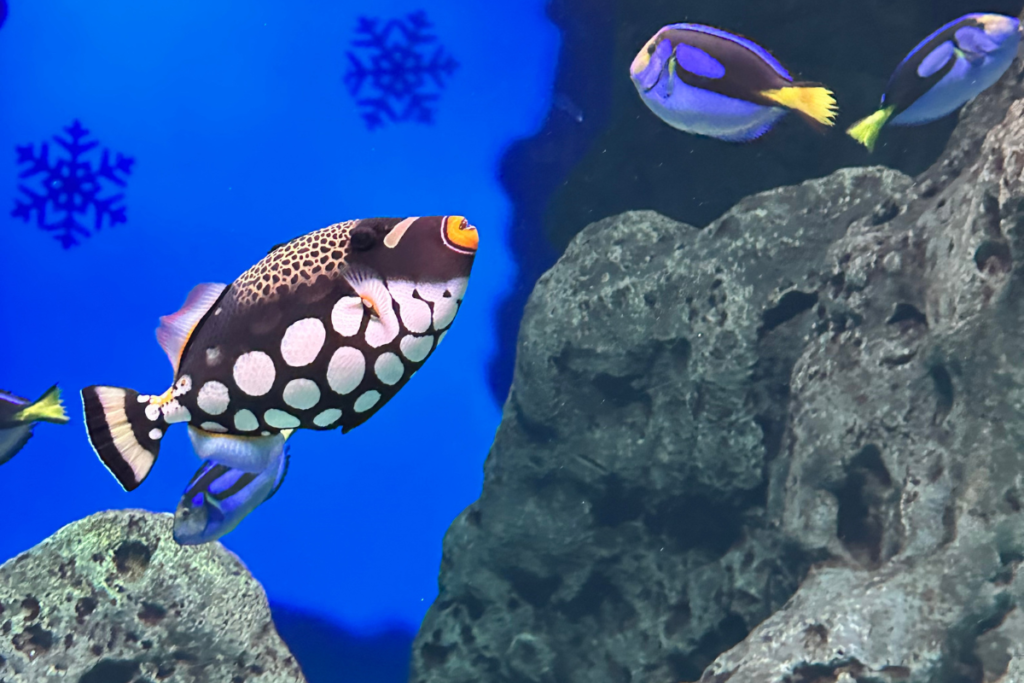
Protective positioning serves as another valuable survival strategy. When threatened, individuals may move toward structures that provide cover or reduce attack angles. Reef formations can function like natural fortresses, offering barriers between predator and prey.
Perhaps the most important defense is growth itself. Each stage of development reduces vulnerability and expands survival options. By combining increasing size, powerful physical adaptations, and constant environmental awareness, the Clown Triggerfish improves its chances of surviving long enough to reproduce and continue the next generation within tropical reef ecosystems.
Popular Searches About Clown Triggerfish
Explore Clown Triggerfish Guide
Explore More Exhibits

Support Encounters World
Help support wildlife photography and get behind the scenes discoveries on Patreon.