Clown Triggerfish Life Cycle Guide: Growth Stages, Development, and Lifespan
Quick Facts
Life Cycle Type: Egg to Juvenile to Adult
Reproductive Method: Egg-Laying (Oviparous)
Parental Care: Nest Guarding and Egg Protection
Juvenile Appearance: Distinctly Different from Adults
Age of Maturity: Approximately 2–4 Years
Average Lifespan: 8–15 Years
Introduction to the Clown Triggerfish Life Cycle
The Clown Triggerfish (Balistoides conspicillum) is one of the most recognizable reef fish found throughout the tropical Indo-Pacific region. From the Indian Ocean to coral-rich areas of the Pacific, this species occupies marine ecosystems that support a remarkable diversity of life. While its striking appearance often attracts attention, its journey from egg to adult is equally fascinating.
Like many reef fish, the Clown Triggerfish undergoes several distinct developmental stages during its lifetime. Each stage presents unique challenges, from surviving as a tiny drifting larva to becoming a powerful adult capable of thriving within competitive reef communities. These transitions gradually shape the fish into the bold and recognizable species observed by divers and aquarium visitors.
The life cycle of this species is closely connected to the broader rhythms of tropical marine ecosystems. Ocean currents, seasonal environmental conditions, and reproductive timing all influence early development and long-term survival. Every stage serves a specific purpose within the species’ overall life history.
Observing an adult Clown Triggerfish offers little indication of the fragile beginnings that preceded it. The large, confident fish seen cruising through reef environments once existed as a tiny developing embryo protected within a single egg. Understanding this transformation provides valuable insight into the species and its place within the marine world.
Clown Triggerfish Reproduction and Early Life Stages
The life cycle begins when mature adults enter the breeding phase. Reproductive activity typically occurs in suitable reef environments where conditions support successful egg development. Timing can vary among regions depending on local environmental factors and seasonal patterns.
Female Clown Triggerfish deposit eggs in carefully selected nesting areas. These eggs are attached to the substrate and remain concentrated within a protected location rather than drifting freely from the beginning. This strategy helps reduce the likelihood of eggs being scattered before development can occur.
Parental investment is particularly important during this stage. Unlike many fish species that abandon eggs immediately after spawning, Clown Triggerfish often guard developing eggs until hatching occurs. This protective period significantly improves survival prospects during one of the most vulnerable phases of life.
After hatching, larvae enter a dramatically different stage of existence. Newly emerged individuals are tiny and almost unrecognizable compared to adults. At this point, they become part of the planktonic community, drifting within ocean currents while continuing to grow and develop.
The larval period functions as a critical dispersal stage. Ocean currents transport young fish across varying distances, helping populations expand and maintain genetic diversity. Although mortality rates are naturally high during this phase, surviving individuals eventually progress toward settlement and juvenile development.
Clown Triggerfish Juvenile Development and Growth Stages
As larval fish continue developing, they gradually undergo physical changes that prepare them for life associated with reef environments. Body shape becomes more defined, swimming ability improves, and key structures continue forming. These developments increase independence and reduce reliance on passive drifting.
Settlement marks a major turning point in the life cycle. Young fish transition from open-water developmental stages to environments more closely associated with adult habitats. This shift resembles the transformation of a butterfly emerging from a chrysalis, representing a dramatic change in lifestyle and ecological role.
Juvenile Clown Triggerfish display appearances that differ noticeably from mature adults. Their coloration and markings are often more simplified, lacking the bold patterns that make older individuals instantly recognizable. These differences can make it difficult for inexperienced observers to identify young fish correctly.
Growth continues steadily throughout the juvenile period. Strong skeletal structures, powerful jaws, and characteristic body proportions gradually develop over time. As size increases, individuals gain access to broader ecological opportunities and become less vulnerable to many threats faced by smaller fish.
The transition to adulthood is not immediate. Several years may pass before a juvenile fully acquires adult coloration, body size, and reproductive capability. During this extended growth phase, gradual developmental changes prepare the fish for participation in the breeding population and long-term survival within reef ecosystems.
Adult Clown Triggerfish Lifespan and Life Cycle Completion
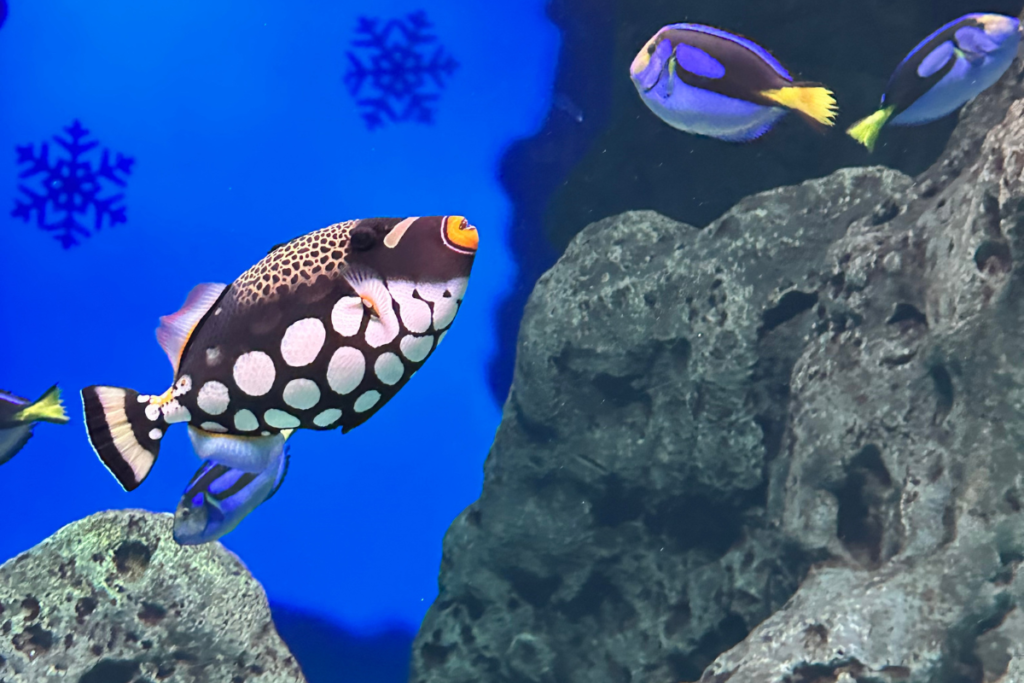
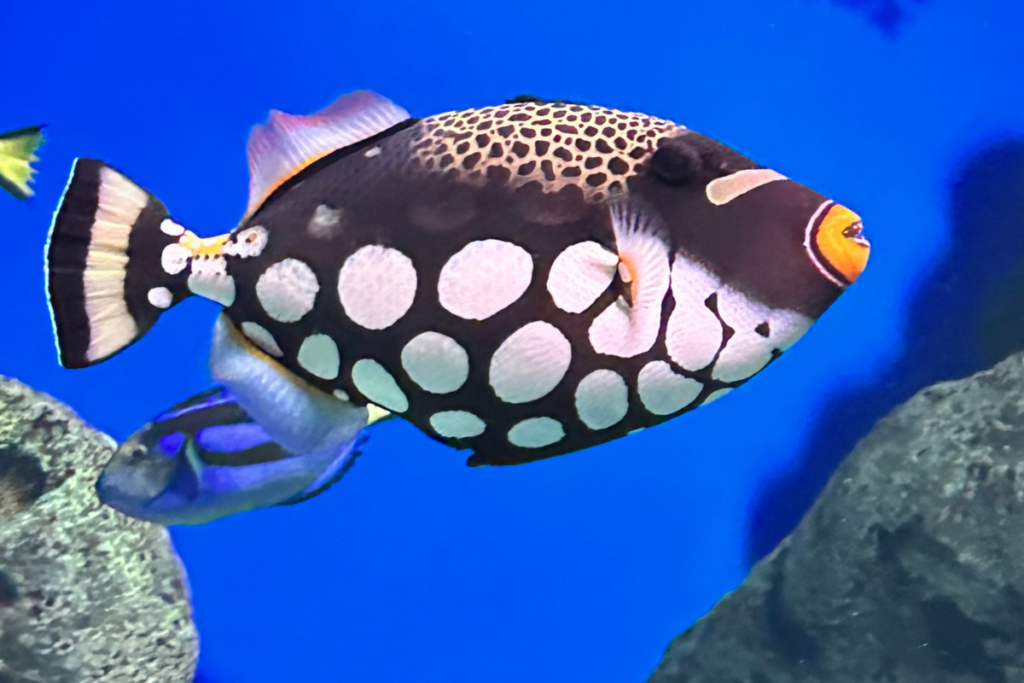
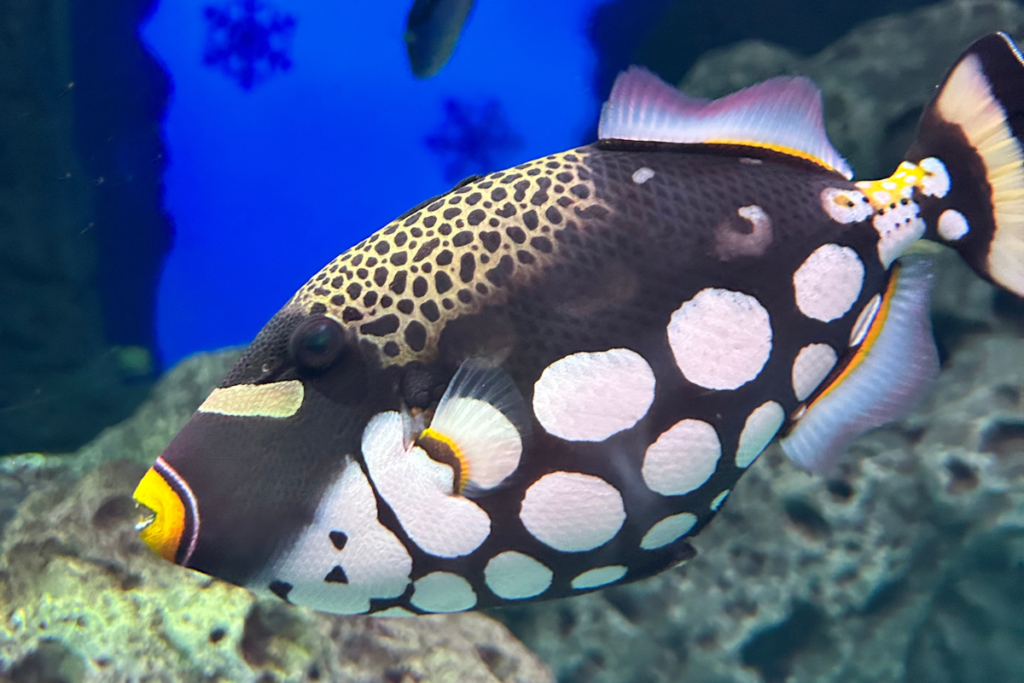
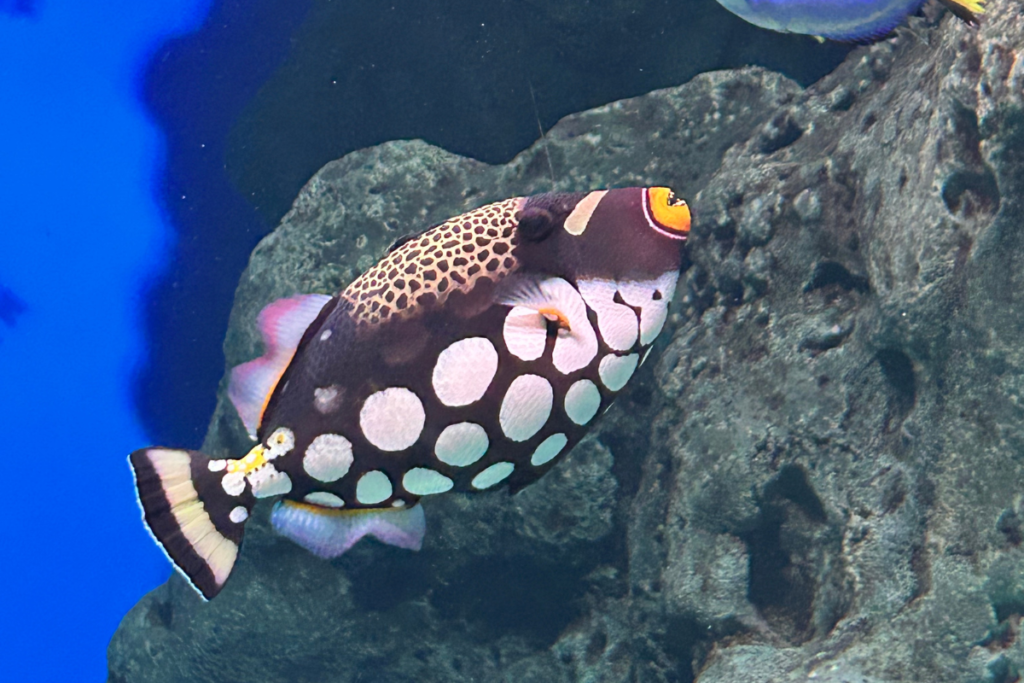
Adult Clown Triggerfish represent the final and most recognizable stage of development. By this point, the species has acquired its distinctive white spots, yellow facial markings, and patterned back. These features become increasingly pronounced as maturity is reached.
Sexual maturity generally occurs after several years of growth. Once mature, individuals can participate in reproduction and contribute to future generations. This stage marks the completion of the developmental pathway that began with a single fertilized egg.
Adults often remain active members of tropical reef communities for many years. Their robust build, specialized adaptations, and accumulated experience improve survival prospects compared to earlier life stages. While natural hazards remain present, mature individuals possess advantages unavailable to larvae and juveniles.
Lifespan estimates commonly range between 8 and 15 years, though exact longevity may vary depending on environmental conditions and individual circumstances. Some fish may live longer when conditions remain favorable and threats are minimized. This extended lifespan allows multiple reproductive opportunities throughout adulthood.
Eventually, every adult reaches the end of its life cycle, but the continuation of the species depends on successful reproduction before that point. Eggs produced by mature individuals begin the process again, creating a continuous cycle that has persisted across tropical oceans for countless generations. From microscopic embryos to large reef predators, each developmental stage contributes to the remarkable life history of the Clown Triggerfish.
Popular Searches About Clown Triggerfish
Explore Clown Triggerfish Guide
Explore More Exhibits

Support Encounters World
Help support wildlife photography and get behind the scenes discoveries on Patreon.