Clown Triggerfish Facts Guide: Fascinating Facts About the Clown Triggerfish
Quick Facts
Scientific Name: Balistoides conspicillum
Common Name: Clown Triggerfish
Family: Balistidae
Average Length: 12–20 Inches (30–50 cm)
Global Range: Indo-Pacific Ocean
Conservation Status: Least Concern
Amazing Clown Triggerfish Facts and Overview
The Clown Triggerfish is widely considered one of the most recognizable reef fish in the world. Its dramatic combination of white spots, dark coloration, and bright yellow markings makes it stand out even among the colorful inhabitants of tropical coral reefs. Few marine fish possess a pattern as distinctive or memorable.
Despite its name, the species is not related to clownfish. The common name originates from its bold and exaggerated appearance rather than any biological connection. Many people mistakenly assume the two species are closely related simply because both contain the word “clown” in their names.
The scientific name Balistoides conspicillum roughly translates to a triggerfish with a remarkable or noticeable appearance. This description is fitting because the species is often among the first fish noticed by divers and aquarium visitors. Its appearance remains one of its most defining characteristics.
Clown Triggerfish belong to the triggerfish family, a group known for their unique locking dorsal spines. This specialized adaptation gives the family its common name and helps distinguish triggerfish from most other marine fish. The Clown Triggerfish represents one of the largest and most striking members of this family.
Although commonly displayed in public aquariums, wild populations occur naturally throughout tropical regions of the Indo-Pacific. Their distribution spans thousands of miles, making them one of the more widespread triggerfish species found on coral reefs.
Unique Clown Triggerfish Physical Facts
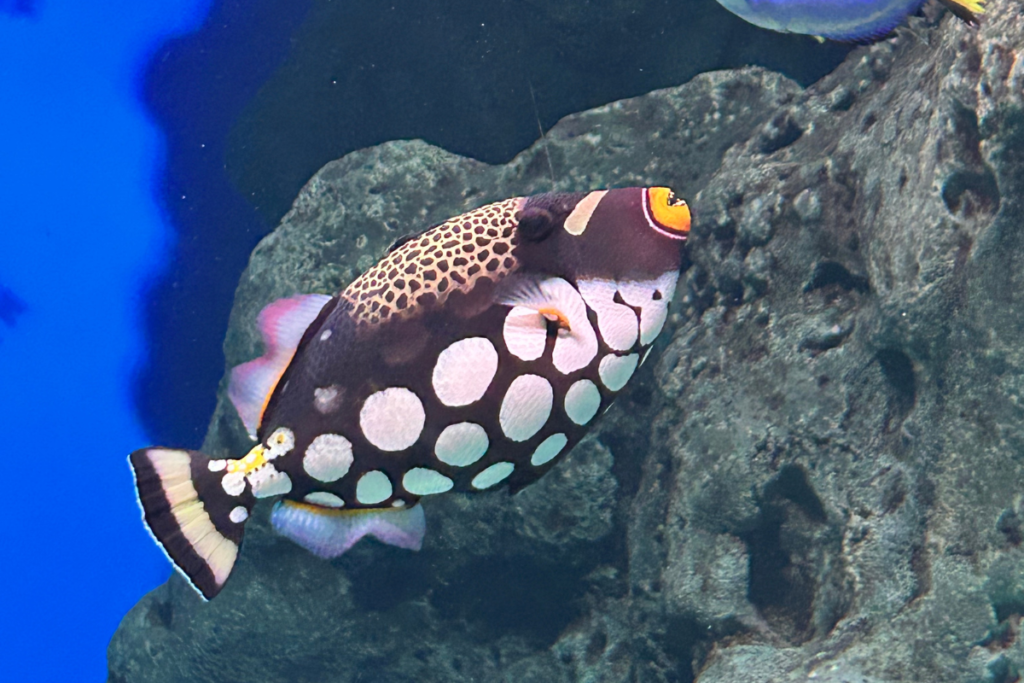
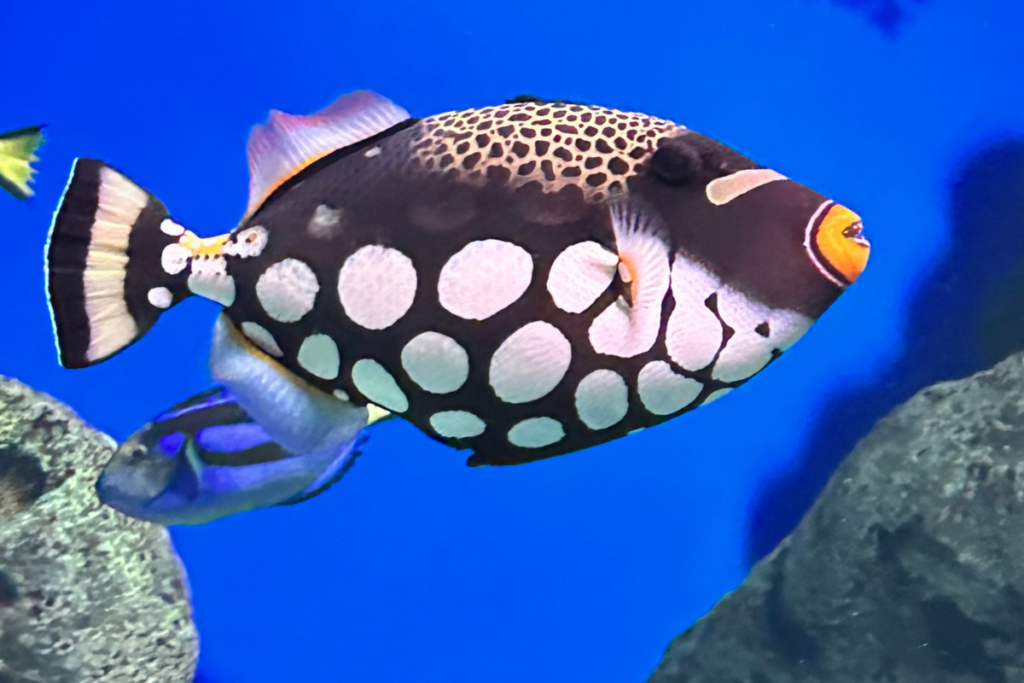
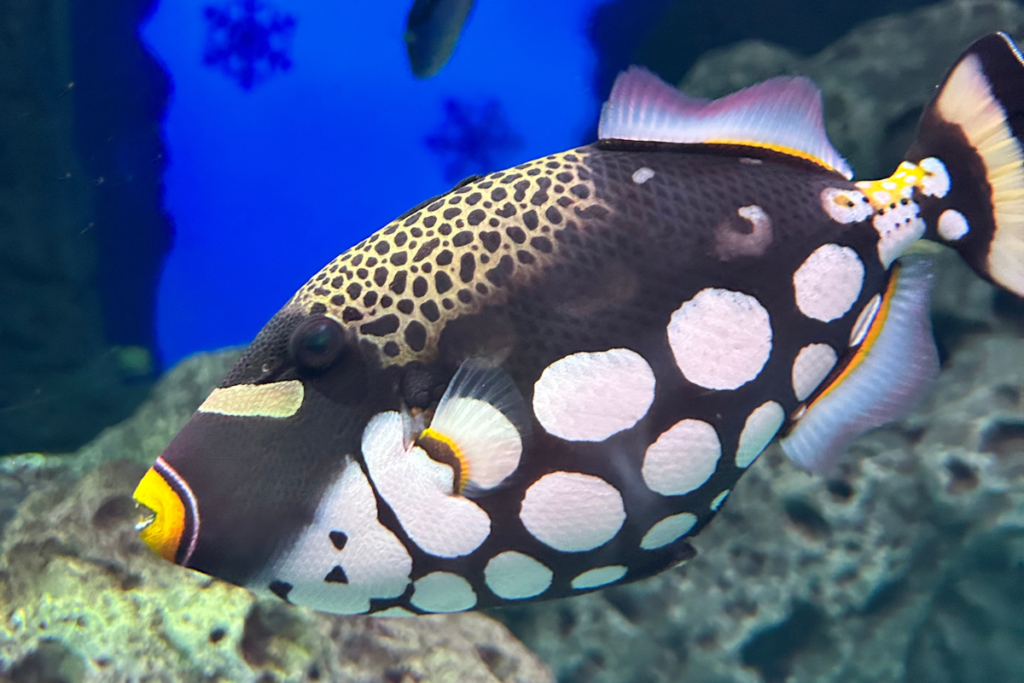
One of the most unusual facts about the Clown Triggerfish is that its body appears almost hand-painted. The fish combines several completely different patterns on a single body, including large white spots, yellow markings, and irregular dark designs. Few fish display such dramatic visual contrast.
The species can grow considerably larger than many people expect. Adults commonly reach lengths of 12 to 20 inches, with some individuals approaching the size of a household ruler. Their deep body shape often makes them appear even larger than their actual length suggests.
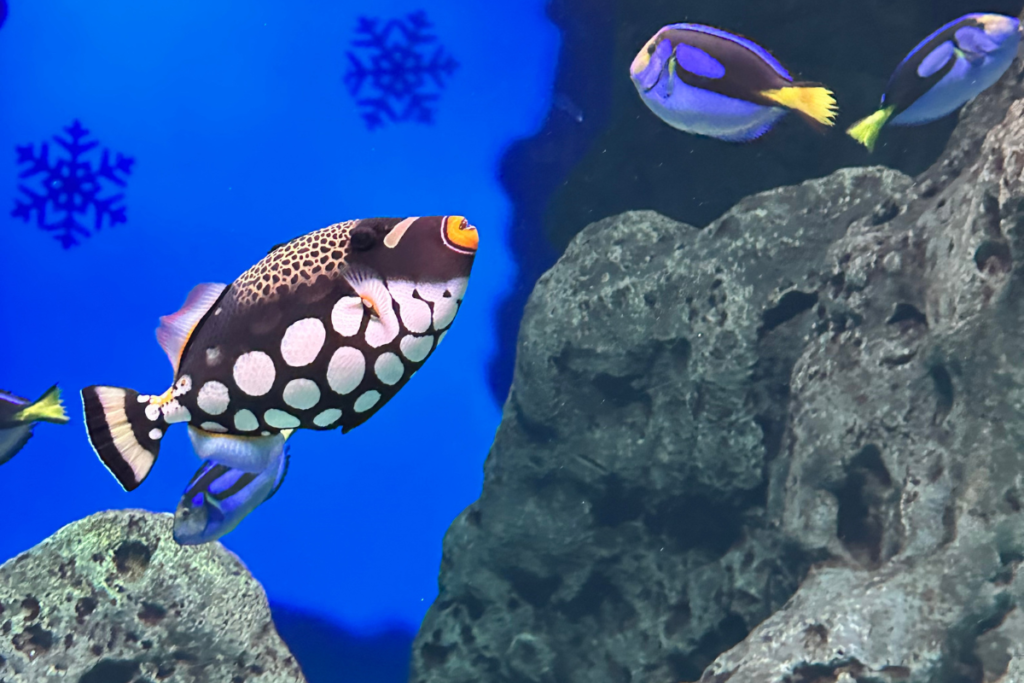
The large white spots covering the rear portion of the body are among the easiest identification features in the marine world. These markings remain visible from considerable distances and immediately separate the species from other reef fish. Many observers identify the fish based solely on this feature.
Another interesting characteristic is the yellow “mask” surrounding the mouth area. Combined with dark facial coloration, this creates a unique appearance that often gives the fish a surprisingly expressive look. The face alone is often enough for experienced observers to recognize the species.
Like other triggerfish, the Clown Triggerfish possesses a trigger spine on its back. This spine can be raised and locked into position, creating a defensive mechanism that has helped define the entire triggerfish family. It is one of the most important structural features of the species.
Clown Triggerfish Behavior and Survival Facts
Clown Triggerfish are known for being highly aware of their surroundings. Observers frequently notice individuals carefully monitoring nearby activity while moving through reef environments. This constant awareness contributes to their reputation as intelligent and attentive fish.
Unlike tightly schooling fish that rely on large groups for security, Clown Triggerfish often display a more independent lifestyle. They may share reef areas with numerous species but typically maintain their own space. This creates a balance between social tolerance and individual independence.
One fascinating fact is that the species can lock itself into reef crevices using its trigger spine. When threatened, the fish raises the spine and wedges itself into a protected space. Predators attempting to pull it free face a much more difficult challenge.
The fish is also capable of sudden bursts of speed despite often appearing calm and deliberate. Most movement is controlled and efficient, but rapid acceleration can occur when necessary. This combination of steady cruising and quick response helps improve survival.
Juveniles and adults differ noticeably in appearance, making early life stages more difficult to identify. As the fish matures, the famous white spots and bold coloration gradually become more pronounced. This transformation represents one of the more dramatic visual changes among reef fish.
Fascinating Clown Triggerfish Facts About Ecology and Life History
The Clown Triggerfish occupies an important position within coral reef ecosystems. As a mid-level predator, it contributes to ecological balance while also serving as part of larger food webs. Its interactions help support the complexity that defines tropical reef communities.
The species begins life as a tiny egg attached to a nesting site. From this vulnerable beginning, it progresses through larval, juvenile, and adult stages before reaching reproductive maturity. The transformation from microscopic embryo to large reef fish is remarkable.
Unlike many fish species that provide little parental involvement, Clown Triggerfish often guard their developing eggs. This protective behavior improves the likelihood that offspring will survive the earliest stages of development. Such parental investment is relatively uncommon among marine fish.
Ocean currents play a major role in dispersing young Clown Triggerfish throughout their range. During the larval stage, developing fish drift with currents before eventually settling into reef environments. This process helps maintain genetic diversity across vast geographic distances.
Perhaps the most impressive fact is that the Clown Triggerfish has become an icon of tropical marine life despite sharing reefs with thousands of other species. Its unforgettable appearance, specialized adaptations, and ecological importance have made it one of the most celebrated reef fish found throughout the Indo-Pacific Ocean.
Popular Searches About Clown Triggerfish
Explore Clown Triggerfish Guide
Explore More Exhibits

Support Encounters World
Help support wildlife photography and get behind the scenes discoveries on Patreon.