Clown Triggerfish vs Picasso Triggerfish: Key Differences, Identification, and Comparison Guide
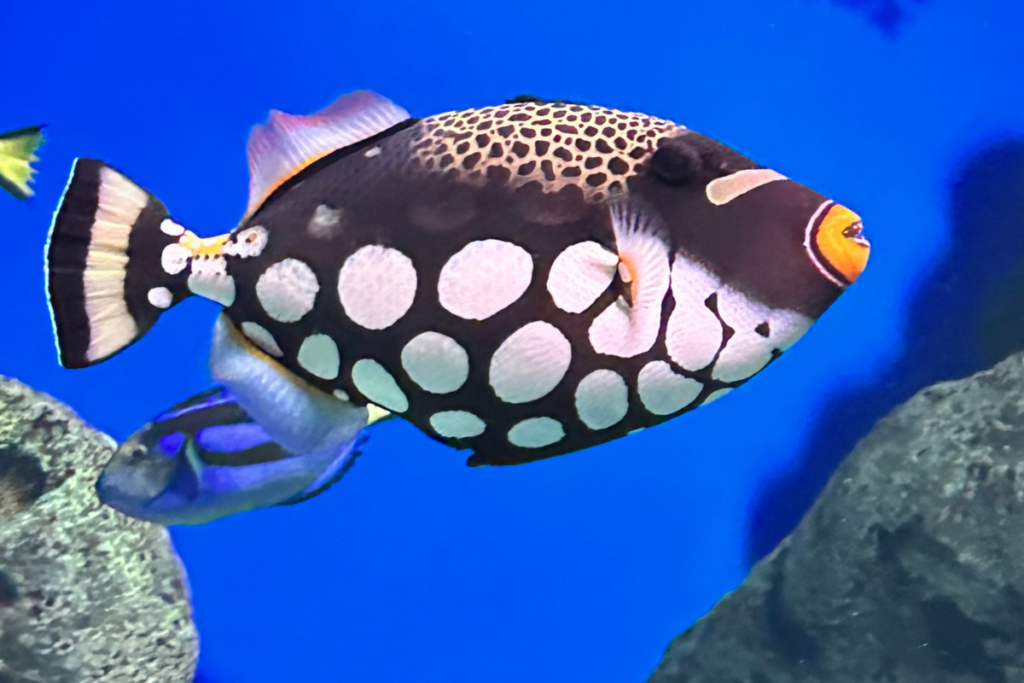
Quick Facts
Clown Triggerfish Scientific Name: Balistoides conspicillum
Picasso Triggerfish Scientific Name: Rhinecanthus aculeatus
Family: Triggerfish (Balistidae)
Largest Species: Clown Triggerfish
Most Colorful Pattern: Picasso Triggerfish
Easiest to Identify: Clown Triggerfish
Introduction to Clown Triggerfish vs Picasso Triggerfish
The Clown Triggerfish and Picasso Triggerfish are two of the most recognizable members of the triggerfish family. Both inhabit tropical Indo-Pacific waters and share the distinctive body shape that defines triggerfish species. Despite these similarities, they differ significantly in appearance, size, and overall visual impression.
Divers, aquarium visitors, and marine enthusiasts frequently confuse these fish because both possess bold patterns and striking coloration. At first glance, each appears highly decorated compared to many surrounding reef fish. A closer look, however, reveals obvious differences that make identification straightforward.
The Clown Triggerfish is often considered one of the most dramatic-looking reef fish in the world. Its large white spots and dark body create a bold contrast that immediately stands out. The Picasso Triggerfish, by comparison, displays a more intricate arrangement of lines, bands, and geometric markings.
Although they belong to the same family, these species occupy distinct visual niches within coral reef ecosystems. Learning their differences helps observers quickly identify each fish while gaining a better understanding of triggerfish diversity throughout tropical oceans.
Clown Triggerfish vs Picasso Triggerfish Appearance Differences
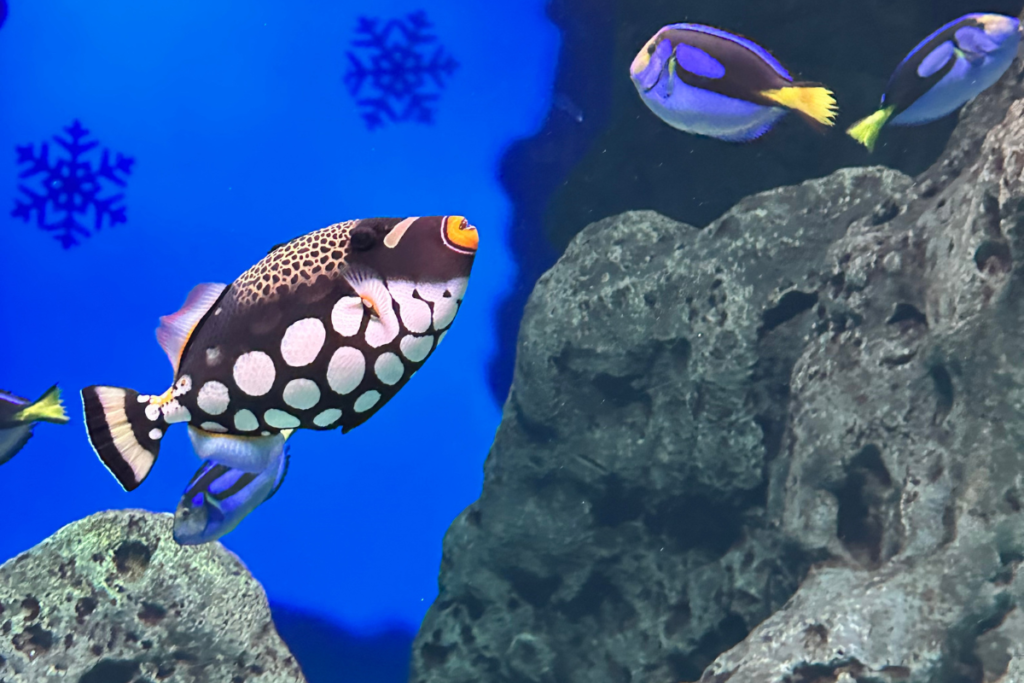
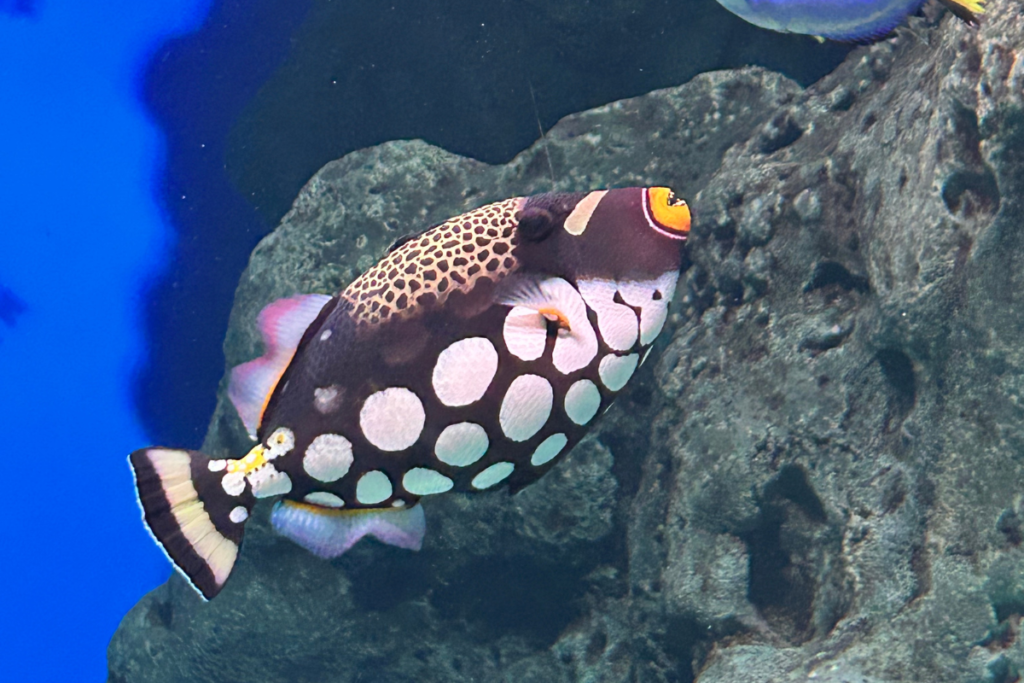
The easiest way to separate these species is by examining body patterns. Clown Triggerfish display large white spots covering the rear portion of the body, creating a design that resembles scattered polka dots. No other common triggerfish exhibits this exact pattern.
Picasso Triggerfish lack these white spots entirely. Instead, they possess a network of black lines, yellow bands, blue accents, and angular markings that resemble abstract artwork. The complex design is responsible for the species’ common name, as many people compare its appearance to a painted canvas.
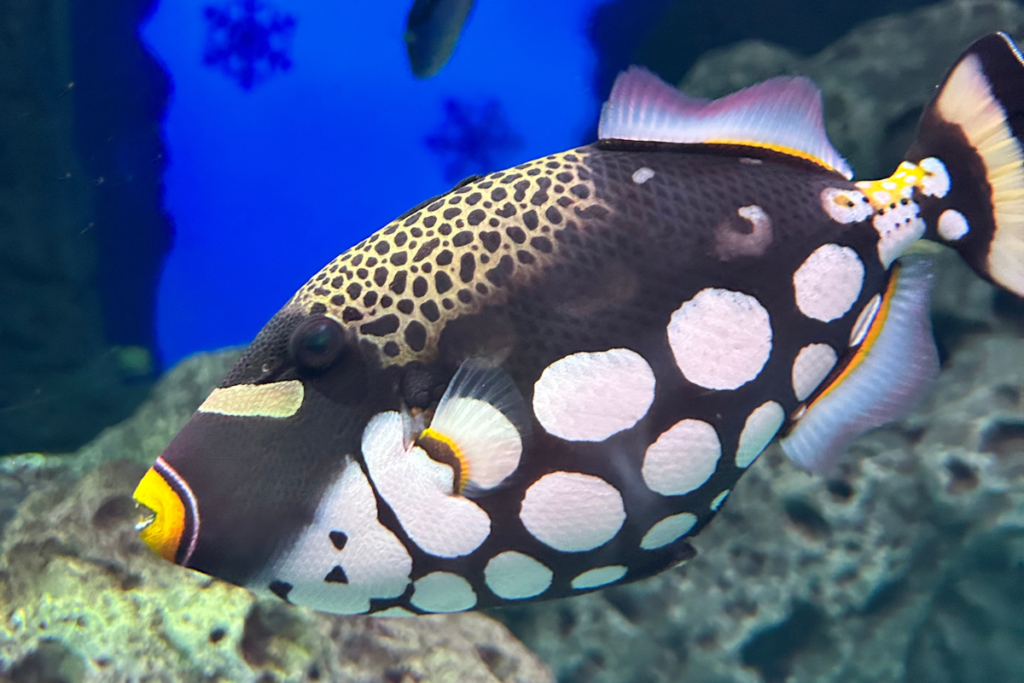
Color distribution differs dramatically between the two fish. A Clown Triggerfish combines dark black coloration with white spots and a yellow leopard-like pattern on the back. Picasso Triggerfish feature a lighter background dominated by cream, yellow, blue, and black geometric markings.
Size also helps distinguish the species. Adult Clown Triggerfish commonly reach 12 to 20 inches in length, making them substantially larger than most Picasso Triggerfish. A fully grown Clown Triggerfish often appears heavier and more imposing when viewed alongside its smaller relative.
Facial markings provide another useful clue. Clown Triggerfish possess a bright yellow mouth and dark facial coloration, while Picasso Triggerfish display intricate stripes and colorful markings extending across the face. These differences remain visible even when only the head is observed.
Clown Triggerfish vs Picasso Triggerfish Size and Physical Characteristics
Body shape is similar because both species belong to the triggerfish family. Each possesses a deep, laterally compressed body with a prominent trigger spine located along the back. This shared structure often causes initial confusion among inexperienced observers.
Despite the similarities, the Clown Triggerfish generally appears more robust. Its body is deeper, heavier, and broader than that of the Picasso Triggerfish. The result is a fish that looks powerful and sturdy compared to the more streamlined appearance of its relative.
Adult Clown Triggerfish may exceed 20 inches under favorable conditions. Picasso Triggerfish typically reach approximately 10 to 12 inches, making them noticeably smaller. This size difference becomes particularly apparent when mature individuals of both species are viewed together.
The head structure also varies slightly. Clown Triggerfish often display a thicker facial profile with a more substantial jaw region. Picasso Triggerfish retain the characteristic triggerfish shape but usually appear somewhat narrower and lighter in overall build.
A useful comparison is to imagine two vehicles built for the same purpose but different scales. The Picasso Triggerfish resembles a compact SUV, while the Clown Triggerfish resembles a larger off-road truck. Both share the same general design, but one possesses a noticeably more imposing presence.
Clown Triggerfish vs Picasso Triggerfish Identification and Recognition
For most observers, identifying a Clown Triggerfish requires only a quick glance. The combination of large white spots, dark coloration, and yellow markings is unlike any common reef fish. Once learned, the pattern is difficult to forget.
Picasso Triggerfish require slightly more attention because their intricate markings contain numerous colors and shapes. However, the maze-like arrangement of lines and geometric patterns quickly separates them from the spotted appearance of a Clown Triggerfish.
When viewing juvenile fish, identification can become slightly more challenging. Young Clown Triggerfish may not yet display the full intensity of adult coloration. Even so, developing spot patterns usually provide reliable clues regarding their identity.
Aquarium visitors often remember the Clown Triggerfish because of its dramatic contrast and bold visual design. Picasso Triggerfish tend to attract attention through detail rather than contrast, encouraging closer observation of their colorful markings and artistic appearance.
Ultimately, the distinction between these species becomes simple once key features are understood. Clown Triggerfish are identified by their large white spots, larger size, and dark coloration, while Picasso Triggerfish are recognized by their smaller size and intricate geometric patterns. Together, they represent two of the most beautiful and easily recognized triggerfish species found throughout the tropical Indo-Pacific.
Popular Searches About Clown Triggerfish
Explore Clown Triggerfish Guide
Explore More Exhibits

Support Encounters World
Help support wildlife photography and get behind the scenes discoveries on Patreon.