
How to Get Rid of Creeping Charlie: Complete Removal and Control Guide
Quick Facts
Removal Difficulty: Moderate to Difficult
Spread Method: Creeping Stems, Rooted Nodes, and Seeds
Most Effective Removal Time: Fall and Early Spring
Manual Removal Success Rate: Moderate
Herbicide Sensitivity: Moderate
Long-Term Control Required: Yes
Native Range: Europe, Western Asia, and Northern Africa
Why Creeping Charlie Becomes Difficult to Remove
Creeping Charlie is one of the most persistent broadleaf plants encountered in lawns, gardens, and landscaped areas. Originally native to Europe and parts of Asia, it has become established throughout much of North America. Its ability to survive in a variety of conditions has made it a familiar challenge for homeowners seeking a uniform lawn.
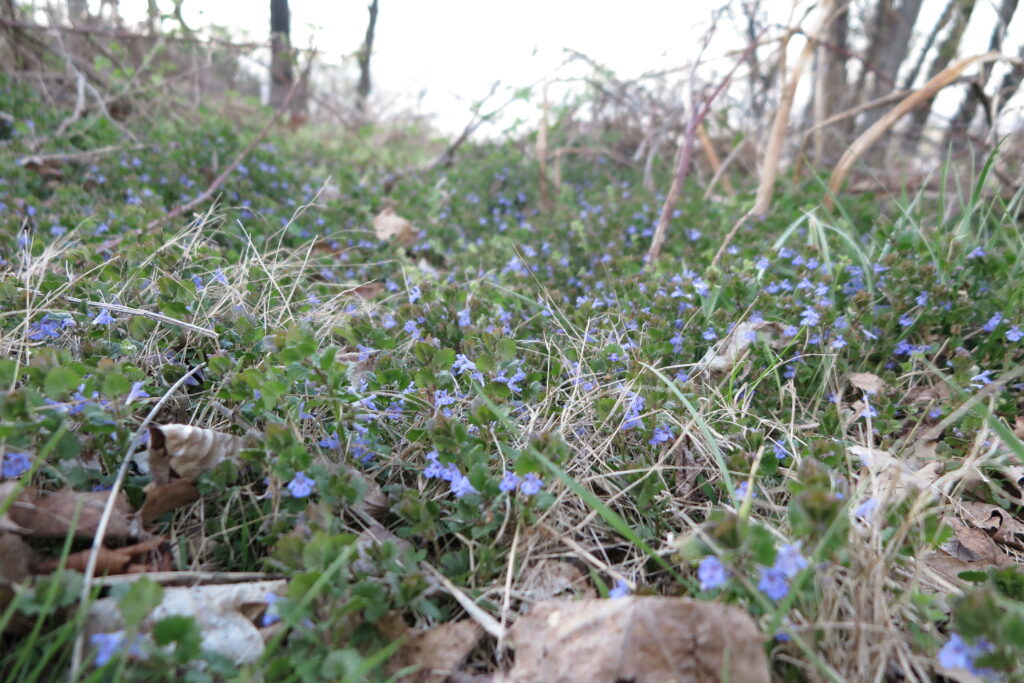
Many people first notice the plant when rounded green patches begin appearing within turfgrass. Over time, these patches can expand and merge, creating larger sections of broadleaf vegetation. The plant’s low profile often allows it to remain unnoticed until substantial coverage has already developed.
Unlike many annual weeds that disappear after a single growing season, Creeping Charlie is a perennial species capable of returning year after year. This long lifespan contributes significantly to its persistence. Even when portions of a patch are removed, surviving sections often remain capable of recovery.
Successful removal requires understanding why the plant is so difficult to eliminate. Many control efforts fail because only visible foliage is targeted while other portions remain intact. Long-term management generally involves repeated action rather than a single treatment.
Creeping Charlie Removal Methods and Control Options
Manual removal remains one of the most commonly used approaches for small infestations. Pulling plants by hand can be effective when patches are limited in size and soil conditions allow roots to be extracted successfully. Moist soil often improves the chances of removing larger sections intact.
Garden tools can improve manual removal efforts. Small cultivators, hand forks, and weeding tools help loosen soil around stems and roots. This reduces the likelihood of stems breaking during extraction and leaving behind viable plant material.
For larger infestations, mechanical removal may be necessary. Sections of heavily infested turf are sometimes removed entirely before reseeding desirable grasses. While labor intensive, this approach can significantly reduce established populations when performed thoroughly.
Chemical control represents another option used by many homeowners. Broadleaf herbicides formulated for lawn weeds are commonly applied when infestations become extensive. Multiple applications are often necessary because mature colonies rarely disappear after a single treatment.
Combining methods frequently produces the best results. Hand removal, improved lawn health, and selective herbicide use can work together to gradually reduce infestations. Integrated management approaches generally provide more reliable long-term outcomes than relying on a single technique.
Why Creeping Charlie Returns After Removal
One of the most frustrating aspects of Creeping Charlie management is its tendency to reappear after treatment. A patch that seems completely removed may return months later, often from small surviving sections that were overlooked. This resilience is a major reason many homeowners struggle with long-term control.
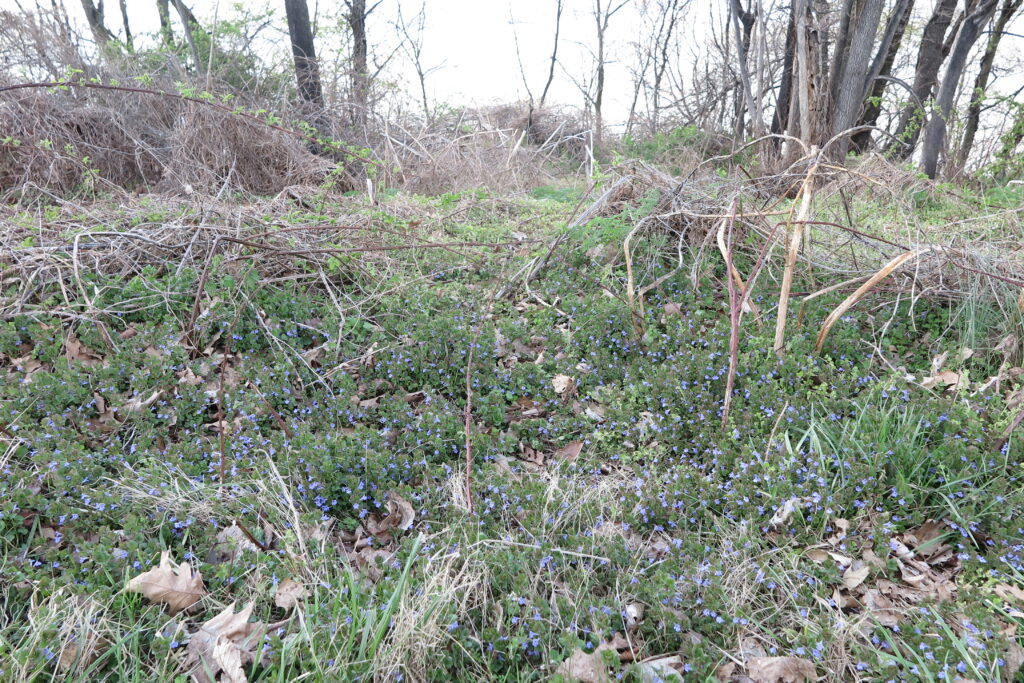
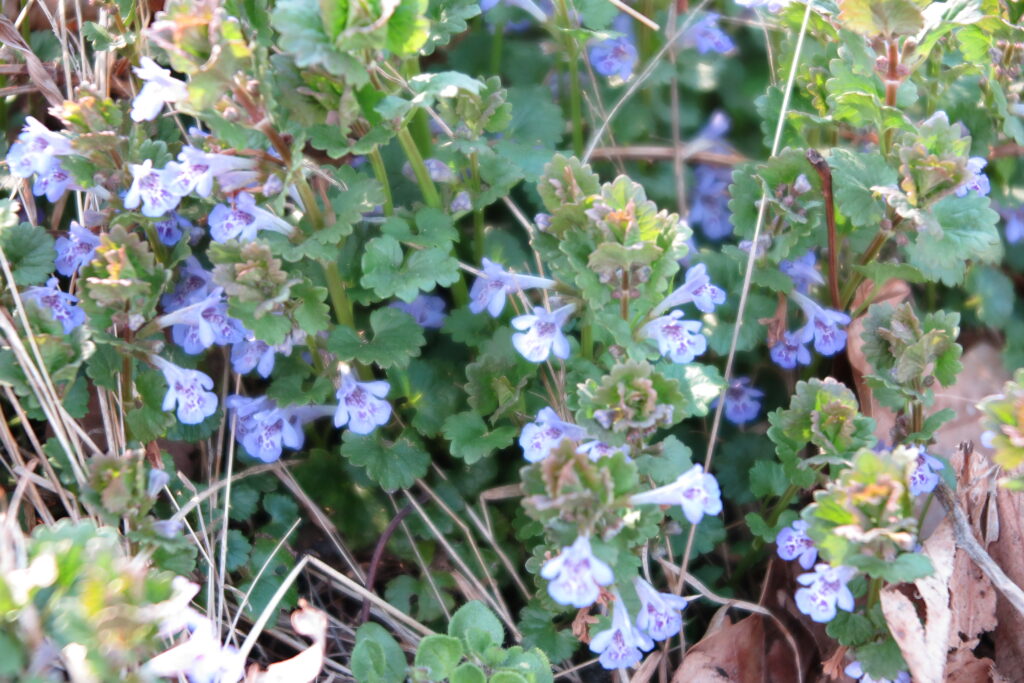
The plant’s interconnected growth structure contributes significantly to this problem. Individual stems frequently remain connected beneath surrounding vegetation. If portions survive removal efforts, they may continue supporting new growth and gradually rebuild the colony.
Rooted stem nodes create another challenge. These nodes function like miniature anchor points throughout the patch. Even when much of the visible growth is removed, surviving rooted sections may remain capable of producing additional foliage.
A useful comparison is removing only part of a spider web while leaving key attachment points intact. Although much of the structure disappears, remaining sections can allow reconstruction over time. Creeping Charlie often behaves similarly when control efforts leave viable plant material behind.
Seeds may also contribute to future infestations. While vegetative spread often plays a larger role within established colonies, seeds provide another pathway for recolonization. This means successful management frequently requires monitoring areas even after visible plants disappear.
Patience is therefore an important part of removal. Long-standing infestations often require repeated inspections and follow-up treatments. Consistent attention typically produces better results than short-term efforts followed by long periods of neglect.
Long-Term Strategies to Prevent Creeping Charlie Regrowth
Preventing regrowth is often more effective than repeatedly removing established patches. Healthy, dense turfgrass provides one of the strongest defenses against reinfestation. Areas with thick grass leave fewer opportunities for Creeping Charlie to gain a foothold.
Improving lawn conditions can help reduce future problems. Proper mowing practices, appropriate fertilization, and correcting soil issues all contribute to stronger grass growth. Vigorous turf generally competes more effectively against broadleaf invaders.
Monitoring problem areas remains essential after removal efforts. Locations that previously supported large infestations should be inspected regularly throughout the growing season. Early detection allows small patches to be addressed before they expand significantly.
Shaded sections of lawns frequently require additional attention. Creeping Charlie often becomes established where desirable turf struggles to thrive. Adjusting landscape management practices or selecting shade-tolerant grass varieties may improve competition in these areas.
Many successful management programs focus on gradual improvement rather than instant eradication. Small recurring treatments often prove more effective than aggressive one-time interventions. Over several seasons, this steady approach can dramatically reduce infestation levels.
A practical way to view control is as ongoing maintenance rather than a single event. Just as lawns require regular mowing and care, Creeping Charlie management benefits from consistent monitoring and response. Long-term commitment is often the key factor separating temporary suppression from lasting control.

Popular Searches About Creeping Charlie
Explore Creeping Charlie Guide
Explore More Plants

Support Encounters World
Help support wildlife photography and get behind the scenes discoveries on Patreon.