Lesser Celandine Overview: Identification, Characteristics, Appearance, and Key Facts
Quick Facts
Scientific Name: Ficaria verna
Common Name: Lesser Celandine
Plant Type: Perennial
Average Height: 3–12 inches (7–30 cm)
Spread Width: 12–36+ inches (30–90+ cm)
Leaf Type: Broadleaf
Growth Form: Creeping
Bloom Color: Bright Yellow
Native Range: Europe, Western Asia, and North Africa
Toxicity: Toxic to humans & pets
Location Observed: Pennsylvania, USA
Field Observation
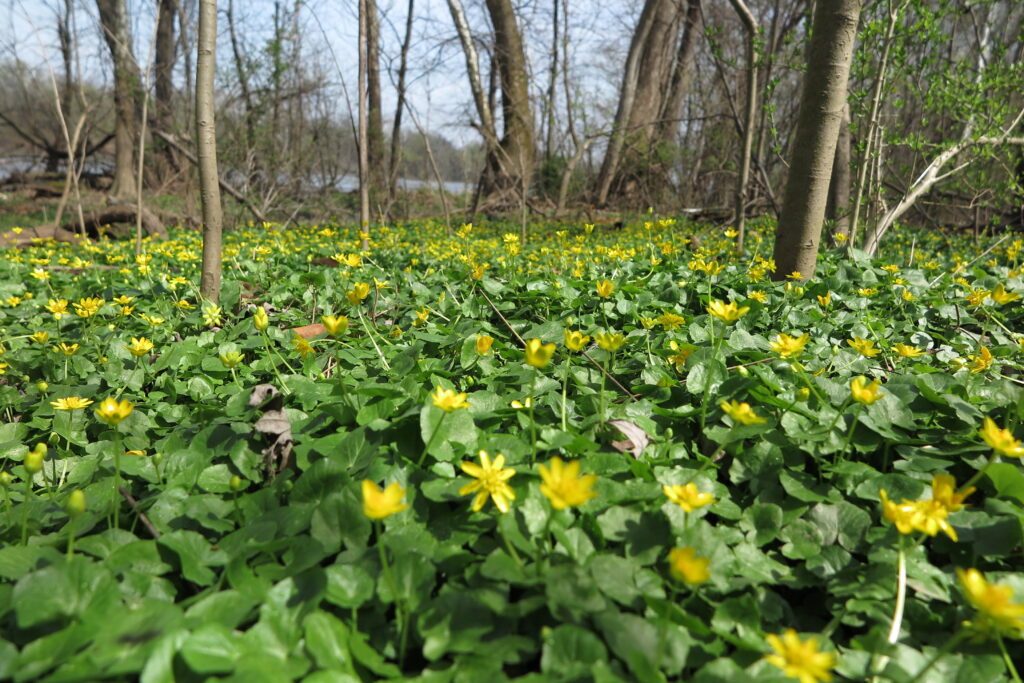
I observed a forest floor almost completely covered by blooming Lesser Celandine, with thousands of bright yellow flowers stretching across the landscape. The dense carpet of foliage and blossoms concealed nearly all visible ground, creating a striking golden display that extended far into the distance beneath the trees.
What Is Lesser Celandine? An Introduction to This Bright Spring Wildflower
Lesser Celandine (Ficaria verna) is a low-growing flowering plant recognized for its glossy yellow blooms that appear during the earliest weeks of spring. Its cheerful flowers often emerge when much of the surrounding landscape is still waking from winter dormancy, creating vivid patches of color across the forest floor. Despite its delicate appearance, this species has attracted significant attention because of its ability to spread rapidly outside its native range.
Originally native to parts of Europe, western Asia, and northern Africa, Lesser Celandine has been transported to numerous regions around the world. Gardeners once valued it as an ornamental plant because of its bright flowers and ability to create dense carpets of greenery. Over time, however, it escaped cultivation in many areas and established self-sustaining populations far from where it was originally planted.
The plant belongs to the buttercup family, a group known for producing showy flowers and often thriving in cool-season conditions. Its blooms can transform large sections of woodland into a sea of yellow during spring. For many observers, encountering an extensive flowering colony is one of the most visually striking signs that winter is ending.
Today, Lesser Celandine is familiar to naturalists, hikers, gardeners, and land managers across multiple continents. Whether admired for its beauty or monitored for its spread, it remains a species that draws attention wherever it appears. Its combination of attractive flowers, glossy foliage, and expansive growth habit makes it one of the most recognizable spring plants in many regions.
Lesser Celandine Appearance and Overall Plant Structure
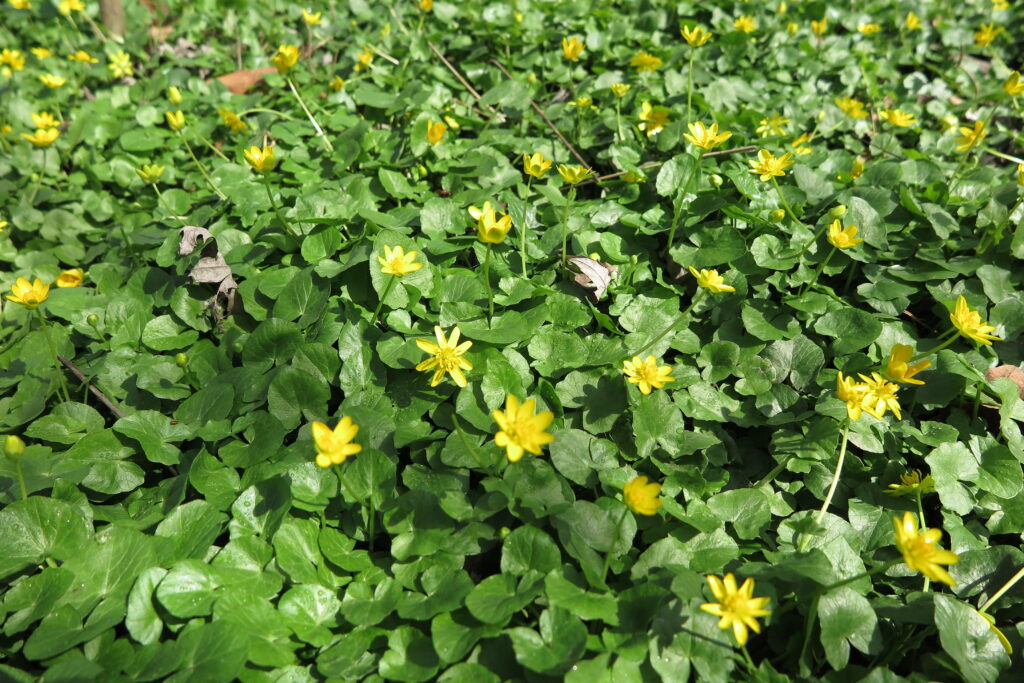
At first glance, Lesser Celandine presents itself as a dense layer of green leaves punctuated by bright yellow flowers. Individual plants remain relatively short, rarely reaching more than a foot in height, yet large groups can cover impressive areas. This growth pattern often makes the species appear more expansive than its modest size would suggest.
The overall form is best described as creeping and mat-forming. Instead of producing a tall, upright silhouette, the plant spreads outward close to the ground. Numerous leaves emerge from short stems, creating a continuous blanket of vegetation that can dominate the visual appearance of an area during spring.
When flowering, the plant becomes especially noticeable because the yellow blooms rise slightly above the foliage. From a distance, large colonies may resemble a green carpet sprinkled with countless golden stars. The contrast between the glossy leaves and bright flowers helps the species stand out even in shaded environments.
Its adaptability has contributed to its success in many regions. Lesser Celandine can establish itself in both cultivated and natural settings, maintaining a similar overall appearance despite differences in climate and geography. Whether growing in a garden bed or spreading across a woodland floor, its low profile and dense coverage remain defining features.
The plant’s visual impact often increases when many individuals bloom simultaneously. A single specimen may be attractive, but thousands flowering together create a display that can transform an entire landscape. This mass flowering effect is one of the primary reasons the species gained popularity as an ornamental plant before concerns about its spread became widespread.
Distinctive Lesser Celandine Characteristics and Features
One of the most recognizable features of Lesser Celandine is its glossy foliage. The leaves often appear polished, reflecting sunlight in a way that makes them seem almost wax-coated. Their smooth surfaces help create the shiny green appearance commonly associated with large colonies.
The leaves are generally heart-shaped, kidney-shaped, or rounded with gently curved edges. Unlike many woodland plants that produce deeply lobed foliage, Lesser Celandine’s leaves maintain a simple form. When viewed from above, they can resemble small green shields arranged closely together across the ground.
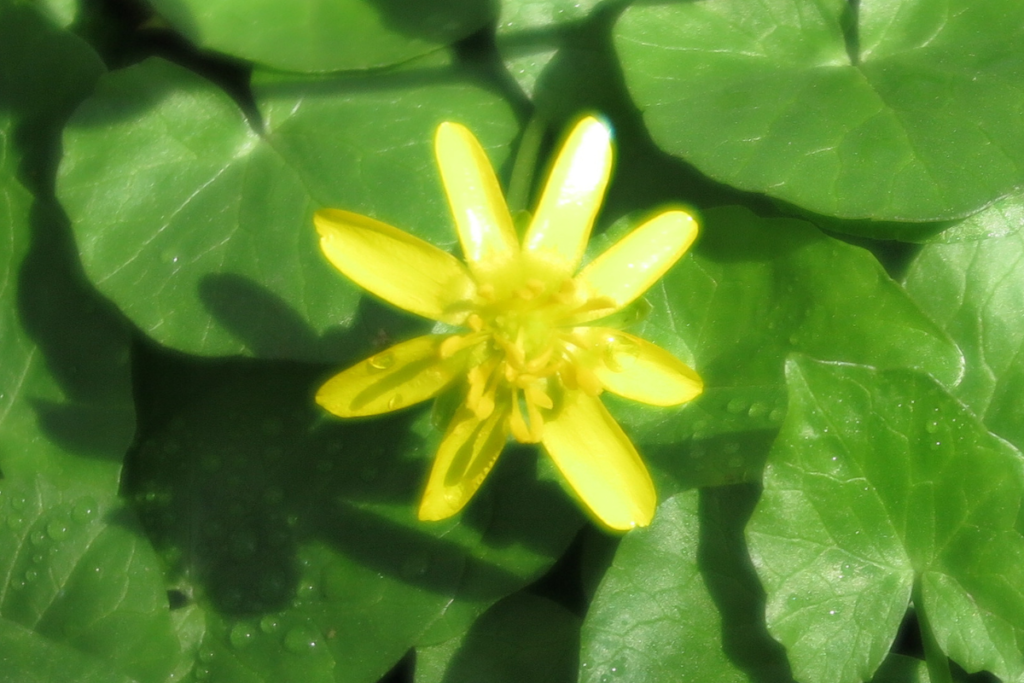
Its flowers provide another defining characteristic. The bright yellow blooms consist of numerous narrow petals arranged around a central cluster of reproductive structures. Compared to the broader petals of many common garden flowers, these petals create a star-like appearance that immediately attracts attention.
Many people compare the flowers to miniature suns scattered across the landscape. The intense yellow coloration often appears almost luminous under spring sunlight. This visual effect becomes particularly striking when hundreds of flowers bloom together, producing a shimmering golden display above the foliage.
Although it belongs to the buttercup family, Lesser Celandine differs from some relatives through its unusually glossy leaves and dense growth habit. Species such as Marsh Marigold may share a similar yellow coloration, yet they generally produce larger flowers and a more upright appearance. These distinctions help separate Lesser Celandine from other yellow-flowered spring plants encountered in similar regions.
How to Identify Lesser Celandine in the Field
Identifying Lesser Celandine begins with examining the combination of flowers and leaves together. The plant produces bright yellow blooms positioned above a layer of shiny green foliage. When both features are present simultaneously, recognition becomes considerably easier than relying on either characteristic alone.
The flowers typically contain numerous narrow petals rather than the handful of broad petals seen on many other spring wildflowers. From a short distance, they often resemble tiny yellow stars resting above the leaves. This petal arrangement is one of the quickest visual clues available to observers in the field.
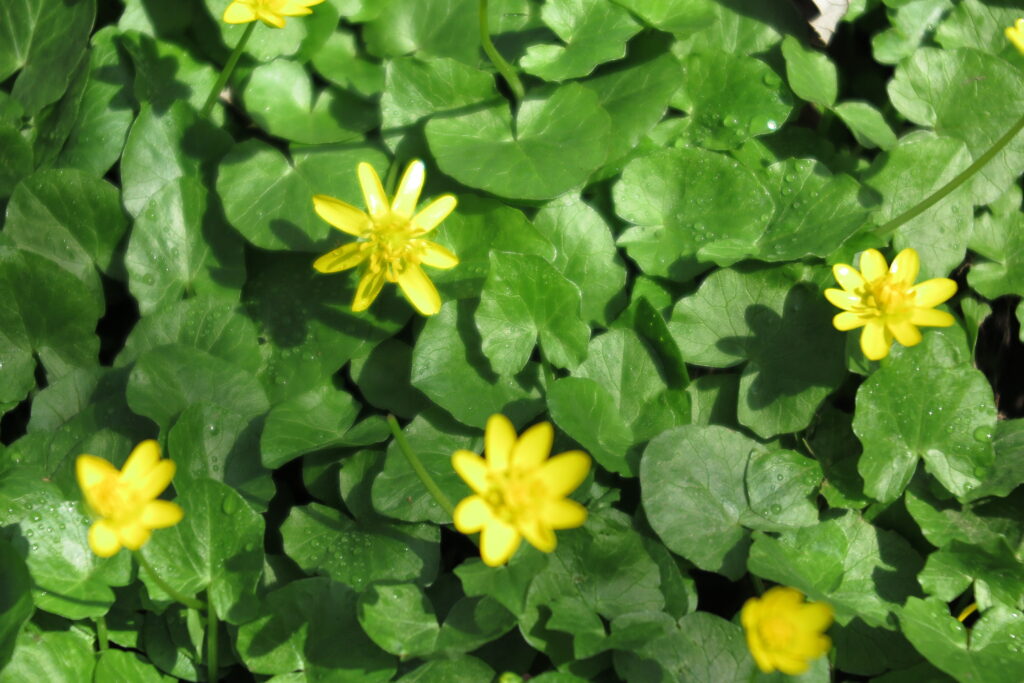
The foliage offers additional confirmation. Leaves are generally smooth, glossy, and rounded with a heart-like or kidney-like shape. Their reflective surfaces often catch sunlight, creating flashes of brightness across large colonies. Few other early-spring plants combine this leaf texture with such vivid yellow flowers.
A common identification mistake involves confusing Lesser Celandine with Marsh Marigold. While both species display yellow blooms, Marsh Marigold typically produces larger flowers with broader petal-like structures and thicker stems. Lesser Celandine tends to appear lower to the ground and forms much denser carpets of vegetation.
Another useful field comparison is to imagine a blanket covered with small yellow stars. If the area contains hundreds of bright flowers rising above glossy, rounded leaves that seem woven together into a continuous layer, Lesser Celandine is a strong possibility. Observing the narrow petals, reflective foliage, and extensive ground cover together provides a reliable combination of traits for accurate identification.
Popular Searches About Lesser Celandine
Explore Lesser Celandine Guide
Explore More Plants

Support Encounters World
Help support wildlife photography and get behind the scenes discoveries on Patreon.