Lesser Celandine Reproduction Guide: How It Spreads, Multiplies, and Establishes New Colonies
Quick Facts
Primary Reproduction Method: Tubers and Bulbils
Secondary Reproduction Method: Seeds
Pollination Type: Insect Pollination
Seed Production: Moderate to High
Vegetative Reproduction: Highly Effective
Spread Potential: Very High
Reproductive Success Rate: Excellent in Suitable Conditions
Understanding Lesser Celandine Reproduction
Lesser Celandine (Ficaria verna) is a perennial member of the buttercup family known for its remarkable ability to reproduce and establish new populations. While many wildflowers depend heavily on seeds for survival, this species employs several reproductive strategies simultaneously. The combination of sexual and vegetative reproduction contributes significantly to its success across many regions.
Native to Europe, western Asia, and North Africa, Lesser Celandine has expanded well beyond its original range. Its reproductive flexibility has played a major role in this expansion. New populations can arise through multiple pathways, allowing the plant to persist even when one method is less successful.
Many plants rely on a single dominant reproductive strategy. Lesser Celandine takes a different approach by investing energy into several forms of propagation at the same time. This diversity increases the likelihood that at least one method will successfully produce new individuals each year.
Understanding reproduction is essential for anyone studying the species or attempting to manage invasive populations. The plant’s ability to generate new colonies often surprises landowners who assume removing visible growth will solve the problem. In reality, reproduction frequently continues through structures hidden beneath the soil surface.
Seed Production and Pollination in Lesser Celandine
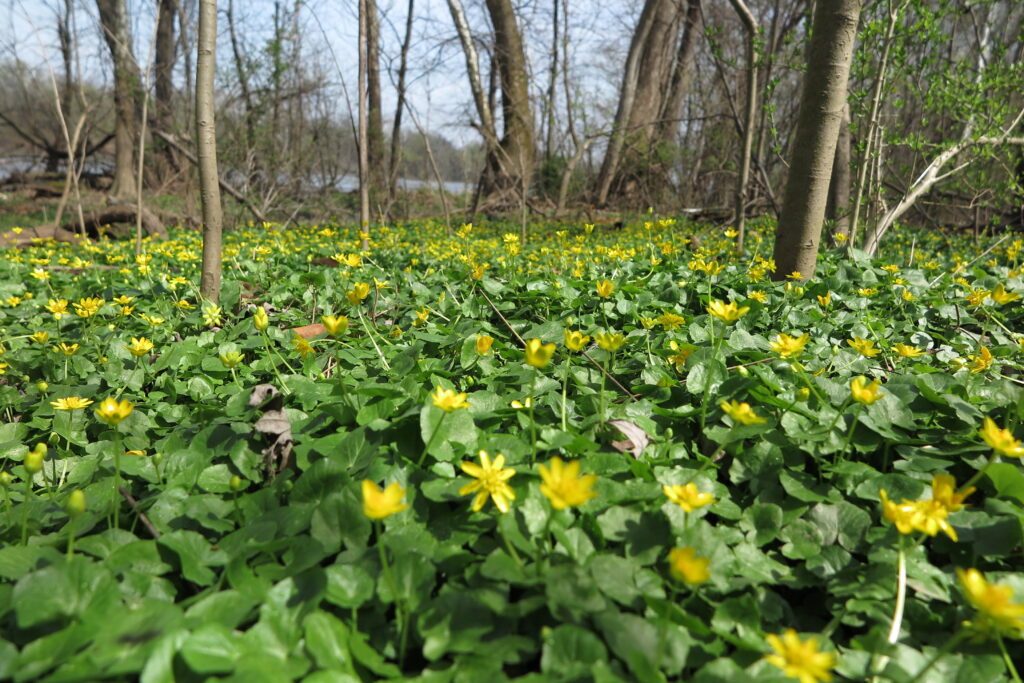
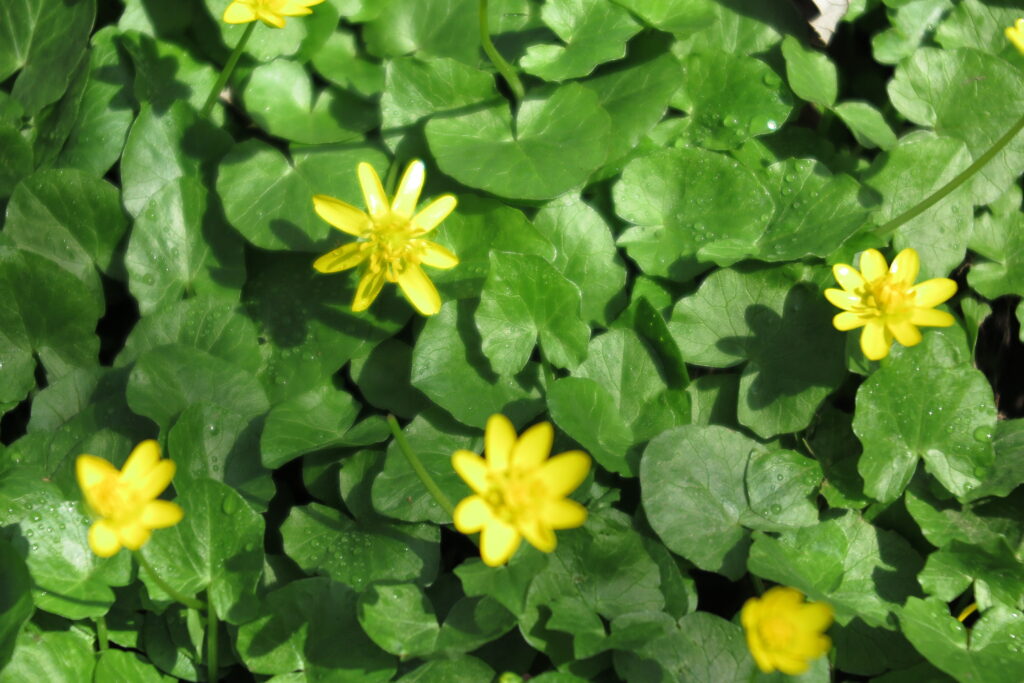
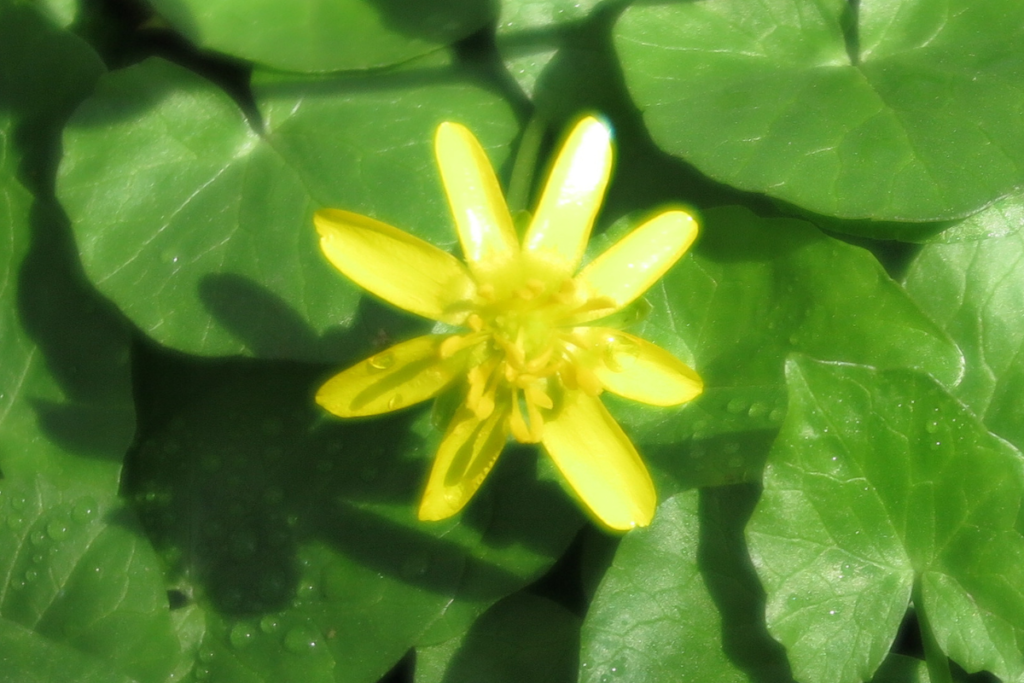
During spring, Lesser Celandine produces bright yellow flowers that attract a variety of pollinating insects. Bees, flies, and other early-season visitors may transfer pollen between flowers as they search for nectar and pollen resources. This process allows fertilization to occur and contributes to seed production.
Once pollination is successful, developing seeds begin forming within reproductive structures at the center of the flower. These seeds contain genetic material from parent plants and provide an opportunity for new individuals to establish in suitable locations. Although seeds are not the species’ only reproductive tool, they remain an important part of its life cycle.
Seed dispersal can occur through several mechanisms. Water movement, soil disturbance, and occasional animal activity may transport seeds away from the parent colony. Compared to species that produce wind-dispersed seeds capable of traveling long distances, Lesser Celandine often relies on more localized distribution.
Seedlings that successfully germinate contribute genetic diversity to populations. This variation can improve adaptability and long-term persistence. While seed reproduction may not be the plant’s most aggressive strategy, it still plays a meaningful role in establishing and maintaining colonies.
The flowering and seed-production stage also helps explain why infestations can gradually appear in new areas. Even relatively small populations may generate enough seeds to support future expansion. Combined with other reproductive mechanisms, seed production strengthens the plant’s overall reproductive success.
Vegetative Reproduction Through Tubers and Bulbils
Vegetative reproduction is often the most important factor behind the spread of Lesser Celandine. Unlike reproduction through seeds, vegetative propagation creates new plants directly from existing structures. This method allows colonies to expand efficiently without depending entirely on pollination or seed germination.
Underground tubers are among the plant’s most effective reproductive tools. These small storage structures develop beneath the soil and contain resources capable of producing entirely new plants. A useful comparison is a collection of tiny underground batteries, each storing energy for future growth.
The species also produces specialized structures known as bulbils. These small reproductive units form near the base of the plant and can detach from the parent individual. Once separated, they have the potential to establish new plants in nearby areas.
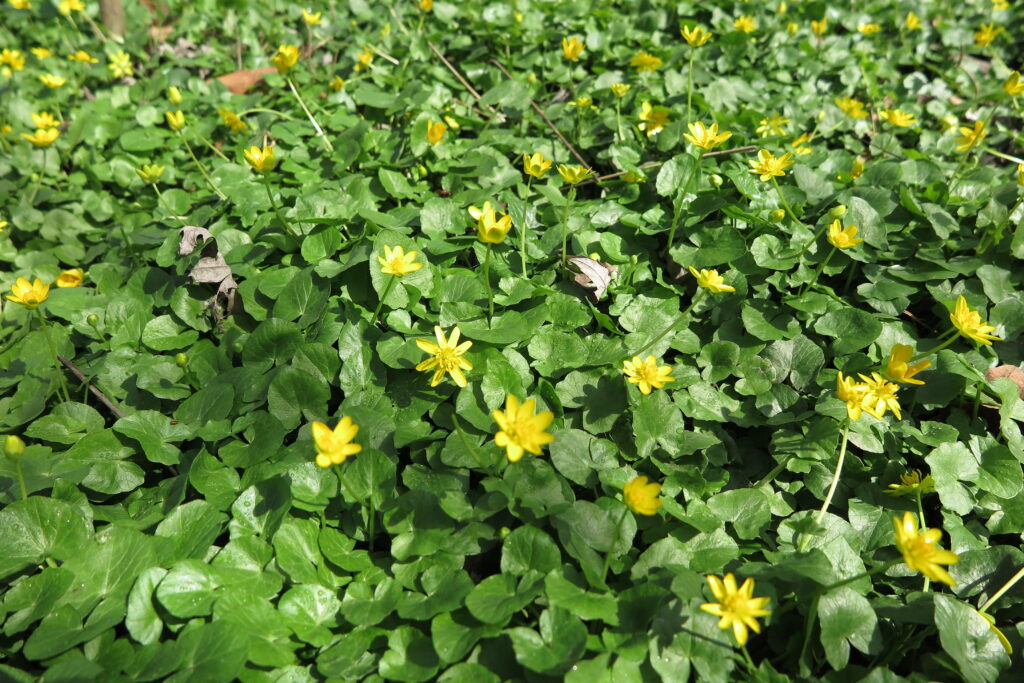
Even minor disturbance can contribute to the spread of these structures. Digging, flooding, soil movement, and landscaping activities may relocate tubers or bulbils to new locations. Because each structure has the potential to become a new plant, populations can expand rapidly when conditions are favorable.
This reproductive strategy provides a significant advantage over species that rely solely on seeds. A colony can continue increasing in size even if seed production is limited. As a result, vegetative reproduction is often considered the primary driver of the species’ persistence and spread.
How Reproduction Supports Spread and Long-Term Survival
The reproductive success of Lesser Celandine is closely tied to its ability to combine multiple propagation methods. Seeds, tubers, and bulbils each contribute to population growth in different ways. Together, they create a highly resilient reproductive system capable of supporting long-term survival.
Water movement frequently enhances reproductive success. Flood events and seasonal runoff can transport reproductive structures beyond the boundaries of existing colonies. This process helps explain why populations often appear along interconnected waterways and floodplain systems.
A useful comparison is a business operating with several independent income streams. If one source becomes less productive, the others continue supporting overall success. Lesser Celandine follows a similar pattern by relying on multiple reproductive pathways rather than depending on a single method.
These overlapping strategies make established populations difficult to eliminate completely. Even when one reproductive source is reduced, others may continue generating new plants. This resilience helps explain why infestations can persist despite repeated management efforts.
Ultimately, reproduction lies at the heart of Lesser Celandine’s success. The combination of insect-pollinated flowers, seed production, underground tubers, and detachable bulbils allows the species to establish, expand, and endure across a wide range of environments. Understanding these reproductive processes provides valuable insight into both the biology of the plant and the reasons it has become such a successful invasive species in many parts of the world.
Popular Searches About Lesser Celandine
Explore Lesser Celandine Guide
Explore More Plants

Support Encounters World
Help support wildlife photography and get behind the scenes discoveries on Patreon.