Lesser Celandine Invasive Guide: Why It Spreads, Ecological Impact, and Management Concerns
Quick Facts
Invasive Status: Invasive in Many Parts of North America
Native Range: Europe, Western Asia, and North Africa
Primary Spread Method: Tubers, Bulbils, and Water Movement
Threat Level: High in Moist Natural Areas
Most Vulnerable Habitats: Woodlands, Floodplains, and Stream Corridors
Ecological Impact: Displaces Native Spring Wildflowers
Management Difficulty: Moderate to Difficult Once Established
Understanding Lesser Celandine as an Invasive Plant
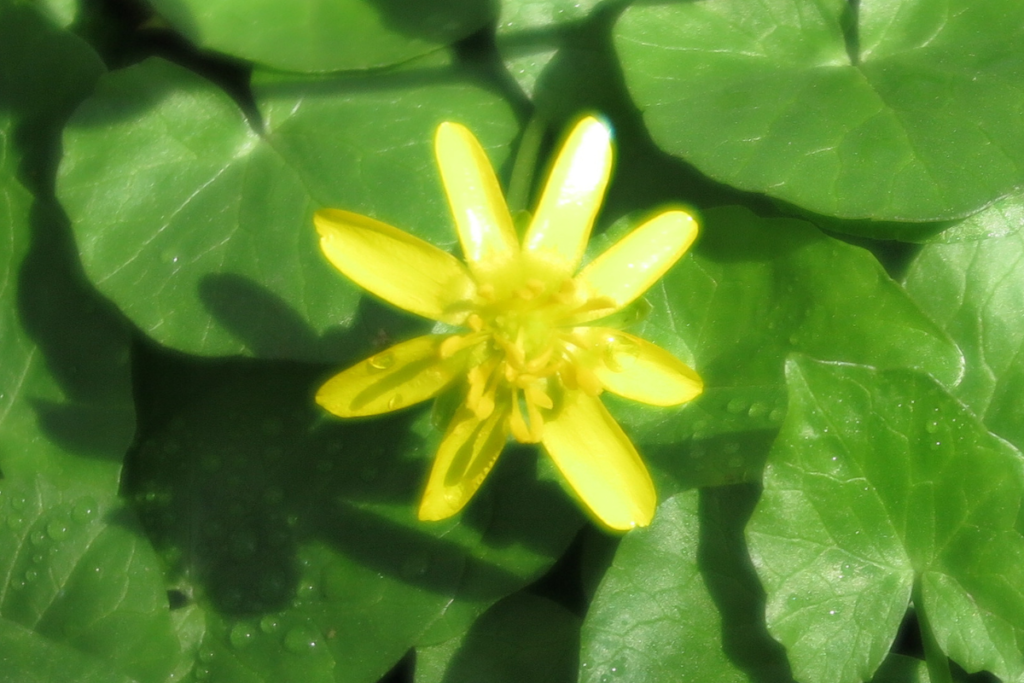
Lesser Celandine (Ficaria verna) is a spring-flowering perennial that has gained significant attention outside its native range due to its invasive behavior. Originally found across parts of Europe, western Asia, and North Africa, the plant was introduced to other regions as an ornamental species valued for its bright yellow flowers. Over time, populations expanded beyond gardens and became established in natural landscapes.
Today, the species occurs throughout numerous temperate regions where it is frequently encountered by hikers, gardeners, conservationists, and land managers. Its cheerful spring appearance often attracts admiration from people unfamiliar with its ecological effects. Large colonies can create impressive displays of yellow blooms that seem to transform entire sections of the landscape.
The plant’s invasive reputation stems from its ability to dominate areas that would otherwise support diverse native vegetation. In many locations, it spreads beyond its original planting sites and forms extensive populations that persist year after year. This tendency has elevated Lesser Celandine from a garden curiosity to a major management concern in some regions.
Conservation organizations often monitor the species because early detection can reduce future ecological impacts. Areas that initially contain only small patches may eventually develop much larger infestations if left unmanaged. Understanding why the plant is considered invasive is an important first step toward recognizing its influence on natural ecosystems.
Lesser Celandine Distribution and Expansion Across Regions
The modern distribution of Lesser Celandine extends far beyond its historical native range. Introductions through horticulture allowed the species to establish itself in locations where it had never naturally occurred. Over decades, scattered plantings gradually expanded into self-sustaining populations across broad geographic areas.
Many invasive plants remain limited to specific climate zones, but Lesser Celandine has demonstrated considerable success throughout temperate regions. Its range now includes numerous locations across North America where environmental conditions resemble those of its native homeland. This similarity has allowed the species to thrive without requiring extensive adaptation.
Compared to some invasive plants that remain concentrated near roadsides or disturbed ground, Lesser Celandine often penetrates natural landscapes. Colonies frequently become established within areas that support native plant communities. This ability to move beyond heavily altered environments increases its ecological significance.
Expansion patterns are often connected through waterways and interconnected landscapes. A population established in one location may eventually appear miles away in another suitable area. These gradual range increases can make management challenging because new infestations may emerge long after the original introduction occurred.
The widespread distribution of Lesser Celandine highlights its success as a non-native species. Rather than remaining a localized ornamental escape, it has become a recognizable component of many spring landscapes. This extensive range is one reason the plant receives significant attention from invasive species programs.
How Lesser Celandine Invades and Dominates Natural Areas
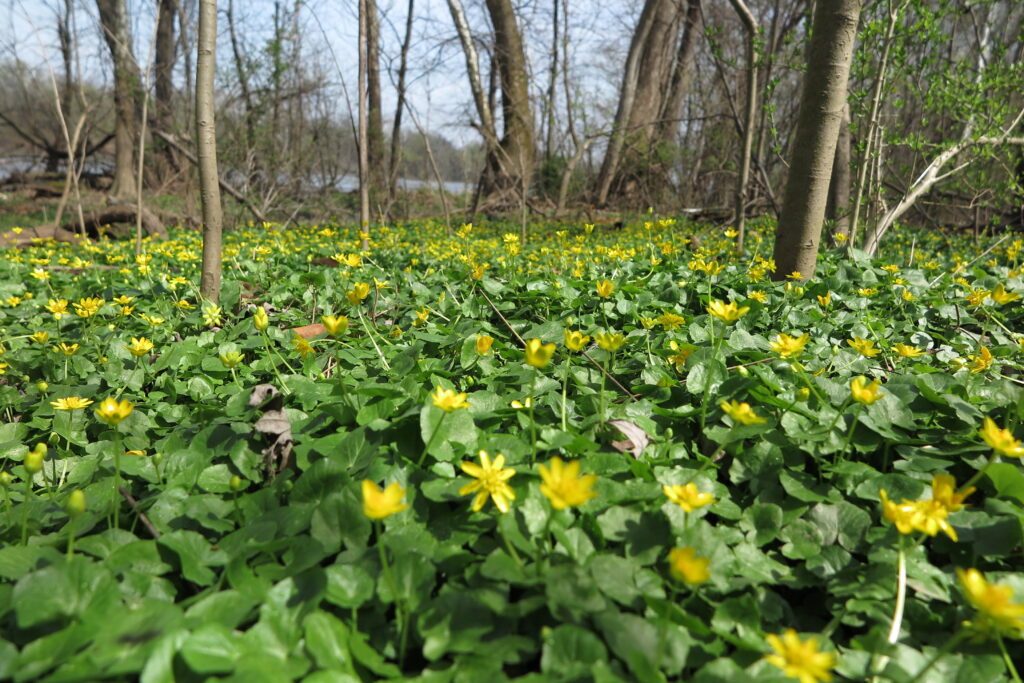
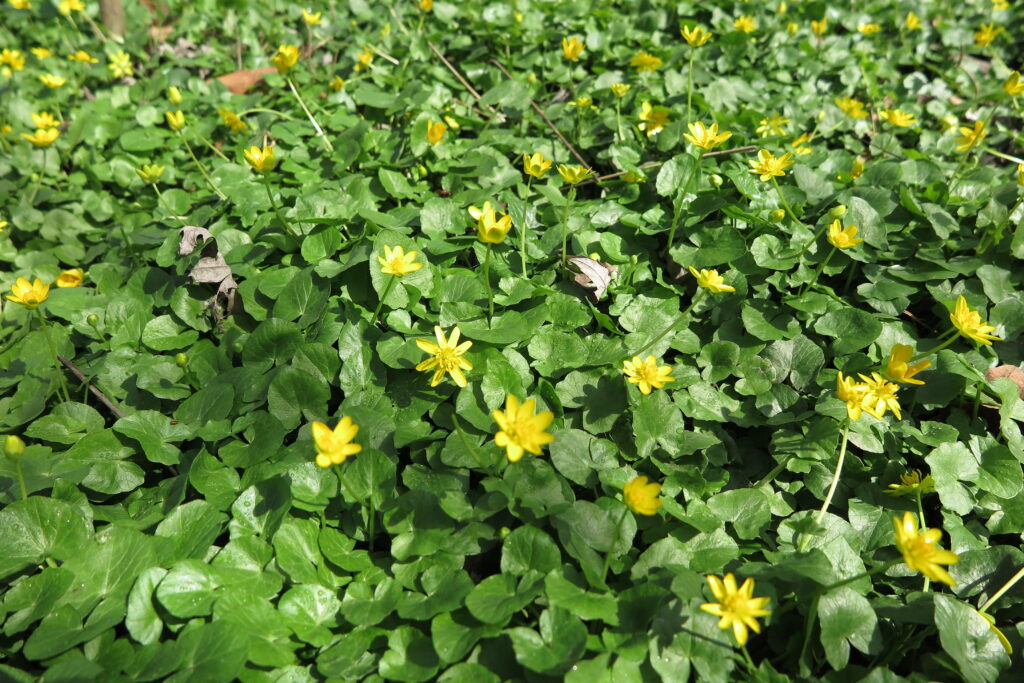
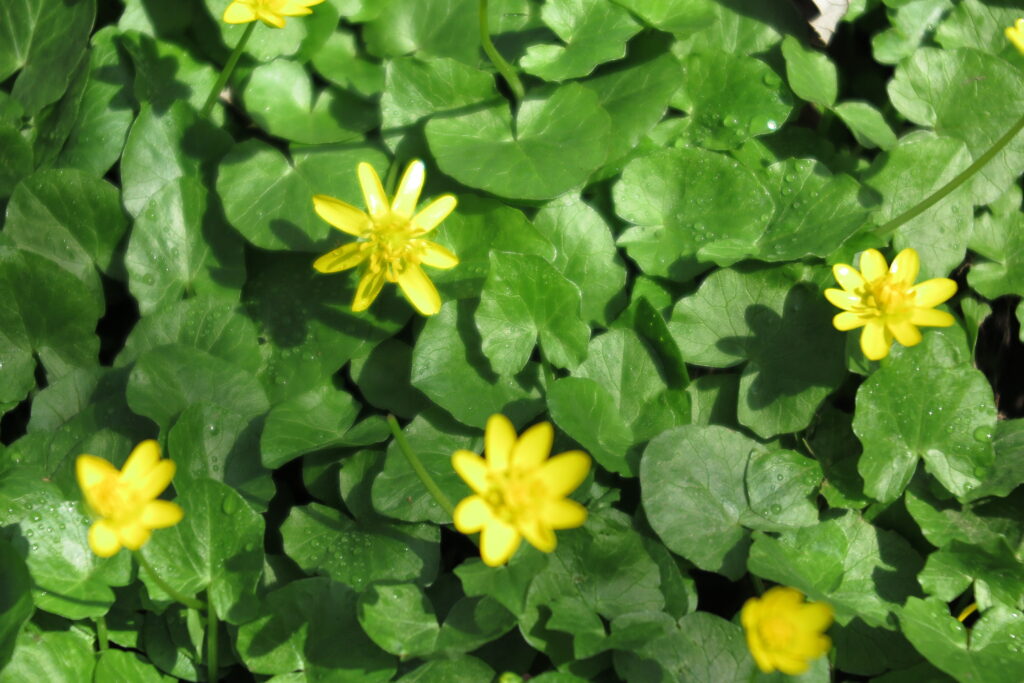
One reason Lesser Celandine is considered problematic is its ability to form dense, nearly continuous colonies. As populations expand, individual plants merge together and create thick carpets that occupy large portions of available ground. This growth pattern often leaves little room for neighboring vegetation to establish.
Native spring wildflowers frequently face the greatest pressure from these expanding colonies. Species that once emerged across the forest floor may find themselves competing with extensive patches of Lesser Celandine. Over time, areas that supported a variety of flowering plants can become visually dominated by a single species.
The process resembles placing a blanket across an existing garden. As coverage increases, fewer openings remain available for other plants. In a similar way, Lesser Celandine can occupy large sections of ground and reduce opportunities for native species to maintain their historical presence.
Floodplains, woodland interiors, stream corridors, and other moist environments are often particularly vulnerable. These areas may provide ideal conditions for colony formation while also supporting numerous native plants adapted to seasonal spring growth. The overlap between suitable habitat and ecologically valuable plant communities contributes to management concerns.
Ecological impacts extend beyond simple visual dominance. When native wildflower abundance declines, broader changes may occur within the local plant community. For this reason, land managers often prioritize monitoring and controlling Lesser Celandine before populations become widespread.
Ecological Impact and Management Challenges of Lesser Celandine
Managing Lesser Celandine can be difficult once large colonies become established. Small infestations are often much easier to address than extensive populations that cover broad areas. Early intervention therefore remains one of the most effective approaches for limiting long-term spread.
The species persists through multiple reproductive strategies that enhance its resilience. Underground tubers, bulbils, and seed production all contribute to population maintenance and expansion. Even when visible growth disappears later in the year, reproductive structures may remain hidden beneath the soil surface.
A useful comparison is an iceberg, where much of the important structure remains out of sight. Although the flowers and leaves are highly visible during spring, a significant portion of the plant’s persistence relies on underground components. These hidden structures can complicate removal efforts and contribute to re-establishment.
Land managers frequently combine monitoring, mechanical control, and carefully timed treatment methods to reduce infestations. Success often depends on repeated efforts rather than a single intervention. Areas containing valuable native wildflower communities may receive particular attention because protecting those ecosystems can prevent long-term biodiversity loss.
Despite its attractive appearance, Lesser Celandine represents a significant invasive species concern in many regions outside its native range. Its capacity to spread, establish dense colonies, and outcompete native vegetation explains why conservation organizations continue to prioritize education, monitoring, and management efforts. Understanding these impacts helps readers recognize the difference between a beautiful spring flower and a plant capable of reshaping entire plant communities.
Popular Searches About Lesser Celandine
Explore Lesser Celandine Guide
Explore More Plants

Support Encounters World
Help support wildlife photography and get behind the scenes discoveries on Patreon.