Lesser Celandine Habitat: Where It Grows and Environmental Preferences
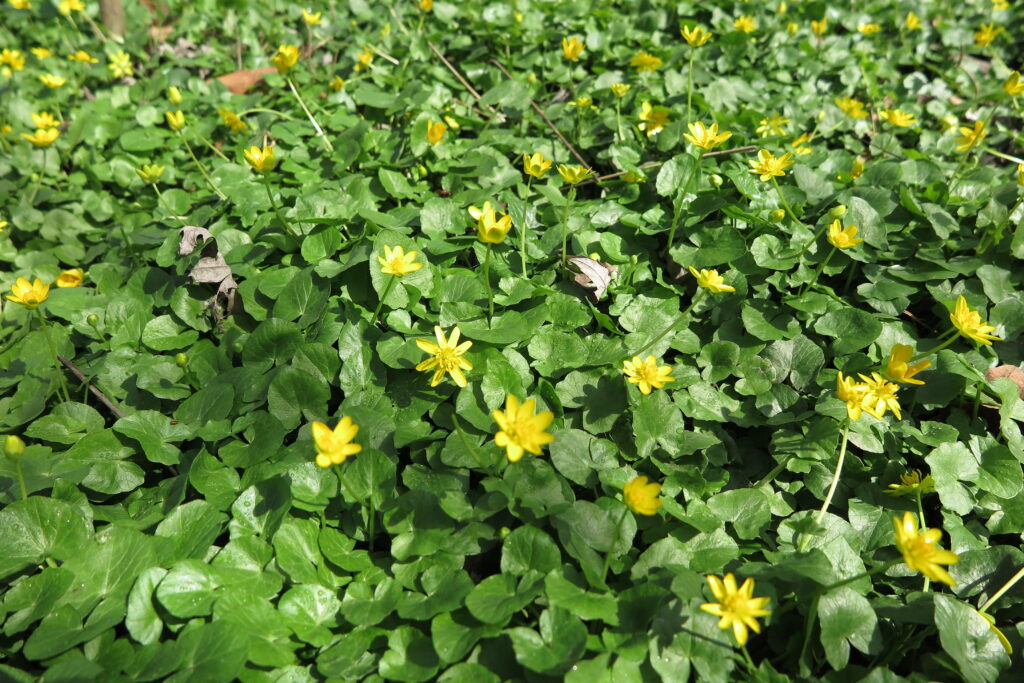
Quick Facts
Primary Habitat: Moist Woodlands and Floodplains
Secondary Habitat: Streambanks, Parks, Lawns, and Disturbed Areas
Soil Type: Loamy, Silty, and Organic-Rich Soils
Soil pH Preference: Slightly Acidic to Neutral
Moisture Level: Moderate to High Moisture
Climate Zone: Temperate Regions
Light Requirements: Full Sun in Early Spring to Partial Shade
Lesser Celandine Across Its Global Landscape
Lesser Celandine (Ficaria verna) is a spring-flowering perennial that has established itself across a remarkably broad geographic range. Native to Europe, western Asia, and parts of North Africa, it has become familiar in many additional regions through intentional planting and accidental spread. Today, it is encountered far beyond its original homeland, making it one of the most recognizable early-season flowering plants in temperate climates.
Its bright yellow flowers often appear during a brief seasonal window when many landscapes are transitioning from winter to spring. During this period, colonies can create vibrant displays that draw attention from hikers, gardeners, and nature enthusiasts alike. The plant’s seasonal presence has made it a familiar sight in numerous countries across multiple continents.
While some wildflowers remain restricted to isolated regions, Lesser Celandine has successfully expanded into many new areas. Populations can now be found throughout large portions of North America as well as scattered locations elsewhere in the world. This broad distribution demonstrates the species’ ability to establish itself under a variety of environmental circumstances.
The plant’s increasing presence has generated interest among botanists, conservation groups, and land managers. In some locations it is appreciated for its striking appearance, while in others it is carefully monitored due to its expanding populations. Regardless of perspective, Lesser Celandine has become a notable component of many spring landscapes across the temperate world.
Lesser Celandine Geographic Distribution and Habitat Range
Few spring wildflowers have expanded their modern range as extensively as Lesser Celandine. What began as a species native to parts of Europe and neighboring regions now includes established populations across large sections of North America. Its distribution continues to attract attention because it often occupies areas far removed from its original native range.
The plant is especially successful throughout regions that experience cool winters followed by mild springs. These climatic conditions closely resemble those found within its ancestral range and provide an environment where it can flourish. As a result, it has become widely recognized across many temperate-zone landscapes.
Compared to numerous native spring wildflowers that may occupy only certain states, provinces, or ecological zones, Lesser Celandine often demonstrates a much broader footprint. It frequently appears across entire regions rather than remaining confined to isolated pockets. This widespread occurrence contributes to its reputation as a highly adaptable species.
Although most abundant in temperate climates, its range is not entirely uniform. Some areas support dense populations, while others contain only scattered colonies. Differences in climate, land use, and environmental conditions influence how successfully the plant establishes itself across various parts of its expanded distribution.
The overall pattern reveals a species capable of thriving across a substantial geographic area. Rather than being restricted to a narrow ecological niche, Lesser Celandine occupies a wide range of temperate regions. Its modern distribution reflects both historical introductions and a notable capacity to persist in suitable environments.
Common Growing Environments for Lesser Celandine
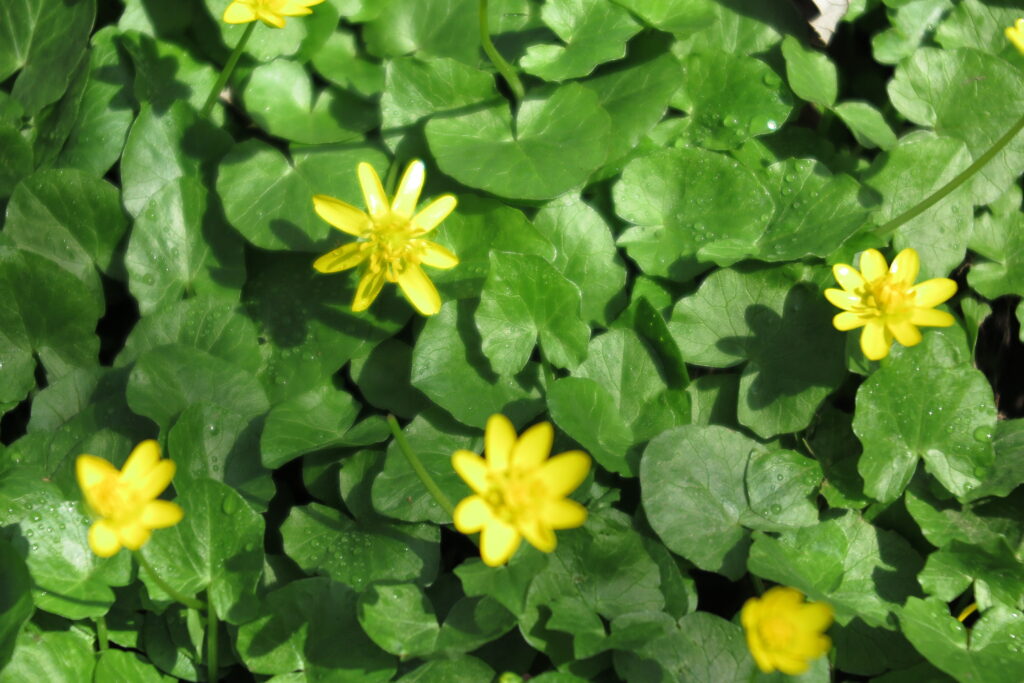
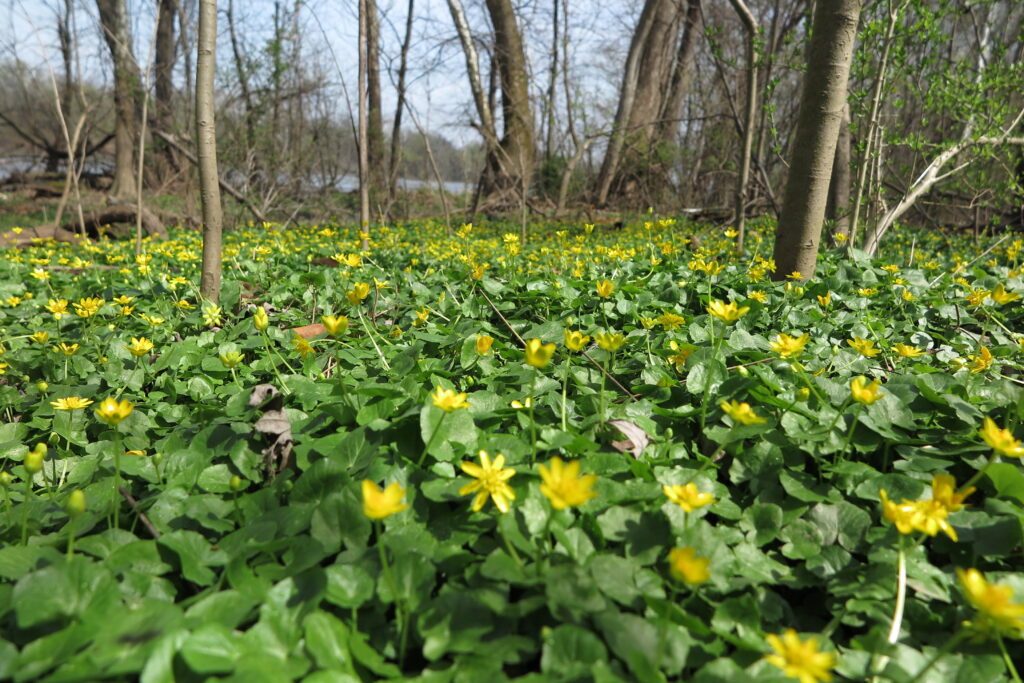
Lesser Celandine is most frequently associated with wooded landscapes where spring sunlight reaches the ground before trees fully leaf out. These areas often provide the combination of moisture and seasonal light that supports extensive colonies. Large patches can develop beneath deciduous trees, creating dense carpets of green leaves and yellow flowers.
Floodplains and stream corridors represent another common setting for this species. Water movement can influence the spread of plant material throughout these environments, allowing colonies to establish along interconnected waterways. As a result, populations are often encountered near rivers, creeks, and drainage systems.
Beyond natural landscapes, Lesser Celandine readily appears in human-modified environments. Parks, residential green spaces, old gardens, and unmanaged lots frequently support populations. In some neighborhoods, colonies emerge each spring along fence lines, beneath ornamental trees, or near landscaped beds where the species was once intentionally planted.
The plant also demonstrates an ability to occupy transitional areas between habitat types. Woodland edges, partially shaded openings, and lightly disturbed ground can all support growth. These boundary zones often provide a balance between sunlight exposure and environmental stability, making them particularly suitable locations.
Environmental variation influences where the largest colonies develop. Some populations flourish beneath mature tree canopies, while others occupy open sections of riparian corridors. This flexibility allows Lesser Celandine to appear across a surprisingly diverse collection of settings without being limited to a single environment type.
Environmental Conditions That Support Lesser Celandine
Moisture is one of the most important environmental factors associated with Lesser Celandine. The plant is commonly linked with soils that remain consistently damp during the spring growing season. Areas that periodically retain water often provide especially favorable conditions for establishment and persistence.
Rich soils containing abundant organic matter are frequently associated with healthy populations. Woodland floors covered in decomposing leaves provide a useful comparison because they offer the nutrient-rich conditions often favored by the species. Loamy and silty soils tend to support particularly vigorous colonies.
The plant performs best in temperate climates characterized by cool winters and moderate spring temperatures. Harsh desert conditions or extremely arid landscapes generally do not provide suitable environmental support. Instead, Lesser Celandine is most often associated with regions where seasonal moisture remains available during its active growth period.
Light availability also plays an important role. The species benefits from early-season sunlight before surrounding vegetation creates heavier shade. This pattern resembles conditions found beneath deciduous forest canopies, where sunlight reaches the ground in spring but becomes more limited later in the year.
Terrain can further influence habitat suitability. Gentle slopes, floodplain flats, stream terraces, and low-lying woodland areas frequently support populations. Combined with moist soils, seasonal sunlight, and temperate climates, these environmental characteristics create the conditions under which Lesser Celandine is most commonly encountered throughout its expanding range.
Popular Searches About Lesser Celandine
Explore Lesser Celandine Guide
Explore More Plants

Support Encounters World
Help support wildlife photography and get behind the scenes discoveries on Patreon.