Lesser Celandine Facts Guide: 25 Fascinating Facts About This Bright Spring Wildflower
Quick Facts
Scientific Name: Ficaria verna
Common Name: Lesser Celandine
Plant Family: Buttercup Family (Ranunculaceae)
Native Range: Europe, Western Asia, and North Africa
Flower Color: Bright Yellow
Bloom Season: Late Winter to Mid-Spring
Interesting Fact: A single colony can contain thousands of interconnected plants
Remarkable Lesser Celandine Facts and Origins
Lesser Celandine is one of the earliest flowering plants many people encounter each year. In some regions, its leaves begin appearing while traces of winter still remain on the landscape. This unusually early emergence helps make the species one of the first visible signs that spring is approaching.
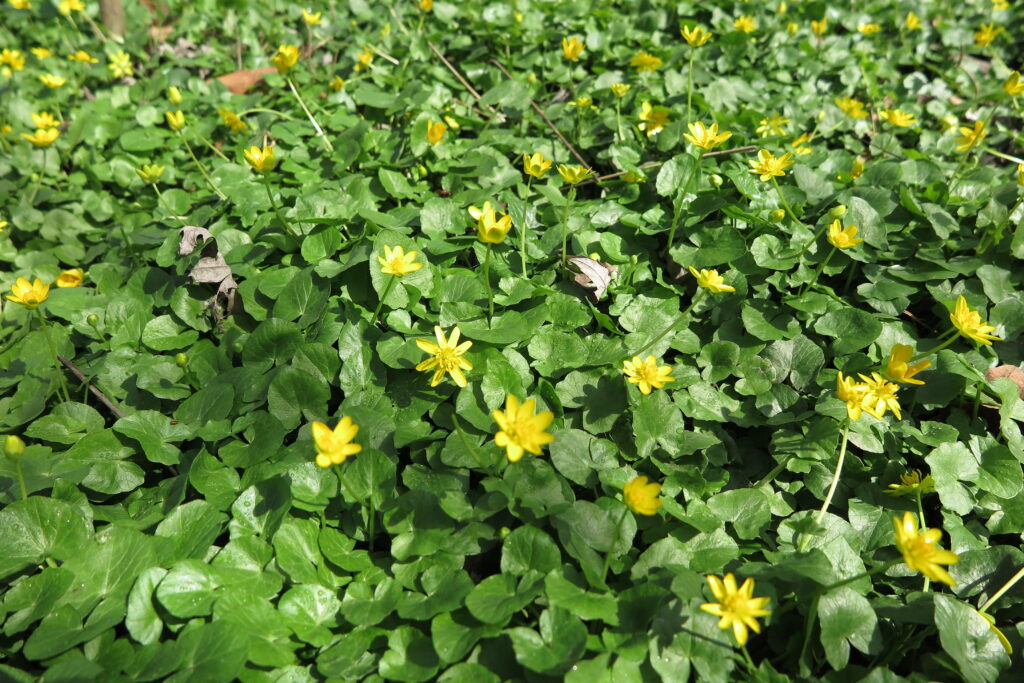
The plant belongs to the buttercup family, a large group that includes many familiar wildflowers. Although numerous buttercup relatives produce yellow blooms, Lesser Celandine stands apart because of its glossy leaves and dense carpet-forming habit. These characteristics often make it immediately recognizable to experienced naturalists.
Its scientific name, Ficaria verna, carries interesting historical meaning. The term “verna” refers to spring, reflecting the plant’s tendency to bloom early in the growing season. The genus name originated from the appearance of its underground structures, which early botanists believed resembled figs.
Lesser Celandine has been known to science for centuries and appears in historical records throughout Europe. Long before modern field guides existed, people recognized the species as a familiar spring flower. Its bright blooms made it easy to notice even among the many wildflowers growing across the countryside.
Unlike many native wildflowers that remain restricted to specific regions, Lesser Celandine has expanded well beyond its original range. Human cultivation played a major role in this expansion. Gardeners once valued it for its colorful flowers and ability to quickly cover bare ground.
In many places, the plant escaped cultivation and established self-sustaining populations. This transition from ornamental flower to invasive species represents one of the most notable chapters in its history. Today, it is discussed as often by conservationists as by gardeners.
Another interesting fact is that colonies may persist for decades. A patch observed today could have originated many years earlier and continued expanding gradually over time. This longevity helps explain why some populations become so extensive.
Despite its widespread recognition, Lesser Celandine is often confused with unrelated species. Many people initially mistake it for Marsh Marigold or other yellow spring flowers. Learning the differences between these species is one reason the plant remains a popular topic among beginner naturalists.
Unique Adaptations That Help Lesser Celandine Succeed
One of the plant’s most remarkable adaptations is its seasonal timing. Rather than competing directly with summer vegetation, it completes much of its annual activity before many neighboring plants become fully active. This strategy allows it to take advantage of available sunlight early in the year.
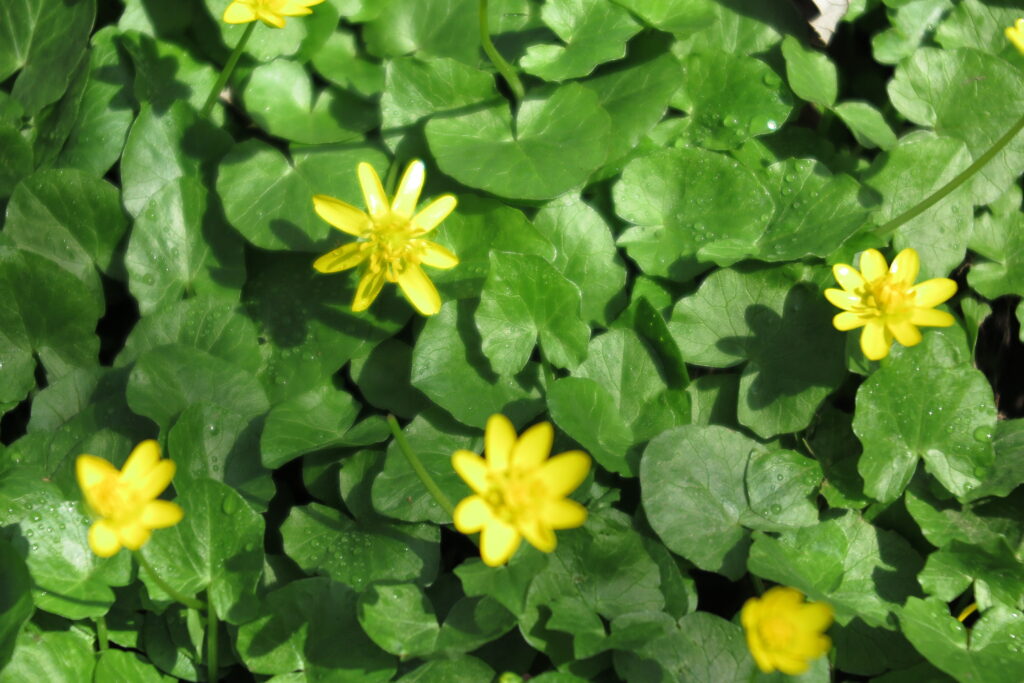
The leaves possess a glossy surface that reflects light in a distinctive way. After rainfall or during morning sunlight, colonies can appear almost polished. Few woodland wildflowers display such a reflective appearance across large areas.
Another fascinating adaptation involves its underground tubers. These structures store energy beneath the soil and allow the plant to survive unfavorable periods. A useful comparison is a rechargeable battery that stores power until conditions become suitable for renewed growth.
The species also demonstrates impressive resilience. Even when weather conditions fluctuate from year to year, established populations often return reliably. This consistency helps explain why the plant can maintain long-term colonies in suitable environments.
Lesser Celandine’s flowers are specifically adapted for attracting early-season pollinators. During a period when floral resources remain limited, their bright coloration stands out strongly against the surrounding landscape. Insects searching for food can locate these blooms from considerable distances.
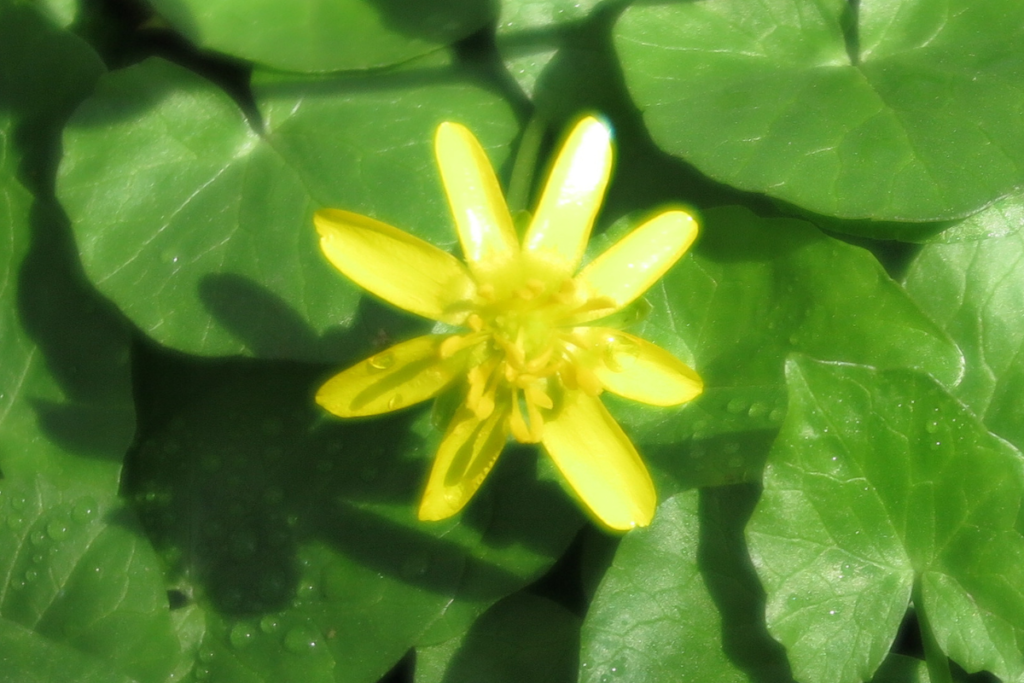
The petals themselves possess a glossy quality similar to the leaves. This reflective surface helps the flowers appear brighter under direct sunlight. Some observers describe colonies as looking almost illuminated on clear spring days.
Another adaptation is the plant’s ability to remain hidden for much of the year. By entering dormancy after spring, it avoids many of the environmental stresses associated with summer conditions. This seasonal disappearance often surprises people who expect flowering plants to remain visible throughout the growing season.
Few species combine early emergence, rapid seasonal development, underground storage, and multiple reproductive strategies as effectively as Lesser Celandine. These adaptations work together to create a plant that is exceptionally successful within its preferred growing season.
Surprising Facts About Spread, Competition, and Ecology
Lesser Celandine is capable of reproducing through more than one method. While many plants depend primarily on seeds, this species also produces tubers and bulbils that can generate new individuals. Multiple reproductive pathways greatly increase its chances of survival.
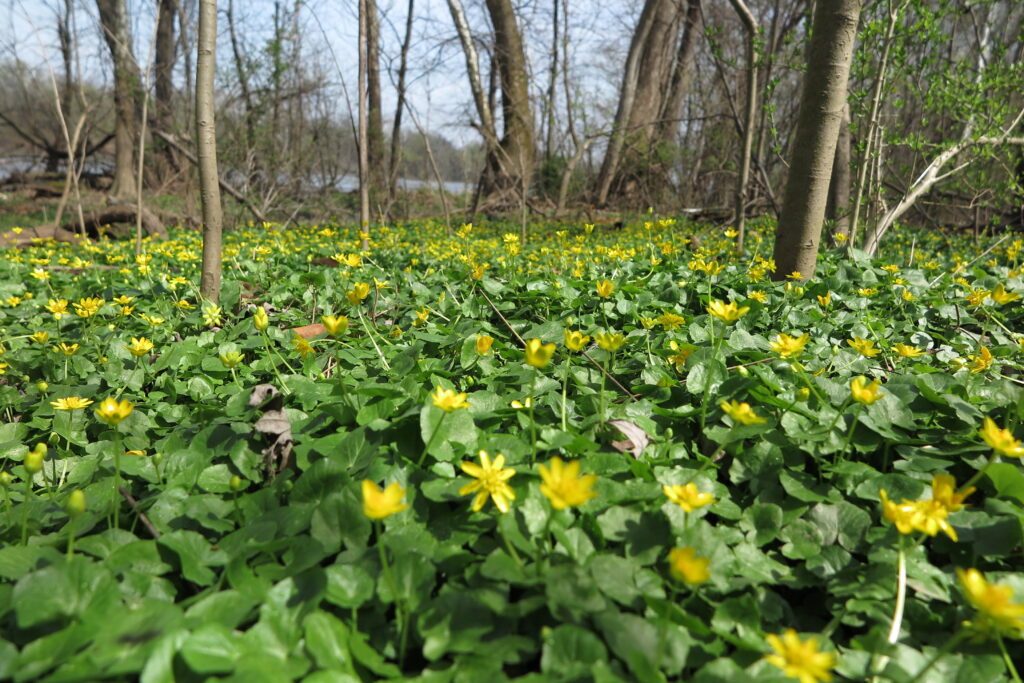
A single colony may contain thousands of interconnected plants occupying a surprisingly large area. From a distance, these colonies often resemble a continuous blanket rather than separate individuals. This visual effect contributes to the species’ reputation for forming dense carpets.
One interesting ecological fact is that the plant often emerges before many native spring wildflowers. Because it begins growing so early, it can occupy available space before competitors reach peak development. This timing advantage plays an important role in its success.
Floodwater frequently contributes to its spread. Tubers and reproductive structures may be carried downstream and deposited in new locations. This process explains why populations are commonly associated with stream corridors and floodplain systems.
Conservation organizations often monitor Lesser Celandine because of its ability to dominate plant communities. Large colonies can reduce the abundance of native spring wildflowers in some locations. As a result, the species is frequently included on invasive plant watchlists.
The plant’s ecological impact varies depending on location. In its native range, it exists as part of established ecosystems. Outside that range, however, it may behave very differently and become considerably more aggressive.
Interestingly, not all populations expand at the same rate. Some remain relatively localized for years, while others spread rapidly across suitable landscapes. Differences in climate, moisture, and local conditions help determine how successful a colony becomes.
This combination of adaptability, multiple reproductive methods, and environmental flexibility has made Lesser Celandine one of the most discussed invasive spring wildflowers in many parts of North America.
Lesser Celandine Trivia and Lesser-Known Information
One of the most surprising facts about Lesser Celandine is how quickly it can disappear. A landscape covered in flowers during April may show virtually no sign of the plant by early summer. To someone unfamiliar with the species, it can seem as though the entire colony vanished overnight.
The flowers often close during cloudy weather and reopen when sunlight returns. This behavior gives colonies a noticeably different appearance depending on daily weather conditions. Sunny days reveal far more of the plant’s vibrant color.
Another lesser-known fact is that many people unknowingly walk past the species every spring without recognizing it. Because it blooms for a relatively short period, its most noticeable stage is easy to miss. Those who visit the same location later in the year may never realize it was present.
Historically, the plant was sometimes associated with traditional herbal practices in parts of Europe. These uses contributed to its popularity long before it became known as an invasive species. Modern safety recommendations, however, generally discourage medicinal or culinary use.
Its common name creates frequent confusion. Lesser Celandine is not closely related to Greater Celandine, despite the similarity in names. The two species belong to entirely different plant groups and possess distinct characteristics.
Photographers often seek out large colonies because of their visual appeal. A woodland floor covered with thousands of yellow flowers can create dramatic spring landscapes. These displays are among the reasons the species was originally introduced as an ornamental plant.
The reflective petals are another unusual feature. Under direct sunlight, they can appear almost metallic in brightness. Few native wildflowers produce the same shimmering effect across entire colonies.
Perhaps the most interesting fact is that Lesser Celandine can inspire completely opposite opinions. Some people view it as one of the most beautiful flowers of spring, while others see it as a serious ecological threat. Few wildflowers generate such different reactions, making Lesser Celandine one of the most fascinating and controversial spring plants found in modern landscapes.
Popular Searches About Lesser Celandine
Explore Lesser Celandine Guide
Explore More Plants

Support Encounters World
Help support wildlife photography and get behind the scenes discoveries on Patreon.