Clown Triggerfish Adaptations Guide: Specialized Features for Survival and Success
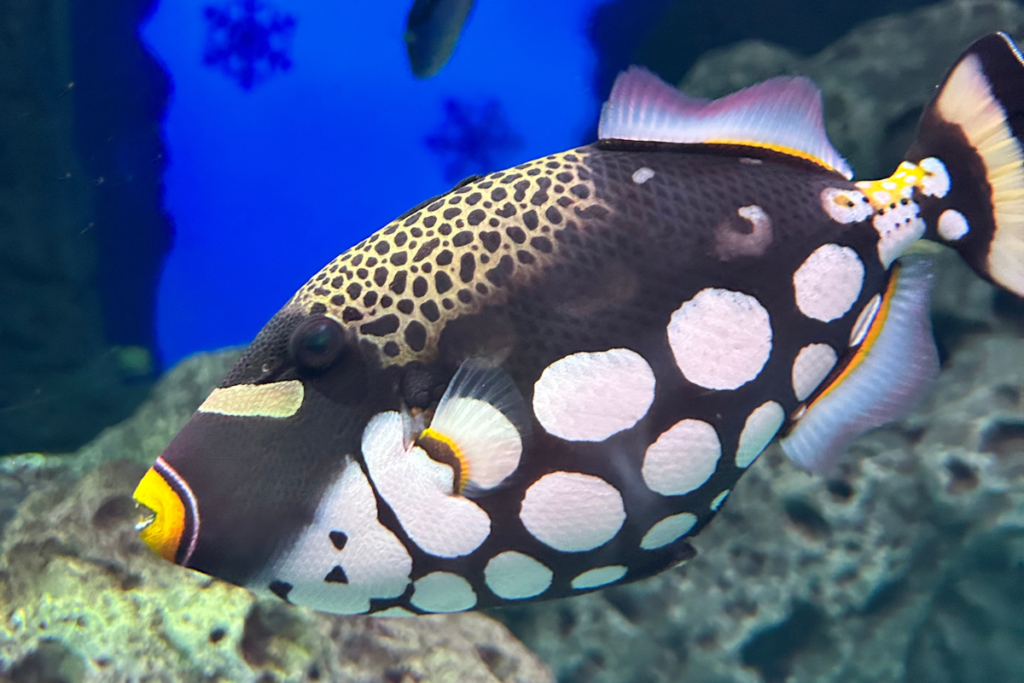
Quick Facts
Adaptation Type: Physical and Behavioral
Primary Survival Feature: Locking Trigger Spine
Defensive Advantage: Strong Body Armor and Awareness
Feeding Adaptation: Powerful Teeth and Crushing Jaws
Sensory Adaptations: Excellent Vision and Environmental Awareness
Evolutionary Benefit: Protection, Feeding Efficiency, and Reef Survival
Introduction to Clown Triggerfish Adaptations
The Clown Triggerfish (Balistoides conspicillum) is one of the most distinctive reef fish found throughout the tropical Indo-Pacific region. Its bold coloration immediately captures attention, but beneath its striking appearance lies a collection of specialized adaptations that have helped the species survive for countless generations. These features allow it to thrive within complex marine ecosystems where competition and danger are constant realities.
Across coral reefs, survival depends on more than appearance alone. Fish must locate resources, avoid predators, compete with neighboring species, and endure changing environmental conditions. The Clown Triggerfish has evolved a combination of physical structures and behavioral traits that support these demands throughout its life.
Many of its adaptations are immediately visible. The species possesses a deep body, powerful jaws, and a unique trigger spine that distinguish it from most reef fish. Other adaptations, such as sensory awareness and developmental flexibility, are less obvious but equally important to long-term survival.
Together, these traits form a highly effective survival package. Rather than relying on a single specialized feature, the Clown Triggerfish combines multiple adaptations that work together, allowing it to remain one of the most successful and recognizable fish inhabiting tropical reef environments.
Clown Triggerfish Physical Adaptations for Reef Life
One of the most famous adaptations of the Clown Triggerfish is the trigger spine located on the top of its body. This specialized dorsal spine can be raised and locked into position, making the fish more difficult for predators to swallow. Once engaged, the mechanism functions much like a doorstop wedged beneath a door, creating resistance that is difficult to overcome.
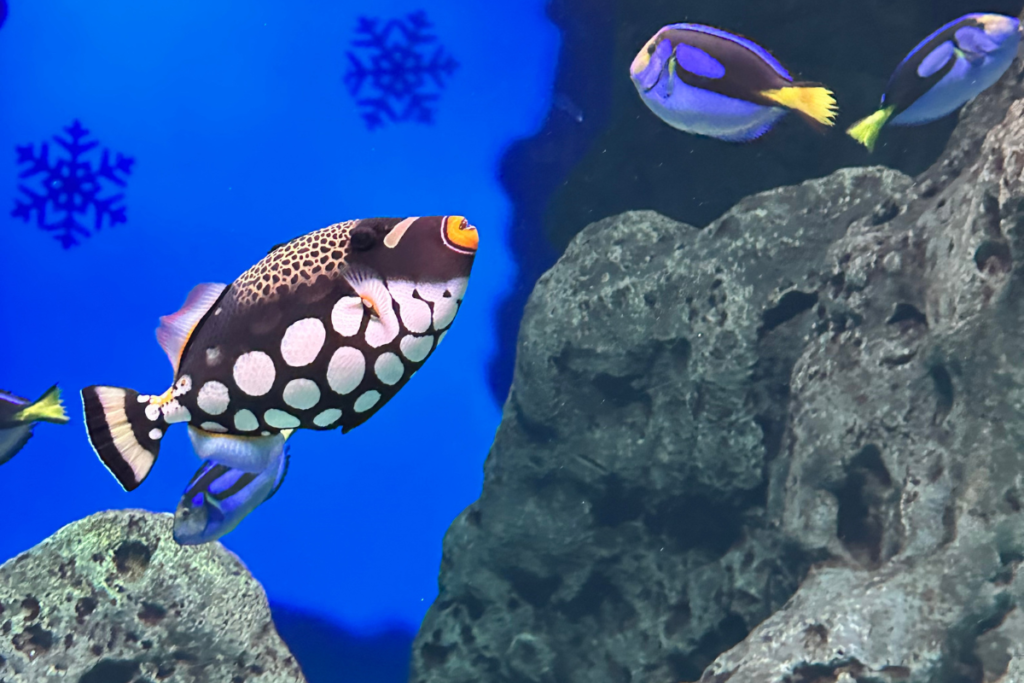
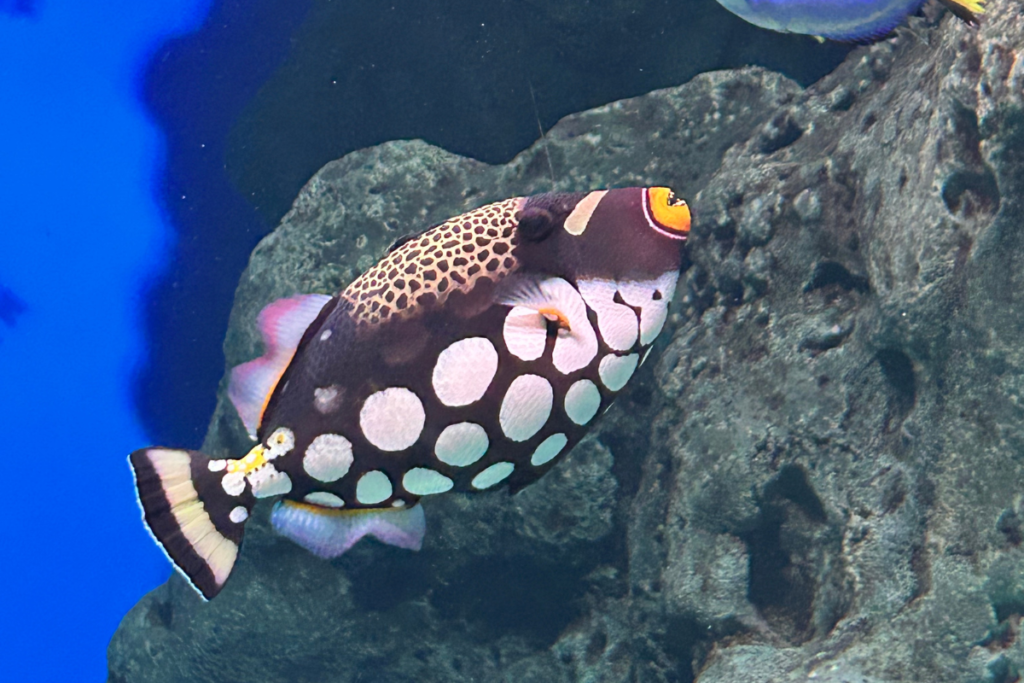
Its body shape represents another important adaptation. The fish possesses a deep, laterally compressed profile that provides stability and maneuverability among reef structures. Compared to long, slender fish that rely primarily on speed, the Clown Triggerfish is built for control and precision within complex underwater environments.
Strong scales and thick skin provide additional protection. While not true armor, these features create a durable outer covering capable of resisting minor injuries and abrasions. This durability is particularly valuable within reef environments where sharp coral, rocky surfaces, and interactions with other marine life are common.
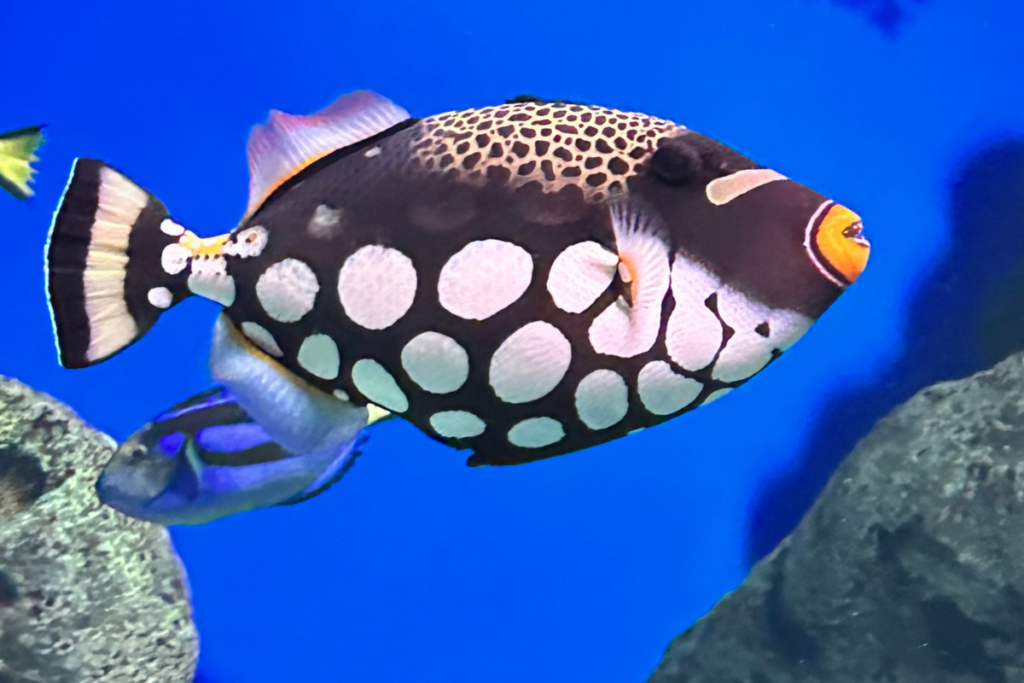
Coloration also serves an adaptive purpose. The bold contrast of white spots, dark body coloration, and yellow markings makes the fish instantly recognizable. In many marine species, striking patterns can function as visual signals that communicate confidence, maturity, or awareness to both competitors and potential predators.
These structural adaptations work together to support survival. Rather than depending on speed alone, the Clown Triggerfish utilizes strength, durability, maneuverability, and defensive features that allow it to navigate the challenges of tropical reef ecosystems effectively.
Clown Triggerfish Feeding and Sensory Adaptations
The jaws of the Clown Triggerfish are among its most powerful adaptations. Equipped with strong muscles and robust teeth, the fish can generate substantial force when feeding. This capability allows it to access resources protected by hard shells and other defensive structures.
Its teeth are designed for crushing rather than slicing. Similar to a heavy-duty nutcracker breaking through a tough shell, the Clown Triggerfish can process food sources that many reef fish cannot utilize. This adaptation expands feeding opportunities and reduces direct competition with species lacking similar capabilities.
Vision plays a major role in daily survival. Large eyes positioned on either side of the head provide a broad field of view, allowing the fish to monitor its surroundings efficiently. Excellent visual awareness helps detect opportunities, recognize threats, and navigate crowded reef environments.
Environmental awareness extends beyond simple eyesight. The species continuously gathers information from movement, light conditions, and nearby activity. This constant assessment allows rapid responses when conditions change, contributing to survival and overall adaptability.
Together, feeding and sensory adaptations create a highly effective combination. Powerful jaws increase access to resources, while strong visual abilities help identify opportunities and avoid risks. These features provide significant advantages within ecosystems where awareness and efficiency often determine success.
Clown Triggerfish Survival Adaptations and Long-Term Success
Behavioral flexibility is one of the species’ most valuable adaptations. The Clown Triggerfish can adjust its responses to changing environmental conditions, competition, and potential threats. This adaptability allows individuals to remain successful across a wide geographic range.
Territorial awareness contributes to survival as well. Individuals often recognize important areas and respond when boundaries are challenged. Maintaining awareness of surrounding activity helps reduce unnecessary risks while supporting access to critical resources.
Another important adaptation is developmental change throughout the life cycle. Juveniles differ considerably from adults in appearance and ecological role. These changes allow the species to utilize different opportunities as it grows, reducing competition between age groups and increasing overall survival potential.
Growth itself functions as a survival strategy. Larger individuals face fewer predators and possess greater physical capabilities than younger fish. As body size increases, the benefits of strength, defense, and experience become increasingly important.
The long-term success of the Clown Triggerfish results from the combination of numerous adaptations rather than any single trait. Locking trigger spines, powerful jaws, effective sensory systems, durable bodies, and behavioral flexibility all contribute to survival. Together, these adaptations have enabled the species to become one of the most recognizable and successful reef fish inhabiting tropical oceans throughout the Indo-Pacific region.
Popular Searches About Clown Triggerfish
Explore Clown Triggerfish Guide
Explore More Exhibits

Support Encounters World
Help support wildlife photography and get behind the scenes discoveries on Patreon.