Early Saxifrage Overview: Identification, Appearance, Characteristics, and Key Facts
Quick Facts
Scientific Name: Micranthes virginiensis
Common Name: Early Saxifrage
Plant Type: Perennial
Average Height: 6–18 inches (15–45 cm)
Spread Width: 4–10 inches (10–25 cm)
Leaf Type: Broadleaf
Growth Form: Clumping, Upright
Bloom Color: White
Native Range: Eastern and Central North America
Toxicity: Non-toxic to humans & pets
Location Observed: Pennsylvania, USA
Field Observation
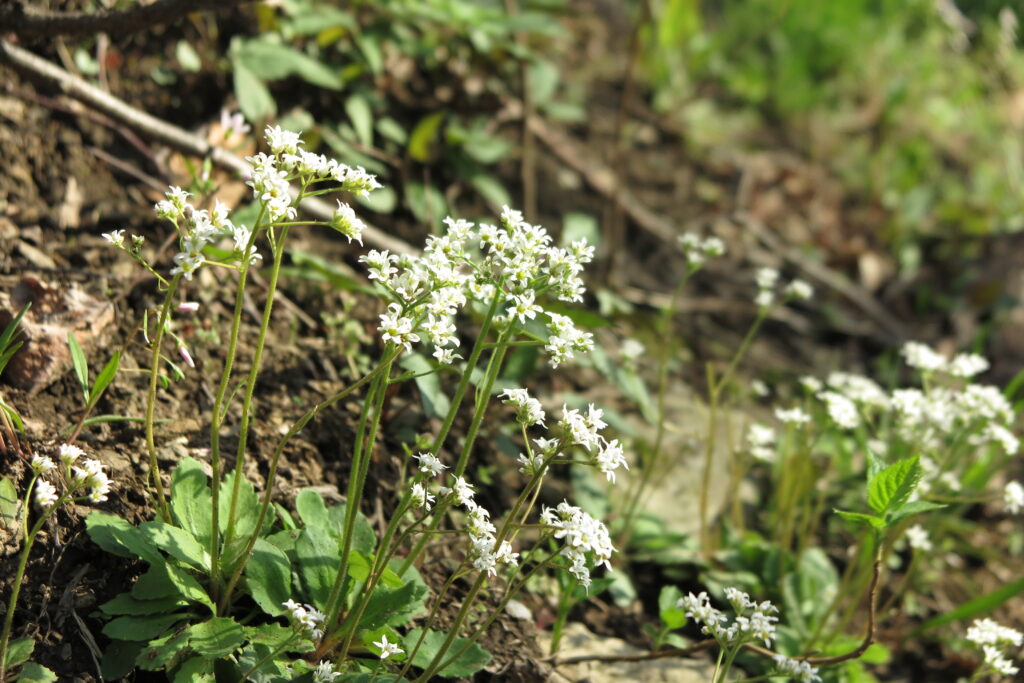
I observed Early Saxifrage growing in small scattered patches, with slender stems rising noticeably above the surrounding vegetation. The bright white flowers stood out clearly against the forest floor, making the plants surprisingly easy to spot from a distance despite their relatively small size. The elevated blooms created a delicate but eye-catching display among the emerging spring wildflowers.
Early Saxifrage in North American Woodlands
Early Saxifrage (Micranthes virginiensis) is a native wildflower that often appears during the transition from winter into spring. Its delicate white blossoms emerge at a time when much of the surrounding vegetation is only beginning to awaken, making the plant especially noticeable in natural landscapes. Despite its modest size, it frequently catches the eye because of its bright flowers and graceful appearance.
This species is native to much of eastern and central North America, where it has become a familiar component of spring wildflower communities. Natural populations occur across a broad geographic range extending from southern Canada into portions of the eastern United States. Its distribution allows it to occupy a variety of regional landscapes while maintaining a recognizable appearance.
Wildflower enthusiasts often encounter Early Saxifrage during spring walks when forests and open woodlands begin producing seasonal blooms. The plant contributes to the rich diversity of native flora that characterizes many temperate ecosystems. Because it flowers relatively early in the season, it is often one of the first native wildflowers observed each year.
Although it lacks the large blossoms of some spring flowers, Early Saxifrage possesses a subtle elegance that rewards close observation. The combination of slender stems and clusters of white flowers creates a refined appearance that stands out among emerging vegetation. Its understated beauty has made it a favorite among naturalists, photographers, and native plant enthusiasts.
Early Saxifrage Appearance and Growth Form
At first glance, Early Saxifrage appears as a compact perennial topped with airy clusters of small white flowers. Individual plants remain relatively modest in size, yet their upright flowering stems create a visual presence larger than their actual dimensions might suggest. This balanced structure allows the species to stand out without overwhelming nearby vegetation.
The plant develops from a basal grouping of leaves positioned close to the ground. From this foundation, slender flowering stems rise upward and support branching clusters of blooms. The result is a graceful arrangement that combines low-growing foliage with elevated floral displays.
Viewed from a distance, flowering individuals often resemble tiny white clouds floating above the forest floor. Multiple stems carrying clusters of blossoms create an open and delicate silhouette. This effect becomes especially noticeable when several plants bloom together in the same area.
The overall growth form remains consistent across much of the species’ range. Whether growing in northern or southern portions of its distribution, Early Saxifrage generally maintains the same upright flowering habit and compact footprint. This reliability contributes to its recognition among native wildflower observers.
Adaptability has allowed the species to persist across a broad geographic region while retaining its distinctive appearance. Although environmental conditions may influence overall size, the plant continues to display the elegant combination of basal foliage and airy flower clusters that define its character. These traits help establish Early Saxifrage as a recognizable member of eastern North America’s spring flora.
Distinctive Characteristics of Early Saxifrage
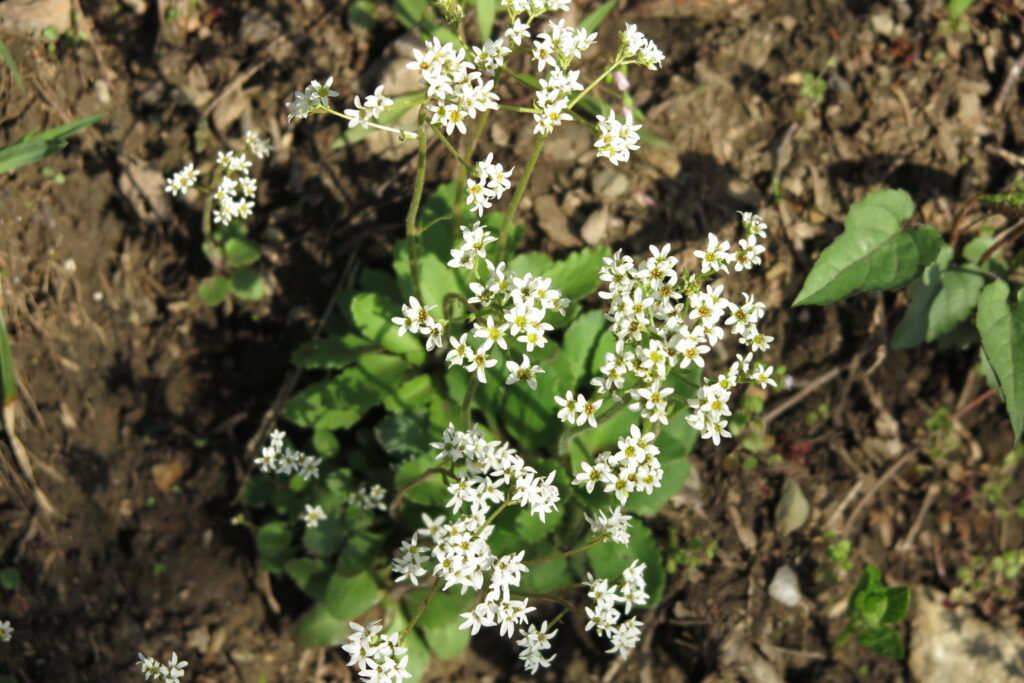
One of the most recognizable features of Early Saxifrage is its basal rosette of leaves. These leaves form a compact cluster at ground level and provide the foundation from which flowering stems emerge. Their arrangement creates a neat, organized appearance even before blooms develop.
The foliage typically displays a rich green coloration and a somewhat textured surface. Leaf margins may appear slightly toothed or scalloped, adding visual detail when examined closely. The leaves often remain attractive throughout much of the growing season, contributing value beyond the flowering period.
Flower clusters provide another defining characteristic. Numerous small white flowers are arranged on branching stems that create an airy and open structure. A useful comparison is a miniature spray of baby’s breath, with multiple blossoms appearing suspended above the foliage rather than packed into a dense cluster.
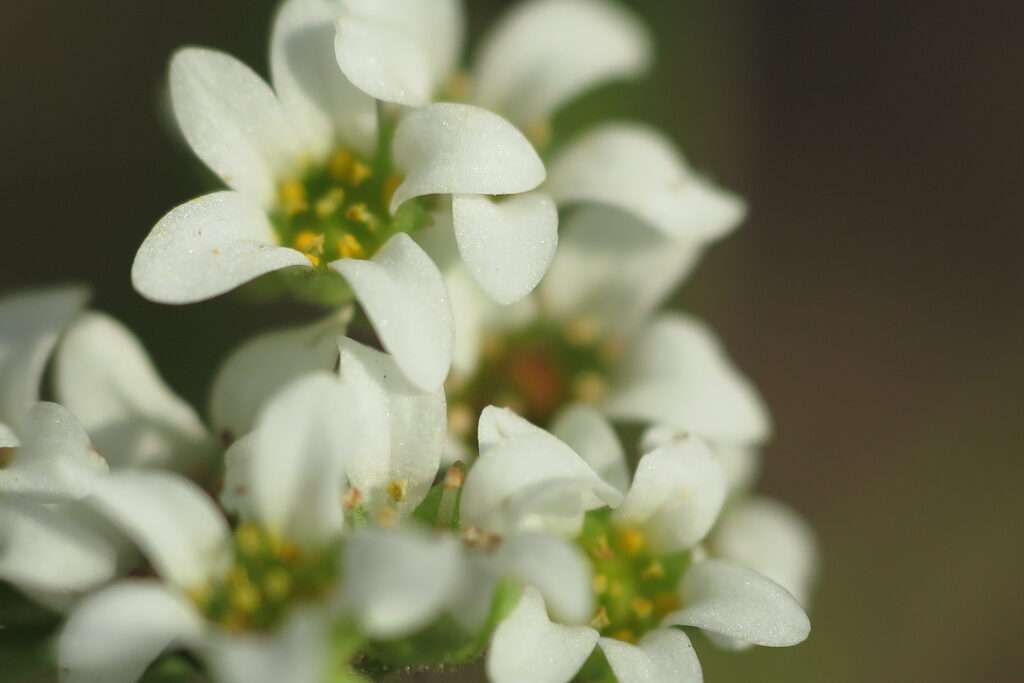
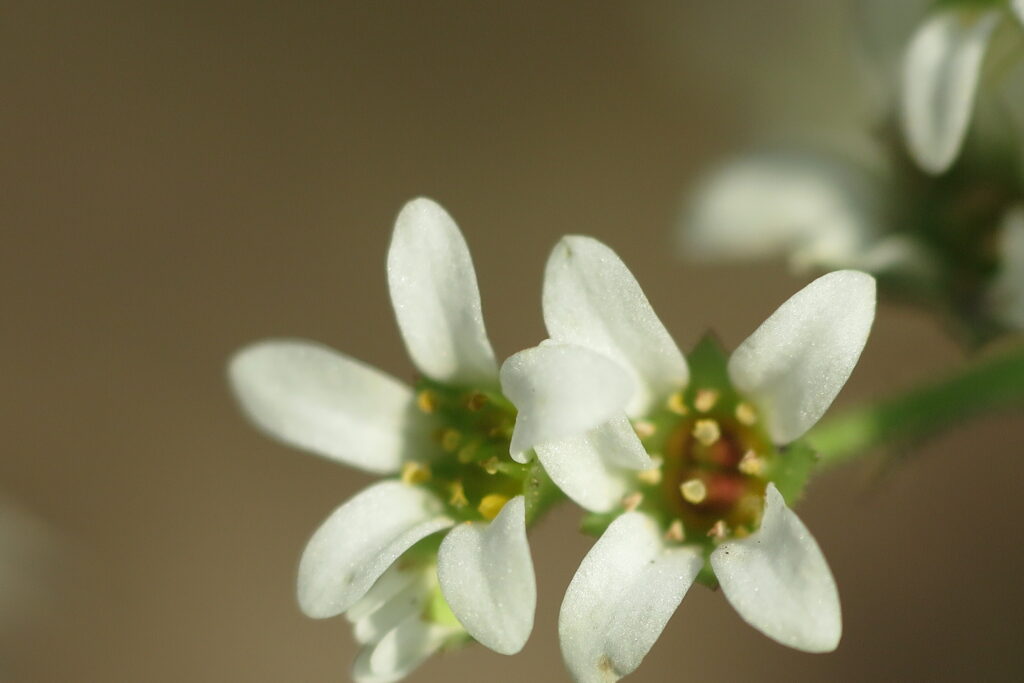
Each flower consists of five petals surrounding a center containing yellow-tipped reproductive structures. The bright white petals contrast strongly with the green stems and leaves, making the flowers visible even in shaded settings. This contrast contributes significantly to the plant’s visual appeal.
The combination of compact foliage, slender stems, and delicate blossoms creates a distinctive identity among native spring wildflowers. While many woodland flowers rely on large individual blooms for attention, Early Saxifrage achieves its appeal through refinement and balance. Its elegance comes from the collective effect of numerous small flowers working together rather than a single dominant blossom.
How to Identify Early Saxifrage in the Field
Identifying Early Saxifrage begins with observing the overall structure of the plant. Look for a low basal cluster of leaves supporting upright stems that branch near the top. These stems carry numerous small white flowers arranged in loose clusters rather than dense spikes or solitary blooms.
The flowers themselves provide one of the strongest identification clues. Each bloom contains five white petals surrounding a greenish center accented by yellow stamens. Because the petals are relatively small, the flowers often appear delicate and refined compared to larger spring wildflowers.
One common identification challenge involves distinguishing Early Saxifrage from other white-flowered native species. Some spring wildflowers produce similar white blossoms, but many have larger flowers, different petal counts, or alternate leaf arrangements. Examining both the flower structure and basal foliage helps reduce confusion.
A useful field comparison is to imagine a tiny bouquet held aloft on slender stems. Unlike species that produce flowers directly above a single stalk, Early Saxifrage creates a branching arrangement that resembles a miniature floral spray. This open structure is often visible even before individual flowers are examined closely.
Careful observation of the basal leaf rosette provides additional confirmation. The leaves remain concentrated near the ground while the flowering stems rise above them, creating a two-tiered appearance. When this leaf arrangement is combined with branching clusters of five-petaled white flowers, Early Saxifrage becomes one of the easier native spring wildflowers to recognize in the field.
Observation Location
Observed in Turkey Hill Overlook Trail, Lancaster County, Pennsylvania, USA
Popular Searches About Early Saxifrage
Explore Early Saxifrage Guide
Explore More Plants

Support Encounters World
Help support wildlife photography and get behind the scenes discoveries on Patreon.