Early Saxifrage Pollinator Guide: Bees, Flies, and Other Pollinators That Visit Early Saxifrage
Quick Facts
Primary Pollinators: Native Bees and Small Solitary Bees
Secondary Pollinators: Hoverflies, Beetles, and Small Flies
Pollination Method: Insect Pollination
Blooming Season: Early Spring
Pollinator Value: Moderate to High
Nectar Production: Moderate
Wildlife Benefit: Provides Early-Season Food Resources
Early Saxifrage and Its Importance to Pollinators
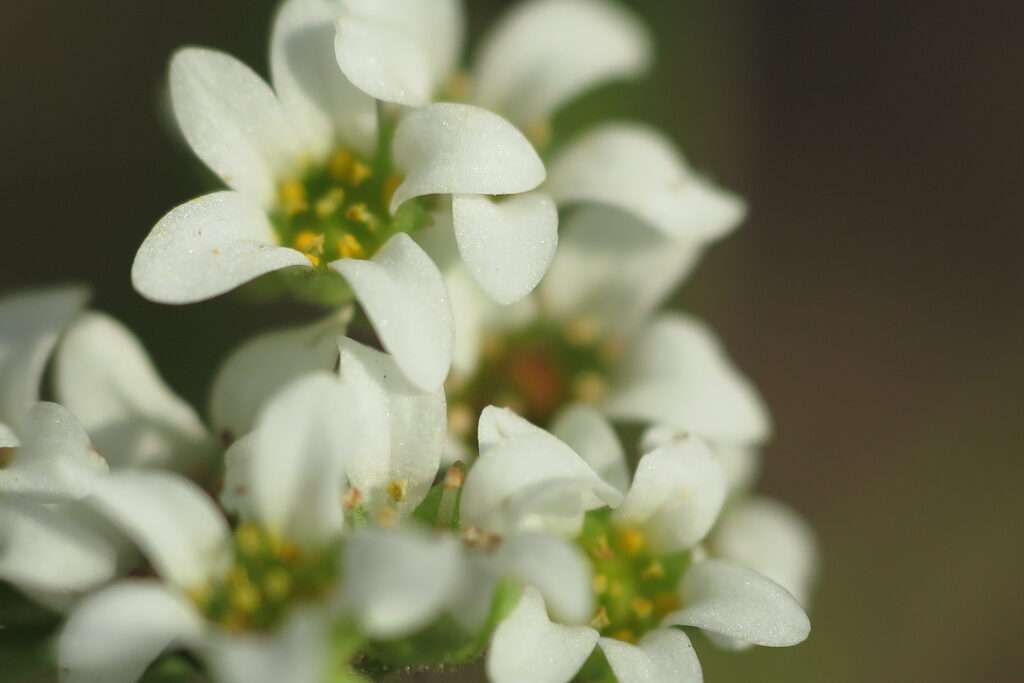
When winter begins to loosen its grip on eastern North America, flowering resources can still be limited for many insects. Early Saxifrage (Micranthes virginiensis) becomes valuable during this period by producing blossoms while much of the surrounding vegetation remains in the early stages of growth. Its flowers help bridge the gap between winter dormancy and the abundance of late spring blooms.
Many pollinating insects emerge during a time when nectar and pollen sources are relatively scarce. Native wildflowers that bloom early in the season often play a disproportionately important ecological role because they provide food when resources are limited. Early Saxifrage contributes to this seasonal support network through its clusters of white flowers.
Although the plant is not as flashy as some larger wildflowers, it still attracts a variety of beneficial insects. The numerous blossoms grouped together on flowering stems create a concentrated source of nectar and pollen. This arrangement allows visiting insects to feed efficiently while moving between flowers.
The ecological value of Early Saxifrage extends beyond the individual insects that visit it. Pollinator interactions contribute to the reproductive success of the plant while also supporting broader ecosystem health. These relationships highlight the importance of native spring wildflowers within natural communities.
Common Pollinators of Early Saxifrage Flowers
Native bees are among the most frequent visitors to Early Saxifrage. Small solitary bees often appear on flowers during warm spring days, collecting both nectar and pollen. These insects play an important role in transferring pollen between blossoms while meeting their own nutritional needs.
Mining bees, sweat bees, and other early-season bee species may regularly forage on Early Saxifrage. Many of these insects emerge before large numbers of flowering plants become available. The presence of reliable nectar sources can significantly influence their ability to survive and reproduce.
Hoverflies are another common visitor. These insects are often mistaken for bees because of their striped appearance, but they belong to a completely different group. While feeding on nectar, hoverflies may contribute to pollination and help support healthy plant reproduction.
A useful comparison is a small roadside café serving travelers during a long journey. Early Saxifrage provides an important stop for insects moving through spring landscapes in search of food. Even though individual flowers are small, the collective floral display offers meaningful resources.
Beetles and various small flies may also visit the blossoms. While they are often less efficient pollinators than bees, their activity still contributes to pollen movement. The diversity of visiting insects demonstrates the plant’s value within a broader pollinator community.
How Early Saxifrage Attracts Pollinating Insects
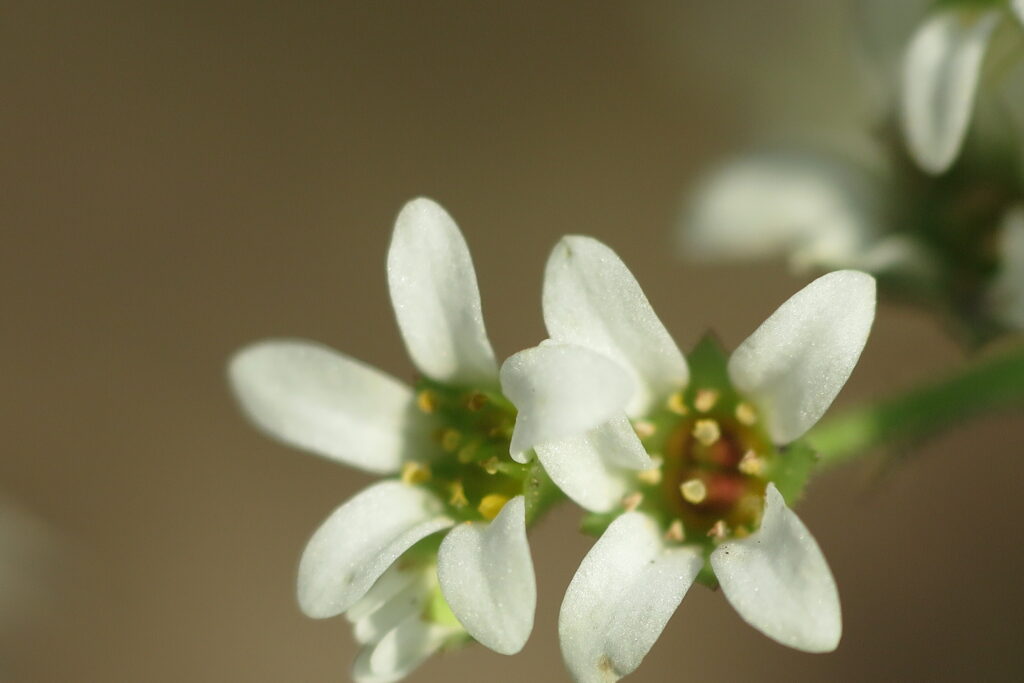
Flower color plays an important role in attracting visitors. The bright white petals stand out against the darker greens and browns commonly found in spring landscapes. This contrast makes flowering plants easier for insects to locate while moving through the environment.
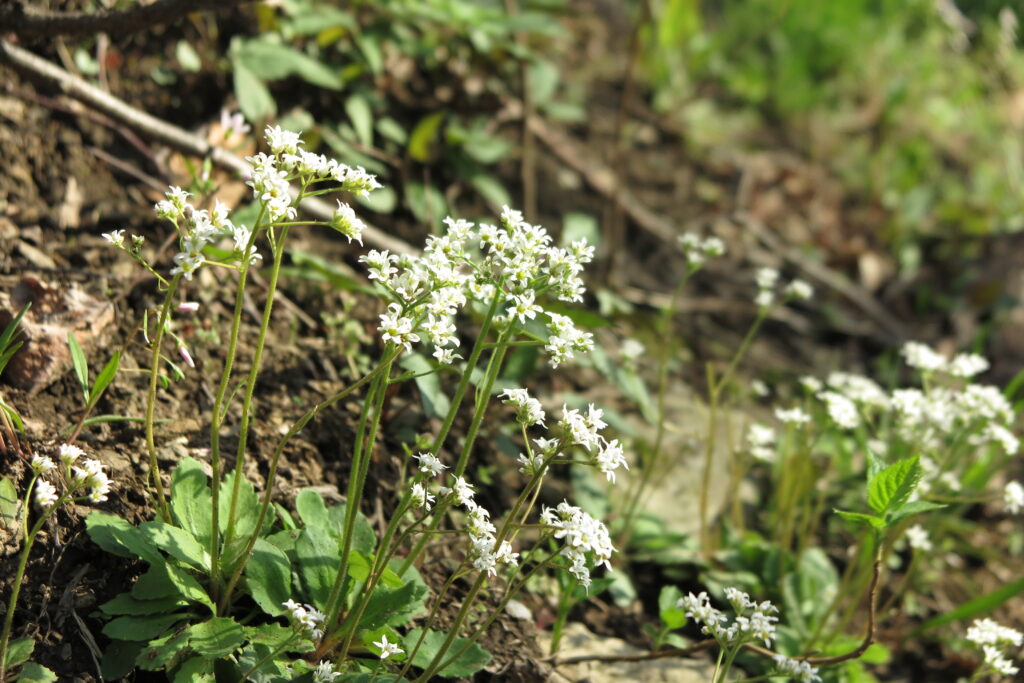
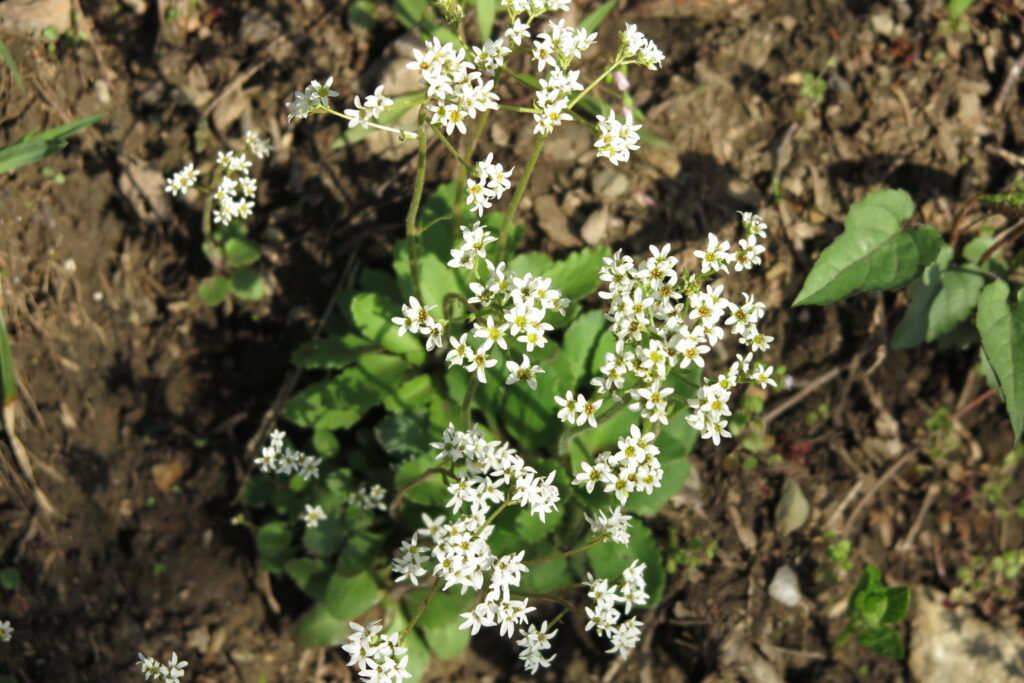
The arrangement of flowers also improves visibility. Rather than producing a single blossom, Early Saxifrage develops multiple flowers in branching clusters. These grouped blooms create a larger visual target that attracts attention from pollinating insects.
A useful comparison is a cluster of lights shining together instead of a single small bulb. Individually, each flower may appear modest, but together they create a display that is much easier to notice. This collective effect increases the likelihood of pollinator visitation.
Accessible flower structure further contributes to pollinator attraction. The open blossoms allow many insect species to reach nectar and pollen without specialized adaptations. This accessibility broadens the range of insects capable of utilizing the plant as a food source.
Timing is another important factor. Because Early Saxifrage blooms during a period when floral resources are less abundant, its flowers may receive greater attention than they would during peak summer flowering seasons. The combination of visibility, accessibility, and timing makes the plant an effective pollinator resource.
Pollinator Benefits and Ecological Value of Early Saxifrage
The benefits of Early Saxifrage extend beyond supporting individual pollinator species. By providing food resources during early spring, the plant contributes to the survival and health of insects that will later pollinate numerous other native plants. This makes its ecological influence larger than its modest size might suggest.
Native plant communities often rely on overlapping bloom periods to support pollinators throughout the growing season. Early Saxifrage helps fill an important seasonal role by flowering before many other species become active. Its contribution helps maintain continuity within pollinator networks.
A useful comparison is the opening shift at a business. Someone must arrive first to ensure everything functions properly before the busiest hours begin. Early Saxifrage serves a similar role by providing resources before the peak flowering season arrives.
The plant also benefits gardeners interested in supporting native wildlife. Incorporating Early Saxifrage into native plant gardens can help attract beneficial insects while increasing ecological diversity. Its compact size allows it to fit easily into woodland plantings and wildflower collections.
As a native spring wildflower, Early Saxifrage demonstrates how even small plants can make meaningful contributions to ecosystem health. Through nectar production, pollen availability, and support of early-season pollinators, it plays a valuable role within eastern North America’s natural landscapes. Its flowers may be delicate, but their ecological importance is substantial.
Popular Searches About Early Saxifrage
Explore Early Saxifrage Guide
Explore More Plants

Support Encounters World
Help support wildlife photography and get behind the scenes discoveries on Patreon.