Early Saxifrage Identification Guide: How to Recognize Leaves, Flowers, and Key Features
Quick Facts
Leaf Shape: Oval to Rounded with Shallow Teeth
Stem Type: Slender, Upright Flowering Stems
Root System: Fibrous Root System
Flower Structure: Five-Petaled White Flowers in Branched Clusters
Growth Form: Clumping, Upright
Texture: Smooth to Slightly Textured
Color Variations: Green Foliage with White Flowers and Yellow Centers
Recognizing Early Saxifrage in the Wild
Early Saxifrage (Micranthes virginiensis) is a native perennial wildflower known for its delicate white blossoms and slender flowering stems. During spring, the plant becomes more noticeable as clusters of bright flowers rise above surrounding vegetation. Although not among the largest woodland flowers, its appearance is distinctive enough that careful observers can identify it with confidence.
The species occurs throughout much of eastern North America and appears in a variety of natural landscapes. Wildflower enthusiasts frequently encounter it during spring hikes when many native plants are beginning their annual growth cycle. Its flowering period often coincides with the emergence of numerous other woodland species, making accurate identification especially important.
At first glance, Early Saxifrage may appear delicate or fragile, but closer inspection reveals a well-defined structure. The plant combines low-growing foliage with elevated flowering stems, creating a balanced appearance that differs from many surrounding wildflowers. This contrast between ground-level leaves and elevated blooms serves as an important visual clue.
Successful identification depends on examining the entire plant rather than focusing on a single feature. Flower arrangement, leaf shape, stem characteristics, and overall growth form all contribute useful information. When these characteristics are viewed together, Early Saxifrage becomes much easier to distinguish from similar spring-blooming species.
Early Saxifrage Overall Structure and Growth Form
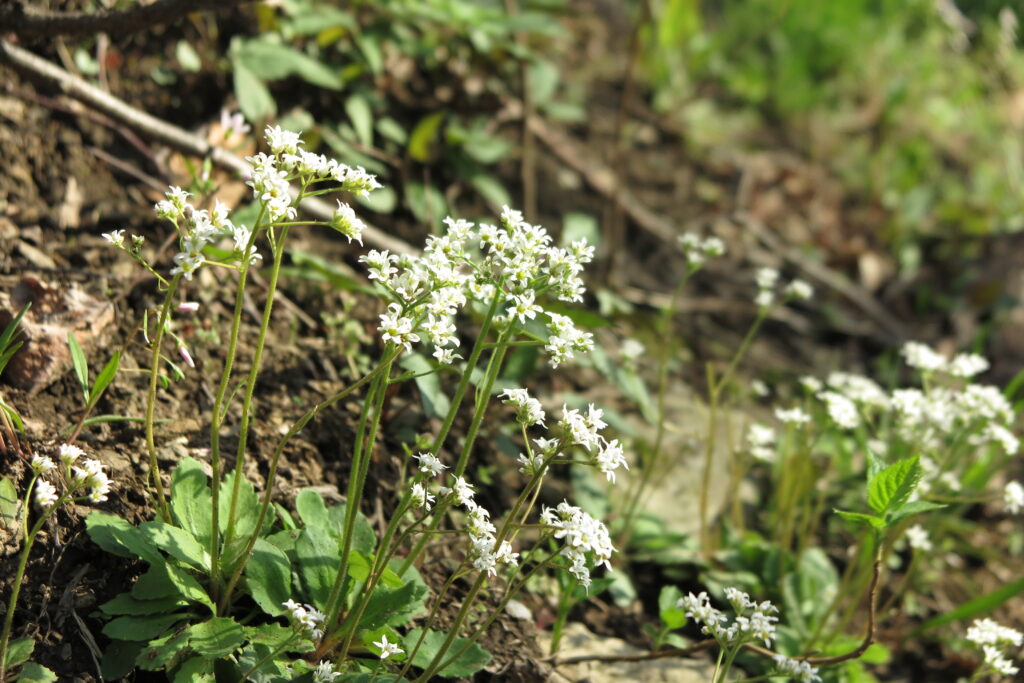
The overall form of Early Saxifrage is compact yet surprisingly noticeable. Plants begin as low clusters of foliage before sending slender stems upward during the flowering season. This arrangement creates a layered appearance that separates the blooms from the leaves below.
Viewed from a distance, flowering plants often resemble small sprays of white blossoms suspended above the ground. The stems are relatively thin, allowing the flower clusters to appear light and airy. This gives the plant an elegant profile compared to species with dense or bulky flower heads.
A useful comparison is a miniature bouquet held above a green base. The flowers occupy the upper portion of the plant while the leaves remain concentrated near the soil surface. This separation creates a visual effect that is both distinctive and easy to recognize once observed.
The species grows in individual clumps rather than forming extensive mats or spreading carpets. Multiple plants may occur together, but each maintains its own compact footprint. This clustered growth style helps distinguish Early Saxifrage from creeping groundcovers and aggressively spreading wildflowers.
Height also contributes to identification. Flowering stems commonly rise several inches above the foliage, making the plant appear taller than its leaf rosette alone would suggest. The resulting shape is upright, open, and balanced rather than sprawling or densely compacted.
Early Saxifrage Leaves, Stems, and Root Characteristics
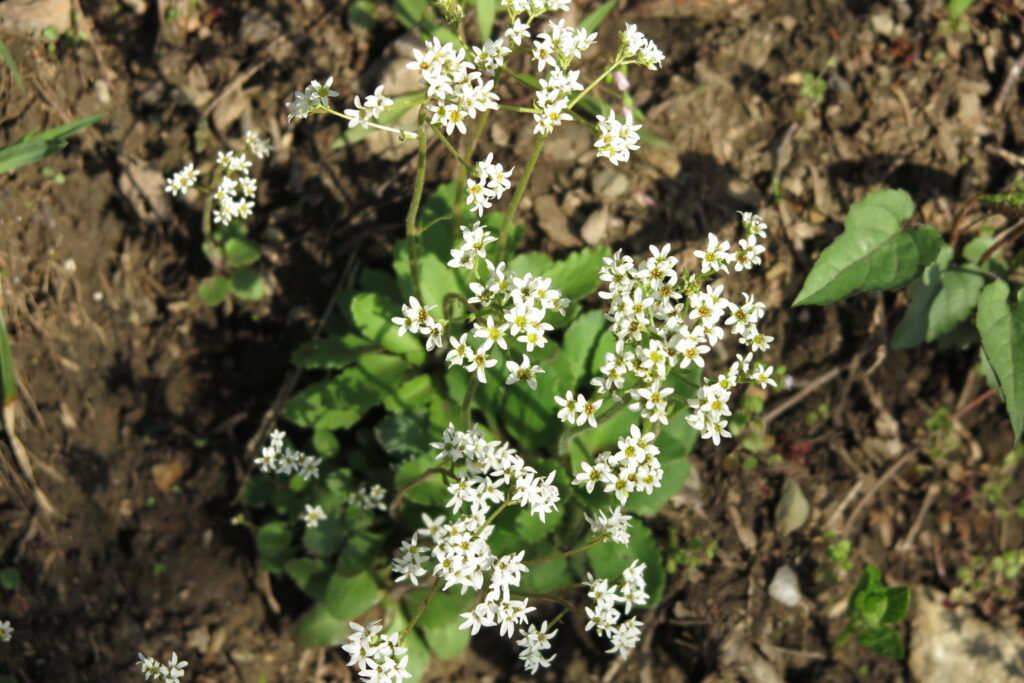
The leaves of Early Saxifrage are concentrated in a basal rosette at the base of the plant. Most leaves are oval, rounded, or slightly spoon-shaped, with shallow teeth along the margins. Their arrangement forms a compact cluster that remains visible even when flowering stems are absent.
Leaf texture is generally smooth to slightly textured depending on age and growing conditions. The foliage often displays a rich green coloration that contrasts strongly with the bright white flowers. Close examination reveals subtle surface details that add character without making the leaves appear rough or heavily veined.
The flowering stems are slender, upright, and unbranched through much of their lower length. Near the top, branching occurs to support multiple flower clusters. These stems are usually green and relatively delicate in appearance, yet strong enough to hold blossoms above surrounding vegetation.
A useful comparison is a thin fishing rod supporting a lightweight cluster at its tip. The stems possess flexibility while maintaining enough rigidity to remain upright. This characteristic contributes to the plant’s graceful appearance during the flowering season.
Below the surface, Early Saxifrage develops a fibrous root system. Rather than producing large taproots or thick underground structures, numerous fine roots anchor the plant and absorb moisture and nutrients. The root system forms a compact network that supports long-term survival while maintaining the plant’s relatively small size.
Early Saxifrage Flowers and Reproductive Structures
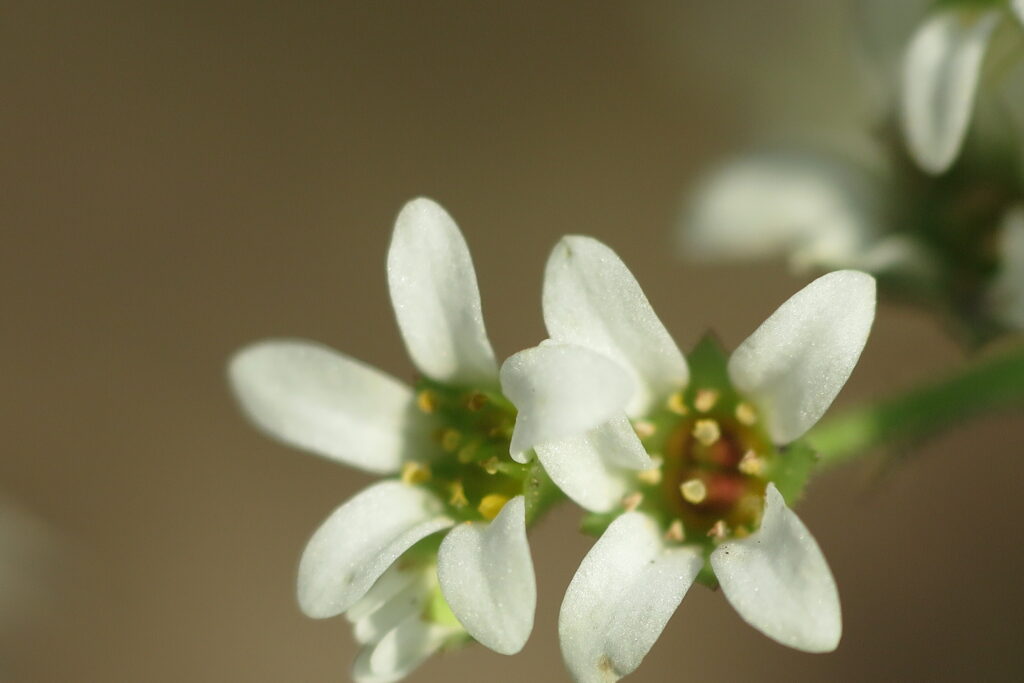
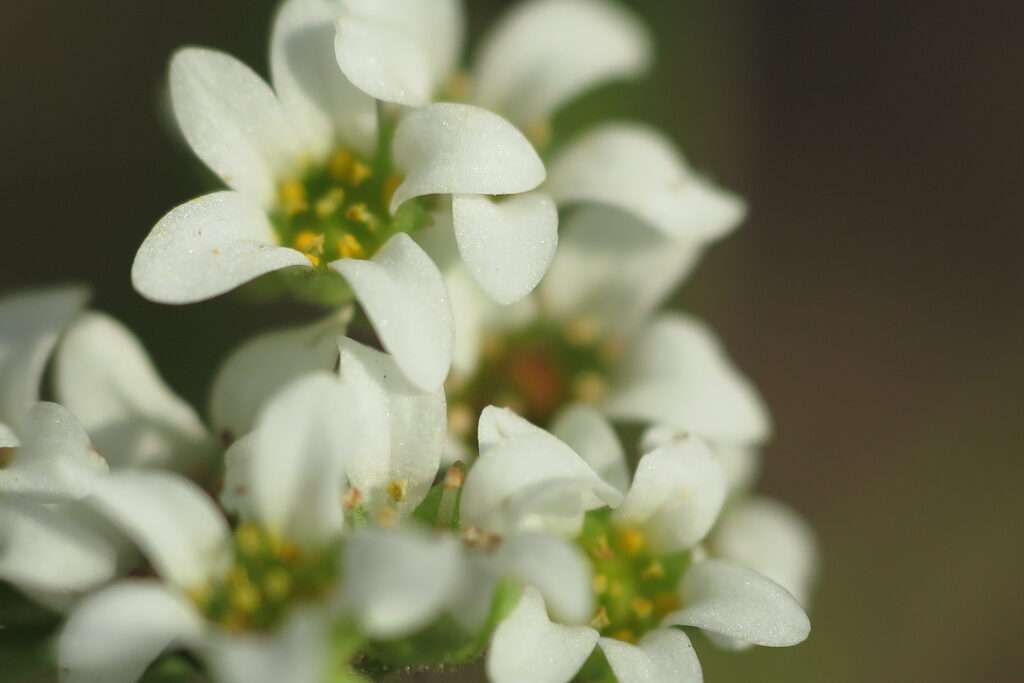
The flowers provide the most reliable identification feature for Early Saxifrage. Each blossom contains five white petals arranged around a central cluster of reproductive structures. The petals are relatively small but highly visible due to their bright coloration.
Flowers occur in loose branching clusters at the top of the stems. Instead of forming a dense flower head, individual blossoms are spaced apart enough to create an open and airy appearance. This arrangement contributes significantly to the plant’s elegant visual character.
The centers of the flowers often display yellow stamens that contrast against the white petals. This color combination creates a subtle focal point visible even from a moderate distance. When numerous flowers bloom simultaneously, the overall effect is both delicate and striking.
A useful comparison is a collection of tiny stars scattered across the upper portion of the plant. Each flower contributes to the overall display while remaining individually distinguishable. This differs from species whose flowers merge visually into a single mass.
Following pollination, flowers develop small seed-producing structures that support reproduction. Although these structures are less noticeable than the blossoms themselves, they remain an important part of the plant’s identification profile. When observers combine flower arrangement, petal count, yellow centers, basal leaves, and upright stems, Early Saxifrage becomes one of the more recognizable native spring wildflowers found throughout eastern North America.
Popular Searches About Early Saxifrage
Explore Early Saxifrage Guide
Explore More Plants

Support Encounters World
Help support wildlife photography and get behind the scenes discoveries on Patreon.