Early Saxifrage Facts Guide: Fascinating Facts, Unique Traits, and Surprising Discoveries
Quick Facts
Scientific Name: Micranthes virginiensis
Common Name: Early Saxifrage
Plant Family: Saxifrage Family (Saxifragaceae)
Plant Type: Perennial Wildflower
Native Range: Eastern and Central North America
Blooming Season: Early Spring
Interesting Feature: One of the Earliest Native White Wildflowers to Bloom
Remarkable Facts About Early Saxifrage
Early Saxifrage is one of the earliest native wildflowers to bloom across much of its range. While many plants remain dormant after winter, this species begins producing flowers during the first stages of spring. Its timing allows it to take advantage of sunlight reaching the forest floor before tree canopies fully develop.
The scientific name Micranthes virginiensis reflects part of the plant’s history and classification. The genus name Micranthes refers to small flowers, a fitting description for the species’ delicate white blooms. Despite their modest size, the flowers are often highly visible because they appear when few other plants are flowering.
Many people assume Early Saxifrage is closely related to common garden flowers, but it belongs to the Saxifrage family, a group containing numerous species adapted to rocky and woodland environments. Members of this family occur throughout the Northern Hemisphere and display a surprising variety of forms and habitats.
Naturalists often consider Early Saxifrage a seasonal indicator. The appearance of its flowers signals that spring conditions are becoming established. In many regions, spotting the first blooming plants has become a welcome sign that winter is finally ending.
Unlike some wildflowers that dominate landscapes through size or color, Early Saxifrage attracts attention through simplicity. Its small white blossoms and graceful stems create a refined appearance that rewards close observation. This understated beauty is one reason it remains popular among native plant enthusiasts.
The species has persisted across eastern North America for thousands of years. Long before modern landscapes existed, Early Saxifrage was already occupying forests, rocky slopes, and woodland openings. Its continued success demonstrates the effectiveness of its adaptations.
Another interesting fact is that many people walk past the plant without realizing it is a native wildflower. Because the flowers are relatively small, they can be overlooked unless someone takes time to examine the surrounding vegetation carefully. Once noticed, however, the species is often easy to recognize.
Its combination of early blooming, broad distribution, and elegant appearance has made Early Saxifrage one of the most recognizable spring wildflowers throughout much of its native range.
Unique Characteristics That Make Early Saxifrage Stand Out
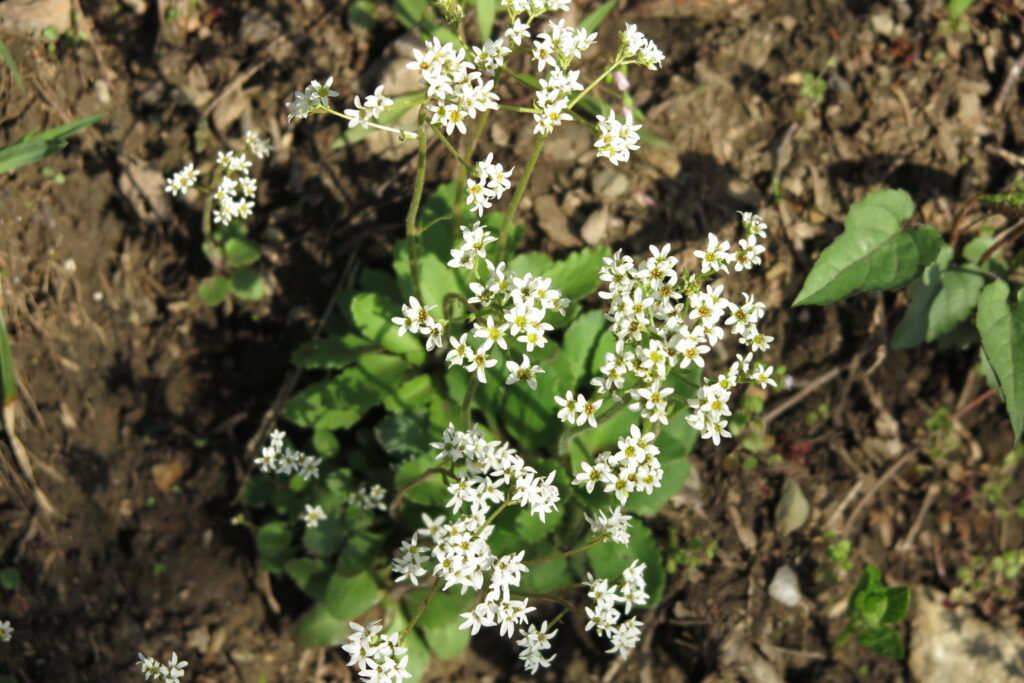
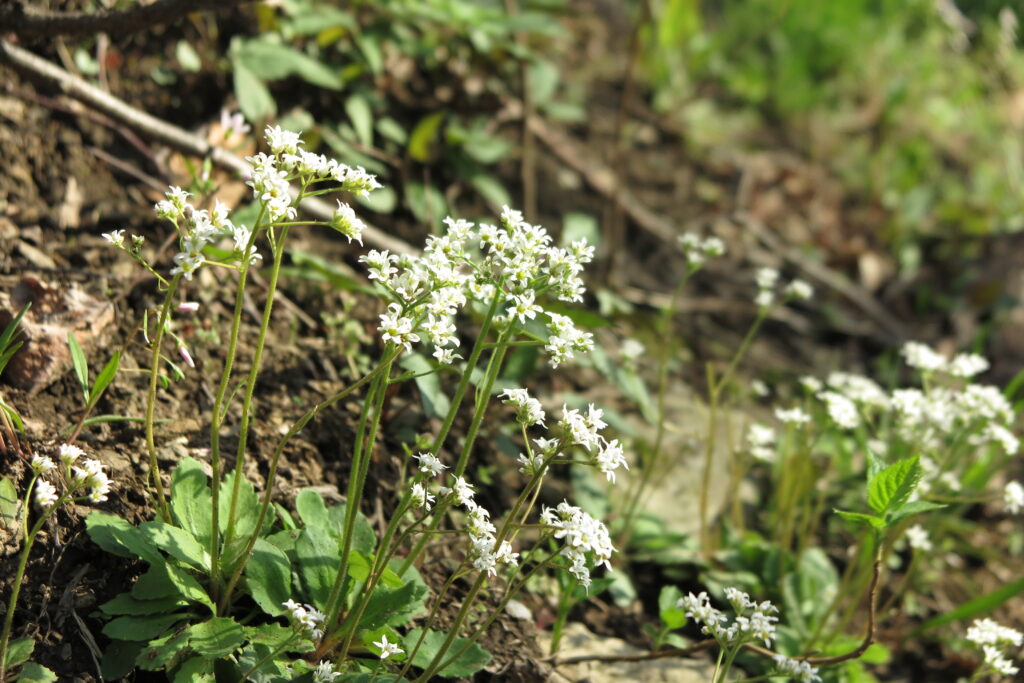
One of the most distinctive features of Early Saxifrage is its growth habit. The plant develops a compact rosette of leaves at ground level while producing flowering stems that rise noticeably above the foliage. This creates a two-layered appearance that helps separate it from many neighboring wildflowers.
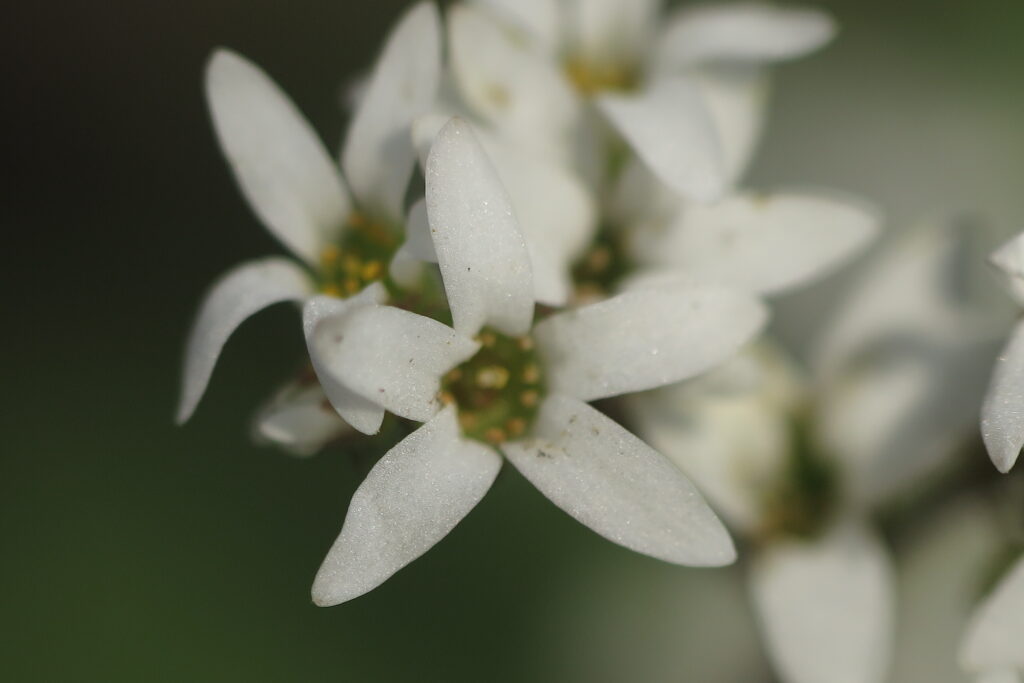
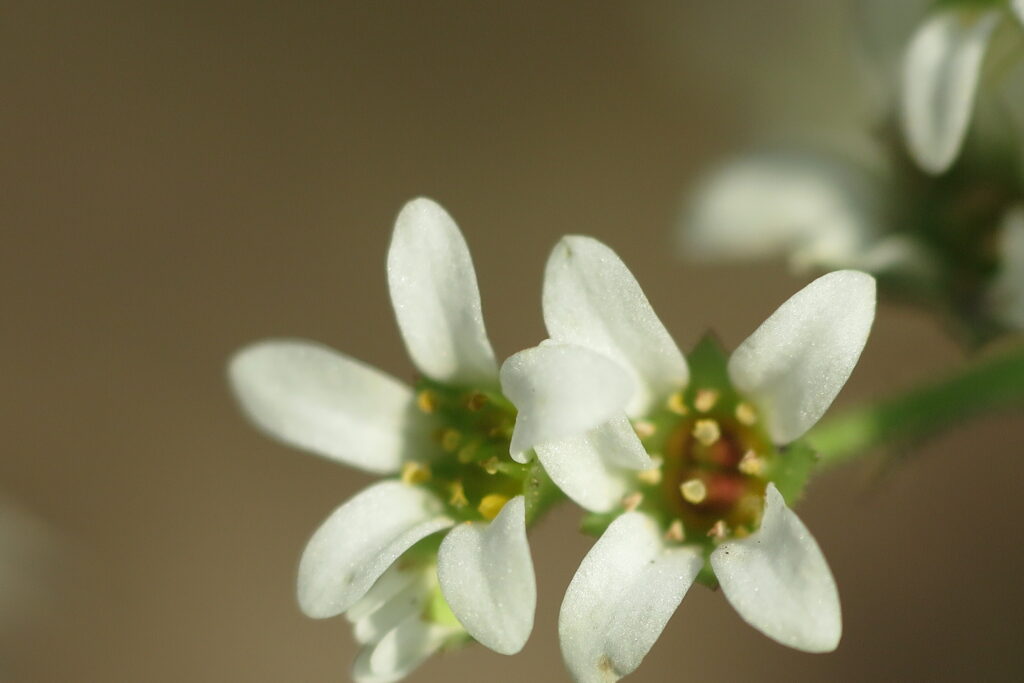
The flowers themselves contribute significantly to the plant’s identity. Each blossom contains five white petals surrounding a central cluster of yellow-tipped reproductive structures. When numerous flowers open simultaneously, they create an airy display that resembles a small cloud of white blooms.
A useful comparison is a miniature bouquet held above the forest floor. The flowers appear suspended on slender stems, creating a visual effect that is both delicate and striking. This arrangement helps the species stand out even among dense spring vegetation.
The plant’s relatively small size is another interesting characteristic. Although individual specimens are modest in stature, the elevated flower clusters make them surprisingly noticeable. A patch of blooming Early Saxifrage can often be spotted from a considerable distance despite the plant’s compact dimensions.
Leaf structure also helps distinguish the species. The foliage forms a neat basal cluster rather than spreading aggressively across the ground. This growth style contributes to the tidy and organized appearance often associated with the plant.
Unlike many ornamental flowers bred for larger blooms, Early Saxifrage relies on the collective effect of numerous small blossoms. The visual impact comes from the arrangement and abundance of flowers rather than individual size. This strategy creates a unique aesthetic that differs from many garden plants.
Another notable characteristic is consistency. Across much of its range, Early Saxifrage maintains similar flower structure, foliage, and growth form. This reliability helps make identification easier for wildflower observers.
Together, these features create a plant that is instantly recognizable to those familiar with native spring wildflowers and rewarding to discover for those encountering it for the first time.
Surprising Facts About Growth and Survival
Early Saxifrage follows a growth schedule that differs from many later-blooming plants. Rather than waiting until summer, it completes much of its visible development during spring. This timing allows the species to utilize resources before taller vegetation becomes dominant.
The plant survives winter through perennial structures that remain alive below the soil surface. Although above-ground growth may disappear during colder months, the plant is far from dead. It simply enters a dormant phase while waiting for favorable conditions to return.
A useful comparison is a theater that closes for the season but prepares behind the scenes for its next performance. Early Saxifrage spends winter conserving energy before reemerging when temperatures rise. This strategy improves survival and supports reliable flowering each year.
Many populations occur in locations with rocky soils and variable conditions. These environments can be challenging for some species, yet Early Saxifrage has adapted successfully. Its ability to thrive in such settings contributes to its broad distribution.
The species also demonstrates impressive longevity. Individual plants may persist for multiple years, returning each spring to produce foliage and flowers. This long-term survival helps maintain stable populations even when annual seedling recruitment varies.
Another interesting fact is that flowering often occurs before many competing plants become fully active. This early schedule reduces competition for sunlight and pollinators. As a result, the species occupies an ecological niche that relatively few wildflowers exploit.
Seed production provides another important survival advantage. Even though individual plants remain relatively small, they can generate numerous seeds capable of producing future generations. This reproductive strategy supports population persistence across large geographic areas.
Through dormancy, early flowering, seed production, and long-term survival, Early Saxifrage has developed a life history well suited to temperate woodland ecosystems.
Ecological Importance and Lesser-Known Facts
Early Saxifrage plays an important ecological role despite its modest appearance. The flowers provide nectar and pollen for insects emerging during spring. Because floral resources can be limited at this time of year, blooming plants become especially valuable to pollinators.
Native bees are among the most frequent visitors. These insects often rely on early-flowering species to obtain food while establishing nests and beginning seasonal activity. Early Saxifrage contributes to this process by providing a dependable source of resources.
A useful comparison is an early morning café serving customers before most businesses open. The flowers supply food during a period when many alternatives are unavailable. This timing increases the plant’s ecological significance.
The species also contributes to biodiversity within native plant communities. Every wildflower occupies a specific ecological role, and Early Saxifrage helps fill the early-season portion of that schedule. Its presence strengthens the overall diversity and resilience of woodland ecosystems.
Many photographers seek out blooming populations because of their delicate appearance. The contrast between white flowers and darker forest backgrounds creates striking natural images. This visual appeal has helped increase appreciation for native spring wildflowers.
Another lesser-known fact is that Early Saxifrage often grows alongside other celebrated spring species such as trilliums, spring beauties, and violets. While these plants sometimes receive greater attention, Early Saxifrage contributes equally to the seasonal display.
Perhaps the most remarkable fact is that such a small wildflower can influence pollinators, ecosystems, biodiversity, and human appreciation of nature simultaneously. Its impact extends far beyond its size, demonstrating how even modest native plants play meaningful roles within the landscapes they inhabit.
For naturalists, gardeners, and wildflower enthusiasts, Early Saxifrage serves as both a beautiful spring flower and an excellent example of the importance of native biodiversity. Its fascinating characteristics continue to make it one of eastern North America’s most rewarding early-season wildflowers.
Popular Searches About Early Saxifrage
Explore Early Saxifrage Guide
Explore More Plants

Support Encounters World
Help support wildlife photography and get behind the scenes discoveries on Patreon.